
How to Reduce Visceral Fat: A Practical Guide for Healthier Aging
Losing stubborn fat, especially around your middle, can feel like an uphill battle. But the real goal isn't just about what you see in the mirror. It’s about tackling visceral fat—the dangerous, “hidden” fat wrapped around your internal organs. The most effective path forward combines smart lifestyle adjustments with medical support when needed, and it's absolutely crucial for your long-term health and longevity.
Understanding the Hidden Health Risk of Visceral Fat
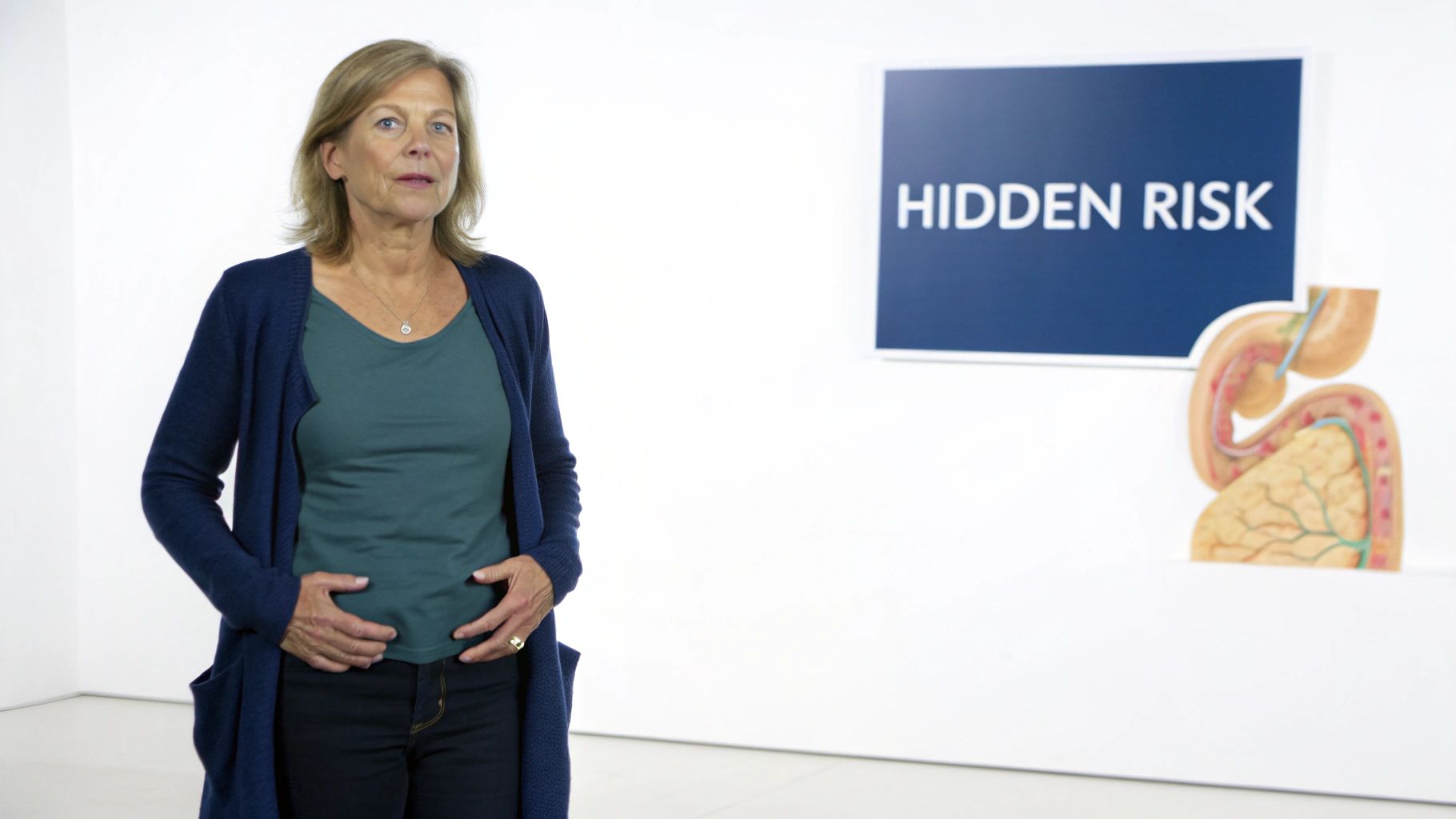
When we talk about body fat, it's not all the same. There's the soft, pinchable layer right under your skin, known as subcutaneous fat. While many of us focus on this, it's the second type—visceral fat—that truly demands our attention for healthy living.
This is the fat stored deep inside your belly, surrounding vital organs like your liver, pancreas, and intestines. You can't see it or grab it, which is why it's so deceptive. Far from being just stored energy, visceral fat is metabolically active. It releases hormones and inflammatory compounds that can disrupt your entire system.
Why Visceral Fat Is a Critical Factor in Healthy Aging
As we age, our bodies naturally change how they store fat. For many, the hormonal shifts that come after age 45 can trigger a noticeable increase in abdominal fat storage. This isn't a personal failure; it's a biological reality. The problem is that high levels of visceral fat are directly linked to serious health complications.
This deep-lying fat is a major troublemaker, contributing to:
- Chronic Inflammation: It actively releases inflammatory signals throughout your body, which can damage cells over time and impact longevity.
- Insulin Resistance: It interferes with how your body uses insulin, paving the way for high blood sugar and dramatically increasing the risk of type 2 diabetes.
- Heart Strain: It can drive up blood pressure and worsen cholesterol profiles, putting a heavy burden on your cardiovascular system.
Understanding this connection is the first step toward taking back control. When you focus on reducing visceral fat, you’re doing so much more than trying to shrink your waistline—you're making a powerful investment in your future health.
A Growing Global Concern
This isn't just an individual struggle; it's a global one. Projections are startling: by 2030, the number of adults worldwide living with obesity is expected to climb by over 115% from 2010 levels, hitting a massive 1.13 billion people. This epidemic is directly linked to the rise in visceral fat, which is a key driver of the chronic diseases that follow.
Key Takeaway: It’s entirely possible to have a "normal" body weight but still carry unhealthy amounts of visceral fat. This is why fixating on the number on the scale can be misleading. To get a true sense of your health, you need to look at your overall body composition. You can learn more by checking out our guide on how to measure body fat percentage.
To get you started, here's a quick overview of the most effective strategies we'll be diving into.
Quick Guide to Reducing Visceral Fat
| Strategy | Why It Works | Practical First Step |
|---|---|---|
| Dietary Changes | Reduces overall calorie intake and limits foods that promote fat storage, like sugar and refined carbs. | Swap one sugary drink (soda, sweetened tea) for water or herbal tea each day. |
| Consistent Exercise | Burns calories, improves insulin sensitivity, and directly targets fat stores. A mix of cardio and strength is ideal. | Go for a brisk 15-minute walk during your lunch break. |
| Quality Sleep | Regulates appetite hormones (ghrelin and leptin) and lowers cortisol, a stress hormone linked to belly fat. | Set a consistent bedtime and turn off screens 30 minutes before. |
| Stress Management | Lowers cortisol levels, which helps prevent your body from storing fat around your midsection. | Practice 5 minutes of deep breathing or meditation when you feel overwhelmed. |
This table is just the starting point.
In the rest of this guide, we'll break down these science-backed strategies with practical tips you can use. From what to eat and how to move to the importance of sleep and stress, you’ll get the tools you need to make real, lasting changes for your weight management and healthy living goals.
Nourishing Your Body to Melt Away Visceral Fat
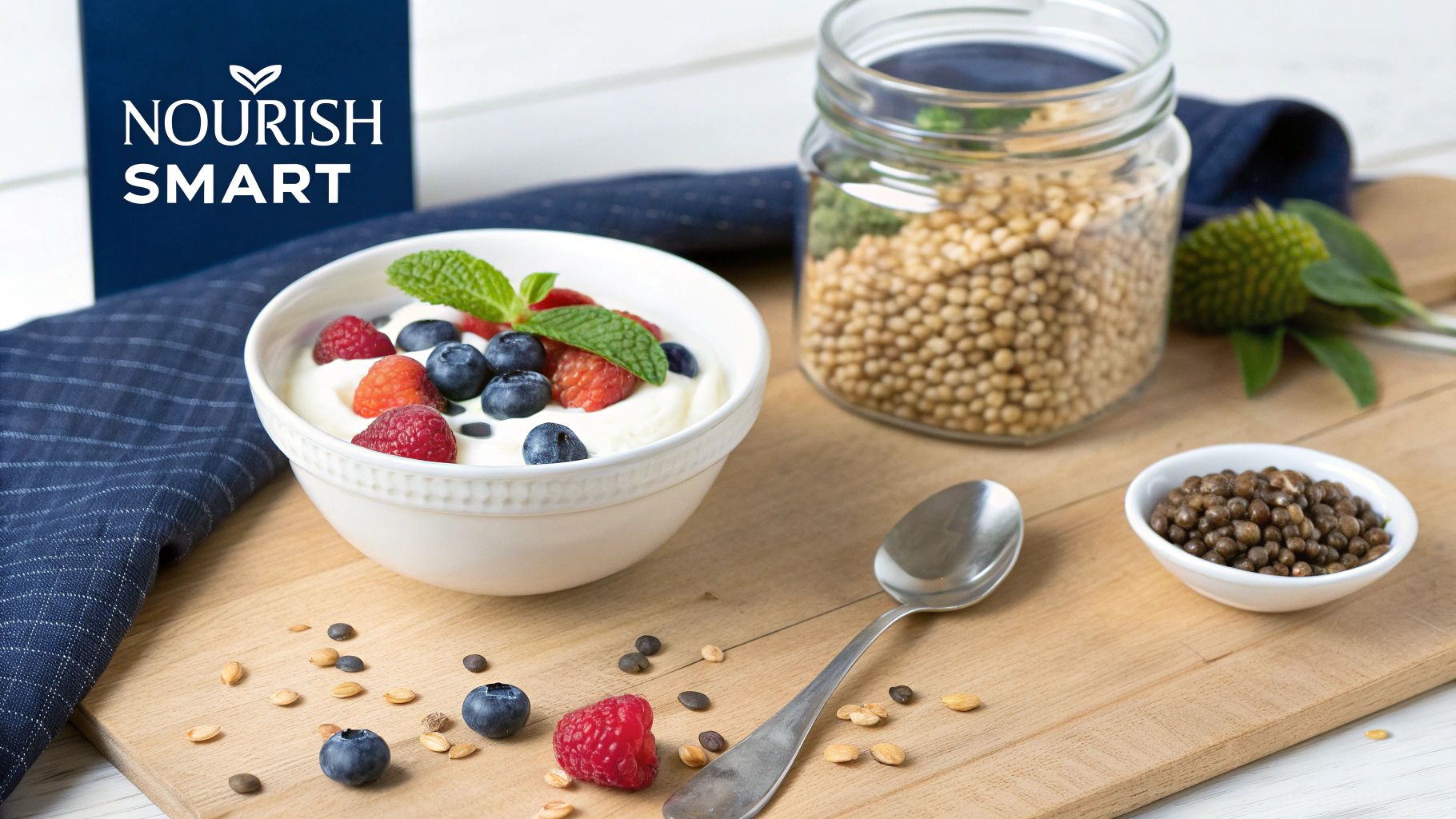
When it comes to getting rid of visceral fat, what you put on your plate is your most powerful tool. This isn't about starting a restrictive, joyless diet. Instead, it’s about making smart, sustainable food choices that work with your body. For those of us over 45, this becomes even more critical as our metabolism and hormones shift, demanding a more mindful approach to nutrition.
The right foods can help calm inflammation, stabilize blood sugar, and signal your body to start burning that dangerous, deep-seated fat for energy. Think of it less as a diet and more as upgrading your body’s fuel source—switching from processed items to premium, nutrient-dense foods built for long-term health.
The Power Trio: Protein, Fiber, and Healthy Fats
If you want to make a real dent in visceral fat, focusing your meals around a few key nutrients can change the game. This trio helps you feel full, preserve muscle, and keep your metabolism running efficiently.
First up is high-quality protein. As we get older, we naturally start losing muscle mass, and protein is what our bodies need to fight that decline. More muscle means a higher resting metabolism, which translates to burning more calories (and fat) around the clock. Including protein in every meal also does wonders for blood sugar stability and managing cravings.
Next, soluble fiber is a true superstar. You'll find it in foods like oats, beans, apples, and Brussels sprouts. It works by forming a gel in your digestive system, which slows everything down, helping you feel fuller longer and keeping blood sugar on an even keel. Even better, credible research shows a direct connection between eating more soluble fiber and having less visceral fat.
Finally, don't fear the fat—as long as it's the right kind. Healthy fats from avocados, nuts, seeds, and olive oil are essential. Visceral fat is a major source of inflammation, and these fats help counteract that. They also make your meals more satisfying, which is key to sticking with any healthy eating plan.
Practical Food Swaps for Your Real Life
Knowing what to eat is one thing; actually doing it during a busy week is another. The secret is to start with simple swaps that don't feel like a total life overhaul.
Here are a few practical tips to get started:
- Breakfast Upgrade: Ditch the sugary cereal or plain bagel. Try a bowl of Greek yogurt with a handful of berries and a sprinkle of chia seeds. You’ll get a solid dose of protein and soluble fiber to start your day with stable energy.
- Smarter Snacking: Instead of reaching for crackers or chips during that afternoon slump, grab a small apple with a tablespoon of almond butter. The fiber and healthy fat combo will tide you over until dinner.
- Dinner Enhancement: Toss a cup of lentils or black beans into your favorite soup or chili. It’s a nearly effortless way to pump up the fiber, benefiting your gut and your waistline.
The goal is to consistently make small, positive changes. It's about adding nourishment, not just taking things away. Every smart choice is a win for your metabolic health and weight management goals.
The Foods That Fuel Visceral Fat
Just as important as knowing what to add to your plate is knowing what to limit. Some foods are practically designed to encourage visceral fat storage, mostly by sending your blood sugar and insulin on a rollercoaster.
The biggest offenders are sugary drinks and refined carbohydrates. Sodas, sweet teas, and fruit juices flood your system with sugar and no fiber, practically screaming at your body to store fat. The same goes for foods made with white flour—think white bread, pastries, and most packaged snacks—which break down into sugar almost instantly.
Cutting back on these is one of the quickest ways to flip the switch from fat-storing to fat-burning mode. For a deeper dive into creating a supportive diet, check out our guide on healthy eating habits for weight loss. By prioritizing whole, unprocessed foods, you’ll naturally crowd out the troublemakers and set yourself up for success.
This is a journey, not a sprint. Every healthy meal is an investment in your long-term wellness. If you're ready to see how a comprehensive plan can help you achieve your health goals, start by taking the Blue Haven Rx assessment.
Moving Smarter to Target Visceral Fat
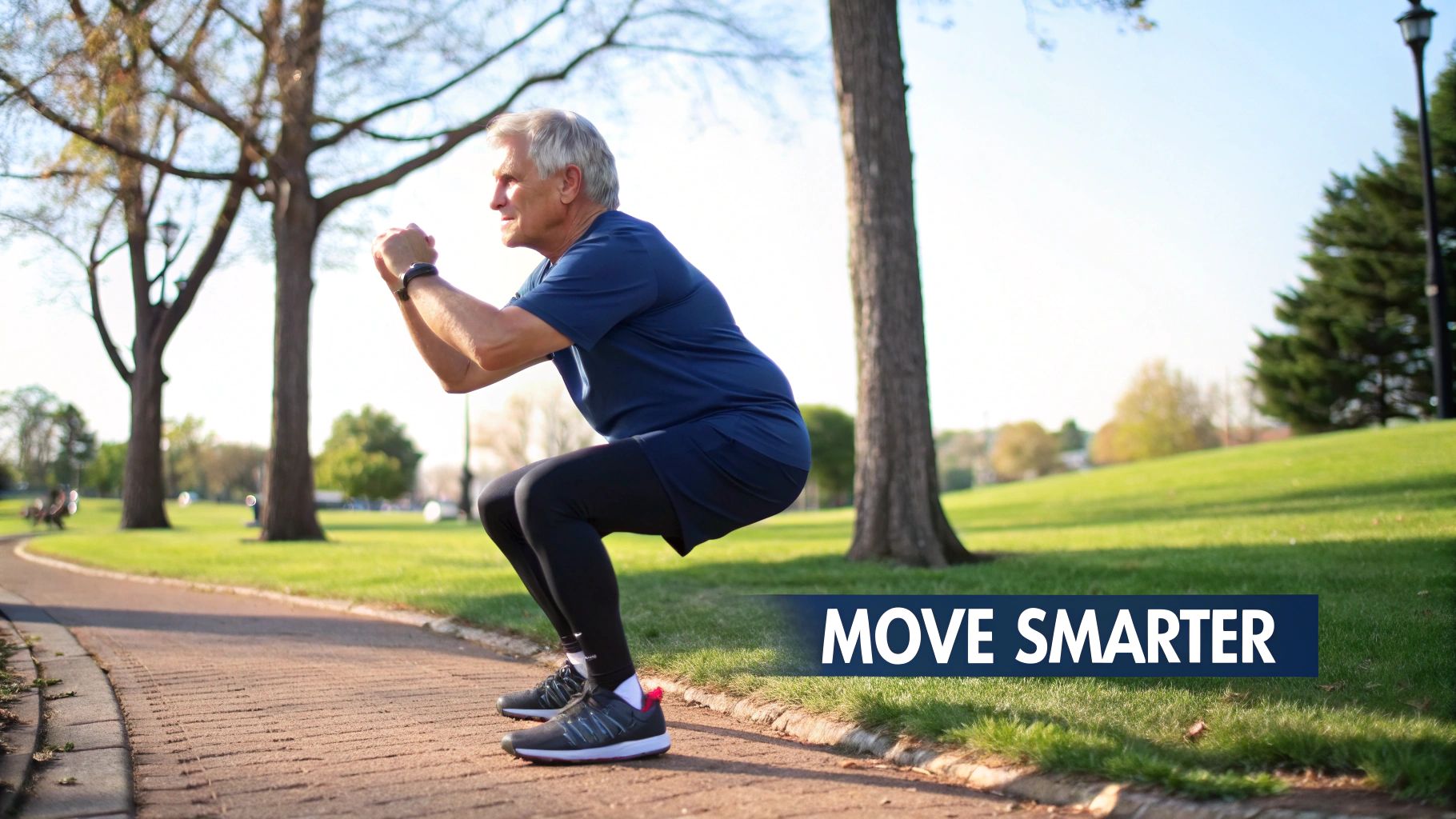
If you think of nutrition as the fuel for your body, then smart, consistent movement is the engine that burns it. When we talk about exercising to lose visceral fat, it's not about grinding out hours on the treadmill or becoming a marathon runner overnight. It’s about finding the right kind of activity.
A balanced approach that combines heart-pumping cardio with muscle-building strength work is the most effective strategy. This one-two punch is what truly signals your body to tap into those dangerous fat stores around your organs. Best of all? You don't need a fancy gym membership to get started.
The Cardio Component for Burning Fat
Moderate-intensity cardiovascular exercise is a trusted way to burn calories and, by extension, reduce visceral fat. This is any activity that gets your heart rate up and makes you breathe a bit harder, but where you could still hold a conversation if you needed to.
The real beauty here is how accessible it is. You can weave this into your daily life without it feeling like a chore. The trick is to find something you genuinely enjoy, because that’s what makes it stick.
Here are a few great places to start:
- Brisk Walking: A simple 30-minute walk each day can be incredibly effective. Just focus on a pace that feels purposeful, not like a leisurely window-shopping stroll.
- Cycling: Whether you're outdoors or on a stationary bike, cycling is a fantastic low-impact option that's easy on the joints.
- Swimming: This gives you a full-body workout that torches calories and builds endurance without putting stress on your body.
Try to hit at least 150 minutes of this kind of activity each week. You can break it up however you like—five 30-minute sessions or even shorter 10- to 15-minute bursts throughout the day. It all counts toward your weight management goals.
Why Strength Training Is Your Secret Weapon
While cardio is great for burning calories during the activity, strength training gives you a benefit that lasts all day long. Building and maintaining lean muscle is one of the most powerful things you can do to fight visceral fat, especially as you get older. Muscle tissue is metabolically active, which just means it burns more calories at rest than fat tissue does.
Think of each pound of muscle as a tiny, calorie-burning furnace that works for you 24/7. This helps raise your resting metabolism, making it easier to manage your weight and prevent visceral fat from returning.
Strength training isn't just about getting stronger; it's about fundamentally changing your body's composition. By increasing muscle mass, you create an internal environment that is less hospitable to visceral fat. This shift is crucial for long-term weight management and metabolic health.
You can do simple, effective strength exercises right from your living room:
- Squats: Using just your body weight, this exercise works the largest muscles in your body. Hold onto a chair for balance if you need to.
- Push-ups: Can't do a full one? No problem. Modify them by doing them on your knees or against a wall to match your current fitness level.
- Planks: This is an excellent move for strengthening your entire core, which is key for good posture and stability.
To get more ideas and build a well-rounded routine, check out these essential strength training exercises that can boost your fat-burning potential.
The Brain and Body Connection
Shedding visceral fat has profound benefits that go far beyond your waistline. It’s a critical step in preserving your cognitive function and cardiovascular health as you age. In fact, emerging research shows a direct link between body composition and brain health. One study found that a higher ratio of visceral fat to muscle can actually predict an older "brain age" on scans.
The good news? The same study identified building muscle and losing visceral fat as actionable goals to help maintain a younger, healthier brain and body. You can explore the 2025 RSNA study findings to see just how powerful this connection is for healthy living.
Integrating both cardio and strength work into your week truly gives you the best of both worlds. For even more strategies, our comprehensive guide on how to reduce body fat percentage can help support your goals.
Making these changes is a powerful step toward a healthier future. If you're ready to create a personalized plan that addresses your unique needs, consider starting your journey with Blue Haven Rx today.
The Overlooked Keys: Sleep and Stress Management
It’s tempting to throw all your focus into diet and exercise. But if you’re ignoring sleep and stress, you're fighting an uphill battle. These two factors are massive players in your body's chemistry, quietly deciding whether you’re burning fat or storing it—especially that dangerous visceral fat.
Think of it like trying to fill a bucket with a hole in the bottom. Your clean eating and workouts are the water you're pouring in, but chronic stress and poor sleep are the holes letting all that hard work drain away. This isn't about chasing perfection. It's about recognizing that proper rest and mental well-being are non-negotiable pillars of any serious weight management plan.
How Stress Directly Packs on Visceral Fat
When you’re constantly under pressure—from your job, family, or just the pace of modern life—your body’s response is to flood itself with a hormone called cortisol. In a short-term crisis, cortisol is your friend. But when it’s stuck on "high" 24/7, it sends a powerful signal to your body: store fat deep in your abdomen.
This is an ancient survival mechanism. Your body thinks it’s in constant danger and needs to hoard energy reserves right where they’re most accessible—around your vital organs. Over time, high cortisol doesn't just encourage fat storage; it also cranks up your cravings for sugary, high-fat comfort foods, creating a vicious cycle that’s tough to escape.
The Connection Between Sleep Deprivation and Belly Fat
A bad night’s sleep does way more than just leave you groggy. It throws your critical appetite-regulating hormones into chaos. Ghrelin, the "I'm hungry" hormone, skyrockets. At the same time, leptin, the hormone that says "I'm full," takes a nosedive.
The result of this hormonal mess? You feel hungrier all day long and much less satisfied after meals, making it incredibly difficult to stick to your nutrition plan. It's not just a feeling; credible research confirms that people who consistently get less than seven hours of sleep a night tend to carry significantly more visceral fat.
The Bottom Line: You simply can't out-train a body that's drowning in stress hormones or running on fumes. Getting a handle on stress and sleep is just as critical to your weight management as what you eat and how you move.
Actionable Tips to Lower Stress and Improve Sleep
Making a real difference doesn't require a life overhaul. Small, consistent actions can have a massive impact on your cortisol levels and sleep quality, which directly helps your body let go of that stubborn visceral fat.
Here are a few practical tips you can start tonight:
- Build a Wind-Down Routine: An hour before bed, power down. Dim the lights and, most importantly, put away the screens. The blue light from phones and TVs can interfere with your body's production of melatonin, the sleep hormone. Try reading a real book, listening to calming music, or taking a warm bath instead.
- Practice Five-Minute Mindfulness: You don't need to become a meditation guru. Just taking five minutes during a hectic part of your day to focus on your breath can bring cortisol levels down. A simple breathing exercise works wonders: inhale for a count of four, hold for four, and exhale slowly for a count of six.
- Guard Your Bedroom: Your bedroom should be a sanctuary for sleep. Try to stop working or watching TV in bed. Make the room as cool, dark, and quiet as possible to create the perfect environment for deep, restorative rest.
Beyond diet and exercise, making your rest a priority is a game-changer for visceral fat reduction. For a deeper dive, check out this practical guide to improving sleep quality to truly enhance your nightly recovery. When you start framing these habits as essential acts of self-care, they become powerful tools on your health journey.
If you’re ready to build a comprehensive plan that addresses all these pieces—from nutrition and exercise to these vital lifestyle factors—take the quiz to start your journey with Blue Haven Rx today.
When Lifestyle Changes Need a Helping Hand
So you've been doing everything right. You’re eating well, moving your body, and trying to get enough rest, but the scale and measuring tape just won't budge. This is an incredibly common and frustrating place to be, especially for those of us navigating the hormonal shifts that come with life after 45.
Sometimes, despite our best efforts, underlying biological factors can make losing visceral fat feel like an uphill battle. This isn't a sign that you've failed. It's often a signal that your body's internal chemistry—whether it's metabolic changes or hormonal roadblocks—is working against you. When you hit this point, medical support can work with your healthy habits to finally help you see progress.
Exploring Science-Backed Medical Options
For many people, the biggest hurdles are a metabolism that feels sluggish and hunger signals that just won't quit. This is precisely where certain prescription treatments can make a real difference. Modern options like GLP-1 agonists (glucagon-like peptide-1) are designed to work with your body’s own systems.
GLP-1s work by mimicking a hormone your gut naturally releases after a meal, which tells your brain you're full. They also slow down the rate at which your stomach empties, helping you feel satisfied for much longer. This one-two punch makes it far easier to stick to a healthy eating plan without feeling constantly deprived—the key to any sustainable weight management plan. You can learn more about our GLP-1 weight loss program here to see how it all fits together.
By getting to the root of the biological drivers of hunger and metabolism, these treatments can help you break through plateaus that lifestyle changes alone couldn't conquer. Think of them as a tool to enhance, not replace, the healthy foundation you've already built for a healthier life.
This approach is particularly helpful for targeting that stubborn visceral fat. In fact, the World Heart Report 2025 findings revealed that cardiovascular deaths driven by high BMI have more than doubled globally to 1.9 million annually in just three decades, with visceral fat as a primary culprit.
GLP-1s have been shown to target this dangerous fat specifically. Clinical data shows they can lead to an average weight loss of 10-15%, but some trials have seen a disproportionate reduction in visceral fat of up to 30-40%. This is a game-changer for reducing inflammation and improving long-term heart health.
The Link Between Stress, Sleep, and Stubborn Fat
As we've touched on, things like chronic stress and poor sleep are direct triggers for visceral fat storage because they spike cortisol. This decision tree paints a clear picture of how these lifestyle factors can send you down one of two very different paths.
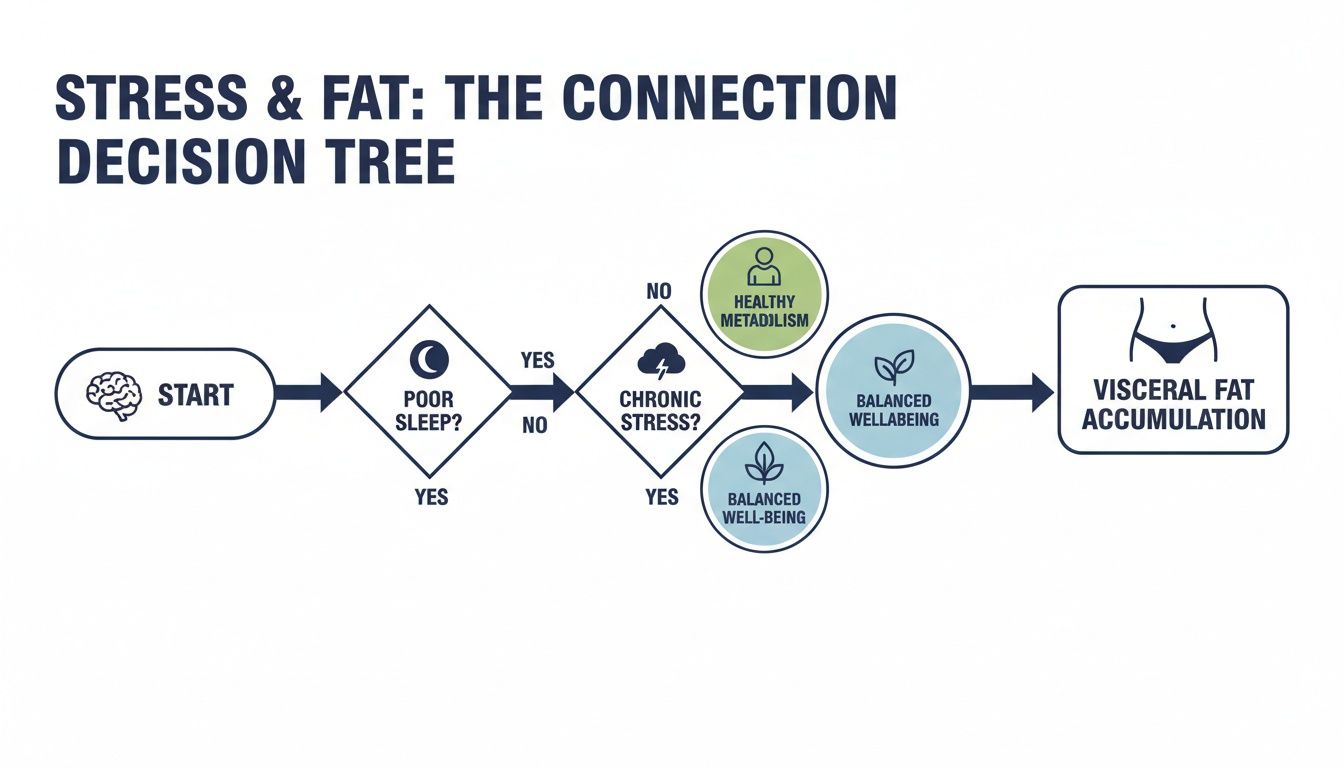
The image drives the point home: when your brain is in a constant state of "fight or flight" from stress or lack of sleep, it signals a hormonal cascade that favors storing fat right around your vital organs. This insight is key to a successful weight management journey.
Finding a Supportive Partner in Your Health Journey
Deciding to explore medical options for weight management is a big step, and you want a trusted guide in your corner. A good telehealth service offers a convenient and private way to discuss your challenges and goals with a licensed medical professional who can help determine if a prescription is the right fit for you.
This isn't about looking for a quick fix. It's about adding a powerful, science-backed tool to your wellness arsenal. When you combine this kind of medical support with your ongoing commitment to nutrition, exercise, and stress management, you create a powerful synergy that can finally unlock the lasting health you've been working so hard for.
If you feel like you’ve hit a wall and are ready for that extra layer of support, you can take the quiz to see if you're a candidate for the Blue Haven Rx program and start a more personalized journey today.
Bringing It All Together for Long-Term Health
Tackling visceral fat isn't just about what you see in the mirror or the number on the scale. It's one of the most significant things you can do for your health and longevity, giving you back your energy and putting you in the driver's seat of your well-being.
The road ahead is paved with small, consistent habits. Every time you opt for a high-fiber meal or head out for a quick walk, you're making a deposit in your long-term health account. It all adds up.
Keep Your Foundations Strong
Real, lasting change happens when a few key habits become second nature. Think of these as the non-negotiables in your daily routine:
- Eat Real Food: Prioritize whole foods packed with protein, fiber, and healthy fats. This means dialing back the processed sugars and refined carbs that contribute to visceral fat storage.
- Move with Purpose: A smart mix of moderate cardio and consistent strength training is your best bet. Cardio burns calories, while building muscle fires up your metabolism around the clock.
- Protect Your Sleep: Aim for 7-9 hours of solid, quality sleep each night. This is crucial for keeping your hunger and stress hormones in check.
- Manage Your Stress: Find what works for you, whether it's a few minutes of deep breathing, meditation, or just some quiet time. Lowering cortisol is a key piece of this puzzle.
This isn't a quick fix; it's a commitment to yourself. You're building a lifestyle that does more than just melt away visceral fat—it boosts your energy, improves your mood, and supports a longer, healthier life.
For many people, these lifestyle shifts are powerful enough to get the job done. But sometimes, factors like hormones or a stubborn metabolism can make it feel like you've hit a wall. If you find yourself needing an extra layer of support, that's completely normal.
At Blue Haven Rx, we're here to be your partner in health and help you figure out what comes next.
Ready to see if a personalized plan is right for you? Take our health quiz to learn more about starting your journey.
Your Visceral Fat Questions, Answered
Let's tackle some of the most common questions that pop up when people start their journey to reduce visceral fat. Getting clear on these points can make all the difference in staying motivated and on the right track.
Can I Do Crunches to Target Visceral Fat?
It’s a common myth that you can "spot-reduce" fat from one specific area, and unfortunately, visceral fat is no exception. While exercises like crunches and sit-ups are fantastic for building strong abdominal muscles, they won't specifically burn off the fat layered around your organs.
The only way to lose visceral fat is to lower your overall body fat. This happens through a smart combination of consistent cardiovascular exercise—think brisk walking, cycling, or swimming—and regular strength training to build metabolically active muscle. When you pair that with a solid nutrition plan, your body gets the signal to start burning that dangerous internal fat.
How Quickly Will I See Results?
This is where the good news comes in. Visceral fat is actually one of the first types of fat your body tends to burn when you make positive lifestyle changes. While everyone's body is different, many people start to see meaningful reductions in just a few weeks or months of consistent effort.
The real secret is consistency, not just intensity. Making small, sustainable changes to your diet, exercise, and sleep habits every single day will add up to significant health wins much faster than you might expect.
Can You Be "Skinny" and Still Have Too Much Visceral Fat?
Yes, absolutely. This is a condition sometimes called "thin outside, fat inside" (TOFI). Someone can have a body mass index (BMI) that falls squarely in the "normal" range but still be carrying a dangerous amount of visceral fat internally.
This often comes down to genetics, a mostly sedentary lifestyle, or a diet heavy in sugar and processed foods. It’s a perfect example of why the number on the scale doesn't tell the whole story. Prioritizing your metabolic health through healthy habits is crucial for long-term vitality, no matter your body weight.
At Blue Haven Rx, we know that every health journey is personal. If you've been putting in the work but feel you need more support to finally reach your goals, we're here to help.
Take our quiz today to see if a personalized plan is right for you.