
How to Measure Your Body Fat Percentage for Better Health
When you're focused on living a long, healthy life, the number staring back at you from the bathroom scale only tells a fraction of the story. To see what’s really going on with your health, you need to understand your body composition. Learning how to measure body fat percentage gives you a much clearer window into your metabolic health than your total weight ever could.
This single number helps you create smarter goals, track real progress, and—most importantly—hold onto the precious muscle mass that keeps you strong and vital as you age.
Why Body Fat Matters More Than the Scale
As we get older, just watching our weight can be misleading. You might be thrilled to see the pounds dropping, but what if you're losing valuable muscle instead of fat? That’s a step in the wrong direction for long-term health and longevity. Body fat percentage cuts through the confusion by showing you the exact ratio of fat to lean mass (which includes your muscles, bones, organs, and water).
This distinction is everything for healthy living.
Keeping muscle is non-negotiable for a healthy metabolism, good mobility, and overall energy. When you track your body fat, you can finally confirm that your diet and exercise efforts are doing what you want them to do: shedding excess fat while protecting the lean tissue that truly matters for healthy aging.
The Problem with Just Using Weight
Weight alone can't tell the difference between a pound of muscle and a pound of fat. This is the classic reason why two people can weigh the exact same but look completely different and have wildly different health outcomes. A healthy body fat percentage is a far better sign of wellness than just a low number on the scale.
Understanding this difference shifts your entire mindset. You stop chasing a number and start building a healthier, stronger body. It's about improving your composition, not just shrinking.
For instance, excess fat—especially the dangerous kind that wraps around your organs—can impact your metabolic health. Getting familiar with what is visceral fat is a crucial first step in understanding potential health risks and why body composition is so important for weight management.
The infographic below gives you a great visual breakdown of your options. You can either go for convenient at-home methods or opt for highly precise clinical tests.
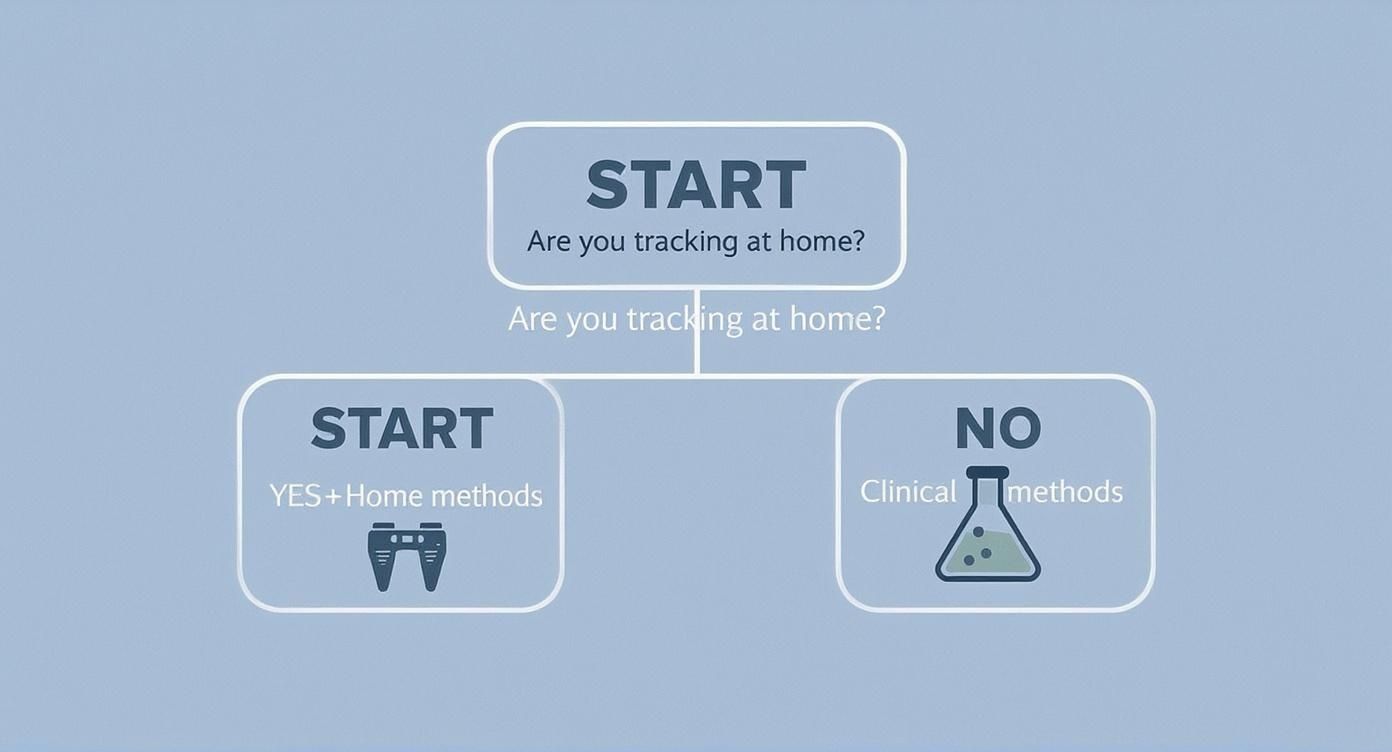
Which path is right for you? It really comes down to your personal goals, your budget, and how accurate you need the numbers to be. We'll dive into all of that next.
Quick Guide to Body Fat Measurement Methods
Here’s a quick summary of the five main ways to measure body fat, comparing their accuracy, cost, and convenience to help you choose the right one for your goals.
| Method | Accuracy Level | Typical Cost | Where to Do It |
|---|---|---|---|
| Tape Measure | Low to Moderate | $ (Very Low) | At home |
| Skinfold Calipers | Moderate to High | $$ (Low) | At home, gym, or with a trainer |
| BIA Scales | Moderate | $$$ (Varies) | At home or gym |
| DEXA Scan | Very High | $$$$$ (High) | Clinic or specialized facility |
| Hydrostatic Weighing | Gold Standard | $$$$$ (High) | University lab or clinic |
Choosing the right tool is all about balancing your need for precision with practical things like cost and accessibility.
Once you realize that body fat percentage is a more meaningful metric, you'll naturally want to learn how to measure body composition accurately. This deeper insight allows you to fine-tune your health strategy for much better, more sustainable results. Whether you start with a simple tape measure at home or book a clinical assessment, tracking this number gives you the feedback you need to succeed.
This guide will walk you through the most common methods, breaking down the pros and cons to help you find the perfect fit for your lifestyle. At Blue Haven Rx, we believe that seeing the complete picture of your health is the first step toward making lasting changes.
Simple At-Home Tools: Tape Measures and Calipers
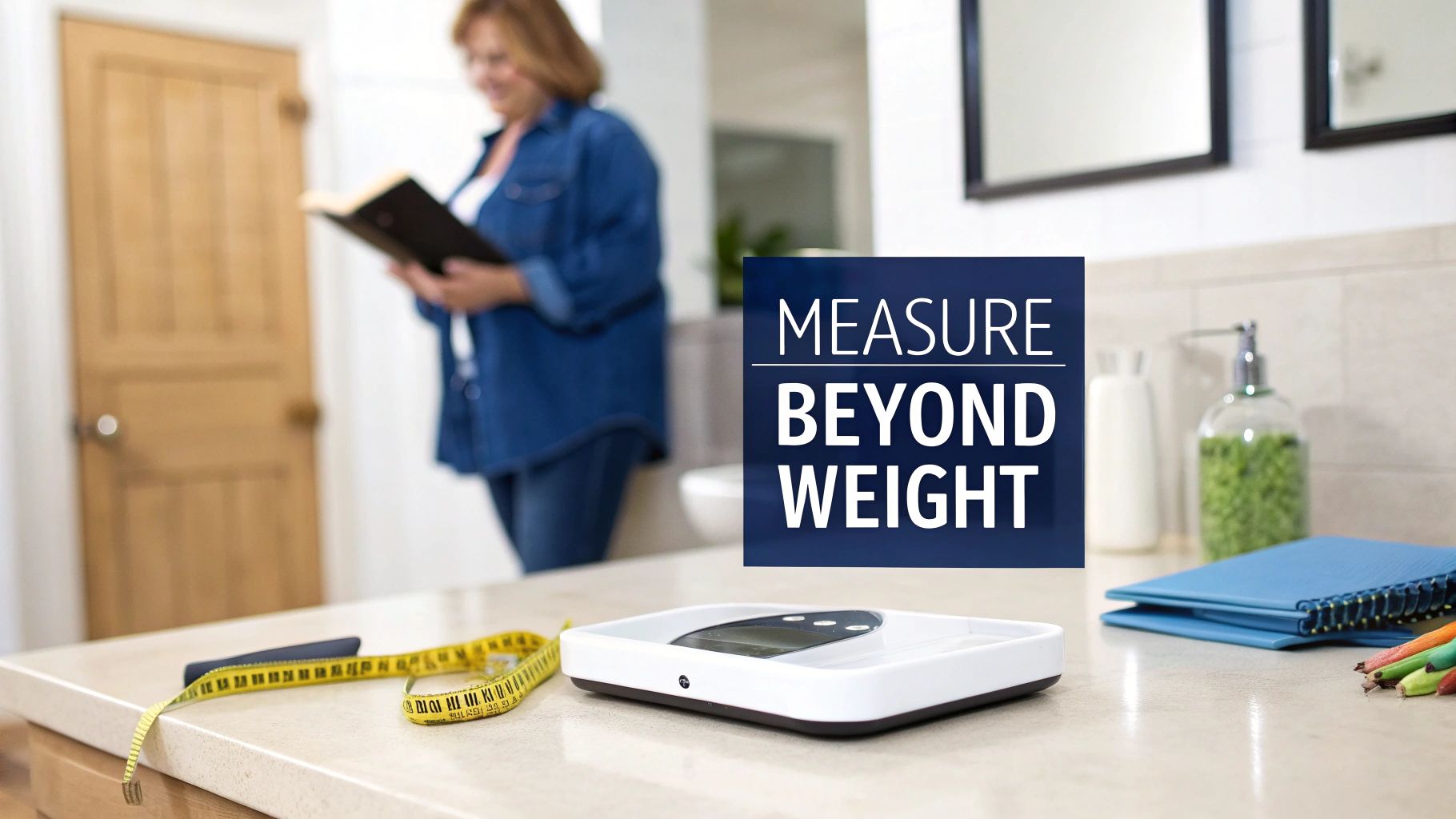
If you're looking for a practical, low-cost way to start tracking your body composition, you don't need to book an appointment for a fancy scan. Two of the most accessible tools—a simple tape measure and a set of skinfold calipers—can be used right in your own home.
These hands-on methods empower you to take an active role in your health journey. They offer a tangible way to see the changes happening in your body that the number on the scale just can't show you. While they take a little practice to master, their real value isn't in finding a perfect number, but in tracking your progress over time.
Using a Tape Measure for Circumference Readings
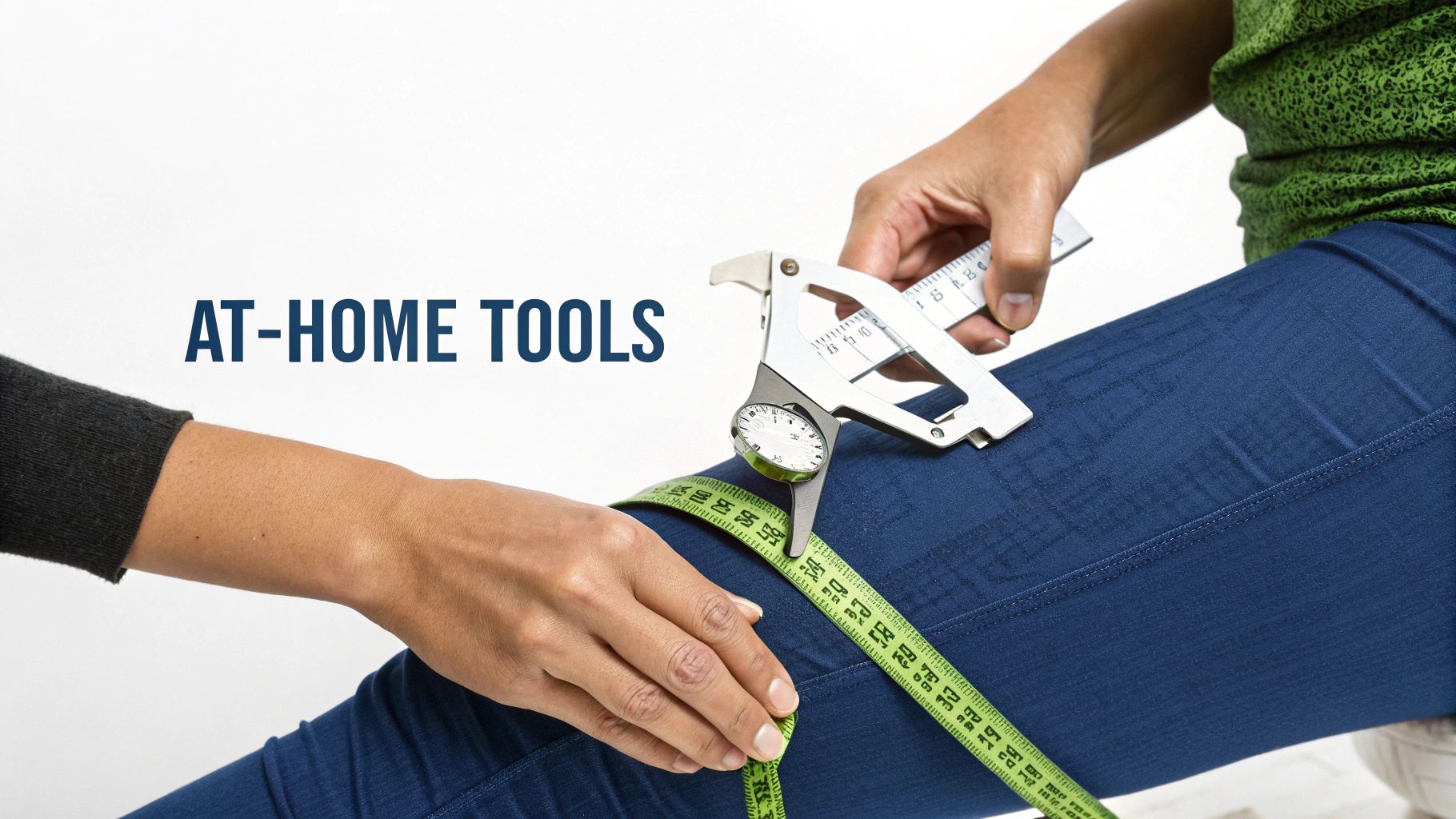
The circumference method is beautifully simple: use a flexible tape measure to take specific body measurements. You then plug these numbers into a formula, like the popular U.S. Navy method, to estimate your body fat percentage. It’s wonderfully straightforward and costs next to nothing.
The secret to getting useful results? Consistency. Always measure at the exact same spots and under the same conditions. It's best to do it first thing in the morning before eating or drinking. Pull the tape snug, but not so tight that it digs into your skin.
H3: Measurement Spots for Women
For women, the U.S. Navy formula typically requires three key measurements:
- Neck: Circle the tape around the narrowest part of your neck, usually just below your larynx (Adam's apple).
- Waist: Find the narrowest point of your abdomen, which for most people is just above the belly button.
- Hips: Measure around the widest part of your hips and buttocks, making sure the tape stays parallel to the floor.
H3: Measurement Spots for Men
For men, the process is a bit different, focusing on just two main areas:
- Neck: Just like for women, measure around the narrowest part.
- Abdomen: Take a horizontal measurement around your midsection, right at the level of your belly button.
Once you have these numbers, you can easily find an online calculator to run the formula. Remember, the goal isn't pinpoint accuracy on day one. It's about establishing a reliable benchmark to see how your body changes week after week. If your waist measurement is shrinking while your weight holds steady, that’s a fantastic sign you're losing fat and holding onto muscle.
The real power of the tape measure isn't in a single measurement. It's in the trend you see over several weeks. A shrinking waistline is a powerful motivator and a clear indicator that your health and wellness efforts are paying off.
Getting Hands-On with Skinfold Calipers
Skinfold calipers take a more direct approach by measuring the thickness of subcutaneous fat—the fat stored just beneath your skin. When done right, this method can be surprisingly accurate for an at-home technique.
The idea is to gently pinch a fold of skin and the underlying fat, pull it away from the muscle, and then use the calipers to measure its thickness in millimeters.
Just like with the tape measure, consistency is everything. You'll need to measure the same sites each time, and it's a good practice to always use the same side of your body.
Common Measurement Sites and Tips
While there are many different protocols out there (like the Jackson/Pollock 3-site or 7-site methods), a few common spots are used for both men and women to get a good overall picture.
- Triceps: A vertical fold on the back of your upper arm, halfway between the bony points of your shoulder and elbow.
- Thigh: A vertical fold on the front of your thigh, midway between your hip crease and your kneecap.
- Abdomen: A vertical fold about one inch to the side of your belly button.
- Suprailiac: A diagonal fold taken just above the crest of your hip bone.
To get the hang of it, pinch the skin firmly with your thumb and index finger. Apply the caliper jaws about a centimeter away from your fingers, then release the caliper trigger to let it gently clamp down and give you a reading. For the most reliable number, take each measurement three times and use the average.
It’s true that both the tape measure and caliper methods have a bit of a learning curve and are prone to user error. Don't get discouraged if your first few attempts feel clumsy. The goal is to establish a personal routine you can stick with.
Finding a program that aligns with your goals is crucial. For instance, our clients often use these simple tools to track their progress while on a clinically-supported weight management plan. Seeing those numbers change becomes a powerful part of their journey toward better health and longevity. If you're ready to see what a comprehensive approach can do for you, you can start your journey with our simple quiz.
Using Smart Scales for Daily Tracking
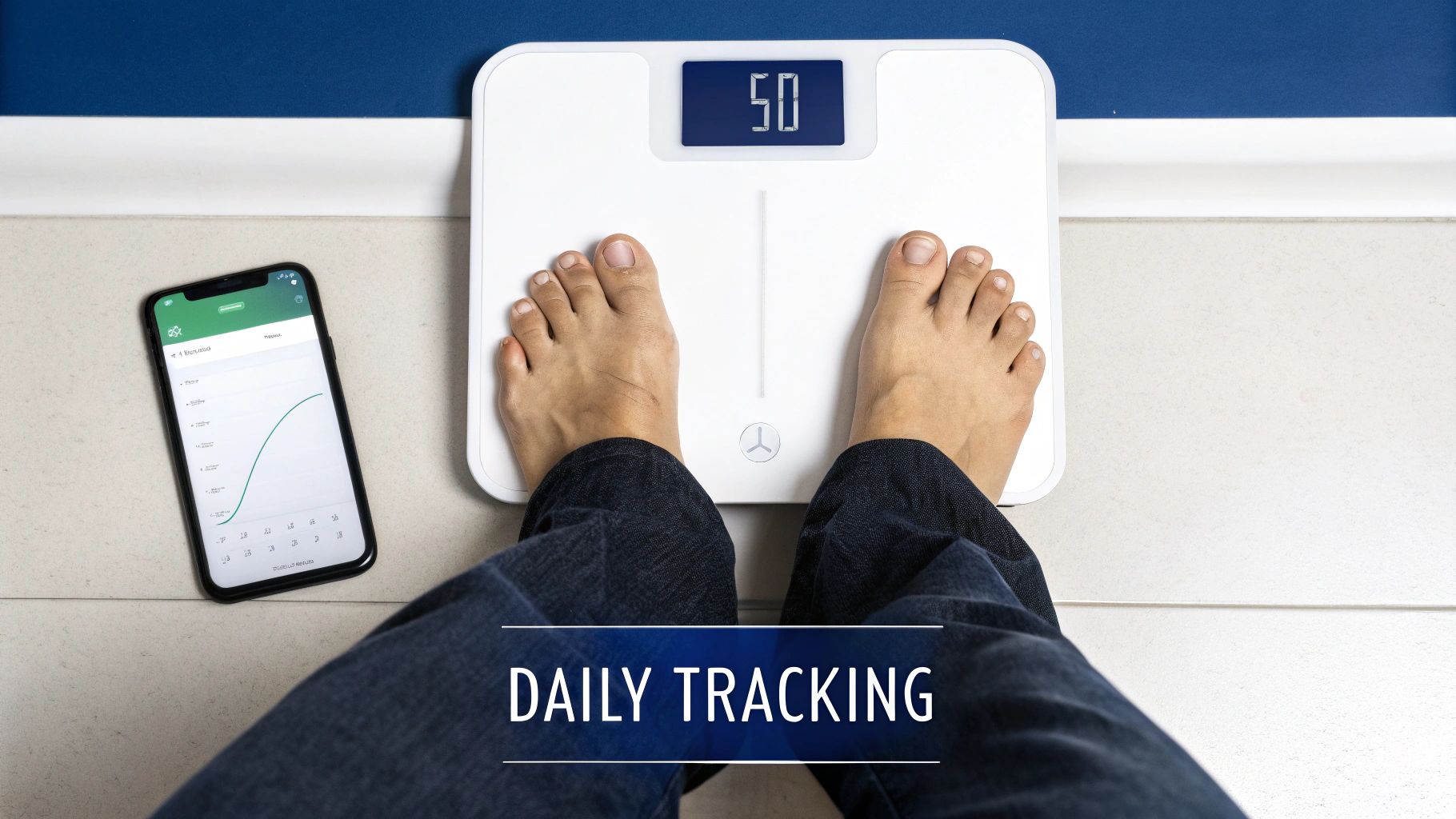
If you're looking for an effortless way to keep an eye on your body composition, modern smart scales are a game-changer. These devices do much more than just report your weight—they give you a quick estimate of your body fat percentage right in your own bathroom. It’s no wonder they’ve become so popular for tracking health trends without any real fuss.
They operate using a technology called bioelectrical impedance analysis (BIA). It sounds complex, but the idea is pretty straightforward. The scale sends a completely harmless, tiny electrical current up through one foot and down the other. Since fat, muscle, and water all conduct electricity differently, the scale analyzes the signal's speed to estimate your body composition.
The biggest draw of a smart scale is just how easy it is. You step on, and seconds later the data appears in an app on your phone. This creates an automatic log of your progress, which is incredibly helpful for staying motivated and seeing how your efforts are paying off over the long haul.
Maximizing Consistency for Better Results
Here’s the thing about BIA scales: they're sensitive. Hydration, recent meals, and even your last workout can make the numbers jump around from day to day. So, the key isn't to get hung up on a single number. It’s all about tracking the trend over weeks and months.
To get reliable data, you need a consistent routine. Here is a practical tip: think of it as your own personal science experiment each morning.
Here's a simple checklist to get the most consistent readings:
- Time it Right: Measure yourself at the same time every day. The best time is first thing in the morning, right after you use the restroom but before you eat or drink anything.
- Keep Hydration Steady: Your hydration level dramatically affects BIA readings. Being dehydrated can make your body fat percentage look higher than it really is. Try to maintain similar hydration habits from day to day.
- Watch Meals and Workouts: A big meal or a tough workout can throw off your body's fluid balance. It’s always best to measure before these activities, not after.
- Bare Feet Only: The electrical signal needs to make direct contact with your skin, so make sure you step on with clean, dry, bare feet.
Sticking to these steps helps iron out those daily fluctuations, giving you a much clearer picture of your actual progress.
The goal with a home BIA scale isn't to get a perfect, clinically precise number. It's to establish a consistent baseline so you can confidently see if your body fat percentage is trending up, down, or holding steady over time.
Understanding Your At-Home Readings
It's crucial to have realistic expectations for a home smart scale. The BIA machines you’d find in a doctor's office are far more sophisticated and will give a more accurate reading. Still, your bathroom scale is an incredibly valuable tool for tracking change.
Think of it this way: even if your scale is consistently off by 2-3%, it will still reliably show you if your efforts are working. If your reading drops from 35% to 32% over a couple of months, you can be confident you're moving in the right direction. That kind of positive feedback is a powerful motivator.
Tracking these numbers gives you real insights you can use to adjust your plan. For instance, if your body fat percentage seems stuck, it might be a signal to tweak your nutrition or change up your workout routine. Understanding how to maintain weight loss is so much easier when you have data to guide your decisions.
Smart scales are a fantastic way to keep your body composition top of mind. By pairing their convenience with a consistent daily routine, you can gain powerful insights into your health journey. This daily feedback, as part of a complete wellness plan, can make all the difference.
For When You Need Maximum Accuracy: The Clinical Methods
While your home tools are fantastic for tracking day-to-day progress, there are times when you need the most precise, detailed picture of your body composition possible. When accuracy is non-negotiable, clinical methods are the undisputed gold standard.
These tests, done in a professional setting, effectively eliminate the guesswork and user error that can skew results from home measurements. They provide a deep dive into your body's true makeup, giving you data that's incredibly valuable for fine-tuning your health strategy.
If you're serious about understanding your body on a deeper level—especially as it relates to healthy aging or a major weight management goal—exploring a clinical assessment is a powerful investment in your wellness.
The Gold Standard: DEXA Scans
Ask any exercise physiologist or clinician, and they’ll likely point to the Dual-Energy X-ray Absorptiometry (DEXA) scan as the top-tier method. You might have heard of DEXA being used to screen for osteoporosis by measuring bone density, but its ability to assess body composition is just as impressive.
The process itself is surprisingly simple and completely painless. You just lie still on a table for about 10 to 15 minutes while a scanner arm passes over your body. It uses extremely low-dose X-rays to clearly distinguish between your bone mass, fat tissue, and lean muscle.
What makes a DEXA scan so powerful is the incredible level of detail you get back.
- Total Body Fat Percentage: It gives you a highly accurate, no-nonsense overall body fat number.
- Regional Breakdown: This is the game-changer. It shows you exactly where you store fat and muscle—in your arms, legs, and trunk. This is crucial for identifying visceral fat around your organs.
- Bone Density: You also get a vital snapshot of your bone health, which is a major concern for longevity, especially for anyone over 50.
A DEXA scan isn't just a measurement; it's a comprehensive health report. Knowing the precise distribution of your fat and muscle allows you and your healthcare provider to create a much more targeted wellness plan.
Understanding these detailed metrics can be a real turning point. It gives you a clear, validated baseline from which to measure meaningful changes, ensuring you’re losing fat, not precious muscle.
Hydrostatic Weighing: The Underwater Method
Another highly accurate clinical technique is hydrostatic weighing, which you may have heard called "underwater weighing." It operates on a classic principle of physics: an object's density can be figured out by how much water it displaces when submerged. Because fat is less dense than muscle and bone, a person with a higher body fat percentage will weigh less underwater and be more buoyant.
To do the test, you sit on a special scale and are lowered into a tank of warm water. The key part is when you're asked to exhale all the air from your lungs and hold your breath for a few seconds while your underwater weight is recorded. This is usually repeated a few times to get a solid average.
It might sound a bit unusual, but it’s long been considered one of the most precise ways to measure body density. However, it requires specialized equipment and can be a little uncomfortable for some people, so it's not nearly as common as a DEXA scan these days.
Comparing the Top Clinical Methods
So, how do you choose between these two gold-standard methods? It really comes down to what you want to learn and what’s available in your area.
| Feature | DEXA Scan | Hydrostatic Weighing |
|---|---|---|
| Primary Measurement | Differentiates fat, muscle, and bone | Measures total body density |
| Procedure | Lie still on a table for a quick scan | Submerged in water briefly |
| Additional Insights | Provides regional body composition and bone density | Primarily gives overall body fat percentage |
| Availability | Increasingly common in clinics and wellness centers | Mostly found in university labs or specialized facilities |
| Comfort Level | High (non-invasive and easy) | Moderate (requires being underwater) |
Both methods offer a level of accuracy that at-home tools simply can't match. Having this kind of precise data is incredibly useful when starting a new health plan, as it establishes an undeniable baseline. For context, credible research shows that a very low percentage of American adults have a 'normal' body fat percentage, which just highlights how critical accurate measurement is for understanding public health.
Once you have this level of personalized insight, the next logical step is to discuss the results with a professional. The real value of telehealth for weight loss is taking these precise numbers and working with a clinician to translate them into an effective, real-world action plan. This powerful combination of accurate data and expert guidance is what truly accelerates your progress.
Turning Your Numbers Into an Action Plan
So you've got your body fat percentage. Now what? That number is more than just data; it's the starting line for building a smarter, more effective health plan. Think of it as a roadmap. You wouldn't start a cross-country trip without a map, and you shouldn't start a fitness journey without understanding your body's unique starting point.
This isn't about getting a "grade" on your health. It’s about gaining clarity so you can set realistic goals that actually move the needle on your long-term wellness and weight management.
What Is a Healthy Body Fat Percentage?
First things first, what’s a “good” number to aim for? The truth is, there’s no single magic number. A healthy body fat percentage is really a range, and it shifts depending on your age and gender. It's completely normal for our body composition to change as we get older, but staying within these healthy zones is a powerful way to lower health risks and feel your best.
To give you some context, here’s a guide based on widely accepted ranges from the American Council on Exercise. Find where you land to get a better sense of your current standing.
Healthy Body fat Percentage Ranges by Age and Gender
This table shows generally accepted healthy body fat percentage ranges for men and women in key age groups, based on guidelines from the American Council on Exercise.
| Category | Women (Age 40-59) | Men (Age 40-59) | Women (Age 60+) | Men (Age 60+) |
|---|---|---|---|---|
| Essential Fat | < 13% | < 5% | < 13% | < 5% |
| Athletes | 14-20% | 6-13% | 14-20% | 6-13% |
| Fitness | 21-24% | 14-17% | 21-24% | 14-17% |
| Acceptable | 25-31% | 18-24% | 25-32% | 19-25% |
| Obesity | > 32% | > 25% | > 33% | > 26% |
If you see your number in the "Acceptable" or "Obesity" category, don't get discouraged. This is just valuable information you can now use to make smart, positive changes. Think of it as one key piece of your overall health puzzle—and our clinicians at Blue Haven Rx are here to help you put it all together.
Building Your Sustainable Wellness Plan
Once you know where you stand, you can start building a plan that truly works for you. A higher-than-ideal body fat percentage usually tells us we need to look at two main areas: what we eat and how we move. The goal is to create a lifestyle that encourages your body to use fat for fuel while holding onto—or even building—that metabolically active lean muscle.
Here are a few key areas and practical tips to focus on:
- Prioritize Protein: This is non-negotiable. Eating enough protein is crucial for staying full and protecting your muscle mass, especially when you're losing weight. It helps make sure the pounds you're dropping are fat, not your hard-earned muscle.
- Strength Train: Lifting weights (or doing bodyweight exercises) two or three times a week is one of the single best things you can do for longevity. It builds and preserves muscle, which naturally revs up your metabolism.
- Be Mindful of Calories: Lasting fat loss comes down to a consistent, moderate energy deficit. Understanding what a calorie deficit is and how to create one without feeling miserable is the bedrock of long-term success.
For people with specific fitness goals like gaining muscle or losing weight—goals often guided by body fat measurements—the best high protein meal delivery services can be a game-changer. They provide the right nutritional foundation and make it so much easier to stay on track.
Remember, the best plan is the one you can actually stick with. Small, consistent habits will always beat drastic, short-lived efforts. Focus on building routines you can see yourself maintaining for the long haul.
This isn't about a quick fix. It's about building a stronger, healthier body that will support you for years to come.
When to Seek Professional Guidance
Trying to interpret all these numbers and create a plan from scratch can feel overwhelming. That’s completely normal, and it's exactly where professional guidance can make all the difference. If your body fat percentage lands in a high-risk category, or if you just feel stuck and aren't seeing progress, it’s a perfect time to talk to a clinician.
A healthcare professional can provide actionable insights and help you:
- Put Your Results in Context: They’ll look at your body fat percentage alongside your complete health profile to give you the big picture.
- Create a Truly Personal Plan: They can help you design a strategy that fits your actual lifestyle, preferences, and unique health needs.
- Explore Advanced Options: For some, a clinically-supported program is the key to finally breaking through. This can include effective tools like GLP-1 medications that work alongside your lifestyle changes for sustainable weight management.
Knowing your numbers is the first step. Turning them into an actionable, supported plan is how you empower yourself to take real, meaningful steps toward a healthier future.
If you’re ready to see how a personalized, clinician-guided approach can help you reach your goals, take our quick quiz to see if you’re a candidate for our program.
Your Top Questions About Measuring Body Fat
Diving into body composition tracking can feel a little overwhelming at first. Once you move past what the scale says, a whole new set of questions pops up. Getting straight, practical answers is key to feeling confident and staying motivated.
This is where we tackle the most common questions that come up when you start measuring body fat. We'll get into the nitty-gritty of timing, how often you should check in, and why your smart scale and gym calipers might be telling you two different stories. Let's clear up the confusion.
When Is the Best Time of Day to Measure?
For the most reliable results, you absolutely want to measure first thing in the morning. A great practical tip is to make it a habit: wake up, use the restroom, and then take your measurement before you eat or drink anything—not even a sip of water.
Why so strict? Your hydration level is the biggest variable that can throw off your readings, especially if you're using a BIA smart scale. By measuring under the exact same conditions every time, you create a consistent baseline. This simple routine is the secret to seeing real, meaningful changes instead of just random daily fluctuations.
How Often Should I Be Checking In?
I know it’s tempting to hop on that smart scale every single day, but it’s more likely to cause frustration than provide insight. Your body fat percentage can bounce around daily due to things like hydration, what you ate the night before, or a tough workout. Focusing on these tiny shifts can be really discouraging.
A much more effective approach is to measure just once a week. Pick a day, like Sunday morning, and make that your official check-in. By looking at the weekly trend, you get a far more accurate picture of your actual progress.
Why Are My Results So Different Across Different Methods?
It’s completely normal to see one number from your BIA scale, another from a skinfold test, and something else entirely from a DEXA scan. Don't panic! Each method looks at your body composition through a different lens.
- BIA scales are all about how an electrical current moves through your body, which is heavily influenced by water.
- Calipers physically pinch and measure the layer of fat just beneath your skin (subcutaneous fat).
- DEXA scans give a highly detailed breakdown of fat, bone, and lean mass using low-dose X-rays.
The real pro-tip here is to pick one primary method and stick with it. Consistency with a single tool is what truly matters for tracking your progress over time. Comparing a caliper reading to a BIA reading is like comparing apples to oranges.
Is BMI Still a Relevant Metric?
Body Mass Index (BMI) has been the go-to health screening tool for a long time, but it comes with some serious blind spots. Since the formula only considers your height and weight, it has no idea whether that weight is muscle or fat.
A classic example is a bodybuilder or a very athletic person who might have a high BMI that wrongly flags them as "overweight." On the flip side, someone can have a "normal" BMI but carry a high percentage of body fat, a condition sometimes called "skinny fat," which still poses health risks. More and more, credible research shows that body fat percentage is a much stronger indicator of metabolic health.
So while BMI can give you a very general starting point, your body fat percentage offers a much clearer and more actionable view of what’s really going on.
At Blue Haven Rx, we believe that understanding your body's unique metrics is the foundation for creating lasting change. A personalized, clinician-guided plan can help you turn those numbers into a real-world success story for your long-term health.
Ready to learn more and start your journey? Take our quick quiz to see if you’re a candidate for our program.