
How to Reduce Body Fat Percentage: A Guide for Lasting Health
Losing body fat isn’t just about chasing a number on the scale. It's a genuine investment in your long-term health and vitality. To truly reduce your body fat percentage and keep it off, you need a smart, sustainable plan—one that brings together nutrition, exercise, and the daily habits that tie it all together for healthy living.
This practical approach ensures you get results that last, helping you shed unwanted fat without losing precious muscle.
Why Body Fat Percentage Matters More Than You Think
Trying to manage your weight, especially as we navigate life changes like perimenopause and menopause, can often feel like a frustrating journey. For so long, we've been taught to focus on our total weight, but that single number doesn't tell the whole story about our health.
A much more revealing metric is your body fat percentage.
This number gives you a clearer picture by separating your fat mass from your lean mass (which is everything else—muscle, bones, organs, and water). When you focus on body fat percentage, you can track changes that truly matter for your longevity and well-being.
It's a Better Metric Than BMI
For decades, Body Mass Index (BMI) was the standard for defining a "healthy" weight. The problem? It's a flawed tool. BMI can't distinguish between a pound of muscle and a pound of fat, which can be incredibly misleading.
For example, a very lean, muscular person could be labeled "overweight" by BMI standards. At the same time, someone with a "healthy" BMI could have a high body fat percentage, putting them at risk without them even knowing it.
Your body fat percentage provides a far more accurate snapshot of your metabolic health. A higher percentage, especially of visceral fat stored around your organs, is tied to a greater risk for conditions like heart disease and type 2 diabetes.
This is a significant global health concern. Back in 1990, the worldwide adult obesity rate was about 6%. By 2022, that figure had jumped to 16%, meaning over 890 million adults were living with obesity. Projections from the World Obesity Atlas 2023 show that over half the world's adult population could be overweight or obese by 2035.
As the diagram below shows, an effective weight management strategy has three core pillars.
Real success isn't about mastering just one of these areas; it's about the harmony you create when nutrition, exercise, and daily habits all work together.
To help you set a realistic goal, here are some typical healthy body fat ranges for different age groups.
| Age Group | Healthy Range for Women | Healthy Range for Men |
|---|---|---|
| 20–39 | 21%–32% | 8%–19% |
| 40–59 | 23%–33% | 11%–21% |
| 60–79 | 24%–35% | 13%–24% |
Source: American Council on Exercise (ACE)
This table gives you a solid baseline, but remember that individual health goals can vary. The first step is figuring out where you currently stand.
You can learn more about how to measure body fat percentage in our detailed article to get started.
When you're ready to take control of your health with a supportive, medically guided approach, Blue Haven Rx is here to help you achieve your goals.
Fueling Fat Loss with Smart Nutrition
Let's get one thing straight: food isn't the enemy in your fat loss journey. In fact, it's your most powerful tool for weight management. The science is clear—to lower your body fat percentage, you need to create a calorie deficit. But this absolutely does not mean starving yourself or living in a constant state of hunger.
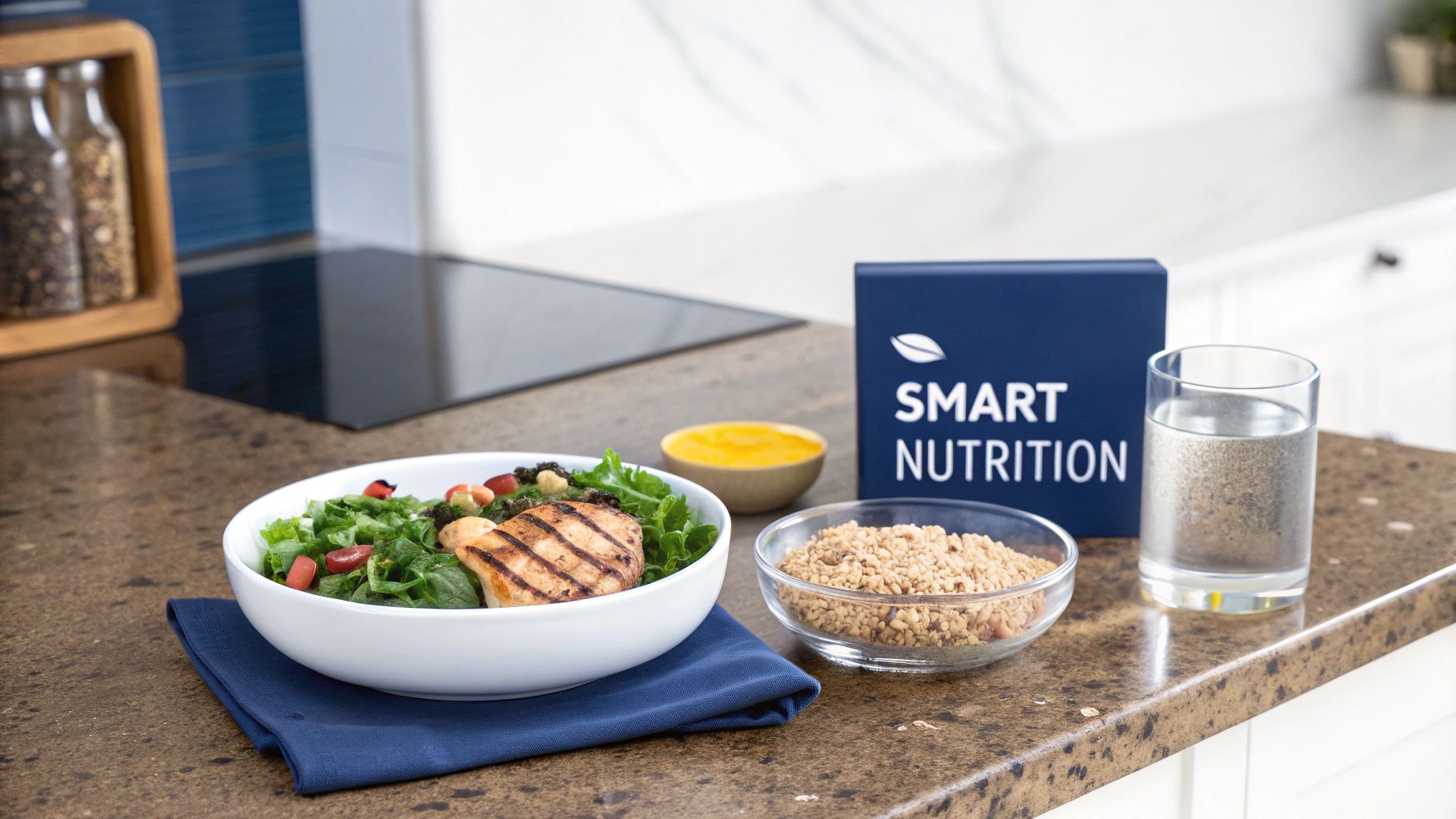
The real secret lies in focusing on nutrient density. This is all about choosing foods packed with vitamins, minerals, fiber, and protein that don't overload you with calories. Think about a vibrant salad with lean protein and colorful vegetables versus a bag of chips. One fuels you for hours, while the other can leave you hungry again quickly.
The Power of a Sustainable Calorie Deficit
A calorie deficit is the foundation of fat loss. Here’s a powerful insight from research: even a 5-10% loss in body weight can lead to a 10-20% drop in dangerous visceral fat. This is a huge win for your long-term health, especially when you consider that in 2022, the World Health Organization reported that 43% of adults worldwide were overweight.
You don't need to make drastic cuts. A targeted deficit of just 500-750 calories daily is a great goal for achieving a safe and sustainable 0.5-1% fat loss per week. Cutting calories too aggressively can backfire, causing muscle loss, fatigue, and cravings that derail your progress. Small, consistent changes win this race.
If you want to dive deeper, you can learn more about creating a calorie deficit in our guide.
Understanding Your Macronutrients
To build a nutrition plan that works and feels good, it helps to understand the role of the three main macronutrients. Getting the balance right is what keeps you energized and satisfied while you shed fat.
-
Protein is Your Foundation: When you're in a deficit, protein is your best friend. It helps you hold onto precious muscle mass, which is crucial for keeping your metabolism active. It's also very filling, making it easier to manage your overall calorie intake. Aim to include a source of lean protein—like chicken, fish, tofu, or beans—with every meal.
-
Smart Carbs for Energy: Carbohydrates have been unfairly demonized. They're your body's preferred fuel source. The trick is choosing the right kind. Focus on complex, high-fiber carbs like sweet potatoes, quinoa, and whole grains. These "smart carbs" give you steady, sustained energy without the blood sugar spikes that can lead to cravings.
-
Healthy Fats for Hormonal Health: Don't fear fat! Dietary fat is essential for hormone production and overall well-being. Prioritize unsaturated fats from sources like avocados, nuts, seeds, and olive oil. They support critical bodily functions while adding flavor and a sense of fullness to your meals.
Practical Tips for Everyday Success
Knowing what to do is one thing, but making it happen is what truly matters. Here are some simple, practical habits you can start building today.
A simple yet powerful strategy is to "add, not just subtract." Instead of obsessing over what to cut out, shift your focus to what you can add in. Add a side of steamed broccoli to dinner, toss a handful of spinach into your smoothie, or grab an apple for a snack.
Smart snacking is a huge part of the equation. Instead of reaching for processed foods, look for healthy snacks for weight loss that can curb your hunger without sabotaging your efforts.
Finally, never underestimate the power of hydration. Drinking plenty of water can boost your metabolism, help control hunger, and keep your energy levels stable.
Building a positive, sustainable relationship with food is a cornerstone of this process. To learn how a medically supported plan can amplify these healthy habits, explore your options with Blue Haven Rx.
Exercising Smarter for Lasting Fat Loss
Let's bust a common myth: the idea that you have to spend countless hours on a treadmill to lose body fat. While cardio has its place, the real secret weapon in your mission to reduce body fat percentage is strength training.

When you build lean muscle, you boost your resting metabolic rate. This just means you burn more calories around the clock—even while you're relaxing. This metabolic boost is a game-changer for long-term, sustainable weight management.
Why Strength Training Is Your Best Friend
For any adult, but especially those over 45, preserving and building muscle is vital for healthy living. As we get older, we naturally start to lose muscle mass in a process called sarcopenia. This process can slow our metabolism and make managing weight feel more challenging.
Resistance training is the most effective way to counteract this.
You don't have to live in the gym or become a bodybuilder. Simple, consistent resistance workouts two to three times a week can make a massive difference. You can use dumbbells, resistance bands, or even just your own body weight.
Here are a few practical, beginner-friendly movements to get you started:
- Bodyweight Squats: A foundational exercise that strengthens your entire lower body and core.
- Push-ups (on knees or toes): A classic move for building upper body and core strength.
- Dumbbell Rows: Perfect for strengthening your back muscles and improving posture.
- Glute Bridges: Targets your glutes and hamstrings, which are crucial for stability.
The key is to challenge your muscles. As you focus on losing fat, it's also critical to understand how to maintain muscle while cutting so you end up strong and toned, not just smaller.
Finding the Right Balance with Cardio
Of course, this doesn't mean you should give up cardio. Cardiovascular exercise is incredibly important for heart health, endurance, and longevity. Activities like brisk walking, cycling, or swimming are fantastic for burning calories and improving your fitness.
The real magic happens when you find a balance that works for you.
A great starting point is to pair two or three days of strength training with two or three days of moderate cardio. This combination delivers the muscle-building benefits of resistance work and the heart-healthy conditioning of aerobic exercise.
This combination becomes even more powerful when paired with modern medical support. Research has shown that combining resistance training with therapies like GLP-1 therapies can help individuals reduce body fat while preserving or even building lean muscle mass. This integrated approach is highly effective for sustainable weight management.
The Hidden Power of NEAT
One of the most overlooked components of an active lifestyle is something called NEAT (Non-Exercise Activity Thermogenesis). It’s the energy you burn from all the small movements you do throughout the day that aren't formal exercise.
Think of it as all the "extra" activity:
- Pacing while on a phone call
- Taking the stairs instead of the elevator
- Doing household chores like gardening or vacuuming
- Walking to the mailbox
These small movements might seem insignificant on their own, but they add up to a significant number of calories burned over time. Simply making a conscious effort to increase your NEAT is a powerful way to support your weight management goals.
Comparing Exercise Types for Body Fat Reduction
This table breaks down the unique benefits of each activity so you can build a well-rounded and effective fitness plan.
| Exercise Type | Primary Benefit for Fat Loss | Example Activities |
|---|---|---|
| Strength Training | Increases resting metabolic rate by building muscle; preserves muscle during a calorie deficit. | Lifting weights, resistance bands, bodyweight exercises (squats, push-ups). |
| Cardio | Burns calories during activity; improves cardiovascular health and endurance for longevity. | Brisk walking, running, cycling, swimming, dancing. |
| NEAT | Increases total daily calorie burn through small, consistent movements throughout the day. | Taking the stairs, walking during calls, gardening, cleaning. |
By weaving all three of these elements into your lifestyle, you create a powerful synergy that supports fat loss and builds a foundation for lifelong health.
Lifestyle Habits for Better Results
You can have a great nutrition plan and a solid workout routine, but if you’re neglecting sleep and stress, you’re fighting an uphill battle. These two factors are foundational to your success in weight management and healthy living.
Without a solid foundation of good sleep and stress management, everything else you're building on top can feel much harder.

When we don't get enough quality sleep, our hormones can get thrown out of balance, which directly impacts your ability to reduce body fat percentage.
The Critical Role of Quality Sleep
Chronic poor sleep can trigger a spike in the stress hormone cortisol. At the same time, it disrupts your appetite-regulating hormones, ghrelin and leptin.
Ghrelin, the "hunger hormone," can go into overdrive, making you feel hungry. Meanwhile, leptin, the hormone that signals fullness, can decrease. This hormonal shift can create intense cravings and make it harder for your body to release stored fat.
Improving your sleep is about quality, not just quantity. Here are a few practical tips you can try:
- Create a Restful Environment: Make your bedroom cool, dark, and quiet. Blackout curtains or a fan for white noise can make a big difference.
- Establish a Wind-Down Routine: An hour before bed, put away screens. The blue light from phones can interfere with melatonin, your body's sleep hormone. Try reading a book, taking a warm bath, or listening to calming music instead.
- Stick to a Schedule: Try to go to bed and wake up around the same time every day, even on weekends. This helps regulate your body's internal clock.
Getting 7-9 hours of quality sleep per night is one of the most effective tools you have for weight management. It helps balance your hormones, control your appetite, and gives your body time to recover.
Managing Stress to Support Your Goals
Just like a lack of sleep, chronic stress is a major roadblock. When you're constantly stressed, your body produces high levels of cortisol. While helpful in short bursts, consistently high levels can signal your body to store fat, especially in the abdominal area.
Stress can also fuel emotional eating. If this is a challenge for you, our guide on how to stop stress eating is a great resource. Finding simple, sustainable ways to manage your daily stress is essential for healthy living.
Simple Techniques for Stress Reduction
You don't need a week-long retreat to get your stress under control. Small, consistent actions can make a massive difference.
- Mindful Breathing: Feeling overwhelmed? Stop for just a few minutes. Sit quietly, close your eyes, and focus on your breath. A simple breathing exercise—like inhaling for four counts, holding for four, and exhaling for six—can help calm your nervous system.
- Get Outside: Even a 15-minute walk can significantly lower cortisol. The combination of light movement and fresh air is a powerful antidote to stress.
- Journal It Out: Before bed, spend a few minutes jotting down your thoughts. Getting worries or ideas out of your head and onto paper can bring a sense of relief.
Adopting these habits is about more than losing fat. It’s about having more energy, a better mood, and supporting your health for the long run. For those looking to further support their cellular energy and vitality, exploring options like NAD+ supplements can be a helpful addition.
To see how these principles can be integrated into a personalized, medically guided plan, discover your options with Blue Haven Rx today.
How Modern Medical Support Can Help
For many people, relying on diet and exercise alone can feel like a constant struggle, especially if you've tried everything before. This is where modern medical support can be a genuine game-changer for your weight management journey.
It’s not about finding a replacement for healthy habits. Instead, think of it as giving those habits the support they need to finally deliver the results you deserve. A medically guided path can provide that missing piece of the puzzle.
This approach recognizes that sometimes, our own biology can work against us. Hormonal shifts, a slower metabolism, and powerful hunger signals can make it incredibly difficult to maintain a healthy lifestyle. Medical support can help address these underlying biological factors.
Understanding GLP-1 Therapies
A key part of this new era of medical support are GLP-1 (glucagon-like peptide-1) therapies. These are not old-fashioned diet pills. They work with your body's natural systems to help bring your appetite and metabolism back into balance.
GLP-1 is a hormone your gut already produces after you eat. Its job is to tell your brain you're full, slow down how quickly your stomach empties, and help manage blood sugar. Medications like Semaglutide and Tirzepatide work by mimicking these natural signals.
The effect? The constant "food noise" that so many people describe finally quiets down. Cravings often feel less urgent, and you may find yourself feeling satisfied with smaller portions. This can make sticking to your nutrition plan feel less like a battle and more like a natural choice.
This isn't about willpower; it's about biology. GLP-1 therapies can help realign your body’s internal signaling, making it easier for you to make the healthy choices you already want to make.
This kind of support can be incredibly helpful, particularly for anyone dealing with the metabolic challenges that can come with age, perimenopause, or menopause. By addressing root hormonal and metabolic issues, these therapies help create an internal environment where your efforts to reduce body fat percentage can finally pay off. You can learn more about how GLP-1s work for weight loss in our detailed article.
Accessible and Personalized Care Through Telehealth
Not too long ago, getting this kind of specialized medical support was a hassle. Thankfully, telehealth has changed the game, making personalized, doctor-guided care easier and more accessible than ever.
At Blue Haven Rx, our entire process is built around your convenience. You can talk to a licensed medical professional right from the privacy of your home.
This one-on-one consultation allows a doctor to understand your health history, your challenges, and your goals. Based on that conversation, they can create a safe, personalized plan for you, which might include a GLP-1 therapy if it's a good fit.
This modern approach ensures your journey is:
- Medically Supervised: Every step is overseen by a licensed doctor to ensure your plan is safe and effective.
- Convenient: Consultations fit into your schedule, and if prescribed, medication is shipped discreetly to your door.
- Supportive: You have a real partner in your health journey to turn to for guidance and answers.
This blend of medical science and easy access removes many of the old barriers to getting effective help. It puts you back in control, giving you the support you need to finally see lasting results.
Wondering if this supportive, medically guided path is the right next step for you? It all starts with our simple quiz.
Ready to explore how a personalized medical plan can help you reach your goals? Take our quiz to start your journey with Blue Haven Rx today.
Your Questions About Losing Body Fat, Answered
It's completely normal to have questions when you start a plan to lower your body fat. Getting clear, practical answers is what keeps you on track and feeling confident. Here are some of the most common questions we hear.
Every person's journey is different, and the real secret to healthy living is finding the approach that works for you.
How Fast Can I Realistically Lose Body Fat?
While it’s tempting to want to see a huge drop right away, a sustainable and healthy goal is to aim for a 0.5% to 1% reduction in body fat per month.
Anything faster can risk losing precious muscle mass, which can slow down your metabolism in the long run. Real progress depends on:
- Your starting body fat percentage.
- How consistently you stick with your nutrition and exercise.
- Your own unique genetics and hormone profile.
At Blue Haven Rx, our medical team focuses on setting realistic goals that respect your body's limits and ensure steady, lasting results for your long-term health.
Do I Have to Give Up All My Favorite Foods?
Absolutely not. In fact, a plan built on total deprivation isn't sustainable for long-term weight management.
The key is balance. Most of the time, you'll focus on whole, nutrient-rich foods. But you should absolutely make room for the occasional treat that you genuinely love. This flexible mindset prevents the "all-or-nothing" cycle of restricting and then overindulging. For many people, medical support like GLP-1 therapies can be a huge help by dialing down intense cravings, making it easier to choose healthier options.
Is Strength Training Really Necessary, or Can I Just Do Cardio?
Any movement is great for your health. But if your goal is specifically to reduce body fat and improve body composition, strength training is essential.
Cardio is fantastic for your heart and burns calories while you're doing it. But strength training gives you a metabolic advantage that lasts all day.
When you build lean muscle, you're essentially turning up your body's internal furnace. A more muscular body burns more calories 24/7. This is especially crucial for anyone over 45, as preserving muscle is key for maintaining strength, mobility, and metabolic health for years to come.
The best approach for healthy living? A combination of both. You’ll see the best changes in your body composition by pairing consistent strength training with smart cardio.
When Should I Consider Medical Support?
Medical weight management can be a powerful tool, particularly if you feel like you've been struggling with diet and exercise alone. It's also a valuable option if you're dealing with weight-related health issues.
If you're up against biological hurdles—like a slow metabolism or hunger signals that feel impossible to ignore—getting medical help can provide the support you need to finally break through.
The best way to know for sure is to talk to a professional. At Blue Haven Rx, we make that first step incredibly simple.
Ready to learn more about how a personalized, medically guided plan could work for you? Blue Haven Rx helps you get started without the hassle. Take our simple online quiz today to begin your journey.