
Your Guide to Managing Constipation with GLP-1 Medication
Starting a new weight management medication is a big, positive step for your health. But it can sometimes come with an unwelcome side effect: constipation. If this is happening to you, know you're not alone, and the great news is that it’s completely manageable.
This guide provides practical health and wellness insights to help you navigate this common issue, tying it back to your goals of weight management and healthy living.
What to Expect When Starting on a GLP-1
Kicking off your journey with a GLP-1 medication is a major commitment to your long-term well-being. It's a powerful tool, but like any new medication, your body needs time to adjust. One of the most common bumps in the road people report is constipation, which can be both uncomfortable and frustrating.
Think of this as your practical guide to navigating that adjustment smoothly. We'll break down exactly why this happens and give you simple, effective steps to keep your digestive system happy so you can focus on your goals.
Why Do GLP-1s Cause Constipation?
To get to the solution, it helps to understand the "why." Medications like semaglutide work their magic in a few ways, one of which is by slowing down gastric emptying. This means food stays in your stomach longer, helping you feel full and satisfied with less. It's a key reason the medication is so effective for weight loss.
However, this slowing effect doesn't just stop at your stomach; it can slow down your entire digestive tract. When things move more slowly through your intestines, your colon has more time to absorb water from the stool, which can make it harder and more difficult to pass.
How Common Is It?
Constipation is a very common side effect, especially as your dose increases. In clinical trials for the 2.4 mg weekly dose of semaglutide used for weight management, constipation was reported by about 24% of people. That’s nearly one in four patients, making it one of the top digestive issues people experience.
Your dosage plays a big role in how likely you are to experience side effects. To get a better handle on your specific treatment plan, our detailed Ozempic dosage chart is a great resource for understanding how doses are typically increased over time.
To help you get started, here's a quick overview of the most effective strategies for managing constipation. We’ll dive deeper into each of these, but this table gives you a great at-a-glance summary.
Quick Guide to Managing GLP-1-Related Constipation
| Strategy | Why It Helps | Practical Tip |
|---|---|---|
| Hydration | Water softens stool, making it much easier to pass through your system. | Aim for 8-10 glasses of water a day. Keep a water bottle with you as a constant reminder. |
| Fiber Intake | Fiber adds bulk and substance to stool, which helps it move more easily through the intestines. | Slowly introduce high-fiber foods like berries, beans, avocados, and whole grains. Don't overdo it at first! |
| Movement | Physical activity stimulates the natural muscle contractions in your intestines, getting things moving. | Even a brisk 20-30 minute walk each day can make a world of difference. |
These simple, consistent habits are your first line of defense and can often prevent constipation before it even starts. Let's look at how to put them into practice.
Why GLP-1s Can Cause Constipation
To get a handle on constipation, it helps to first understand why it’s happening in the first place. The very same process that makes GLP-1 medications so effective for weight loss is also what can make your digestive system feel, well, a bit stuck. Think of it as a feature, not a bug—one that just needs a little hands-on management.
These medications work by imitating a natural hormone that tells your brain you're full. A huge part of how they do this is by slowing down gastric emptying—the speed at which food travels out of your stomach. If your digestive tract is usually a busy highway, a GLP-1 medication turns it into a slow, scenic country road.
How a Slower Gut Leads to Backups
This slowdown is fantastic for controlling your appetite, but it creates a ripple effect down the entire digestive line. As food takes its sweet time moving through your intestines, your colon gets extra opportunities to absorb water from the waste. When too much water gets pulled out, your stool becomes dry, hard, and a lot tougher to pass. That's constipation in a nutshell.
On top of that, some of the lifestyle changes that come with taking these medications can unintentionally make things worse. You're naturally eating less, you might be opting for lower-fiber foods because you get full so fast, and maybe you're not drinking as much water. It's a perfect storm for getting backed up.
This mind map breaks down how hydration, diet, and movement are your three best tools for keeping things moving smoothly.
As you can see, tackling this from all three angles is the best way to maintain regularity. And while constipation is a very common side effect, it's just one of several digestive shifts you might experience. For a broader look, check out our guide to common GLP-1 medication side effects.
The bottom line is this: the medication is doing its job by slowing your system down. Your job is to help your body adjust to this new, slower pace. By focusing on smart habits—plenty of water, fiber-rich foods, and gentle movement—you can keep your digestive system happy and make your weight management journey a much more comfortable one.
Simple Lifestyle Changes for Lasting Relief
Dealing with constipation while on a GLP-1 medication can be a real drag, but here’s the good news: you have a ton of control over it. Simple, consistent daily habits are often the most powerful tools for finding relief.
Think of these strategies not just as a quick fix for discomfort, but as foundational pillars supporting your overall wellness and longevity. By focusing on a few key areas—hydration, fiber, and movement—you can make a massive difference in how you feel and get the most out of your treatment.
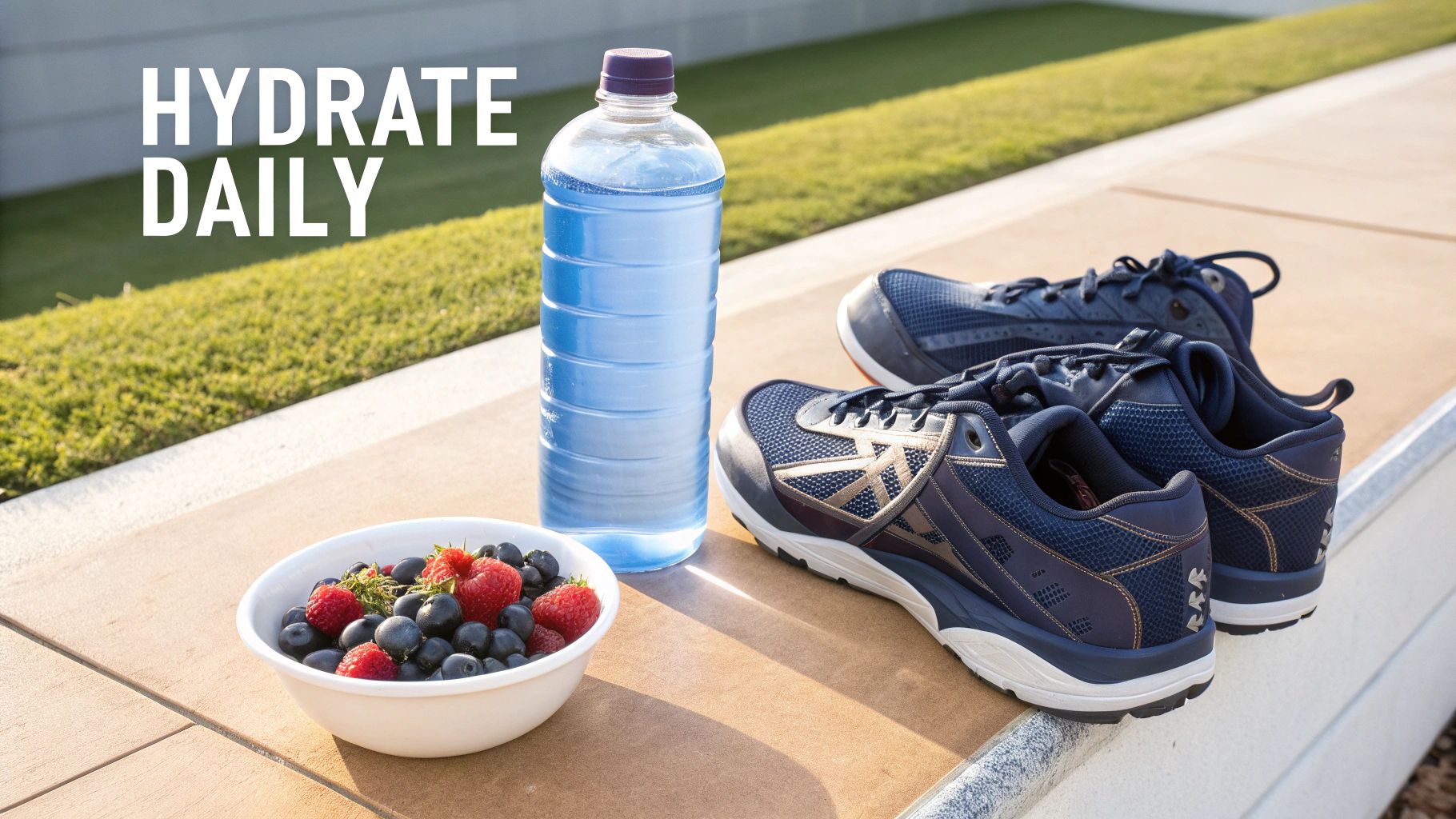
Hydration: The Foundation of Regularity
When it comes to managing constipation, proper hydration is completely non-negotiable. Water is what softens stool, making it easier for everything to pass through your digestive system smoothly.
If you’re dehydrated, your body will pull extra water from waste in the colon, which is a direct recipe for the hard, dry stools causing all that trouble. Aim for at least eight 8-ounce glasses of water a day. A great practical tip is to grab a large, marked water bottle—seeing your progress can be a surprisingly effective motivator to keep sipping.
Boost Your Fiber Intake Mindfully
Fiber is your digestive system's best friend. It adds bulk to your stool, which is exactly what you need to help it move through your intestines. But there's a catch: you have to introduce it slowly.
A sudden, dramatic increase in fiber can backfire, leading to more gas and bloating. Think gradual and steady.
Here are some fantastic high-fiber foods to start weaving into your diet:
- Fruits: Berries, pears, and apples (keep the skin on!) are all great.
- Veggies: Load up on broccoli, Brussels sprouts, carrots, and leafy greens.
- Legumes: Chickpeas, lentils, and black beans are true fiber powerhouses.
- Whole Grains: Start your day with oatmeal or swap in quinoa and whole-wheat bread.
If you need more inspiration for meals that work with your medication, we've put together a guide with plenty of delicious and simple GLP-1 friendly foods. It’s designed to help you make choices that support both your weight management and your digestive health.
The Power of Gentle Movement
You don’t need to train for a marathon to get things moving again. Consistent, gentle physical activity is amazing for stimulating the natural muscle contractions in your intestines that promote regularity, a key part of healthy living.
Even a brisk 20 to 30-minute walk each day can make a world of difference. The real secret here is consistency. Find something you actually enjoy, whether it's walking, swimming, or a relaxing yoga session. When you like what you're doing, it’s much easier to stick with it. If you're struggling to make it a routine, it helps to learn how to make exercise a lasting habit.
By building these simple but powerful habits into your daily life, you can take charge of constipation and feel your best on this journey.
When You Might Need a Little Extra Help
Diet, hydration, and exercise are always your first line of defense against constipation. But let's be realistic—sometimes, even with your best efforts, your system needs a little extra nudge.
If you’ve been upping your water and fiber intake and still feel stuck, it might be time to look at some over-the-counter (OTC) options. Think of them as short-term support to help get things moving again while your body adjusts.
Stool Softeners vs. Laxatives: What's the Difference?
When you walk down the pharmacy aisle, you'll see two main players: stool softeners and laxatives. They both aim for the same result, but they get there in completely different ways.
A stool softener is exactly what it sounds like. It works by pulling more water into your stool, which makes it softer, bulkier, and much easier to pass. It’s a pretty gentle approach, perfect if you're dealing with hard, dry stools and straining.
Laxatives, on the other hand, are more direct. They actually stimulate the muscles in your intestines, encouraging them to contract and push things along. Some types, like osmotic laxatives (think MiraLAX), also draw water into the colon to help the process. They offer a bit more "get up and go" when things have really slowed down.
The key with either of these is to see them as temporary tools, not a permanent fix. They're here to help you over a hump while you continue to build those long-term healthy habits that keep you regular.
Making the Right Choice for You
So, which one should you reach for? It really depends on what you're experiencing.
For many people on a GLP-1 who are just starting to feel backed up, a gentle stool softener is a great place to start. It’s often all that’s needed to get back on track.
If the problem is more about infrequent movements rather than just discomfort, a laxative might be more effective. Targeted supplements can also be a game-changer. For example, finding the best probiotic for constipation relief can be incredibly helpful, since a balanced gut is fundamental to good digestion.
Here’s a simple way to think about it:
- Try a Stool Softener If: Your main issue is hard, dry stool that’s difficult to pass.
- Consider a Laxative If: You're having very few bowel movements and feel like your system is at a standstill.
- No Matter What: Always start with the lowest recommended dose. You can always take more if you need it, but you can't take less.
Before you start anything new, please have a quick chat with your Blue Haven Rx medical team. We can give you advice that's specific to your health and ensure you're choosing the safest, most effective option.
And for a deeper dive into managing this side effect, check out our guide to Wegovy constipation relief—the strategies are very similar and just as helpful
Recognizing When to Contact Your Doctor
Most of the time, you can get a handle on GLP-1-related constipation with the lifestyle tweaks we've covered. Staying on top of your water intake, fiber, and daily movement is usually enough to keep things regular.
But it's just as important to know when your body is sending you a signal that it's time to call in a professional. Your health and safety are always the top priority.
Red Flag Symptoms to Watch For
While a bit of constipation is a known side effect, some symptoms are more serious and shouldn't be ignored. If you experience any of the following, it’s time to get in touch with your doctor right away:
- Severe Abdominal Pain: We’re not talking about typical cramping here. This is pain that’s sharp, constant, or so bad it hurts to move. That’s a clear sign you need to get checked out.
- Ongoing Nausea and Vomiting: A little nausea can happen, but if you're constantly vomiting and can't even keep water down, that requires immediate medical attention.
- No Bowel Activity at All: If it's been several days since you've had a bowel movement or even passed gas, it could point to a potential blockage.
- Blood in Your Stool: Never ignore this. Whether the blood is bright red or your stool looks dark and tarry, it’s something you need to discuss with your doctor.
These aren't meant to scare you, but to empower you. Knowing when a symptom has crossed the line from "annoying side effect" to "potential problem" is a crucial part of managing your health safely.
We Are Here to Help
Navigating side effects is just part of the journey, and you’re never on your own. The good news is that most people find that with the right support, these issues are very manageable.
While early trials saw constipation in about 3–5% of users, newer data—especially with higher doses for weight management—shows it can affect up to 24–35% of people. But here's a reassuring statistic: one analysis found that only about 4% of people with GI symptoms actually stopped their medication. That tells us that with the right guidance, this is something you can work through. For a deeper dive, check out this helpful guide to stopping constipation on GLP-1s.

If you're ever feeling worried or unsure about your symptoms, your dedicated medical team at Blue Haven Rx is just a message away. We’re here to give you personalized advice, talk about potential adjustments to your care plan, and provide the peace of mind you deserve.
How Blue Haven Rx Supports Your Entire Journey
Dealing with side effects like constipation shouldn't be something you have to figure out on your own. At Blue Haven Rx, we see our role as your partner in this process. True, long-term health success comes from feeling supported and confident every step of the way.
Your journey is yours alone, which means your care plan should be just as unique. Our telehealth services are built to be flexible and responsive to what you're actually experiencing. When you start with us, you're not just getting medication—you're getting a dedicated team of licensed medical doctors who are with you for the long haul.
Personalized Adjustments and Guidance
If you start struggling with constipation or any other side effect, that's a sign for us to connect. Your medical team is right there to help you troubleshoot.
Together, we can explore adjusting your medication dosage, suggest specific lifestyle changes that make a real difference, and keep a close eye on your progress to find that sweet spot where you feel good and see results.
Our platform is designed to keep you connected, so you never feel like you're left guessing. We're here to answer your questions and make changes to your plan as needed.
Your success is about more than just the number on the scale. It's about feeling great in your body and building sustainable habits for a longer, healthier life. We're committed to supporting you in achieving that.
This commitment to your well-being goes beyond just managing side effects. We also offer programs designed to boost your overall health, like our NAD+ therapies that focus on improving cellular health and vitality. You can learn more about those therapies here.
Start Your Supported Journey Today
Tired of navigating your health goals alone? Our programs provide the medical expertise and consistent support you need to feel safe and be effective. We take care of the clinical complexities so you can focus on what matters most—your health.
If you’re ready for a truly supported wellness journey, the first step is easy. Take our quick eligibility quiz to see if our program is the right fit for you.
Your Questions, Answered
Starting any new medication brings up questions. It's only natural. When it comes to GLP-1s and constipation, you're not alone in your concerns. Let's walk through some of the most common questions we hear from patients.
How Long Does Constipation from a GLP-1 Typically Last?
For most people, side effects like constipation are part of an adjustment period. You'll likely notice it most when you first start taking the medication or right after your doctor increases your dose. The good news is that for many, this settles down on its own within a few weeks as your body gets used to the medication.
That said, some people find that constipation with Ozempic and similar medications sticks around, especially on higher doses. It can become a persistent issue that needs ongoing attention. This is where those proactive habits—diet, water, and movement—become your best friends for staying comfortable long-term. If things aren't getting better, it's definitely time to check in with your Blue Haven Rx provider.
Can I Use Fiber Supplements Like Metamucil?
Absolutely. Fiber supplements, particularly those with psyllium husk like Metamucil, can be a great tool. Think of them as a sponge: they soak up water in your gut, which adds bulk and softness to your stool, helping everything move along more easily.
The golden rule with any fiber supplement is to drink plenty of water with it. If you don't, the fiber can actually clump up and make the problem worse. It's always a good idea to chat with your healthcare provider before starting any new supplement, just to make sure it’s the right move for you.
Will a Lower Dose Help with Constipation?
It's a definite possibility. Since this side effect is often dose-dependent, easing back on the dosage can sometimes provide relief. Higher doses of semaglutide have a more powerful effect on slowing down your digestive system, so it stands to reason that a lower dose might lessen that "braking" effect.
However, changing your dose isn't something to try on your own. It's a conversation you need to have with your doctor. Your Blue Haven Rx medical team can look at the whole picture—your symptoms, the benefits you're getting from your current dose—and help decide on the safest and most effective path forward for your treatment.
At Blue Haven Rx, we don't just provide medication; we provide a partnership. Our medical team is here to support you through every part of your weight management journey, making sure you feel heard, comfortable, and confident. If you're ready to start with a team that has your back, learn more about our approach and start your journey today.