
Ozempic Dosage Chart: Your Guide to Semaglutide
Starting a new wellness path often comes with questions, and when it involves semaglutide (the active ingredient in Ozempic), understanding the dosage schedule is a great first step. The process is designed to be gradual, beginning with a low dose of 0.25 mg once a week for the first four weeks. From there, the dose is slowly increased over several months.
This careful, step-by-step approach is designed to help your body get used to the medication comfortably and minimize potential side effects, setting you up for a successful and sustainable journey toward your health goals.
Your Guide to the Semaglutide Dosage Schedule
Getting the hang of a semaglutide dosing schedule is simpler than it seems. The entire strategy is built around a gradual increase in your dose, a process known as titration. Think of it as a "start low, go slow" method—it's the key to letting your body adapt smoothly, which is critical for long-term success in your weight management and healthy living goals.
This approach puts your comfort and safety first. The standard plan starts with that initial 0.25 mg weekly dose. It's helpful to know that this first dose isn't primarily for immediate results; its main job is to let your system acclimate and reduce the chances of common side effects like nausea. After those first four weeks, the dose is typically increased to 0.5 mg once weekly. You can find more details about this initial dosing strategy on third-party health sites.
This visual timeline gives you a good sense of how the dosage typically progresses over the first few months.
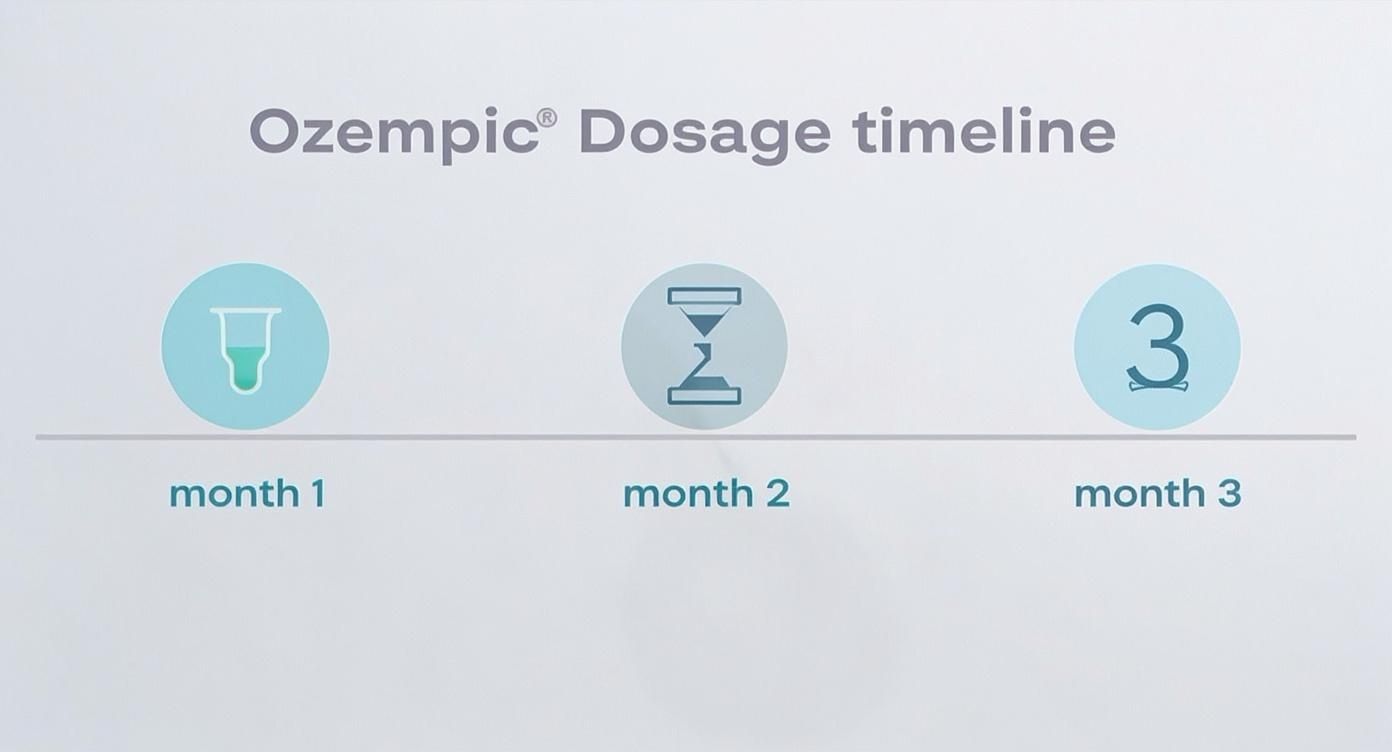
As you can see, each month brings a planned step-up, allowing your body to adjust at a steady, manageable pace.
Standard Semaglutide Titration Schedule
To lay it out clearly, here is a standard schedule for increasing the weekly dose. This is a general guideline, of course. Your healthcare provider will personalize a plan based on your specific health profile and how you respond to the medication.
| Month | Weeks | Weekly Dosage | Purpose |
|---|---|---|---|
| Month 1 | Weeks 1–4 | 0.25 mg | Acclimatization: Allows your body to get used to the medication. |
| Month 2 | Weeks 5–8 | 0.5 mg | Initial Therapeutic Dose: Begins to work more actively toward your goals. |
| Month 3 | Weeks 9–12 | 1.0 mg | Increased Dose: For further management if needed. |
| Month 4 & Beyond | Week 13+ | Up to 2.0 mg | Maintenance: The dose is adjusted to maintain results effectively. |
It's really important to remember that not everyone's dosage needs are the same. For example, a plan focused strictly on weight management might progress differently than one for another health goal.
Ultimately, your journey is your own. The key is working closely with an experienced provider who can make sure your dosage is just right for you, helping you get lasting results safely. The team here at Blue Haven Rx is ready to help create that personalized plan.
Curious about how a GLP-1 program could fit into your weight management goals? Take our quiz to check your eligibility and start your journey today.
How Your Semaglutide Dosage Schedule Works

Getting started with semaglutide isn't about jumping to the highest dose. The whole process is built around a core medical principle called titration. Put simply, it means we "start low and go slow." This careful, step-by-step approach is the key to helping your body get used to the medication while minimizing potential side effects.
Think of the first month as an introductory period. That initial 0.25 mg weekly dose isn't designed to produce big results right away. Its main job is to let your system acclimate to the medication, which is crucial for reducing issues like nausea and digestive upset that can happen if you start too high, too fast.
This gradual increase is a time-tested strategy that sets you up for long-term success. By giving your body the time it needs to adjust, you're paving the way for a much smoother and more sustainable wellness experience.
The Purpose Behind Each Dose Increase
Every time your dose is increased, it’s for a specific reason. Following this structured progression allows you and your healthcare provider to pinpoint the most effective dose that works for your body and your goals.
- Weeks 1-4 (0.25 mg): This is the acclimatization phase. The goal here is all about tolerability. Your body is just getting familiar with the medication without being overwhelmed.
- Weeks 5-8 (0.5 mg): Now we're at the initial therapeutic dose. Once your body is comfortable, this dose starts to actively support your health goals, whether that's helping with weight management or another wellness objective.
- Weeks 9 and Beyond (1.0 mg, 1.7 mg, or 2.0 mg): These are considered maintenance and optimization doses. Based on your progress, side effects, and overall response, your provider may decide to increase the dose further to achieve and sustain your target results.
It's a common misconception that the highest dose is always the "best" one. The right dose is the one that gives you the results you need with side effects you can easily manage. That’s why honest, open communication with your provider is so important—it helps find that perfect balance.
Why Sticking to the Schedule Matters
Following your prescribed dosing schedule is essential for both safety and getting the results you want. GLP-1 medications have become a trusted tool for health management for a reason. You can learn more about GLP-1 usage statistics to see the broader impact. This success is built on the structured titration schedule, which improves both medical outcomes and a person's ability to stay on the treatment long-term.
Consistency is also key. Taking your injection on the same day each week helps keep a steady, effective level of the medication in your bloodstream. If you're wondering about timing your dose, you can read our guide on the best time of day to take semaglutide for more practical tips.
Working closely with a healthcare expert ensures your treatment plan is right for you. The professionals at Blue Haven Rx can guide you through this process, making smart adjustments along the way to support your long-term health and wellness.
Dosage for Weight Management vs. Blood Sugar Control
While semaglutide is the same active ingredient whether it's used for weight loss or blood sugar control, the dosing strategies can differ. Understanding this distinction is helpful for setting realistic expectations for your treatment plan.
When the primary goal is managing type 2 diabetes, the focus is on finding the lowest dose that effectively controls blood sugar and gets A1C levels into a healthy range. For many people, a weekly maintenance dose of 0.5 mg or 1.0 mg is all that's needed to achieve and maintain that control.
For weight management, however, the approach may involve aiming for higher doses to achieve desired outcomes.
Why Higher Doses Are Common for Weight Loss
When the focus shifts to weight loss, the goal is to reach a dose that delivers significant appetite suppression to help you shed pounds and keep them off. Research consistently shows that higher doses of semaglutide can be more effective for this purpose. This is why the titration schedule for weight loss often continues upward, past the typical maintenance doses for diabetes.
A crucial takeaway here: the "best" dose isn't always the highest dose. It's the one that gives you the results you need with side effects you can comfortably manage. The real goal is creating a sustainable path to long-term health and longevity.
Tailoring the Dose to Your Personal Goals
Whether you're focused on weight, blood sugar, or both, your journey is your own. The slow and steady dose titration process is designed to let your healthcare provider see exactly how your body responds to the medication at each step. This careful, personalized approach is how we find the maintenance dose that's just right for you.
For instance, if you're getting fantastic weight loss results and feeling great on the 1.7 mg dose, there may be no need to increase it further. That could be your ideal maintenance level. That's why open, honest communication with your provider about your progress and any side effects is so important—it’s how you find that perfect balance.
Getting familiar with how different GLP-1 options for weight loss are designed for specific goals is a smart move. Having this background knowledge helps you have more productive conversations with your provider.
How to Properly Administer Your Injection

Getting comfortable with your weekly injection is a big part of succeeding on your treatment plan. Don't worry, it quickly becomes second nature. A few simple, consistent steps are all it takes to make sure the medication is delivered safely and correctly every time.
First things first: wash your hands well with soap and water. Then, give your pen a quick inspection. The liquid inside should be completely clear and colorless. If you notice any cloudiness or see particles floating around, it's best not to use it and to start with a new pen.
Step-by-Step Injection Guide
Having a set routine for your injection can help you feel more confident and ensure you get the right dose. Here’s a straightforward breakdown of the process.
- Prepare Your Pen: Grab a new needle for every single injection—this is non-negotiable for safety and comfort. Once you attach it, pull off both the outer and inner needle caps. Be careful not to bump the needle.
- Check the Flow (New Pens Only): Before the very first use of a new pen, you need to prime it. Turn the dose selector to the flow check symbol. With the needle pointing up, press the dose button until you see a single drop appear. This confirms the pen is working correctly.
- Select Your Dose: Turn the dose selector dial until your prescribed dose (like 0.25 or 0.5 mg) lines up perfectly with the pointer. You'll hear and feel distinct "clicks" as you turn it.
- Choose and Clean Your Site: The best spots are your stomach area (staying at least two inches away from your belly button), the front of your thighs, or your upper arm. Wipe the skin with an alcohol swab and let it air-dry completely before injecting.
- Perform the Injection: Gently insert the needle straight into your skin. Press and hold the dose button down until the dose counter clicks back to "0."
- Hold and Remove: This is a crucial step. After the counter hits "0," keep the needle in your skin and slowly count to six. This ensures you get the full dose before you pull the needle straight out.
- Dispose of the Needle: Immediately and carefully remove the used needle from the pen. Place it in a sharps disposal container to prevent accidental needle sticks.
Storing Your Pens and Choosing Injection Sites
How you store your pens directly impacts the medication's effectiveness. Before you use a pen for the first time, it must be stored in the refrigerator. Once you've started a pen, you can keep it at room temperature (under 86°F) or put it back in the fridge for up to 56 days.
A pro tip for maintaining healthy skin is to rotate your injection sites. If you used your abdomen one week, switch to a thigh the next. This simple habit prevents any one area from getting irritated and helps avoid developing lumps or hard spots over time.
Traveling with your medication is definitely doable with a bit of planning. To learn how to keep your pens at the right temperature while you're on the move, check out our guide on how to travel with semaglutide.
By following these practical steps, your weekly injection will become a quick and seamless part of your health routine. And if you ever have any questions about the process or your Ozempic dosage chart, remember that the Blue Haven Rx healthcare team is always here to help.
Managing a Missed Dose or Schedule Change
Life happens, and even with the best intentions, a dose can be missed. Don't worry—handling these hiccups is straightforward. While a consistent routine is best for keeping steady medication levels in your system, an occasional adjustment is perfectly manageable when you know the guidelines.
The key is knowing how to respond based on how much time has passed since your dose was due. Following a simple rule of thumb ensures you stay on track safely without derailing your progress toward your weight management goals.
What to Do If You Miss a Dose
Forgetting your weekly injection can be stressful, but there's a clear protocol. Your next step depends entirely on when you remember you missed it.
- If it’s been less than 5 days (120 hours): Go ahead and take your missed dose as soon as you remember. After that, just get back on your regular weekly schedule. For instance, if your injection day is Sunday but you forget until Wednesday, take it on Wednesday. Your very next dose will still be on the following Sunday as usual.
- If it’s been 5 days or more: Skip the missed dose entirely. Just wait and take your next dose on your regularly scheduled day. Do not take two doses at once to catch up, as this can significantly increase your risk of side effects.
The most important safety rule is to ensure there are always at least 3 days (72 hours) between any two injections. This waiting period is critical to prevent a buildup of the medication in your system.
How to Safely Change Your Injection Day
Sometimes your schedule shifts, and your original injection day no longer works. You can absolutely change it, provided you do it thoughtfully.
To switch your injection day, just take your next dose on the new day you’ve chosen. The only requirement is that at least 3 days (72 hours) have passed since your last injection. For example, if you typically inject on a Sunday and want to move to Thursdays, you can simply take your next dose on a Thursday. From that point on, Thursday becomes your new weekly injection day.
Staying on top of your treatment is a big part of your journey toward better health and longevity. Understanding these simple rules for your Ozempic dosage chart empowers you to handle minor schedule changes with confidence. If you ever have questions, the Blue Haven Rx team is here to support you.
Safety Information and When to Talk to Your Doctor
Starting any new medication is a partnership between you and your doctor, and your well-being is always the top priority. While many people find GLP-1 medications to be a smooth experience, it’s completely normal to have some side effects as your body adjusts. Knowing what to expect can help you manage them and understand when it’s time to check in with your provider.
Most of the common side effects are digestive in nature—things like nausea, diarrhea, or constipation. These are typically mild and often improve as your body gets used to each new dose. Simple, practical tips like eating smaller meals and steering clear of fried or greasy foods can really help minimize this temporary discomfort.
Some people also report feeling tired when they first start semaglutide. If you're experiencing this, we have a full article that dives into why semaglutide might make you feel tired.
When to Consult Your Healthcare Provider
While mild issues are expected, certain symptoms are a clear signal to get in touch with your medical team. Good communication is the best way to make sure your treatment is working safely and effectively for your healthy living goals.
You should call your doctor if you experience:
- Side effects that are severe or just won't go away, especially if they interfere with your daily life.
- Signs of dehydration, like feeling dizzy, having a very dry mouth, or not urinating as much. This can happen if you're dealing with vomiting or diarrhea.
- Intense abdominal pain, which could signal a more serious problem that needs prompt medical evaluation.
- Any signs of an allergic reaction, such as swelling in your face, lips, or tongue, or if you have trouble breathing.
Your provider can help by adjusting your dose on the ozempic dosage chart or suggesting other ways to manage what you're feeling.
Special Considerations for Your Health Profile
Your unique health history plays a big role in your treatment plan. Certain conditions might mean your dosing schedule needs a more careful, customized approach.
For instance, people with chronic kidney disease (CKD) require special attention. The standard starting dose is still 0.25 mg weekly for four weeks to let the body acclimate. From there, the dose is usually increased to 0.5 mg weekly. It may be raised again under very close medical supervision.
The titration schedule isn't a race to the highest dose. Think of it as a careful, collaborative process. The real goal is to find the most effective dose that you can tolerate comfortably for the long haul.
Always give your provider your full medical history before you start. This honesty is crucial for creating a plan that’s built for your specific needs, setting you up for a safe and successful journey.
Wondering if a GLP-1 program is a good fit for you? A great place to start is by taking the Blue Haven Rx quiz. Our medical team can review your information to see if you're eligible and guide you on the next steps.
Answering Your Ozempic Dosage Questions
As you start your treatment, it's completely normal to have questions pop up. We've compiled a few of the most common ones we hear from patients about semaglutide dosing. This should help clear things up and give you more confidence as you move forward.
Can I Split My Semaglutide Dose?
This is a frequent question, especially from people looking for ways to minimize side effects. The short answer is no—you should not split your weekly semaglutide dose into two smaller injections without your doctor's explicit instruction.
The pens are specifically designed to deliver one full, precise dose each week. Altering that can impact how well the medication works. If side effects are a concern, your first move should always be to talk to your healthcare provider. They have other strategies, like adjusting your titration schedule, to make your experience much more comfortable.
How Long Do I Stay on Each Dosage Level?
The standard rule of thumb is at least four weeks at each dosage level before moving up. This gradual, "start low, go slow" method is central to the treatment plan for a good reason.
This four-week window gives your body the time it needs to get used to the medication. Rushing the process is often what leads to more intense side effects like nausea or fatigue. Patience here really pays off for a smoother long-term experience.
Your provider will be tracking your progress. Based on your results and how you're feeling, they might keep you at a certain dose for longer. If you're hitting your weight management goals and tolerating the dose well, there might be no need to increase it.
What Is the Highest Maintenance Dose?
The maximum dose really depends on what you're using semaglutide for. The goals you and your provider set will determine the target.
- For type 2 diabetes, the highest dose used in studies is 2.0 mg once a week.
- For weight management, the target maintenance dose is often 2.4 mg weekly, as this is the dose that showed significant weight loss in clinical trials.
But "highest" doesn't automatically mean "best." The right dose for you is the one that works effectively and that you can tolerate for the long haul. Plenty of people find great, sustainable success on lower maintenance doses like 1.0 mg or 1.7 mg. It all comes down to finding that sweet spot for your body and your wellness journey.
At Blue Haven Rx, our team is here to give you the expert guidance you need to reach your health goals safely.
Ready to learn more and start your journey with us? Take our quiz to get started on your path to a healthier life.