
A Practical Guide to Wegovy Constipation Relief
If you’ve started a new weight management journey with semaglutide and noticed things are... a bit slow, you're not alone. It can be frustrating, but constipation is often a sign the medication is working as intended. Thankfully, finding relief is usually straightforward and starts with simple habits like drinking more water, upping your fiber, and moving your body.
These practical tips can help you stay comfortable while pursuing your weight management and healthy living goals.
Why Semaglutide Can Cause Constipation
Starting a weight management medication is a big step toward better health, and tools like the semaglutide in our GLP-1 program are designed to give you an edge. They help you feel fuller for longer, which is a massive help for reducing calorie intake. This powerful effect, however, stems from a biological process that can also throw your digestive system for a loop.
Here's what’s happening in your body: semaglutide works by slowing down gastric emptying. That’s the clinical term for how quickly food travels from your stomach to your intestines. While this delay is fantastic for keeping hunger at bay, it naturally means things move through your entire system more slowly, leading to less frequent bowel movements.
The slowdown isn't a bug; it's a feature. It’s part of how the medication supports weight loss. Framing it this way can help you see constipation less as a problem and more as a sign that your treatment is working.
Your Body Needs Time to Adapt
Whenever you start a new medication or increase your dose, your digestive system has to get used to a new, more sluggish pace. This adjustment period is when side effects like constipation are most likely to appear. It's like your body is recalibrating its internal clock.
You are definitely not the only one dealing with this. Real-world data suggests that constipation affects about 24% of users—that's nearly one in four people. The good news is that for many, these digestive issues tend to improve as their bodies adjust over a few weeks or months. For a deeper dive, check out our guide on common GLP-1 medication side effects.
The Link Between Slower Digestion and Bowel Habits
When everything slows down, waste sits in your colon for longer than usual. This gives your large intestine extra time to do its job of absorbing water. The result? Stool can become dry, hard, and much more difficult to pass. This is the root cause of the issue and why finding effective relief is key to staying comfortable on your wellness journey.
Understanding the why behind this side effect gives you the power to be proactive. Instead of worrying, you can focus on simple, effective strategies to keep your digestive system happy while you continue to see the weight management benefits.
Gentle At-Home Strategies for Daily Relief

When you're dealing with constipation from your medication, the solution isn't always found in the medicine cabinet. The most effective and sustainable relief often comes from making small, consistent adjustments to your daily routine that support your long-term health.
We can break it down into three simple pillars: hydration, fiber, and movement. Think of these as the foundational habits that support your digestive system, helping it work with your body instead of against it. Getting these right often makes all the difference.
Prioritize Smart Hydration
This one sounds obvious, but it’s the cornerstone of comfortable digestion, especially when a GLP-1 medication slows things down. Water is what softens stool, making it much easier to pass. It's surprisingly easy to forget to drink enough when your appetite and thirst cues are reduced, so you have to be intentional about it.
A great habit to build is starting your day with a full glass of water before you do anything else. From there, keep a reusable water bottle handy—the visual reminder is often all you need. If you get bored with plain water, try infusing it with a few slices of lemon, cucumber, or some fresh mint.
Aim for 8-10 glasses of water a day as a solid baseline. Keep in mind you’ll likely need more if you're physically active or live in a hot climate.
Boost Your Fiber Intake Thoughtfully
Fiber is non-negotiable for healthy bowel function. It adds the necessary bulk to your stool and helps keep everything moving along. The key here is to increase your fiber intake gradually. Ramping up too fast can lead to more bloating and discomfort, which is the last thing you want.
When we talk about fiber, there are two types, and your gut needs a good mix of both for optimal function. Many natural remedies for constipation focus heavily on getting this balance right.
Here’s a quick guide to incorporating different types of fiber-rich foods to help promote comfortable, regular bowel movements.
Fiber-Rich Foods for Better Regularity
| Fiber Type | How It Helps Your Gut | Simple Food Examples |
|---|---|---|
| Soluble Fiber | Dissolves in water to form a gel, which helps soften stool so it can pass more easily. | Oats, apples, beans, psyllium husk, carrots, and citrus fruits. |
| Insoluble Fiber | Does not dissolve in water. It adds bulk to stool, which helps it move through your system more quickly. | Whole grains, nuts, seeds, cauliflower, green beans, and potatoes. |
Making these additions doesn't have to be complicated. Try adding a tablespoon of chia seeds to your morning smoothie or swapping your usual white bread for a whole-grain or sourdough option. For more tips on building a diet that supports your journey, check out our Wegovy meal plan.
Embrace Gentle Movement Every Day
You don't need to run a marathon to get your bowels moving. In fact, gentle, consistent activity can work wonders for stimulating peristalsis—the natural wave-like muscle contractions that push waste through your digestive tract.
Consider it a gentle internal massage for your gut. A brisk 20-30 minute walk each day is a fantastic and accessible starting point for promoting both weight management and digestive health.
Other great, low-impact options include:
- Gentle stretching or a simple yoga routine
- A casual bike ride
- Swimming
The real goal is just to move your body in a way that feels good and that you can stick with. Even a quick 10-minute walk after your meals can kickstart digestion and make a huge difference in your overall comfort and well-being.
Choosing Safe Over-the-Counter Options
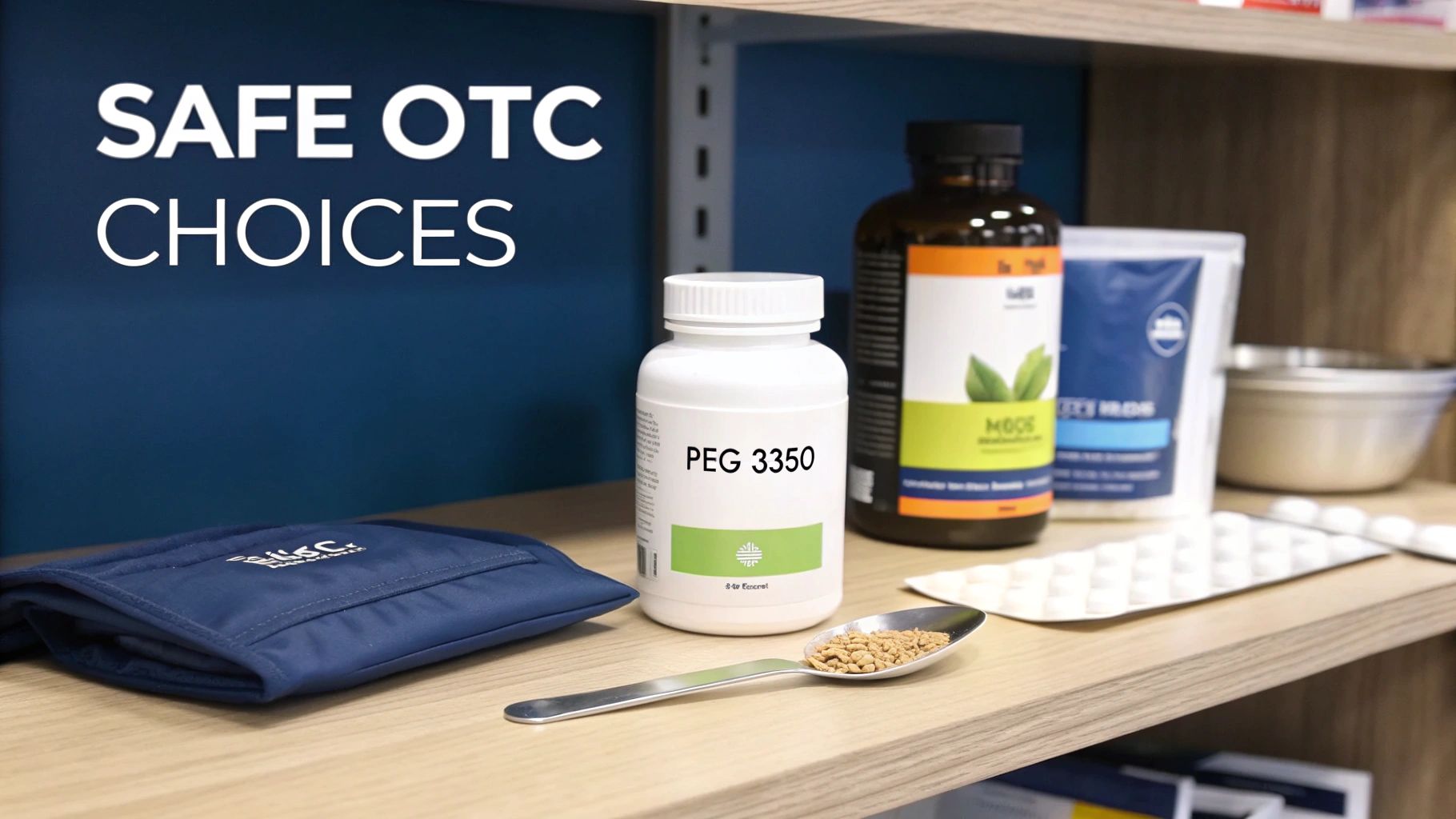
Sometimes, even after you’ve nailed your diet, hydration, and activity levels, your digestive system might still need a little extra nudge. That's completely normal. When lifestyle tweaks aren't quite enough to resolve medication-related constipation, turning to safe over-the-counter (OTC) options is a sensible next move.
The key is to approach the pharmacy aisle with a "start low and go slow" mindset. We're looking for gentle, effective relief that supports your body without causing harsh side effects or dependency. For most people, that means starting with the mildest options and only moving on if necessary.
Starting with Gentle Fiber Supplements
Before reaching for a laxative, it's often best to start with a bulk-forming fiber supplement. Think of these as a natural extension of your high-fiber diet. They work by absorbing water in your intestines, which adds bulk and, more importantly, softness to your stool, making it much easier to pass.
These supplements are generally very safe for long-term use and fit perfectly with the other healthy habits you're building. One of the most popular and effective choices is psyllium husk, a gentle, natural fiber supplement. Products with methylcellulose are another great option. Just remember to introduce them gradually and, crucially, drink plenty of extra water throughout the day to help them do their job.
A Quick Word of Advice: Always have a quick chat with your healthcare provider before adding any new supplement to your routine. They can give you personalized advice and make sure it’s the right fit for you, especially when you're on a GLP-1 medication through a program like ours at Blue Haven Rx.
Understanding Osmotic Laxatives
If adding a fiber supplement still isn’t getting things moving, an osmotic laxative is often the next logical step. These are still quite gentle and work in a fascinating way: they draw more water into your colon from the surrounding body tissues.
This influx of fluid naturally softens the stool and gently encourages a bowel movement. The most common and well-regarded osmotic agent is polyethylene glycol 3350 (you've probably seen it under brand names like MiraLAX). Because it’s not a stimulant, it’s generally considered safe for occasional or even regular use under a doctor's supervision. It simply uses your body’s own fluid to resolve the issue over a day or two.
Stool Softeners and Stimulant Laxatives
Other options you'll see on the shelf are best reserved for very specific, short-term situations.
-
Stool Softeners: These products, which often contain docusate sodium, don't actually make you go. Instead, they allow more water and fat to penetrate the stool, making it softer and less strenuous to pass. They can be helpful if straining is a major issue.
-
Stimulant Laxatives: These should be your absolute last resort, saved for acute, occasional relief. Ingredients like bisacodyl or senna work by directly stimulating the intestinal muscles to contract, forcing a bowel movement. Overusing them is a real risk and can lead to dependency, so they are not recommended for managing the kind of chronic constipation that can come with GLP-1 medications.
Finding the right balance is all part of creating a comfortable and sustainable weight management journey.
If you're feeling unsure about where to begin or find that these OTC options aren't providing the relief you need, that's the perfect signal to check in with your provider. Take our quick 5-minute quiz to see if our programs are right for you and get access to a team that can guide you through every step of the process.
Balancing Side Effects with Long-Term Benefits
When you're dealing with something as frustrating as constipation, it can feel like a major setback on your weight loss journey. It's uncomfortable, discouraging, and can make you question if the treatment is worth it. But it's so important to see this as a temporary hurdle in a much larger, life-changing process.
Think of it this way: managing constipation is a small, solvable problem on the path to a huge win for your overall health and longevity. When you keep your eyes on the incredible long-term benefits—significant weight loss, better metabolic health, reduced cardiovascular risk—the side effects start to feel more like a manageable speed bump than a total roadblock.
The Long-Term Health Rewards Are Worth It
This isn't just about dropping a few pounds. It's about fundamentally improving your health for the long haul.
While GLP-1 medications can cause constipation, the payoff is massive. Clinical research has shown an average weight loss of about 15% of starting body weight over a year. Even more impressive, nearly a third of adults—30% of them—taking semaglutide lose at least 20% of their weight.
But the benefits go far beyond the scale. For people at high risk, semaglutide has been shown to cause about a 20% reduction in major cardiovascular events like heart attacks and strokes. When you put it in that context, working through a temporary side effect seems like a very small price to pay for such a powerful investment in your future.
A key thing to remember: These side effects are often at their worst when you first start the medication or right after you increase your dose. It's usually a sign that your body is just getting used to the changes as the medicine starts to work its magic on your appetite and blood sugar.
You Don't Have to Go It Alone
Navigating the ups and downs of a new health plan is so much easier when you have an experienced team in your corner. This is where having support from professionals, like us at Blue Haven Rx, makes all the difference. We get the nuances of these medications and can give you personalized, practical advice to stay comfortable and on track.
A good support system means you never feel stuck. We can help you fine-tune your diet and hydration, point you toward safe over-the-counter options, or even adjust your treatment plan. Sometimes, a simple change, like slowing down how quickly you increase your dose, can make all the difference. If you're not familiar with the standard process, our guide to the Wegovy dosing schedule is a great resource.
Ultimately, it all comes down to balance. By staying focused on the amazing long-term health benefits and proactively managing the temporary side effects with the right support, you can successfully navigate this journey and achieve the lasting results you're working so hard for.
When You Should Talk to Your Doctor
Most of the time, constipation from GLP-1 medications is a manageable nuisance that you can handle at home. But it's important to know when your body is sending signals that need a professional's attention. This isn't about being an alarmist; it's about being smart and proactive with your health.
Let's put this in perspective. Constipation is a very common, and frankly, expected side effect of GLP-1 medications. In major clinical trials for semaglutide, 39% of participants reported constipation, yet the vast majority of them continued with their treatment. This tells us that for most people, the benefits of the medication far outweigh this side effect, and it's rarely a reason to stop a successful weight management journey. You can discover more insights about these clinical findings.
This decision guide is a great visual for understanding the difference between symptoms you can manage yourself and red flags that mean it's time to call your provider.

The bottom line is that while home remedies are your first move, persistent or severe symptoms absolutely require a professional opinion.
Knowing the Red Flag Symptoms
If your constipation comes with any of the following symptoms, it’s time to stop the at-home trial-and-error and contact your provider right away. These can sometimes point to a more serious issue that needs to be addressed quickly.
Be on the lookout for these warning signs:
- Severe or worsening abdominal pain that doesn't go away after a bowel movement.
- Nausea and vomiting, particularly if you're struggling to keep any liquids down.
- No bowel movement for more than a week, even after trying home and over-the-counter remedies.
- Blood in your stool, which might look like bright red streaks or have a dark, tarry appearance.
The Value of Ongoing Medical Support
This is where having a dedicated medical team in your corner makes all the difference. You're not just getting a prescription; you're getting a partner for your entire health journey. Instead of playing a guessing game with your symptoms, you can just send a message or book a quick chat.
With modern telehealth services, getting that expert advice has never been easier. A simple conversation allows your provider to assess what's going on, offer personalized Wegovy constipation relief strategies, or even adjust your treatment plan if needed. Our guide on how telehealth works walks you through just how convenient this process is.
Your provider might recommend a prescription-strength laxative or suggest a minor tweak to your dosing schedule—small changes that can provide major relief. This continuous support means you can handle any bumps in the road with confidence, without letting them derail the progress you've made.
If you’re ready to start a weight management journey with a team that has your back every step of the way, explore your options with Blue Haven Rx today.
Common Questions About Semaglutide and Constipation
We get it—you probably have a few more questions about dealing with this side effect. Let's walk through some of the most common concerns we hear from patients so you can feel confident and prepared.
How Long Will the Constipation Last?
This is probably the number one question people ask. For most, constipation is most intense right after starting treatment or when you increase your dose. The good news is that it often gets better within a few weeks as your body gets used to the medication.
One study found the median duration was about 47 days, but honestly, this is different for everyone. If it’s still a problem after a few weeks, sticking with the strategies in this guide and talking to your doctor is the best way to get things moving again and find some lasting Wegovy constipation relief.
Is a Daily Fiber Supplement Safe?
Absolutely. For most people, a simple psyllium husk supplement is a safe and effective way to get more fiber and encourage regularity. It's a gentle, bulk-forming agent that plays well with GLP-1 medications.
The key is to start slow. Begin with a small dose, make sure you're drinking plenty of water with it, and then gradually increase the amount over several days to let your system adapt. And as always, it’s a good idea to give your doctor a heads-up about any new supplements you start taking.
A quick tip: A supplement should support your diet, not replace it. Keep making high-fiber fruits, veggies, and whole grains the star of the show.
Will Constipation Go Away if I Stop My Medication?
If you stop taking the medication, your digestion will likely return to its normal pace. But—and this is important—do not stop your treatment on your own without talking to your doctor first. They can help you manage side effects so you don't have to derail your progress.
Is Constipation a Side Effect of All GLP-1 Medications?
Yes, it's a known side effect of the entire drug class. The active ingredient, semaglutide, works by slowing down digestion, which helps you feel full longer. That same mechanism is what can cause constipation.
This happens with other GLP-1 medications too, including compounded versions, because they all work the same way. That's why having a supportive medical team, like ours at Blue Haven Rx, is so important. We can help you manage this from day one, keeping you comfortable and on track toward your long-term wellness goals.
At Blue Haven Rx, our team is here to give you the ongoing support you need for every part of your weight management plan. If you're ready to hit your health goals with a team that has your back, take our 5-minute quiz to get started today.