
What is Insulin Resistance? A Clear Guide to Better Health and Weight
Insulin resistance is a common health issue that can make managing your weight feel like an uphill battle. It’s a condition where your body's cells don't respond properly to insulin, a key hormone for regulating blood sugar. Over time, this can lead to stubborn weight gain, fatigue, and other health concerns, making it a critical topic for anyone focused on healthy living and longevity.
Understanding what’s happening inside your body is the first step toward taking control of your health.
Your Guide to Understanding Insulin Resistance
Let's use a simple analogy. Think of insulin as a key. Its job is to unlock the "doors" to your cells so that glucose (sugar) from your blood can get inside to be used for energy. This process fuels everything you do, from your morning walk to focusing on a good book.
With insulin resistance, the locks on your cell doors become a bit "rusty." The key (insulin) is there, but it can't open the door easily. This means glucose has a hard time getting into your cells, causing it to build up in your bloodstream.
Your pancreas senses this problem and works harder, pumping out more and more insulin to try to force those stubborn locks open. For a while, this keeps your blood sugar levels in a normal range. But this constant state of high insulin isn't sustainable and creates its own set of problems.
Why This Matters for Your Health and Longevity
Grasping what is insulin resistance is vital because it often develops silently, but its impact on your health is significant. Recent research shows it affects over a quarter of adults globally, with some studies suggesting a prevalence rate as high as 26.53%. It's a widespread issue directly tied to weight management and healthy aging. Read the full research about these findings.
This is especially important for your health for a few key reasons:
- Weight Gain: High insulin levels signal your body to store fat, particularly visceral fat around your abdomen. This can make losing weight feel nearly impossible.
- Energy Crashes: When your cells can't get the fuel they need, you're often left with frustrating energy slumps, brain fog, and intense cravings for carbs and sugar.
- Hormonal Shifts: For many women, the hormonal changes of perimenopause and menopause can worsen insulin resistance, making it even harder to manage weight and energy during this life stage.
The good news is that insulin resistance is not a life sentence. With the right knowledge and a proactive approach, you can improve your body's sensitivity to insulin, manage your weight, and protect your long-term health.
By learning to recognize the signs and understanding the root causes, you can take meaningful steps to regain control. This guide will walk you through the causes, symptoms, and proven strategies for managing this condition.
Ready to find out if you're on the right track? Our team at Blue Haven RX can help you understand your options. Take our quiz to see if you’re a candidate for our program.
Exploring the Causes of Insulin Resistance
So, what causes those cellular locks to get "rusty" in the first place? It's usually a combination of factors, including lifestyle, genetics, and the natural aging process.
Pinpointing these drivers is the first step toward taking back control of your metabolic health. It’s about seeing the whole picture so you can create a plan that truly works for you.
Excess Body Weight and Visceral Fat
One of the biggest factors is excess body weight, but it's not just about the number on the scale. Where you store fat matters most. Visceral fat, the "hidden" fat that surrounds your internal organs like the liver and pancreas, is particularly problematic.
Unlike the fat you can pinch under your skin, visceral fat is metabolically active. It releases inflammatory substances that interfere with insulin's signaling, making your cells less responsive.
As this dangerous fat builds up, it can contribute to a "fatty liver," a major tipping point for metabolic health. When your liver becomes resistant to insulin, it can make weight loss feel almost impossible.
We have a complete guide that dives deeper into what visceral fat is and how to lose it.
Lifestyle and Dietary Habits
Our modern lives can sometimes set the stage for insulin resistance. The combination of what we eat and how we move creates the ideal conditions for our cells to start ignoring insulin.
- Lack of Physical Activity: Your muscles are your body's biggest user of glucose. When you're active, your muscles soak up sugar from the blood for fuel, which makes them very sensitive to insulin. Without regular activity, they lose this sensitivity.
- Diet High in Processed Foods: Eating lots of refined carbs (like white bread and sweets) and sugary drinks sends your blood sugar on a rollercoaster. Your pancreas responds by pumping out large amounts of insulin. Over time, your cells can become overwhelmed and start to tune out the signal.
Hormonal Shifts and Aging
For many people, especially those in the 45–65+ age group, hormones are a huge piece of the puzzle. The natural drop in estrogen during perimenopause and menopause, for instance, changes how the body stores fat and uses energy.
This hormonal shift often leads to more abdominal fat and less muscle mass—a combination that worsens insulin sensitivity. It’s why so many women struggle with weight during this phase, even if their diet and exercise habits haven't changed. Addressing these hormonal factors is crucial for healthy living.
Getting to the root of the problem empowers you to make changes that actually move the needle. This is about building a lifestyle that helps your body listen to insulin again. If you're ready to find a personalized path forward, you can start your journey with Blue Haven Rx today.
The Long-Term Health Risks of Insulin Resistance
Think of insulin resistance as your body's "check engine" light. You can ignore it for a while, but a problem is brewing that could lead to a major breakdown if left unaddressed. This metabolic imbalance can set off a domino effect, leading to serious health complications down the road.
Knowing these risks isn’t about fear; it’s about empowerment. When you understand what’s at stake, you can take meaningful, proactive steps to protect your long-term health and well-being.
From Prediabetes to Type 2 Diabetes
One of the most direct consequences of untreated insulin resistance is prediabetes. This is a critical warning sign where your blood sugar levels are elevated but not yet high enough for a diabetes diagnosis. It's your body's way of signaling that it needs help.
If left unmanaged, your pancreas continues to work overtime until it can no longer keep up. Eventually, insulin production may falter, and blood sugar levels can rise uncontrollably. This is the point where type 2 diabetes is diagnosed.
According to the International Diabetes Federation, a staggering 589 million adults—1 in 9 people globally—are living with diabetes. For most, the root cause is underlying insulin resistance. You can discover more insights about these global diabetes facts and figures for a deeper look.
The Link to Cardiovascular Disease
The danger doesn't stop with diabetes. Chronically high levels of insulin and blood sugar create a state of low-grade inflammation throughout your body, which takes a toll on your cardiovascular system.
This internal inflammation can damage the lining of your arteries, causing them to become stiff and prone to plaque buildup (atherosclerosis). As your arteries narrow, the risk for major cardiovascular events like heart attacks and strokes increases.
High insulin levels are a major red flag for your heart. They contribute to high blood pressure, unhealthy cholesterol levels (high triglycerides and low HDL), and an increased risk of blood clots—all major risk factors for heart disease.
Metabolic Syndrome and Broader Health Concerns
Insulin resistance is the cornerstone of a cluster of conditions known as metabolic syndrome. A person is typically diagnosed with it if they have at least three of these five risk factors:
- High blood pressure
- High blood sugar
- Excess body fat around the waist
- High triglyceride levels
- Low HDL ("good") cholesterol levels
Having metabolic syndrome dramatically increases your risk for heart disease, diabetes, fatty liver disease, and even certain types of cancer. You can learn more about the signs of metabolic syndrome in our detailed article.
Taking control of insulin resistance is one of the most powerful things you can do for your weight management, longevity, and overall health. Recognizing these risks is the first step; taking action is the next.
If you’re ready to address the root causes and protect your future, Blue Haven Rx can help. Learn more about how our programs can support you on your journey.
How Doctors Identify Insulin Resistance
When it comes to your health, knowledge is power. Because insulin resistance can develop for years without obvious symptoms, specific blood tests are the best way to get a clear picture of your metabolic health.
Catching it early allows you to take action before it escalates into more serious conditions. Knowing your numbers empowers you to have a productive conversation with your healthcare provider, whether in person or through a telehealth service like ours.
Common Blood Tests for Insulin Resistance
To check for insulin resistance, doctors look at a few key markers in your blood. It’s usually a collection of clues that, when pieced together, tell a story about your metabolic health.
Here are the most common tests a provider will likely start with:
- Fasting Glucose: This simple test measures the sugar levels in your blood after an overnight fast. A consistently high number suggests your body is having trouble moving glucose out of the bloodstream.
- Hemoglobin A1c (HbA1c): Think of the A1c test as a 2-3 month average of your blood sugar levels. It gives your doctor a longer-term view that isn't affected by daily fluctuations.
- Fasting Insulin: This test directly measures the amount of insulin in your blood while fasting. High levels are a major red flag, indicating your pancreas is working overtime to compensate for your cells' resistance.
This infographic shows how unchecked insulin resistance can progress to prediabetes, type 2 diabetes, and a greater risk for heart disease.
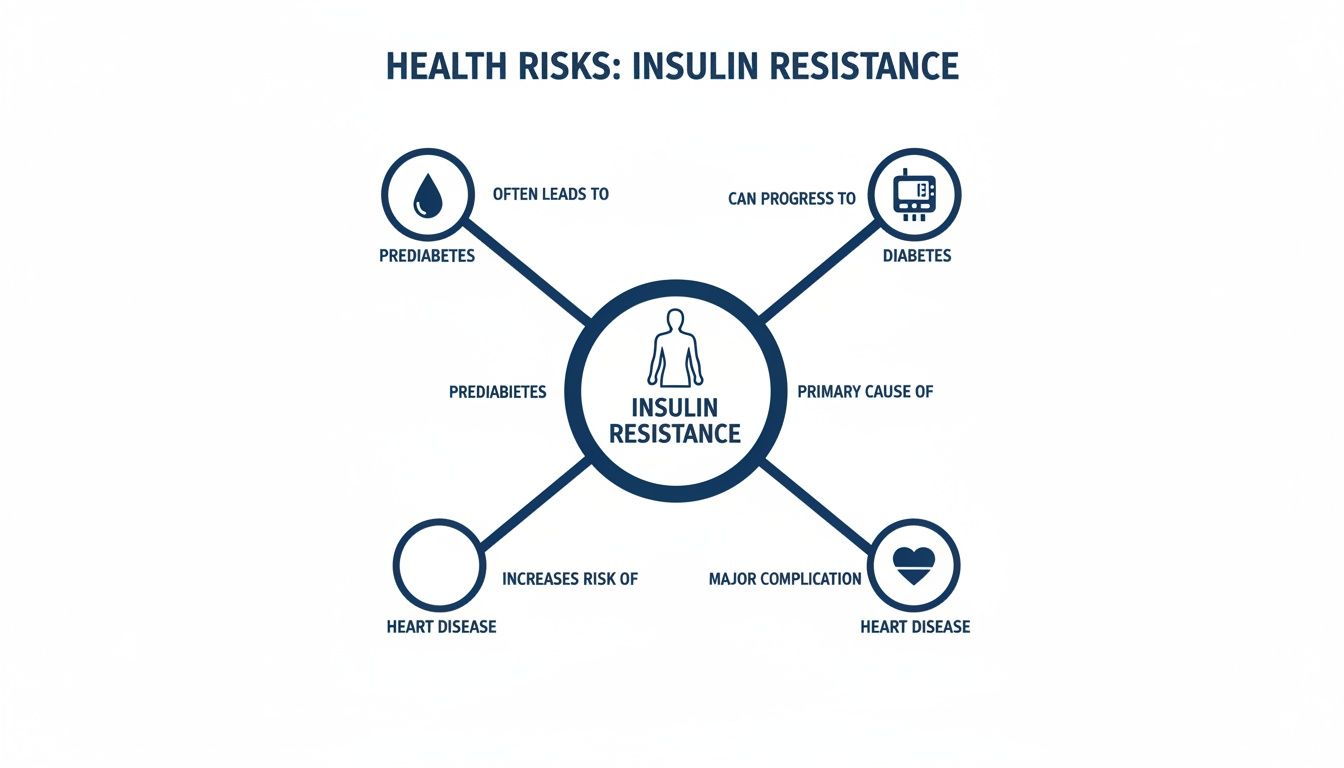
It’s crucial to see these not as separate problems, but as connected points on a timeline where insulin resistance is often the root cause.
More Advanced Diagnostic Tools
Sometimes, a deeper look is needed to confirm a diagnosis or understand the severity of the resistance. In these cases, your doctor might use more advanced tools.
The HOMA-IR (Homeostatic Model Assessment for Insulin Resistance) is a calculation that uses your fasting glucose and fasting insulin levels. It estimates how hard your body is working to keep blood sugar in check. A higher HOMA-IR score strongly suggests significant insulin resistance.
Another useful test is the Oral Glucose Tolerance Test (OGTT). This involves a fasting blood draw, followed by drinking a sugary liquid. Your blood is then tested periodically over the next two hours to see how your body responds to the sugar challenge. It provides clear insight into both insulin sensitivity and pancreas function.
Understanding these tests helps you take the next step with confidence. If you're concerned about insulin resistance, discussing these options with a provider is a great place to start. The team at Blue Haven Rx is here to help you navigate your options and begin your journey toward better health.
Actionable Strategies to Improve Insulin Sensitivity
Now for the empowering part: taking action. The great news is that you can absolutely improve your body’s insulin sensitivity with the right approach.
This isn’t about extreme diets or punishing workouts. It’s about making smart, sustainable lifestyle changes that help your body function at its best. By combining proven health habits with the right medical support, you can get your metabolic health back on track.
Fueling Your Body for Success
What you eat has a powerful and direct impact on your insulin sensitivity. The goal is to choose foods that keep your blood sugar stable and provide steady energy.
Practical Tip: Build your meals around these key components:
- Prioritize Fiber: High-fiber foods like vegetables, beans, and whole grains slow down sugar absorption, which helps prevent the sharp blood sugar spikes that overwork your pancreas.
- Embrace Lean Protein: Protein is essential for building muscle, which acts like a storage tank for glucose. It also helps you feel full and satisfied, reducing cravings for processed snacks.
- Choose Healthy Fats: Don't fear fat! Sources like avocados, nuts, seeds, and olive oil support your overall health and can help improve your body's response to insulin.
When you shift your diet to focus on whole, unprocessed foods, you naturally reduce your intake of the refined sugars and carbs that fuel insulin resistance. This single change is a cornerstone of better metabolic health.
Because hormonal balance is often part of the puzzle, exploring supplements to balance hormones can be a helpful addition to your overall wellness strategy.
The Power of Movement
Exercise is one of the most effective tools for boosting insulin sensitivity. When you're active, your muscles soak up glucose directly from your bloodstream for fuel, often requiring less insulin to do the job.
Practical Tip: A well-rounded routine includes both cardio and strength training:
- Aerobic Activity: Activities like brisk walking, cycling, or swimming get your heart pumping and make your body more efficient at using glucose. Aim for at least 150 minutes of moderate activity each week.
- Resistance Training: Building muscle is a game-changer. Using weights, resistance bands, or your own body weight increases muscle mass, giving you more "storage space" for glucose and improving your entire metabolic system.
Modern Medical Support for Your Journey
Lifestyle changes are incredibly effective, but sometimes, an extra tool can help you see significant results, especially when weight loss is a key goal.
This is where modern treatments like GLP-1s can make a difference. These are not just "weight loss drugs"; they work by mimicking a natural gut hormone to support your body in several ways. They can help regulate blood sugar, reduce hunger, and slow digestion so you feel full longer. This powerful combination can lead to meaningful weight loss, which is crucial for improving insulin sensitivity. In our programs, we may utilize compounded versions of medications like Semaglutide and Tirzepatide to support your journey.
By blending smart nutrition, consistent movement, and, when appropriate, medical support like NAD+ therapy or GLP-1 programs, you create a comprehensive plan to reclaim your health.
Your Path Forward to Better Health
Understanding what insulin resistance is and the tools available to manage it can make the path forward feel much clearer. This condition is a signal from your body that it’s time for a change, and you have the power to turn your metabolic health around, reach your weight goals, and build a foundation for a healthier, longer life.
The most effective approach combines smart lifestyle habits with the right medical guidance. The best part? Modern telehealth has made getting that support simpler and more accessible than ever before.
A Modern Approach to a Healthier You
A complete plan is the most effective way to tackle insulin resistance. This means making sustainable changes to what you eat and how you move. But for many people, especially when significant weight loss is the goal, diet and exercise alone may not be enough.
This is where telehealth services like Blue Haven Rx come in. We connect you with licensed medical professionals who can assess your health and, when appropriate, create a personalized treatment plan to enhance your efforts. You get the best of both worlds: the knowledge to build healthy habits and access to powerful medical tools that can help you see real progress.
Your health journey is unique, and your plan should be too. Combining personalized medical guidance with practical lifestyle changes creates a powerful synergy for lasting success.
Your Partner in Health and Wellness
At Blue Haven Rx, we are here to be your trusted partner on this journey. Our telehealth platform provides convenient, at-home access to licensed doctors who are experts in weight management and metabolic health. We believe in providing clear, straightforward care that puts you in control.
From your first consultation to your ongoing progress, our team is here to guide you. If you've been struggling with weight gain tied to metabolic issues, you can learn more in our article on how to lose weight with diabetes. We help you understand all your options, including treatments that work hand-in-hand with your lifestyle changes to improve insulin sensitivity and help you achieve the results you deserve.
Your journey to a healthier, more vibrant you starts with one simple step. If you're ready to see what a personalized plan can do for you, we invite you to start your journey with Blue Haven Rx today.
Answering Your Questions About Insulin Resistance
It's normal to have questions as you begin to address insulin resistance. Getting clear, practical answers can help you feel confident and motivated. Here, we'll answer some of the most common questions we hear.
Can You Be Thin and Still Have Insulin Resistance?
Yes, absolutely. While insulin resistance is strongly linked to excess body weight, it can also affect people who are lean. This is sometimes called "lean insulin resistance."
Genetics can play a major role. Some people are simply more predisposed to it. For others, it’s about where their body stores fat. They may not have much fat under their skin but can accumulate it in the liver and around organs, which is a direct trigger. A sedentary lifestyle, even in a slim person, can also reduce muscle mass and make cells less receptive to insulin.
Is Insulin Resistance Reversible?
The great news is that for most people, insulin resistance is reversible. Your body is remarkably responsive to positive changes, and you can definitely improve your metabolic health.
Practical Tip: The most effective strategies are the ones we've discussed:
- Losing excess weight, especially the visceral fat around your organs.
- Getting regular physical activity, with a focus on building muscle.
- Shifting to a whole-foods diet rich in fiber, lean protein, and healthy fats.
- Prioritizing good sleep and managing stress, as both directly impact your hormones and metabolism.
Making these changes is like polishing the rust off your cellular "locks," allowing the insulin "key" to work properly again.
How Long Does It Take to Reverse Insulin Resistance?
The honest answer is that it's different for everyone. How long it takes depends on your starting point, how consistent you are with your new habits, and your unique biology.
Some people see improvements in their blood work in just a few weeks of dedicated effort. For others, it might take several months to achieve lasting results. The key is to view this as a long-term commitment to your health, not a quick fix. You're building sustainable habits that will support your well-being for years to come.
Key Takeaway: Focus on consistency, not perfection. Small, steady steps taken every day lead to major breakthroughs in your metabolic health and longevity.
Do I Need Medication to Manage Insulin Resistance?
Lifestyle changes are always the most important first step. For many, a better diet and more exercise are enough to get their metabolism back on track. But sometimes, additional support is needed.
This is where treatments like GLP-1s can be incredibly helpful, particularly when significant weight loss is needed to improve insulin sensitivity. These medications work with your body's systems to help regulate blood sugar and manage hunger, making it easier to stick with your healthy habits.
Ultimately, the best path forward is a personalized one that combines a solid lifestyle foundation with expert medical guidance.
Your path to better health starts with understanding your body and your options. At Blue Haven Rx, we connect you with licensed doctors who can help create a personalized plan for your weight loss and wellness goals.
Take our quiz to see if you’re a candidate and begin your journey today.