
5 Key Signs of Metabolic Syndrome You Should Know
The first hints of metabolic syndrome are easy to miss. They aren't dramatic symptoms but quiet warnings from your body: a little extra weight around your middle, blood pressure that's creeping up, or less-than-ideal cholesterol and blood sugar numbers on a lab report.
Think of it less as a single disease and more like a series of flashing yellow lights on your health dashboard. When these lights appear together, they signal a significantly higher risk for more serious health problems down the road, impacting your longevity and overall wellness.
What Is Metabolic Syndrome?
Imagine your body's metabolism as a finely tuned orchestra. When everything is working in harmony, you feel energetic and well. Metabolic syndrome is what happens when several key players in that orchestra fall out of sync, creating a cluster of conditions that puts a major strain on your health.
It's officially defined by a group of five specific risk factors. If you have at least three of them, it's a strong indicator of metabolic syndrome. Knowing what these markers are is the first, most crucial step toward getting your health back on track and supporting a long, healthy life. This isn't a final verdict; it's a powerful opportunity to take control.
A Growing Health Concern
This isn't a rare condition. It's incredibly common and, unfortunately, on the rise. In the United States, recent data reveals that about 39.8% of adults now fit the criteria for metabolic syndrome. That figure jumps to over 56.4% for adults aged 60 and older.
These aren't just numbers—they represent a major challenge to healthy living. Recent research in Frontiers in Nutrition underscores how widespread this issue has become, linking it directly to modern lifestyles that often involve processed diets, less physical activity, and higher stress. Recognizing the signs gives you the power to push back against these trends.
Metabolic syndrome is your body sending a clear signal to pay closer attention. By addressing its root causes—like weight management, blood pressure, and blood sugar—you're making a direct investment in your future health and vitality.
Why It Matters for Healthy Aging
The real reason we talk so much about metabolic syndrome is because of what it can lead to if ignored. This cluster of risk factors dramatically increases your chances of developing serious, life-altering conditions that can shorten your lifespan.
- Heart Disease: The combination of high blood pressure and unhealthy cholesterol puts immense strain on your arteries, paving the way for dangerous blockages.
- Type 2 Diabetes: When your body is constantly battling high blood sugar and insulin resistance, it's on a direct path toward diabetes.
- Stroke: High blood pressure is one of the biggest risk factors for stroke, which happens when blood supply to the brain is cut off.
Treating these signs as an early warning system empowers you to get ahead of the problem. A great starting point is understanding a comprehensive metabolic panel, which gives you a detailed look at your metabolic health. This knowledge provides a clear roadmap for making targeted lifestyle changes that can lead to a longer, healthier life.
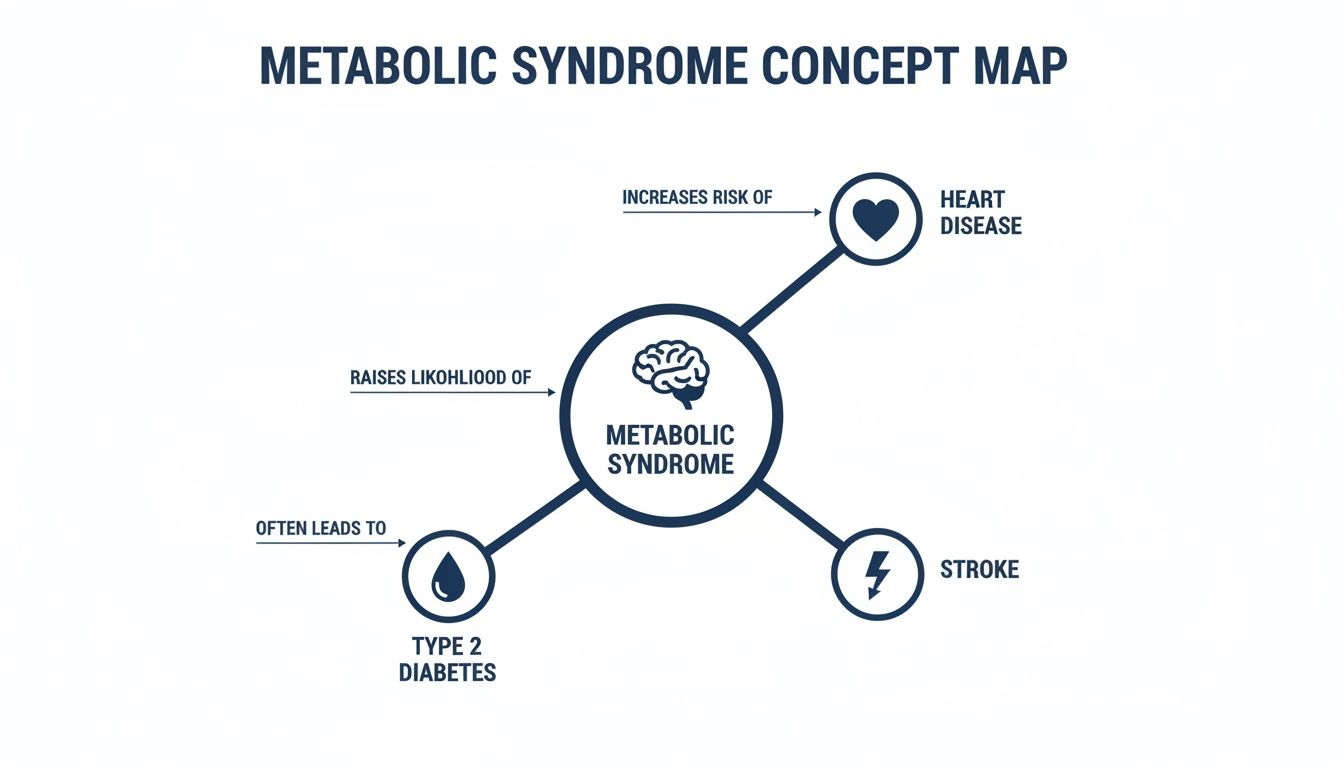
This visual map helps connect the dots. As you can see, these aren't isolated health issues. They're all tangled together, which is exactly why getting a handle on your metabolic health is so critical for preventing these major complications and promoting longevity.
The 5 Key Signs of Metabolic Syndrome
Metabolic syndrome isn't a single disease but rather a cluster of risk factors. When you have several of these conditions at once, your risk for serious health problems skyrockets. The official diagnosis typically requires having at least three of the following five signs.
Here’s a clear overview of what clinicians look for.
The 5 Signs at a Glance
This table breaks down the five key indicators. Think of it as a checklist; having three or more of these signs is the clinical standard for a diagnosis.
| Indicator | What It Measures | At-Risk Threshold |
|---|---|---|
| Abdominal Obesity | Excess fat around the waist | Waistline >40 inches (men) or >35 inches (women) |
| High Triglycerides | A type of fat (lipid) in your blood | 150 mg/dL or higher |
| Low HDL Cholesterol | The "good" cholesterol that clears arteries | Less than 40 mg/dL (men) or <50 mg/dL (women) |
| High Blood Pressure | The force of blood against artery walls | 130/85 mmHg or higher |
| Elevated Fasting Glucose | High blood sugar, a sign of insulin resistance | 100 mg/dL or higher |
These numbers aren't arbitrary. They represent tipping points where your body's systems are under enough strain to significantly increase your risk for future health problems. Let's dig into each one.
Sign 1: Abdominal Obesity (A Widening Waistline)
When it comes to metabolic syndrome, the number on the scale isn't the whole story. The real focus is on abdominal obesity, which is simply a clinical term for carrying too much fat around your midsection. We measure this with a tape measure, not a scale.
Why the focus on the waist? Because the fat stored deep in your belly—known as what is visceral fat—is far more dangerous than the fat you can pinch on your arms or legs. This internal fat is metabolically active, meaning it churns out inflammatory hormones that fuel insulin resistance, the core problem behind metabolic syndrome.
Sign 2: High Triglycerides
Triglycerides are a type of fat that circulates in your blood. Your body uses them for energy, but when you consistently eat more calories than you burn, it converts the excess into triglycerides and stores them in fat cells.
When a blood test shows high triglycerides (150 mg/dL or higher), it's a sign that your body's energy-storage system is overloaded. This excess fat in the bloodstream contributes to the hardening and narrowing of arteries, setting the stage for heart disease.
Sign 3: Low HDL Cholesterol
Think of high-density lipoprotein (HDL) as the "good" cholesterol. Its job is to be the cleanup crew for your circulatory system. HDL patrols your arteries, scavenging for harmful cholesterol and carrying it back to the liver to be flushed out.
When your HDL levels are too low—less than 40 mg/dL for men and 50 mg/dL for women—it means the cleanup crew is understaffed. Plaque can build up more easily, clogging your arteries and raising your risk of a heart attack or stroke.
Sign 4: High Blood Pressure (Hypertension)
High blood pressure, or hypertension, means the force of blood pushing against your artery walls is consistently too high. Over time, this constant pressure damages the delicate inner lining of your arteries.
This damage makes the arteries stiff and narrow, forcing your heart to work much harder to pump blood. A reading of 130/85 mmHg or higher is the threshold for metabolic syndrome. It’s a classic sign that your entire cardiovascular system is under serious strain.
Sign 5: Elevated Fasting Blood Sugar
This is a direct measure of how well your body manages sugar. After you eat, your body breaks down carbohydrates into glucose (sugar), which enters your bloodstream. The hormone insulin then helps shuttle that glucose into your cells for energy.
An elevated fasting glucose level (100 mg/dL or higher) indicates that this process isn't working correctly. Your cells are becoming resistant to insulin's signals, leaving too much sugar floating around in your blood. This is a major stepping stone toward prediabetes and, eventually, type 2 diabetes.
The Silent Signs: Blood Pressure and Blood Sugar
Some of the most critical signs of metabolic syndrome don't show up in the mirror. While an expanding waistline is a visible clue, two of the biggest red flags are high blood pressure (hypertension) and high fasting blood sugar.
These are often called "silent" signs for a good reason—you can't feel them. But beneath the surface, they're putting serious, constant strain on your body. Regular check-ups are the only way to catch them. Knowing your numbers isn't about getting a scary diagnosis; it's about getting the data you need to take control of your health.

High Blood Pressure: The Strained System
Think of your blood vessels as a flexible plumbing system. In a healthy state, blood flows through them smoothly. Hypertension is like cranking the pressure way up in that system.
Over time, that relentless force damages the delicate inner lining of your arteries. They start to get stiff and are more likely to develop plaque buildup. This makes your heart work overtime just to pump blood, leading to wear and tear. For metabolic syndrome, the diagnostic cutoff is a reading of 130/85 mmHg or higher. This chronic strain is a direct line to an increased risk for heart attacks and strokes.
A single blood pressure reading is just a snapshot. Consistently high readings serve as a call to action—an opportunity to protect your heart with simple shifts in diet, stress management, and regular movement.
Hypertension and blood sugar issues are major contributors to cardiovascular risk. Data shows metabolic syndrome affected roughly 56.4% of U.S. adults aged 60 and over, partly because high blood pressure and glucose problems become more common with age. You can read more about these findings from the International Diabetes Federation.
Elevated Fasting Blood Sugar: A Communication Breakdown
The other silent sign is an elevated fasting blood sugar level, which points to a bigger problem called insulin resistance.
Here’s a simple way to picture it: Think of insulin as a key and your body’s cells as doors with locks. Normally, insulin neatly unlocks the cell doors, letting glucose (sugar) in for energy.
With insulin resistance, the locks on the doors get rusty. Your pancreas tries to compensate by making more insulin keys to force the doors open, but eventually, it just can't keep up. The result? Sugar gets locked out of the cells and starts piling up in your bloodstream.
A fasting blood sugar level of 100 mg/dL or higher is a clear signal that this system is struggling. This is one of the most direct signs of metabolic syndrome and a significant step toward developing prediabetes or type 2 diabetes.
The good news is that you have a ton of influence over this process. Simple, smart changes to what you eat and how much you move can help your cells "listen" to insulin again. For practical ideas, check out our guide on how to reduce insulin resistance naturally.
Understanding Your Personal Risk Factors
While knowing the five signs is a great start, it's just as important to understand why they show up. Recognizing your personal risk factors isn't about blame; it's about gaining the knowledge to make proactive choices for your long-term health.
Some of these factors we can't change, like our age or genes. But many others are completely within our control, and that's where the real power for healthy living lies.
Factors You Cannot Change
Certain parts of our health profile are simply part of our story. You can't alter them, but knowing they exist helps you stay vigilant and focus on what you can influence.
- Age: As we get older, our bodies can naturally become more prone to insulin resistance. It’s why metabolic syndrome is more common in adults over 45—a natural shift that simply requires more conscious effort to manage.
- Family History: If type 2 diabetes or heart disease runs in your family, you might have a genetic predisposition. This isn't a guarantee, but it does mean your daily choices carry more weight.
Factors You Can Influence
This is where you get to take the driver's seat. The following risk factors are tied directly to your lifestyle, giving you a clear roadmap for improving your well-being and supporting healthy longevity.
The most empowering part of understanding metabolic syndrome is realizing how much influence you have. Your daily habits related to food, movement, and stress are the most powerful tools you possess.
Leading a less active life is a major contributor. Regular physical activity helps your body use insulin effectively and plays a huge role in weight management. When we're mostly sedentary, our muscles become less sensitive to insulin, which makes it easier for blood sugar to creep up. Knowing how to measure body fat percentage can give you a much clearer picture than the scale alone.
Your diet is another key piece of the puzzle. A diet high in processed foods, sugary drinks, and unhealthy fats can overload your system. On the flip side, a diet rich in whole foods—fruits, vegetables, and lean proteins—gives your body the right tools to function at its best.
Finally, don't overlook chronic stress and poor sleep. When you're constantly stressed, your body pumps out excess cortisol, a hormone that can drive up blood sugar and encourage belly fat storage. Similarly, not getting enough quality sleep disrupts the hormones that regulate appetite and metabolism.
For a precise picture of where you stand, it can be helpful to explore custom metabolic health tests. These insights can help you and your clinician create a truly targeted plan.
Your Action Plan for Better Metabolic Health
Knowing the signs of metabolic syndrome is the first step. The next—and most empowering—is taking action. The good news is that you have a tremendous amount of control. Small, consistent changes can lead to profound improvements in your health and support your weight management goals.
Think of it as building a sturdy foundation for your long-term wellness, one practical choice at a time.

Nourish Your Body with Smart Food Choices
What you put on your plate is one of the most powerful tools you have. This isn’t about restrictive dieting; it's about making smart, sustainable swaps that nourish your body.
A great place to start is by focusing on whole, unprocessed foods. Fill your plate with a colorful variety of vegetables, lean proteins like chicken and fish, and healthy fats from avocados and nuts. These foods help stabilize blood sugar and cool the inflammation that drives many signs of metabolic syndrome.
At the same time, it’s wise to reduce refined sugars and processed carbs. Simple swaps—sparkling water instead of soda, whole-grain bread instead of white—can make a huge difference.
Move with Purpose Every Day
Movement is essential for metabolic health. It helps your body use insulin more effectively, lowers blood pressure, improves cholesterol, and is a must for maintaining a healthy weight.
You don’t have to become a marathon runner. Consistency is key. Aim for at least 30 minutes of moderate activity, like a brisk walk, on most days.
Practical Tip: Find something you enjoy. Whether it's gardening, dancing, or walking with a friend, you're more likely to stick with it if it doesn't feel like a chore. Incorporate strength training two times a week to build muscle, which helps your body manage blood sugar more efficiently.
Prioritize Restorative Sleep
Sleep is when your body repairs itself. Skimping on quality sleep can throw the hormones that control your appetite and metabolism completely out of whack.
Most adults need 7-9 hours of solid sleep each night. If you’re struggling, try creating a relaxing bedtime ritual. Shut down screens an hour before bed, take a warm bath, or read a book. Making your bedroom a cool, dark, and quiet sanctuary can also work wonders.
Think of sleep not as a luxury, but as a critical pillar of your metabolic health. It’s just as important as diet and exercise for healthy aging.
Find Healthy Ways to Manage Stress
Chronic stress is another major player in metabolic problems. When you’re constantly wound up, your body pumps out cortisol, a hormone that can raise blood sugar and encourage the storage of stubborn belly fat.
Finding healthy outlets for stress is key. This could be mindfulness, spending time in nature, connecting with friends, or enjoying a hobby. Even taking a few minutes for deep, slow breaths can help calm your nervous system.
The Role of Medical Guidance and Modern Therapies
While lifestyle changes are the foundation, you don’t have to go it alone. Working with a clinician is crucial for creating a personalized plan and tracking your progress.
For many, these efforts are supported by modern therapeutic options. For instance, GLP-1 therapies can be an effective tool for weight management and improving insulin sensitivity, tackling several key factors of metabolic syndrome at once. Other innovative therapies like NAD+ may also support cellular health and energy metabolism as part of a comprehensive plan.
These tools, when used under professional guidance, can be a powerful part of your overall strategy. If you're looking for structured support, our guide on how to start a weight loss journey is packed with practical tips.
Your Path Forward Starts Now
Learning about the signs of metabolic syndrome isn't about getting a frightening diagnosis. It’s about listening to your body. Think of these signs as a clear roadmap—your body is handing you the directions you need to build a healthier, more vibrant future.
Each sign is an opportunity to make powerful changes that can profoundly impact your health and longevity. This isn't a journey you have to take on by yourself. The real magic happens when you combine your own motivation with expert guidance.
This is your moment to take the wheel. Recognizing these signs is the first, most crucial step toward a longer, more energetic life. You have the power to change the destination.
Making small, consistent adjustments to your daily routines can help restore your body’s natural balance. Your path to better health is personal, and a one-size-fits-all approach just doesn't work.
Ready to understand your personal health profile and get a clear plan? Take the Blue Haven Rx quiz and discover how a personalized approach can help you achieve your wellness goals.
Common Questions About Metabolic Syndrome
Here are some clear, straightforward answers to the things people ask most often.
Can I have metabolic syndrome if I'm not overweight?
Absolutely. While a large waistline is one of the five key criteria, it’s not required for a diagnosis. It's possible to be at a "normal" weight but still have other risk factors, like high blood pressure, high triglycerides, and elevated blood sugar. This is a powerful reminder that internal metabolic health is more important than the number on the scale.
How quickly will lifestyle changes help?
You might be surprised at how quickly your body can respond. Many people see measurable improvements in just a few weeks of consistent effort.
The goal is progress, not perfection. Small, consistent changes are what build long-term health and add up to a huge impact over time.
Blood pressure and blood sugar can start to improve within a few weeks of eating better and getting regular exercise. More substantial shifts, like noticeable weight loss and better cholesterol numbers, usually take a few months.
Is metabolic syndrome reversible?
Yes, for most people, the conditions that define metabolic syndrome are reversible. You can’t change your genetics, but you have a tremendous amount of control over the five key markers. By committing to sustainable lifestyle changes—like eating whole foods, moving your body regularly, managing stress, and getting good sleep—you can guide those numbers back into a healthy range and set yourself up for a much healthier future.
At Blue Haven Rx, we believe that understanding your health is the first step toward changing it. If you're ready to get a clear picture of where you stand and find a guided path toward your wellness and weight management goals, we’re here to help.
Start your journey with us today.