
A Practical Guide on How to Lose Weight with Diabetes
Losing weight when you're managing diabetes isn't about just one thing. It’s a thoughtful blend of nourishing your body with the right foods, finding physical activities you genuinely enjoy, and working with modern medical support. This combination is key to managing your blood sugar levels effectively while achieving sustainable, long-term weight loss.
Your Realistic Path to Weight Loss with Diabetes
Trying to lose weight with diabetes can sometimes feel like solving a complicated puzzle. But here’s the good news: it's a puzzle you can absolutely solve. This guide is your straightforward roadmap, offering clear, actionable strategies without confusing medical jargon. We'll break down how losing even a small amount of weight can make a massive difference in your blood sugar control and overall health.
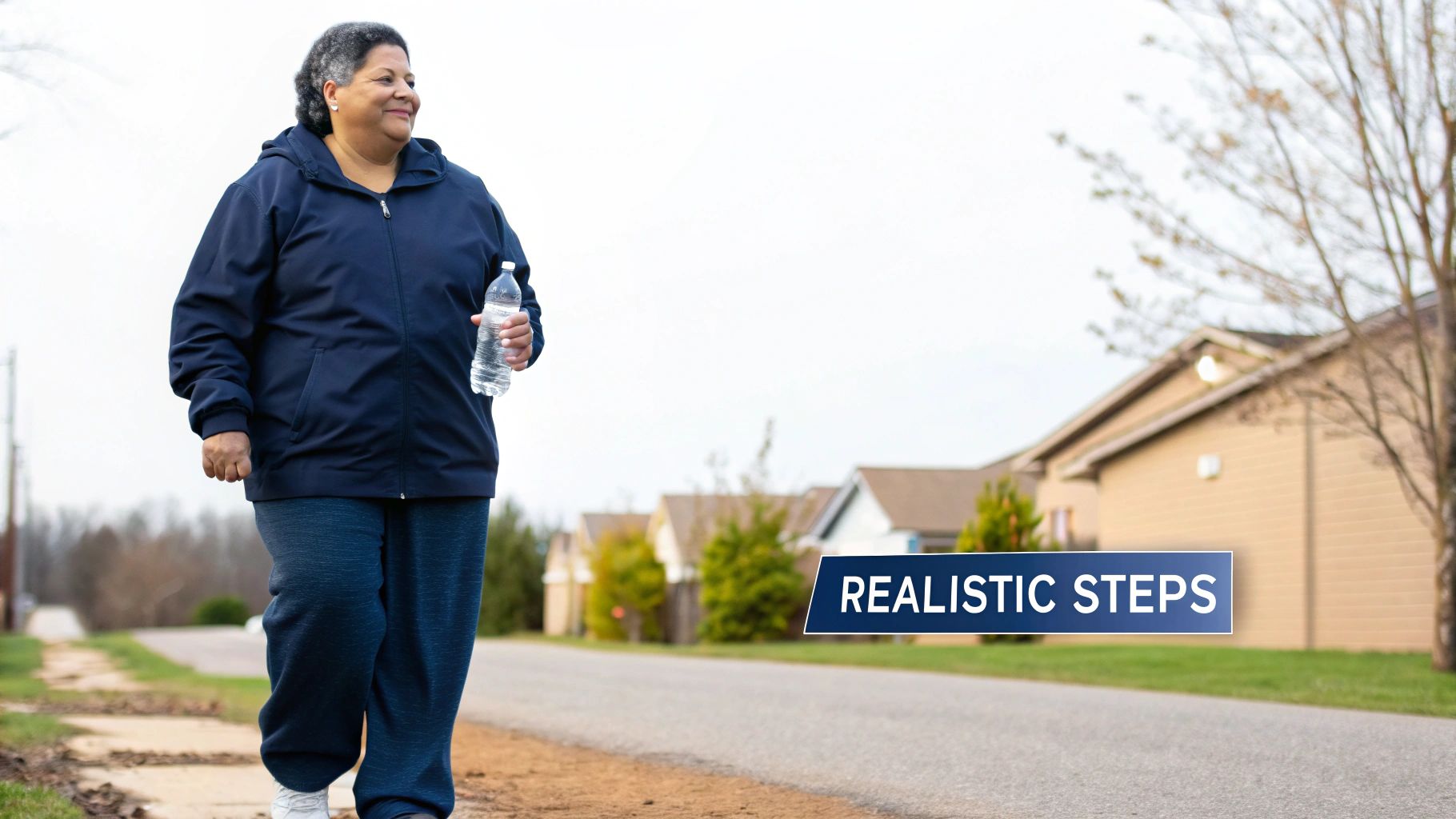
Think of this as a partnership. Armed with the right tools and knowledge, you can achieve your health goals and build a more vibrant future. For a deeper dive into the basics, our guide on how to start a weight loss journey offers foundational tips that work perfectly with the diabetes-specific advice here.
Setting The Foundation For Success
The secret isn't perfection; it's consistency. You’ll build powerful momentum by focusing on small, manageable changes that add up over time. These small shifts become the bedrock of a healthier lifestyle that supports both your weight management goals and your long-term well-being.
Your journey will likely involve a few core areas, each playing a vital role in your success. Below is a quick overview of the key strategies we’ll be covering.
Key Strategies for Diabetes Weight Management
This table outlines the core components for a successful weight loss journey with diabetes. We'll explore each one in more detail.
| Strategy | Main Objective | Example Action |
|---|---|---|
| Dietary Choices | Stabilize blood sugar and create a calorie deficit. | Focusing on whole foods and managing carbohydrate intake. |
| Physical Activity | Improve insulin sensitivity and burn calories. | Starting with a daily 30-minute walk. |
| Medical Guidance | Ensure safety and optimize your plan. | Adjusting medication with your doctor's oversight. |
Each of these pillars supports the others, creating a comprehensive plan that's both effective and sustainable.
Don't Forget Healthy Fats
As you make changes, it’s important to understand the role of different nutrients. Healthy fats, for example, are crucial for heart health and can help you feel full. Incorporating high-quality oils can be a fantastic addition to your strategy. This article is a great resource explaining the benefits of Extra Virgin Olive Oil for Weight Loss.
Small, consistent actions are the secret to lasting change. Instead of overhauling your entire life overnight, focus on making one better choice at a time. This approach makes your goals feel achievable and helps you build confidence.
Why Weight Management Is a Game-Changer for Diabetes Control
Before we dive into how to lose weight with diabetes, let's talk about the why. Understanding this connection is the most powerful first step you can take. It puts you in charge of your health in a way that nothing else can.
Think of insulin as the key that unlocks your body's cells, letting sugar (glucose) in for energy. When you carry extra weight, especially around your middle, it’s like the locks on those cells get rusty. This makes it difficult for the insulin key to do its job, a condition called insulin resistance.
When the key doesn't work well, sugar gets stuck in your bloodstream instead of fueling your cells. That’s what leads to high blood sugar. Losing weight is like oiling those rusty locks—it helps your own insulin work much better.
What’s Really Happening Inside Your Body
The connection between a higher Body Mass Index (BMI) and type 2 diabetes is a powerful one. A massive Global Burden of Disease study showed that a high BMI is the single biggest risk factor for type 2 diabetes. That number underscores just how critical weight management is for your long-term health. Discover more insights from the global diabetes study.
So, what happens when you start to manage your weight and tackle insulin resistance?
- Your blood sugar becomes more predictable. As your body regains sensitivity to insulin, your glucose levels start to stabilize, making wild swings less common.
- You might need less medication. It’s not uncommon for people to reduce their diabetes medication dosage as they lose weight, always with a doctor’s guidance.
- Your risk for complications drops. Healthy weight management is one of your best defenses against long-term diabetes issues like heart disease, kidney damage, and nerve problems.
Getting a handle on insulin resistance is truly at the heart of the matter. For a deeper dive into practical strategies, you can learn how to reduce insulin resistance naturally in our comprehensive guide.
Navigating Changes After 45
For many of us in the 45-65+ age range, our bodies go through changes. Hormonal shifts can slow down your metabolism, making it easier to gain weight, especially that stubborn fat around the abdomen.
This isn't just about how your clothes fit. This type of belly fat, or visceral fat, is a major player in worsening insulin resistance. It can feel like you’re fighting an uphill battle, especially when the diet and exercise tricks that worked in your 30s just don't seem to work anymore.
The most important thing to remember is that these changes are normal. The goal isn't to fight your body but to adapt your strategy. You can absolutely navigate this stage successfully.
It’s all about working smarter, not just harder. This means finding the right mix of nutrition, movement you enjoy, and sometimes, the right medical support to get your body back in balance. This holistic view is what leads to real, lasting results for healthy living.
Building a Sustainable Diabetes-Friendly Eating Plan
When you’re trying to lose weight with diabetes, your diet is ground zero. But let's move past generic, one-size-fits-all advice. This is about creating real-world food strategies that stick—enjoyable, sustainable habits, not a restrictive diet that leaves you feeling deprived.

One of the best starting points is the "plate method." It's a simple visual guide for putting together balanced meals. You won't need to mess with complicated calorie counting, making it an intuitive way to get the right nutrients for both weight loss and blood sugar stability.
Mastering the Plate Method
Picture your dinner plate divided into three sections. This simple mental trick can make healthy eating feel almost automatic, removing the guesswork from your meals.
Here’s the breakdown:
- Half your plate: Non-starchy vegetables. Load up on things like broccoli, spinach, bell peppers, green beans, or a big, colorful salad. They're incredibly low in calories and carbs but loaded with fiber and vitamins.
- One-quarter of your plate: Lean protein. Think chicken breast, fish, tofu, or beans. Protein is critical for helping you feel full and satisfied, which is your best defense against overeating.
- The last quarter: Complex carbohydrates. This spot is for high-fiber choices like quinoa, brown rice, or sweet potatoes. These carbs digest more slowly, which helps prevent sharp blood sugar spikes.
Following this model ensures you get a nutrient-dense meal that provides steady energy. While this simplifies portion control, it's still helpful to grasp the core concept of energy balance. You can learn more about creating a calorie deficit in our detailed guide.
Your Best Friends: Protein and Fiber
For anyone with diabetes, protein and fiber are your most powerful allies. They team up to slow down digestion, which is the secret to better blood sugar control. When digestion is slower, glucose enters your bloodstream more gradually, preventing the sudden highs and lows that can zap your energy.
Protein also does the crucial job of maintaining muscle mass while you lose weight. This is important because muscle burns more calories than fat. Fiber—found in vegetables, fruits, and whole grains—adds bulk to your meals, helping you feel physically full on fewer calories.
The goal is to feel satisfied, not starved. A diet rich in protein and fiber makes it infinitely easier to stick to your plan because you won't be constantly fighting hunger and cravings.
Making Smart Swaps and Reading Labels
You don't need to overhaul your pantry overnight. Small, consistent changes are what lead to lasting results. Start with simple swaps that cut down on sugar and boost your nutrient intake.
Practical Tip: Easy Meal-Swaps
- Trade sugary breakfast cereal for oatmeal topped with berries and nuts.
- Instead of fries, ask for a side salad or steamed veggies.
- Swap white bread and pasta for their whole-grain counterparts.
- Ditch sodas and juices for water infused with fruit or unsweetened iced tea.
Becoming a savvy label-reader is another game-changing skill. Food companies often hide sugar in products like pasta sauces and salad dressings. Always check the "added sugars" line on the nutrition panel and aim to keep it as low as possible.
Enjoying Your Life While Staying on Track
A healthy eating plan shouldn't feel like a punishment. You can, and should, still enjoy eating out with friends and family. It just takes a little planning.
Most restaurants post menus online. Before you go, take five minutes to find a few healthy options. When ordering, don't be shy about making requests, like asking for sauces on the side or for your chicken to be grilled instead of fried.
At home, your choice of cooking tools can make a difference. For example, using PFOA and PTFE-free cookware is a great step toward creating a healthier kitchen environment.
The Role of Medical Support
Building these healthy habits is the cornerstone of long-term success. But for many people, the biological pull of cravings and intense hunger can feel like an impossible hurdle. This is where modern medical support can be a true game-changer.
Medications like GLP-1s work with your body's natural systems to help manage cravings and regulate your appetite. They can help you feel full faster and stay satisfied longer, which makes sticking with your new, healthier eating plan much more achievable.
Weaving Movement into Your Life for Better Blood Sugar
If diet is the foundation of your plan, think of movement as the framework that holds it all together. When you're trying to lose weight with diabetes, getting active is a total game-changer. This isn't about training for a marathon. It’s about finding ways to move your body that you enjoy—ways that support both your weight loss goals and your blood sugar management.
Exercise works its magic in two key ways. First, activities that get your heart pumping—like a brisk walk or bike ride—burn calories, which is fundamental for weight loss. But the second part is where things get really interesting for diabetes control: building strength.
Why Muscle is Your Best Friend
Your muscles are like sponges for blood sugar. The more lean muscle you have, the more efficiently your body can pull sugar out of your bloodstream for fuel. This process is a huge boost for your insulin sensitivity, helping your body's own insulin work the way it's supposed to.
This powerful effect means that regular activity can lead to steadier blood sugar levels. It also gives your metabolism a nice kickstart, which is great for longevity and healthy living.
How to Get Started Safely and Smartly
I get it—if you haven't been active in a while, starting an exercise routine can feel like a huge hurdle. The secret is to start small. Your body is amazing at adapting, and what feels tough today will be your warm-up in a few weeks.
Here are a few practical tips to get moving:
- Just walk. It’s free, you can do it anywhere, and it's one of the most underrated exercises. Start with 10-15 minutes a day and gradually add more time or pick up the pace.
- Find your fun. You're more likely to stick with something you enjoy. Maybe it's dancing, gardening, or a water aerobics class.
- Add strength training twice a week. You don't need a gym. Bodyweight exercises like squats and lunges are fantastic. Resistance bands are another great, low-impact way to build muscle at home.
The challenge of diabetes is a global one; the World Health Organization is tracking some staggering numbers. But there's real hope in the data. Study after study shows that lifestyle changes, especially exercise, can dramatically change the outcome. In trials for modern medications, participants who combined treatment with lifestyle efforts saw incredible results, losing an average of 14.9% of their body weight. A whopping 86% of them lost at least 5%.
Your Pre-Workout Safety Checklist
For anyone managing diabetes, a few safety checks are important. These simple steps can help you avoid a potentially dangerous drop in blood sugar, or hypoglycemia.
Practical Tip: Always check your blood sugar before and after you exercise, especially when starting a new activity. This is the best way to learn how your body responds.
Be sure to keep a quick source of carbs with you, like glucose tablets or a small juice box. If you start to feel shaky, dizzy, or confused, you'll have it on hand. And don't forget to drink plenty of water!
Look for the Wins Beyond the Scale
While the number on the scale might be your goal, the "non-scale victories" are often what keep you going. These are the real-life benefits that make you feel better every day.
You’ll start to notice you have more energy. You’re sleeping better. Your mood feels brighter. These positive changes create a fantastic feedback loop that makes you want to keep moving. Celebrating these wins is essential for making movement a permanent, joyful part of your life.
How Modern Medicine Can Support Your Weight Loss Goals
It can be frustrating. You’re doing everything right—watching your diet, trying to be more active—but the scale isn’t budging, especially when managing diabetes. If this sounds familiar, please know you’re not alone, and it’s not a personal failing. Sometimes, lifestyle changes need a helping hand.
The great news is that modern medicine offers powerful tools that can work with your efforts. These aren’t quick fixes, but rather science-backed treatments designed to support your body's biology and give your hard work the boost it needs.
Understanding GLP-1 Medications
You’ve probably heard of a class of medications called GLP-1s (glucagon-like peptide-1 agonists). While first developed to treat type 2 diabetes, they’ve proven to be game-changers for weight management. Compounds like Semaglutide and Tirzepatide work by mimicking a natural hormone in your body.
This hormone does a few things that are incredibly helpful when you're trying to lose weight with diabetes:
- It tells your brain you’re full, helping to quiet your appetite and dial down cravings.
- It slows down how quickly your stomach empties, so you feel satisfied longer after a meal.
- It improves your body’s insulin response when blood sugar is high—a direct win for managing diabetes.
By working in sync with your body, these medications can make creating a calorie deficit feel less like a constant, uphill battle. You can dive deeper into how they work in our guide on GLP-1 medications for weight loss.
The Impact of Modern Treatments on Health
Clinical trials for medications like Tirzepatide have shown remarkable outcomes. Some participants have lost up to 22.5% of their body weight while significantly lowering their A1C. These are the kind of results that can reduce long-term health complications.
That’s the real story here. These treatments go far beyond just weight loss; they are a direct investment in better diabetes control and overall health.
Think of it this way: Medical support is like a strong tailwind on a long hike. You still have to do the walking (diet) and navigate the path (exercise), but it makes the journey forward so much smoother and less exhausting.
It’s all about making your efforts count for more. When your body's own signals are working with you instead of against you, sticking to a healthy plan becomes so much more achievable.
Accessing Support Through Telehealth
Not long ago, exploring medical weight loss options meant multiple appointments and a lot of hassle. Thankfully, telehealth has changed that, making it easy to get personalized, expert guidance right from your home.
At Blue Haven Rx, we’ve designed a simple, supportive process to help you find out if a medical plan is the right next step. We see it as a partnership, and our goal is to make you feel empowered and informed.
Our process is straightforward:
- Start with our quiz. This gives us a snapshot of your health and goals, helping determine if you might be a candidate.
- Consult with a licensed provider. You’ll have a secure, one-on-one video call with a healthcare professional to discuss the best path forward.
- Receive medication discreetly. If prescribed a treatment, it’s shipped directly to your home in private packaging.
Our commitment doesn't end there. We provide ongoing, personalized support to ensure you feel confident and successful on your path to better health.
Creating a Long-Term Plan for Lasting Success
Losing the initial weight is a huge accomplishment, but keeping it off for good is the real win. The journey of how to lose weight with diabetes succeeds when you stop thinking in terms of a temporary "diet" and start building a healthier lifestyle you can stick with.
Long-term success boils down to having a resilient mindset. You're going to have off days. There will be times when the scale won't budge. That’s not failure; it’s a normal part of the process. The secret is to stay consistent with your core habits, even when motivation isn't at its peak.
Pushing Past Plateaus
It’s almost inevitable: you'll hit a weight loss plateau where your progress seems to stop. This is often your body adapting to your new routine. To get things moving again, you may need to shake things up—maybe by adding a different type of exercise or getting more precise with your portion sizes.
Managing stress is another piece of the puzzle. High stress levels spike cortisol, a hormone that can throw your blood sugar out of whack and encourage your body to store belly fat. Finding healthy ways to decompress—whether it's a quiet walk, meditation, or a hobby you enjoy—is non-negotiable for both your mental health and your weight management.
The goal isn't to create a lifestyle of constant struggle. It's to build one that feels good. Remember to celebrate all the wins along the way—not just the numbers on the scale, but the newfound energy and the healthy habits you've built.
Combining Efforts for the Best Outcome
The most effective formula for lasting health combines all your efforts. Think of healthy eating and consistent movement as your foundation. For many people, adding medical support from providers like Blue Haven Rx provides the extra help needed to make those habits stick.
Modern treatments can help you navigate biological challenges, like intense cravings, making it far easier to stay on track. This comprehensive approach creates a powerful synergy that paves the way for success that truly lasts.
Questions That Come Up When Losing Weight with Diabetes
Starting a weight loss plan with diabetes can feel like navigating a maze. It’s normal to have questions. Getting straight, reliable answers is the first step to feeling confident and in control. Let's tackle some common ones.
Can I Try to Lose Weight Quickly?
The idea of shedding pounds fast is tempting, but with diabetes, "slow and steady" is the safest and most sustainable path. The goal should be a gradual loss of about 1-2 pounds per week.
Losing weight too quickly can throw your blood sugar into a tailspin and cause you to lose muscle, not just fat. This is where a clinical team becomes your essential partner. They can help you create a plan that works with your body, making medication adjustments as you progress to keep your glucose levels stable.
How Do Medications Like GLP-1s Actually Work?
You've probably heard about GLP-1 medications like Semaglutide and Tirzepatide. They've been a game-changer for people managing type 2 diabetes and weight because they mimic a natural hormone in your gut, targeting the biological roots of the problem.
Here’s a breakdown of what they do:
- They tell your brain you’re full, dialing down food "noise" and cravings.
- They slow down the rate at which food leaves your stomach, so you feel satisfied for much longer after eating.
This one-two punch is incredibly effective. It makes sticking to a healthier diet feel less like a battle and more like a choice, leading to significant weight loss and better blood sugar control.
If I'm on Medication, Do I Still Have to Diet and Exercise?
Yes, absolutely. Think of medication as a powerful co-pilot, not the pilot. It’s there to make the journey smoother, but you still need to steer with healthy habits. A foundation of nutritious food and consistent movement is non-negotiable for long-term health.
The medication is designed to manage physiological hurdles—like intense hunger—that can derail even the best intentions. This makes it so much easier to build and stick with those healthy routines for lasting weight management and healthy living.
Your journey to a healthier you is personal, and you shouldn't have to figure it all out by yourself. At Blue Haven Rx, we provide the medical guidance to help you reach your goals safely and effectively.
Ready to see what a personalized plan could do for you? Start your journey with Blue Haven Rx today.