
Wegovy Nausea Treatment Tips That Actually Work
Taking the first step in a new weight management plan is a huge win for your health, but it's natural to have questions about side effects like nausea. The good news is that while nausea is common with GLP-1 medications, it's almost always temporary and very manageable with the right approach.
Understanding why it happens is the first step to feeling in control and staying on track with your long-term health goals.
Starting Your Journey with Confidence
Kicking off a new chapter in your wellness journey is exciting, and knowing what to expect makes it even better. Nausea is the most talked-about side effect when starting a semaglutide plan, and there's a simple reason why. The medication works by slowing down how quickly your stomach empties—which is a key part of how it helps you feel full longer and manage your weight effectively.
That feeling of fullness can sometimes tip over into feeling queasy, especially at the beginning while your body adjusts. The bright side? This sensation almost always gets better as you continue. Think of it as your body’s initial "getting to know you" phase with a powerful new tool for your health and longevity.
Understanding the Numbers
Looking at the research can help you know what's typical. In clinical trials for semaglutide, nausea was the most commonly reported side effect. For instance, some data showed that around 44% of people felt some nausea while taking it for weight management. For most, it was mild to moderate and rarely a reason to stop treatment when managed properly. You can explore the side effect data in more detail on Chemist-4-U.
The key takeaway is simple: nausea is common, but it's also predictable. This means you and your provider can create a plan to get ahead of it, ensuring a much smoother start.
The Importance of a Gradual Approach
One of the most effective ways to keep discomfort at bay is to increase the dose slowly and carefully. This isn't just a suggestion; it’s fundamental to how we support clients at Blue Haven Rx. How often people experience nausea is directly linked to the dose—it's far less common on the lower starting doses and tends to pop up more as the dose increases.
This is exactly why following a structured plan is so critical for healthy, sustainable living. A proper dosing schedule gives your body the time it needs to adapt, which can dramatically reduce the intensity of side effects. This "start low, go slow" method is designed to keep you comfortable and motivated, setting you up for the long-term results you're looking for. You can learn more about the standard Wegovy dosing schedule in our complete guide.
With the right knowledge and support, you can navigate this initial period with confidence. The strategies we’ll cover will give you practical, real-world ways to handle nausea so you can focus on the incredible, positive changes you're making.
If you’re ready to get started on a personalized plan, take our quick quiz to see if a GLP-1 plan from Blue Haven Rx is right for you.
What to Expect During the First Few Weeks
One of the first questions I always get is, "How long is this nausea going to last?" It's a completely fair question. Knowing what to expect can make the whole process feel much less intimidating.
Most people feel some nausea when they first start, especially during that initial "dose-escalation" phase. This is when you're just beginning the medication or whenever your dose is increased. It’s simply your body getting used to the way the medication works.
The good news? For the vast majority of people, that queasy feeling starts to fade within a few days to a week. You might notice it pop up again for a short time after your next dose increase, but that's a normal part of the process.
A Typical Adjustment Period
Setting realistic expectations is one of the most important things you can do to stick with your treatment long enough to see real results for your health.
Here’s a look at a typical journey, which helps visualize how you progress from starting the medication to settling into a comfortable, effective maintenance dose.
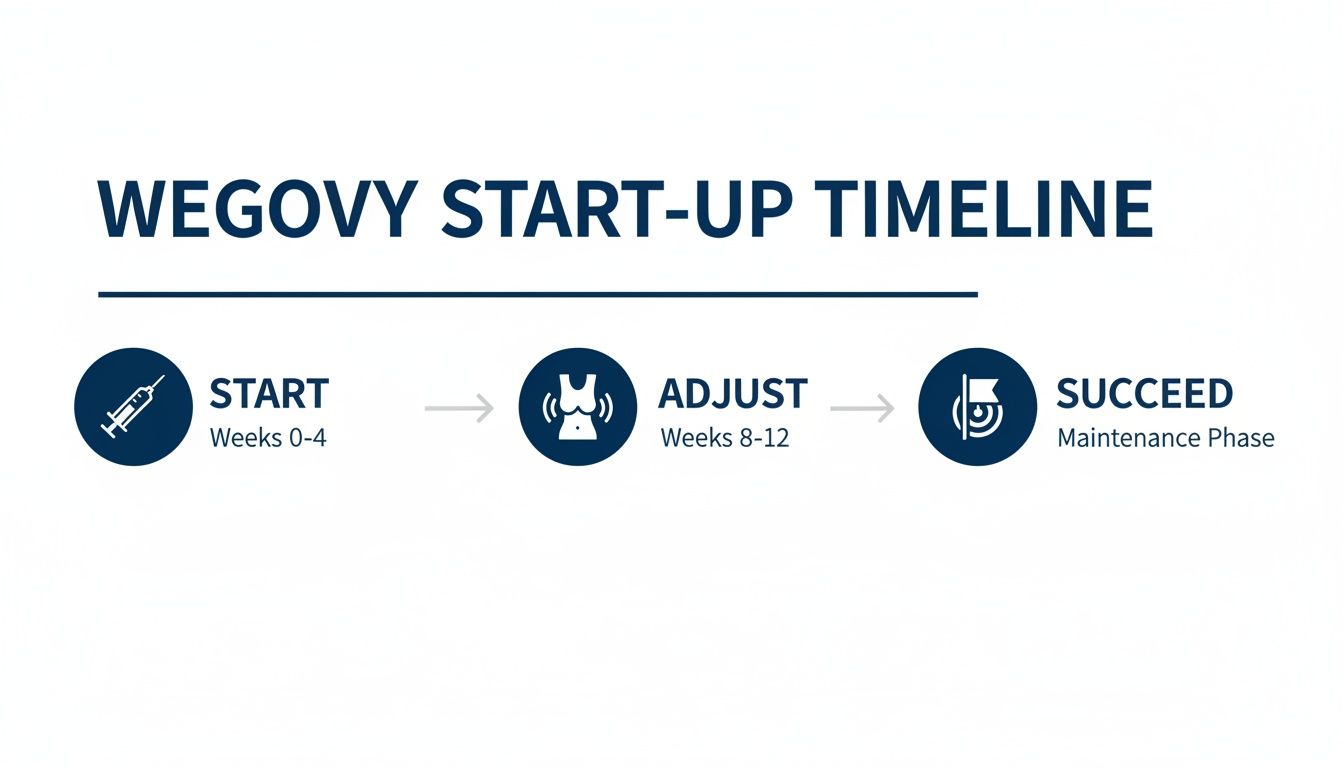
As you can see, the adjustment period is temporary. It’s a bridge to get you to your long-term wellness goals.
Those first few weeks are the most critical for letting your body adapt. We know from clinical data that nausea is most noticeable in the first one to four weeks after either starting a GLP-1 or increasing your dose. This is the peak time when your stomach is learning to empty more slowly.
By the time you reach your stable, long-term maintenance dose, persistent nausea is uncommon. A little patience during the first couple of months really pays off for your long-term success.
What Happens When Your Dose Goes Up
Every time you step up your dose according to your prescription schedule, your body continues to adapt. This is precisely why the "start low, go slow" method is the gold standard for managing side effects and having a positive experience.
I like to compare it to starting a new fitness plan. You wouldn't walk into the gym on day one and try to lift the heaviest weights. You build up gradually, letting your muscles adapt. It’s the same principle here—a slow, steady titration gives your digestive system the time it needs to adjust without getting overwhelmed.
Here’s what that "start low, go slow" process usually feels like:
- Your First Dose: This is often when nausea is most pronounced. But for most, it calms down as your body gets acquainted with the medicine.
- Later Dose Increases: You might feel a mild, temporary return of nausea for a few days following each step-up.
- Your Maintenance Dose: Once you’re on your ongoing dose, your body is typically well-adjusted. At this point, side effects are usually minimal or gone.
Think of this adjustment period as a learning opportunity. It’s the perfect time to discover which foods, portion sizes, and habits help you feel your best. For a more comprehensive overview, you can learn more about common GLP-1 medication side effects in our detailed guide.
Remember, this phase doesn't last forever. Getting through it with the right strategies is the key to unlocking incredible long-term health benefits.
What to Do When Nausea Hits: Your At-Home Toolkit
When that familiar, queasy feeling creeps in, having a plan can make all the difference. Having a few go-to strategies can help you get back on your feet quickly. The goal here is simple, immediate comfort.

Sometimes the easiest tricks are the most effective. Simply sipping on ice-cold water throughout the day can be surprisingly settling. If you prefer warm beverages, herbal teas with ginger or peppermint are classic stomach-soothers for a reason—they work.
Speaking of ginger, it’s a powerhouse for fighting nausea. You can find it in teas, chews, or even crystallized candies. Keeping a few ginger chews in your bag or car is a discreet and fast-acting fix for when you’re out and about.
Your Go-To Nausea-Fighting Foods
The last thing you want when you feel sick is a big, heavy meal. The trick is to focus on small, bland snacks that are gentle on your digestive system. These foods help absorb excess stomach acid and keep your blood sugar stable without overwhelming you.
Here are a few trusted options to keep in your pantry:
- Plain Crackers or Toast: Simple, easy to digest, and they get the job done.
- Bananas: They're soft, easy on the stomach, and packed with potassium.
- Applesauce or Rice: These are classic choices for an upset stomach because they’re low in fat and fiber.
The real secret is listening to your body. Instead of forcing three big meals, try having five or six tiny "mini-meals" during the day. This keeps your stomach from getting completely empty, which often makes nausea feel worse.
For more ideas on what to eat, our guide on building a Wegovy-friendly meal plan is a great resource for meals that support your weight management goals while keeping side effects in check.
Non-Food Tactics for Quick Relief
Relief doesn’t always come from the kitchen. Simple adjustments to your environment and routine can be just as powerful when a wave of nausea hits.
Fresh air is one of the fastest ways to shake off that queasy feeling. Just step outside for a few minutes or open a window. A cool, quiet space can also feel like a sanctuary when you're feeling unwell.
Scents can also make a big difference. Many people find that dabbing a little peppermint essential oil on their wrists and inhaling the aroma provides a grounding, soothing sensation. And one last tip: try to stay upright after eating. Lying down flat can make indigestion feel much worse.
For more practical tips, check out these 8 Natural Ways to Support Digestive Comfort. Combining a few of these strategies can give you a solid defense against nausea, helping you stay on track.
How Your Diet and Habits Can Prevent Nausea
When it comes to managing nausea from GLP-1s, the best offense is a good defense. Rather than waiting for that queasy feeling to hit, you can make proactive changes to your diet and daily habits to sidestep it entirely. The key is to work with how the medication functions to keep your body comfortable.
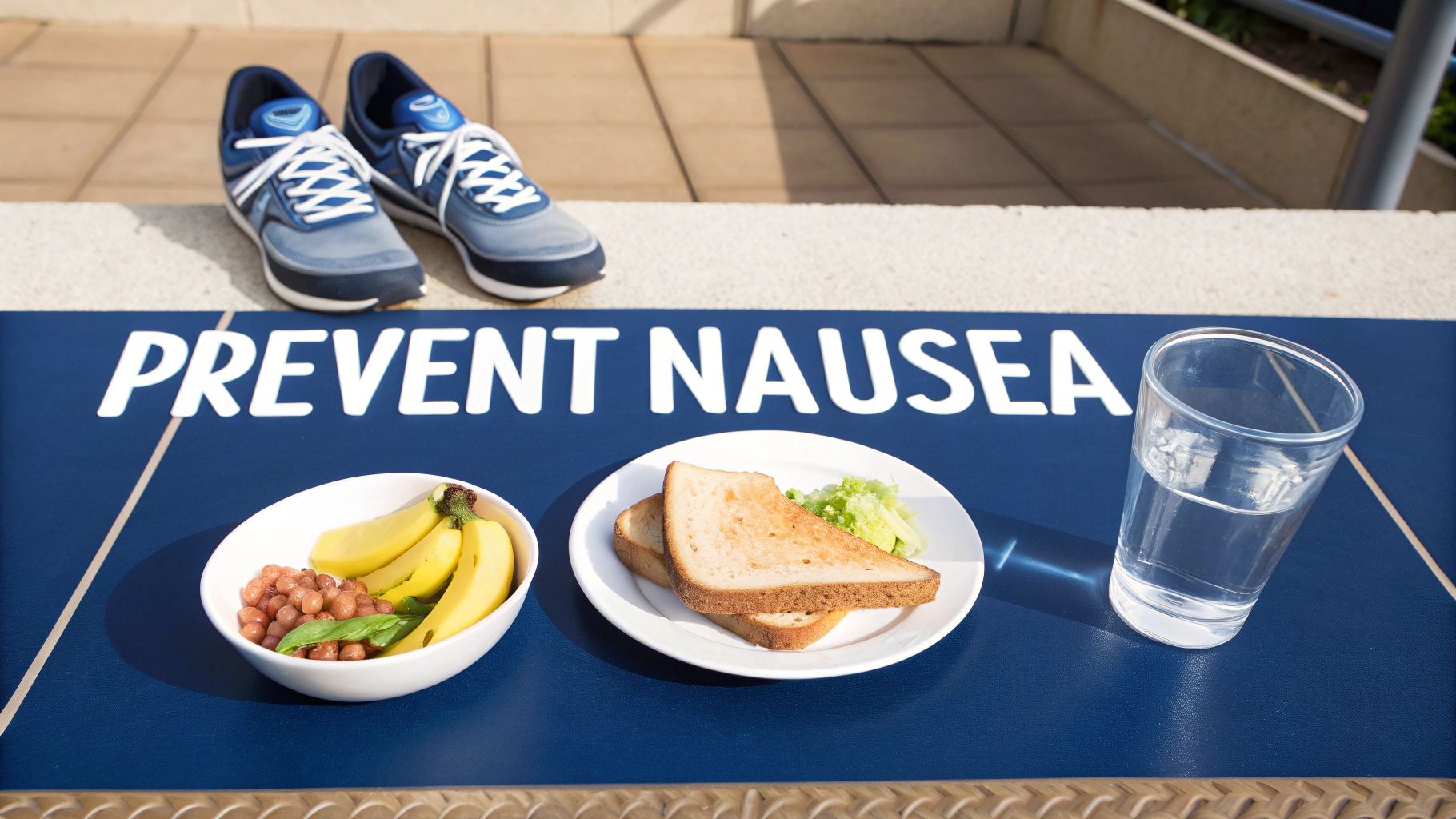
The most effective strategy is often to rethink how you structure your meals. Because your stomach empties more slowly now, the old “three square meals a day” model can easily lead to feeling uncomfortably full.
Rethink Your Meal Structure
Instead of three large meals, try aiming for five or six small meals spaced throughout the day. This simple change prevents your stomach from getting too empty or too full—both common triggers for nausea. It creates a steady trickle of energy and keeps your digestive system from feeling overwhelmed.
This is a mental shift from "mealtime" to "fueling time." You’ll quickly learn to tune into your body’s new fullness signals. The goal is to stop eating the moment you feel satisfied, not stuffed.
A few bites can be the difference between feeling great and feeling queasy. Learning to recognize that subtle "I'm satisfied" signal is a game-changer for your healthy living journey.
Finding ways to make this work with a busy schedule is crucial. Resources like these 7 On-The-Go Diet Tips to Stay On Track can offer some great, practical ideas.
Choose Your Foods Wisely
What you eat is just as important as when you eat. Certain foods are naturally gentle on the stomach, while others are known troublemakers when digestion slows down. Focusing your diet on nausea-friendly foods can make a world of difference.
Your go-to allies will be bland, easy-to-digest foods. Think:
- Lean proteins like grilled chicken, turkey, and fish.
- Simple carbohydrates such as plain rice, toast, crackers, and potatoes.
- Gentle foods like bananas, applesauce, and broth-based soups.
On the flip side, some foods are common culprits for nausea on semaglutide. It's wise to limit these, especially when first starting or after a dose increase:
- Greasy or fried foods that are heavy and take a long time to digest.
- Very spicy meals which can irritate the stomach.
- Excessively sugary foods or drinks.
- Heavy, rich sauces or creamy dishes.
Keeping a simple food and symptom journal for a week or two is an incredibly useful tool. You might discover a clear pattern that helps you feel your best.
Here’s a quick reference guide to help you make smarter choices.
Nausea-Friendly Foods vs Foods to Limit
This table is a great starting point for planning meals that will keep you feeling your best.
| Food Category | Recommended Choices (Easy to Digest) | Foods to Approach with Caution (Potential Triggers) |
|---|---|---|
| Proteins | Grilled chicken breast, baked fish, tofu, plain Greek yogurt | Fried chicken, fatty cuts of red meat, processed sausages |
| Carbohydrates | White rice, plain toast, crackers, boiled potatoes, oatmeal | Rich pasta sauces, pastries, sugary cereals, french fries |
| Fruits & Veggies | Bananas, applesauce, melons, steamed carrots, peeled cucumbers | Cruciferous vegetables (broccoli, cauliflower), acidic fruits (oranges, tomatoes) |
| Fats | Avocado, nuts in small amounts, olive oil | Butter, heavy cream, mayonnaise, fried foods |
Remember, everyone is different, so use this as a guide and pay close attention to your own body's signals.
Lifestyle Habits That Make a Difference
Beyond food, a few small adjustments to your daily routine can have a big impact on preventing nausea.
Hydration is critical, but how you hydrate matters. Chugging a big glass of water with your meal can add too much volume at once. A better approach is to sip water consistently throughout the day between meals.
Gentle movement is also your friend. A slow, 10-minute walk after eating can aid digestion and prevent that heavy feeling in your stomach. On the other hand, you should avoid lying down for at least an hour after eating, as this can make indigestion worse.
The timing of your injection could also be a factor. Some people report fewer side effects by adjusting when they take their dose. For more on that, check out our article on the best time of day to take semaglutide.
By weaving these strategies into your life, you're creating a sustainable, healthy routine that supports your weight management journey for the long haul.
When It's Time to Talk to Your Doctor About Nausea
While most nausea from a GLP-1 is temporary and manageable at home, it's important to know when to bring in professional support. Think of your healthcare provider as your partner in this journey. They're there to help you find solutions that keep you comfortable and on track toward your goals.
Reaching out isn't a sign of failure—it's a smart, proactive step. It's how we make sure your treatment plan is working for you.
Clear Signs It's Time to Reach Out
Knowing the difference between your body adjusting and a side effect that needs attention is key. A little temporary queasiness is one thing, but some signals are your body's way of asking for help.
It's a good idea to contact your provider if you're dealing with any of these:
- Severe or Worsening Nausea: If the feeling is so intense it's disrupting your daily life, it’s more than a minor inconvenience.
- Nausea That Won't Quit: If you’ve been feeling sick for several days or weeks without improvement, you may need a different approach.
- Vomiting and Dehydration: Frequent vomiting is a major red flag. If you can't keep fluids down, it's important to get medical advice right away.
- Inability to Eat: If nausea is so persistent that you can't get enough food down to stay nourished, it's time to talk to your doctor.
Remember, the goal of a weight management program is to support your health, not make you feel miserable. Persistent or severe side effects are a clear sign that a conversation is needed.
How Your Doctor Can Help Manage Nausea
When you let your provider know you're struggling with nausea, they have several effective tools to help you feel better. This is where personalized care really makes a difference.
One of the most common and effective adjustments is changing your dose titration schedule. If your body is having a tough time with a dose increase, your doctor might suggest staying at your current, lower dose for a few extra weeks. This gives your system more time to adapt gradually, which often solves the problem.
Another option is prescribing an anti-nausea medication (also called an antiemetic). Medications like ondansetron can be incredibly effective for managing GLP-1-related nausea, allowing you to stay on your treatment plan comfortably.
The Simplicity of Telehealth Support
This is where a service like Blue Haven Rx makes things so much easier. Instead of trying to schedule an in-person appointment, you can connect with your licensed medical team quickly from home. It's direct access to the professionals guiding your care.
Your provider can assess what's going on, adjust your prescription if needed, and even send any necessary anti-nausea medication right to your door. This seamless support ensures that a manageable side effect doesn't become a roadblock on your path to long-term wellness.
If you're ready to start a journey with a team that has your back, take our quiz to learn more about Blue Haven Rx.
Your Nausea Questions, Answered
Starting a new medication always comes with questions, and feeling prepared is a big part of sticking with it. Let's walk through some of the most common concerns about nausea on GLP-1 treatments so you can feel more confident.
Can I Take Over-the-Counter Nausea Medication?
This is usually one of the first questions people ask. When you're feeling queasy, you want to reach for something familiar. While some over-the-counter options can be helpful, it’s critical that you check with your healthcare provider first.
Your Blue Haven Rx clinician knows your health history and can make sure an over-the-counter option won't cause any issues with your treatment. They can also point you toward the most effective choice and the right dose for you.
If the nausea is more persistent, your provider might suggest a prescription for something like ondansetron. It’s a go-to for managing GLP-1-related nausea because it works well and it works fast.
Does the Injection Site or Time of Day Matter?
This is a great question, and the answer often comes down to personal experience. While there isn't extensive clinical data saying one injection site is definitively better, patient anecdotes tell an interesting story.
Some people swear by injecting in their thigh instead of their abdomen. The thinking is that absorption might be a bit slower from the thigh, making it a gentler experience. It’s an easy thing to try, so you can see if it works for you.
Along those same lines, many people find that injecting their dose in the evening is a game-changer. This may allow them to sleep through the initial few hours when mild queasiness is most likely to occur.
These are simple tweaks you can discuss with your care team. A little experimentation, with their guidance, can help you find what feels best.
Will This Nausea Ever Go Away Completely?
For the vast majority of people, the answer is a resounding yes. The nausea you feel with GLP-1 medications is almost always most intense at the very beginning—those first few weeks, and right after a dose increase.
As your body gets used to the medication and how it works, this side effect typically fades away or disappears. This is the whole reason we use a slow, gradual dose-escalation schedule. It’s designed to give your body time to adjust as smoothly as possible.
Think of it as your body getting into a new groove. Once it finds its rhythm, things usually settle down. If your nausea isn't getting better, it’s a signal to check in with your Blue Haven Rx provider to review your plan.
What if I Feel So Sick I Want to Stop Treatment?
Feeling this way can be discouraging, especially when you’re motivated to reach your health goals. Before you consider stopping, please reach out to your medical team.
Severe nausea usually just means your treatment plan needs a little fine-tuning. Your well-being is the number one priority, and there are plenty of adjustments we can make.
Your Blue Haven Rx provider can help by:
- Tweaking your dose schedule: They might have you stay at your current dose a bit longer to give your body more time to acclimate.
- Prescribing an anti-nausea medication: This can offer immediate relief and make it much easier to stick with your treatment.
- Brainstorming other strategies: They may have other personalized tips based on your specific symptoms.
Honest, open communication is the key to finding a path forward that feels both comfortable and effective. You’re not in this alone; your care team is your partner in making this journey a success.
At Blue Haven Rx, we believe ongoing support is crucial for long-term success. If you're ready to start your journey with a team that's with you every step of the way, learn more about our approach.