
A Practical Wegovy Meal Plan for Lasting Weight Loss
A successful Wegovy meal plan isn't about rigid, restrictive dieting. It’s a smarter, more supportive way of eating that actually enhances the medication's effects. The whole idea is to focus on nutrient-dense foods—things like lean proteins, fiber, and healthy fats—to help you feel full and energized on smaller portions, all while keeping potential side effects in check.
This approach is about creating sustainable habits for long-term health and wellness.
Building Your Foundational Wegovy Meal Plan
Starting a weight management journey with a GLP-1 medication is a big step toward better health. Creating a meal plan to go along with it is much simpler than most people think. The goal isn't perfection; it's about making thoughtful food choices that work with the medication, not against it.
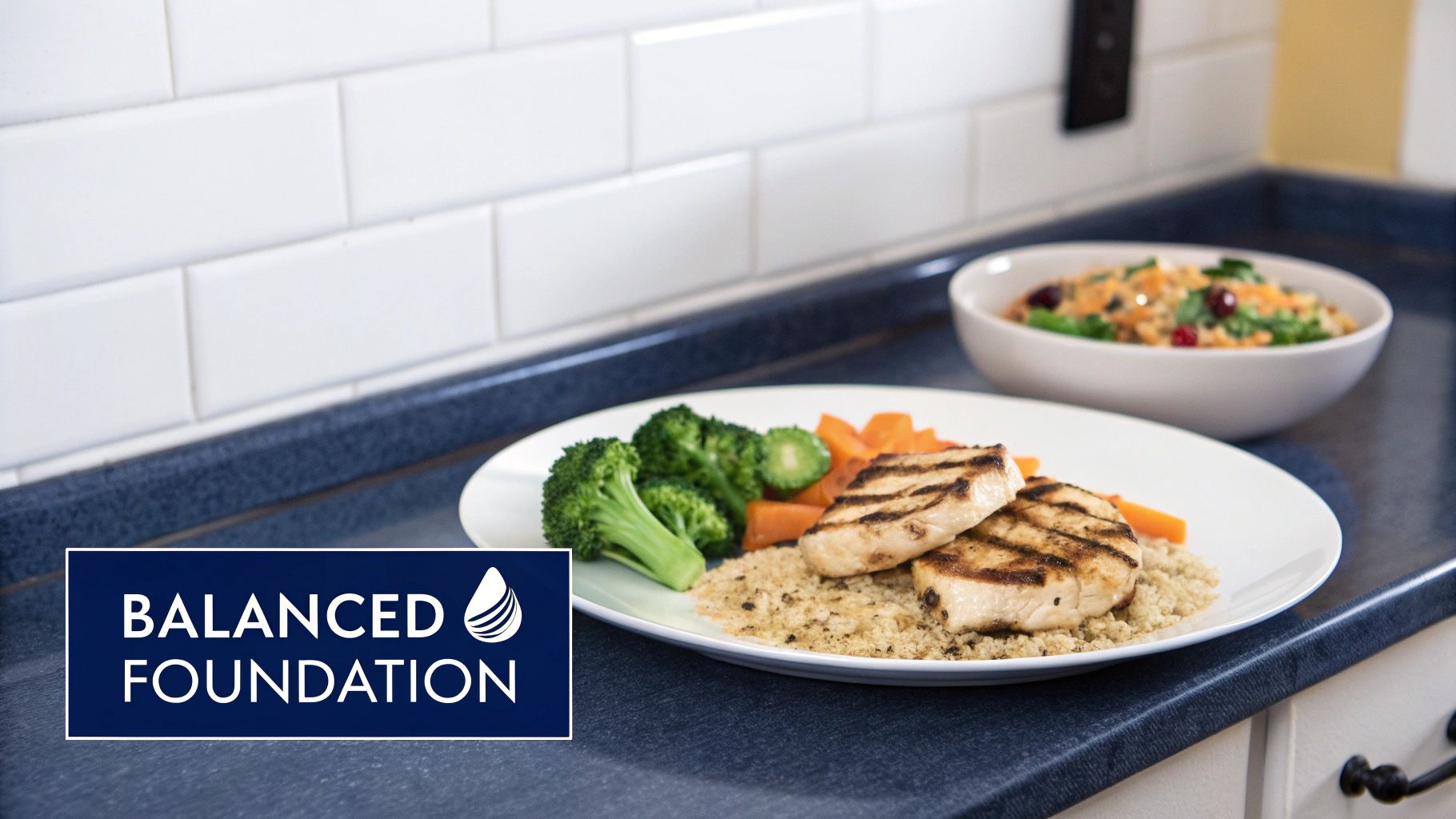
GLP-1s work by slowing down how quickly your stomach empties and sending signals to your brain that you're full. If you want to get into the science, you can learn more in our guide to GLP-1 for weight loss. This naturally dials down your appetite, making it easier to eat fewer calories without that constant feeling of deprivation. Because of this powerful effect, the quality of the food you choose becomes more important than ever.
Prioritizing Nutrient-Dense Foods
Since you’ll naturally be eating less, every bite counts. Focusing on nutrient-dense foods ensures your body gets the vitamins, minerals, and energy it needs to function at its best, supporting both weight management and longevity.
Here’s a quick rundown of the building blocks for a solid meal plan:
- Lean Proteins: Think chicken breast, fish, tofu, beans, and Greek yogurt. Protein is your best friend for feeling satisfied after a meal, and it’s critical for maintaining muscle mass as you lose weight.
- High-Fiber Foods: Load up on vegetables, fruits, and whole grains. Fiber not only helps with digestion but also stabilizes blood sugar and adds to that feeling of fullness, which is exactly what you want.
- Healthy Fats: Sources like avocado, nuts, seeds, and olive oil provide essential fatty acids and also help you feel full. A practical tip: since high-fat or greasy foods can sometimes trigger side effects like nausea, moderation is key.
This balanced approach goes way beyond just losing weight. It’s about building sustainable, healthy living habits that will support you for years to come. For a broader look at dietary principles, this comprehensive guide to healthy meal plans for weight loss is a great supplementary resource.
Key Food Groups for Your Wegovy Meal Plan
| Food Group | Why It's Important | Examples |
|---|---|---|
| Lean Protein | Promotes satiety, preserves muscle mass during weight loss, and helps stabilize blood sugar. | Chicken or turkey breast, fish (salmon, cod), eggs, tofu, lentils, Greek yogurt. |
| High-Fiber Carbohydrates | Aids digestion, contributes to fullness, and helps prevent constipation (a common side effect). | Oats, quinoa, brown rice, whole-wheat bread, berries, leafy greens, broccoli. |
| Healthy Fats | Provides essential fatty acids and enhances satiety. Best consumed in moderation to avoid side effects. | Avocado, olive oil, nuts (almonds, walnuts), seeds (chia, flax), olives. |
| Fruits & Vegetables | Packed with essential vitamins, minerals, and antioxidants for overall health on a reduced-calorie intake. | Spinach, kale, bell peppers, carrots, apples, bananas, oranges, blueberries. |
Focusing on these groups ensures you're getting a well-rounded diet that fuels your body properly on your weight loss journey.
A Science-Backed Strategy
The proof is in credible research. Combining lifestyle changes with this kind of treatment is incredibly effective. A major 68-week clinical trial showed that adults taking this medication (with a starting weight around 232 pounds) lost an average of 15% of their body weight. That’s about 35 pounds.
This was a massive difference compared to the 2.5% loss seen in the placebo group. Even more impressive, nearly a third of the participants lost 20% or more of their body weight. A crucial detail? These results were achieved when participants also followed a reduced-calorie diet and increased their physical activity. It truly highlights the synergy between the medication and a healthy lifestyle.
By focusing on these foundational principles, you’re not just creating a meal plan. You’re building a sustainable way of eating that supports your health, helps you manage side effects, and sets you up for long-term success.
A Sample 7-Day Wegovy Meal Plan With Easy Swaps
Let's get practical. To give you a real-world idea of what eating on a GLP-1 medication can look like, we've put together a sample Wegovy meal plan for one week. Please don't see this as a set of rigid rules. Think of it more as a flexible blueprint, packed with simple, satisfying meals that hit all the right notes: lean protein, plenty of fiber, and healthy fats.
This trio of nutrients is your best friend on this journey. It's the secret sauce to feeling full, warding off cravings, and keeping your energy levels steady. We're talking about things like a protein-packed Greek yogurt bowl to start your day, a crisp grilled chicken salad for lunch, and baked salmon with roasted asparagus for dinner. Simple, clean, and effective.
We've also included easy substitution ideas for every meal. This gives you the freedom to adapt everything to your personal taste, what you're in the mood for, or just what you happen to have in the fridge. The goal is to build your confidence and help you find variety that works for you.
Your Flexible 7-Day Guide
One of the first things you'll notice is that your portion sizes will likely be smaller than what you're used to. That's not just normal; it's the medication doing its job. The most important skill you can practice is listening to your body's fullness cues. Stop when you feel satisfied, not stuffed.
Feel free to adjust the portions based on your specific calorie goals and, most importantly, how you feel. The whole idea is to nourish your body properly. For a deeper look at the numbers behind it, our article explains what a calorie deficit is and how it helps with weight management.
The table below lays out a full week of meals with built-in flexibility to make it work for your life.
Sample 7-Day Meal Schedule with Substitutions
Here is a sample schedule to give you some inspiration. It’s designed to be balanced and easy to prepare, with plenty of room for you to swap ingredients based on preference or availability.
| Day | Breakfast | Lunch | Dinner | Easy Swaps & Tips |
|---|---|---|---|---|
| Day 1 | 2 scrambled eggs with spinach and 1/4 avocado. | Grilled chicken salad with mixed greens, cherry tomatoes, cucumber, and a light vinaigrette. | Baked salmon with roasted asparagus and a small side of quinoa. | Swap chicken for chickpeas in the salad. Not a salmon fan? Try cod or halibut. |
| Day 2 | Plain Greek yogurt with a handful of berries and a sprinkle of chia seeds. | Leftover salmon and quinoa from last night’s dinner, served cold or reheated. | Turkey and black bean chili with a dollop of Greek yogurt on top. | Instead of yogurt, try cottage cheese. Use ground chicken or lentils in the chili. |
| Day 3 | Oatmeal made with low-fat milk or water, topped with sliced banana and walnuts. | Lentil soup with a side of whole-grain crackers. | Lean ground turkey meatballs with zucchini noodles and marinara sauce. | Add a scoop of protein powder to your oatmeal. Swap turkey for lean ground beef. |
| Day 4 | Protein smoothie made with unsweetened almond milk, 1 scoop of protein powder, spinach, and half a frozen banana. | Tuna salad (made with Greek yogurt instead of mayo) in lettuce cups. | Sheet pan lemon-herb chicken with broccoli and bell peppers. | Use any protein powder you like. Canned salmon works well in place of tuna. |
| Day 5 | Two hard-boiled eggs with a piece of whole-grain toast. | Leftover sheet pan chicken and veggies from Day 4. | Shrimp stir-fry with mixed vegetables (like snap peas and carrots) and a small serving of brown rice. | Swap eggs for cottage cheese. Use tofu or chicken instead of shrimp in the stir-fry. |
| Day 6 | Cottage cheese with sliced peaches and a few almonds. | Quinoa bowl with roasted chickpeas, cucumber, tomatoes, and a lemon-tahini dressing. | Grilled lean steak with a large side salad. | Use any seasonal fruit with your cottage cheese. Add grilled chicken to the quinoa bowl if desired. |
| Day 7 | Whole-grain toast with avocado and a sprinkle of everything bagel seasoning. | Leftover chili from Day 2. | Omelet with mushrooms, onions, and a sprinkle of low-fat cheese, served with a side of mixed greens. | Add a sliced hard-boiled egg to your toast for extra protein. Use any veggies you have on hand for the omelet. |
As you can see, eating well doesn't mean your food has to be complicated or bland. The focus is on real, whole foods that are simple enough to prepare even on a busy weeknight.
Making Your Meals Work For You
Real success with a Wegovy meal plan happens when you make it your own. Those substitution ideas in the table are just the beginning.
Here are a few more practical tips to help you customize your plan:
- Power Up with Protein: Make it a priority to include a source of lean protein in every meal. If you’re not up for a big meal, a simple protein shake or a cup of Greek yogurt is a fantastic alternative. Protein is critical for feeling full and protecting your muscle mass.
- Vary Your Veggies: Don't get stuck in a rut. Swap out the vegetables in the plan for whatever is in season or on sale. Leafy greens, broccoli, cauliflower, and colorful bell peppers are always great choices.
- Be Smart About Carbs: Focus on high-fiber, whole-grain carbohydrates. Things like quinoa, brown rice, and oats are digested more slowly, which gives you sustained energy and keeps you feeling satisfied for much longer.
- Boost the Flavor: Get friendly with herbs, spices, lemon juice, and different vinegars. They can add a ton of flavor to your meals without adding extra calories or fat. Roasting vegetables brings out their natural sweetness, and a simple homemade vinaigrette can make any salad exciting.
By using this guide as a template, you can start building a way of eating that truly supports your health goals and makes this wellness journey feel both manageable and enjoyable.
Managing Side Effects Through Smart Food Choices
While many people adjust to GLP-1 medications without any issues, it's not unusual to experience some gastrointestinal side effects. Things like nausea or constipation often appear when you first start treatment or after a dose increase.
The great news? A few simple tweaks to your Wegovy meal plan can make a massive difference in how you feel. Learning to manage these symptoms with the right foods puts you in control, helping you stick with your wellness program and stay focused on your health goals.
Taming Nausea with Gentle Foods
That queasy feeling is one of the most common complaints. It makes sense when you think about it—the medication slows down how quickly food leaves your stomach. While that's fantastic for feeling full longer, it can also lead to discomfort if you're eating certain foods.
Your best bet is to switch from three large meals to smaller, more frequent ones throughout the day. This simple change keeps your stomach from getting overwhelmed. It’s also a good idea to temporarily avoid foods known to make nausea worse:
- High-Fat and Greasy Foods: Think fried foods, creamy sauces, and fatty meats. They take a long time to digest and can feel heavy in your stomach.
- Very Sugary Foods: For some people, desserts and sugary drinks can trigger that nauseous feeling.
- Spicy Foods: While you may love them, spicy dishes can irritate your stomach lining. It’s probably best to dial back the heat for a little while.
Instead, lean into bland, easy-to-digest foods. Things like crackers, toast, rice, baked chicken, or a simple broth-based soup are your friends. Sipping water consistently all day is another game-changer for settling your stomach.
Handling Constipation and Staying Regular
Because everything is slowing down digestively, you might also notice some constipation. The fix is usually a straightforward combination of fiber and fluids. Just remember to increase your fiber intake slowly to give your gut time to adjust.
Jumping into high-fiber foods too quickly without drinking enough water can backfire. Try to work in both soluble and insoluble fiber from real food sources. Some great options include:
- Legumes: Lentils, chickpeas, and black beans are fiber powerhouses.
- Whole Grains: Think oatmeal, quinoa, and brown rice for gentle bulk.
- Fruits and Vegetables: Berries, apples, leafy greens, and broccoli are fantastic choices.
The key is pairing these foods with plenty of water. Water helps the fiber work its magic, softening everything up and promoting regularity. If you feel you need extra help, looking into natural remedies for constipation can offer some gentle, effective ideas.
Minimizing Acid Reflux and Heartburn
Some people also find themselves dealing with acid reflux or heartburn. The triggers are often the same culprits that cause nausea—greasy, spicy, or oversized meals. For some, even acidic foods like tomatoes, citrus fruits, and coffee can set it off.
Try to choose leaner proteins, less acidic fruits like bananas or melons, and well-cooked vegetables to keep the discomfort at bay. It also helps to stay upright for at least an hour or two after you eat.
It's also worth noting that fatigue can sometimes affect your eating habits. You can learn more by reading our guide on whether semaglutide can make you tired. Knowing how to navigate these potential side effects is crucial for staying the course and getting all the benefits of your treatment.
Making these mindful food choices can dramatically improve your comfort and help you stick with your treatment plan.
Smart Snacking and Staying Hydrated
When you’re on a GLP-1 medication, your appetite naturally decreases, which means every bite you take really counts. This is where smart snacking comes in—it’s not about mindlessly adding calories, but about using those in-between meal moments to get the nutrients your body needs to feel good.
Think of snacks as mini-meals. Your goal is to stay nourished and energized without feeling overly full, which is a common concern on these medications.
Choosing Nutrient-Dense Snacks
The best approach is to focus on snacks that are high in protein and fiber. This combination is fantastic for keeping you satisfied, stabilizing your energy, and helping you stick to your health goals. It's about making your calories work for you.
Instead of grabbing empty-calorie options like chips or cookies, it helps to have some go-to, nutrient-packed choices ready.
Here are a few simple, practical ideas:
- A hard-boiled egg: It's a perfect, portable powerhouse of high-quality protein.
- A small handful of almonds: You get a great mix of healthy fats, protein, and fiber that really helps with satiety.
- Cottage cheese with berries: This delivers a serious protein punch, plus you get antioxidants and fiber from the fruit.
- Plain Greek yogurt: Another protein superstar. Add a few nuts or seeds for some satisfying crunch.
- Edamame: A fantastic plant-based option. A little bit of steamed, lightly salted edamame is packed with both protein and fiber.
For a longer list of ideas, take a look at our guide to GLP-1 friendly foods that can easily slot into your meal plan.
The Critical Role of Hydration
Don't underestimate the power of water! Staying well-hydrated is one of the most important things you can do to feel your best on this journey. It's especially crucial for managing potential side effects like constipation, which can sometimes happen as your digestion slows down.
What's really interesting is how our bodies can sometimes mistake thirst for hunger. By keeping up with your water intake, you’ll find it much easier to tell if you’re actually hungry or if you just need a drink. It’s a simple healthy living habit that supports your physical well-being and helps you become more in tune with your body’s signals.
The research continues to show just how effective these treatments are, especially when you pair them with supportive habits like good hydration. One study on a higher dose of semaglutide found that participants lost an average of 21% of their body weight. In fact, over 90% of users achieved at least 5% weight loss. Discover more about these weight-loss findings.
Meal Planning and Prepping for a Stress-Free Week
Consistency is the real secret to success with any healthy eating plan. And the key to consistency? Preparation. The idea of "meal prep" can sound like a huge chore, but it really doesn't have to be. A little bit of planning can save you an incredible amount of time and mental energy during a busy week.
Think of it this way: dedicating just a couple of hours on a Sunday afternoon sets you up for a whole week of easy, healthy choices. This is a game-changer when you’re on a GLP-1 medication. Having supportive, pre-planned meals ready to go removes the guesswork and makes it so much simpler to stay on track.
Creating Your Simple Grocery List
A good prep session always starts with a smart grocery list. Base your list directly on the meals you’ve picked for the week—like those in our sample Wegovy meal plan—and try organizing it by store section (produce, protein, pantry, etc.). This makes the shopping trip way more efficient.
Your focus should be on whole, unprocessed foods that will fuel your body and support your overall wellness.
- Lean Proteins: Grab versatile options like chicken breast, fish fillets, ground turkey, and eggs. Don't forget plant-based choices like tofu or canned chickpeas.
- Fresh Produce: Load up on non-starchy vegetables that are easy to roast or chop ahead of time. Think broccoli, bell peppers, asparagus, and plenty of leafy greens for quick salads.
- Whole Grains: Add items like quinoa, brown rice, and old-fashioned oats to your list for that slow-release, steady energy.
- Healthy Fats: And of course, don't forget sources like avocados, nuts, seeds, and a good quality olive oil for cooking and making simple dressings.
When your kitchen is stocked with these staples, you always have the building blocks for a balanced meal.
Beginner-Friendly Meal Prep Techniques
You don’t have to cook every single meal for the entire week in one go. Even just a few small prep tasks can make a world of difference.
A great place to start is by batch-cooking a grain. Making a big pot of quinoa or brown rice only takes about 20-30 minutes, and suddenly you have a ready-to-use base for bowls and salads all week long.
Next, prepare your proteins. You could grill a few chicken breasts to slice up for salads or hard-boil half a dozen eggs for easy snacks.
Finally, wash and chop your vegetables. This is a huge time-saver. Having sliced bell peppers, chopped onions, and washed spinach ready to go turns a 30-minute cooking job into a 10-minute assembly task.

It’s all about making the healthy choice the easy choice.
Storing Your Food for Freshness
Proper storage is crucial to keep your prepped food fresh and appealing. We recommend investing in a good set of airtight glass containers—they're fantastic for reheating and keep food fresher for longer.
Here are a few practical tips to maximize freshness:
- Cool Completely: Always let hot foods cool down to room temperature before you put them in the fridge. This prevents condensation from making everything soggy.
- Keep Dressings Separate: If you're prepping salads, store the dressing in a small, separate container. Only add it right before you eat to avoid wilted greens.
- Use Paper Towels: For washed leafy greens, line the storage container with a paper towel. It absorbs excess moisture and keeps them crisp.
By adopting these simple meal planning habits, you’re creating a system that supports your health goals with very little daily effort. This thoughtful approach to eating also complements other wellness strategies, like supporting your cellular health with therapies such as NAD+.
If you’re ready to build a supportive wellness routine, find out if you’re a candidate and take the first step with Blue Haven Rx.
Common Questions About Eating on Wegovy
It's completely normal to have questions when you start a new medication. Figuring out how to eat can feel overwhelming at first, but once you get the hang of it, it becomes second nature. Let's walk through some of the most common questions we hear from people just starting out.
Our goal is to give you clear, practical answers so you can feel confident and in control of your Wegovy meal plan.
What Foods Should I Limit to Feel My Best?
The short answer is that no foods are completely forbidden. However, you'll quickly learn that some foods just don't sit well anymore. Since this type of medication slows down how quickly your stomach empties, certain foods can linger and cause discomfort.
You'll probably feel better if you limit:
- High-Fat or Greasy Foods: Think fried chicken, heavy cream sauces, or fatty steaks. These take a long time to digest and are known for causing that heavy, bloated, and nauseous feeling.
- Very Sugary Foods: Sodas, candy, and super-sweet desserts can be a one-way ticket to queasiness for many people. Plus, they offer calories without much nutritional value.
- Spicy Foods: If you love spicy food, you might need to dial it back a notch, at least in the beginning. For some, hot spices can irritate the stomach and lead to indigestion.
Can I Have Alcohol on This Medication?
This is a big one, and it's smart to be cautious with alcohol. It's not just about the "empty calories" that can hinder your weight management goals; alcohol can also affect your blood sugar levels.
Even more, alcohol can amplify some of the medication's side effects. Many people report that even a single drink makes them feel much more nauseous. If you do decide to have a drink, moderation is key. It's also a good idea to have it with food rather than on an empty stomach.
How Do I Eat Enough When I Have No Appetite?
Feeling like you have zero appetite is actually a sign that the medication is doing its job. But it presents a new challenge: how do you get the nutrients your body needs? The trick is to shift from three big meals a day to small, frequent, nutrient-packed mini-meals.
Your focus should be on the quality of food, not the quantity.
Here are a few practical strategies that work well:
- Lead with Protein: Protein is your best friend for maintaining muscle mass. If a whole chicken breast sounds impossible, try a simple protein shake, a cup of Greek yogurt, or a hard-boiled egg.
- Eat by the Clock, Not by Your Stomach: Don't wait to feel hungry, because that feeling might not come. Set a gentle alarm on your phone to remind yourself to have a small snack or meal every 3-4 hours. This keeps your energy steady.
- Drink Your Nutrients: Sometimes it's just easier to sip than to chew. A smoothie is perfect for this—blend protein powder with spinach, berries, and a healthy fat like avocado or almond butter. It's a powerhouse of nutrition that won't leave you feeling stuffed.
With these simple adjustments, you can make sure your body is getting what it needs to thrive on your healthy living journey.
At Blue Haven Rx, we believe in a supportive and comprehensive approach to weight management. If you’re ready to see how a personalized plan can help you achieve your health goals, we invite you to learn more and start your journey with us today.