
Your Wegovy Dosing Schedule: A Guide to Weekly Injections
Starting a GLP-1 medication for weight loss like semaglutide is a significant step toward better health, and understanding the process can help you feel confident and prepared. The Wegovy dosing schedule is not a race; it's a gradual, five-month process designed to help you reach the most effective dose with minimal side effects.
This slow ramp-up is often called "dose escalation" or "titration." You’ll start with a very low 0.25 mg dose and increase it step-by-step. This careful approach is essential—it gives your body the time it needs to adjust, which is crucial for managing common issues like nausea and making your wellness journey a more comfortable one.
Your Roadmap to the Wegovy Dosing Schedule
Feeling confident on this journey starts with understanding the plan. With semaglutide, "slow and steady" isn't just friendly advice; it's the core principle for success. The structured schedule is designed to introduce the medication to your system gently, allowing it to adapt over time.
Think of it like starting a new fitness program. You wouldn't try to lift the heaviest weights on your first day. Instead, you build up gradually to avoid injury and make sustainable progress. The same logic applies here. Rushing the process can lead to uncomfortable side effects, which is the last thing you want when you're focusing on building new, healthy habits for life.
Why Gradual Increases Matter for Your Success
This carefully planned dose escalation is central to how well the medication works and, just as importantly, your ability to stick with it. By starting low and going slow, you’re setting yourself up for success in two key ways:
- You'll feel better. Giving your body time to acclimate is the best way to reduce the intensity of potential side effects.
- You'll stay on track. A smoother experience makes it easier to be consistent, helping you reach the full maintenance dose where the most significant weight management benefits are often seen.
This proven timeline is all about making your path to a healthier you as smooth as possible.
The Wegovy dosing schedule kicks off with a 0.25 mg subcutaneous injection once a week for the first 4 weeks. This low starting dose is specifically designed to minimize the gastrointestinal issues, like nausea and diarrhea, that can be common with GLP-1 medications.
The Standard Escalation Path
The typical dosing plan follows a clear, predictable monthly schedule. You begin with 0.25 mg weekly for the first four weeks. From there, your dose will increase every four weeks—first to 0.5 mg, then 1.0 mg, and 1.7 mg, eventually landing on the target maintenance dose of 2.4 mg.
To make it even clearer, here's a simple table that breaks down the standard Wegovy titration schedule.
Wegovy (Semaglutide) Dose Escalation at a Glance
This table outlines the standard monthly dosing schedule, showing how the dose increases over the first five months to reach the maintenance level. This visual guide helps you track your progress week by week.
| Month | Weeks of Treatment | Weekly Semaglutide Dose |
|---|---|---|
| Month 1 | Weeks 1-4 | 0.25 mg |
| Month 2 | Weeks 5-8 | 0.5 mg |
| Month 3 | Weeks 9-12 | 1.0 mg |
| Month 4 | Weeks 13-16 | 1.7 mg |
| Month 5+ | Weeks 17 and onward | 2.4 mg (Maintenance Dose) |
As you can see, each step is a month-long phase, which gives your body ample time to get comfortable before moving up.
This timeline visualizes that standard dose escalation, helping you see the journey from Month 1 to the maintenance level in Month 5 and beyond.
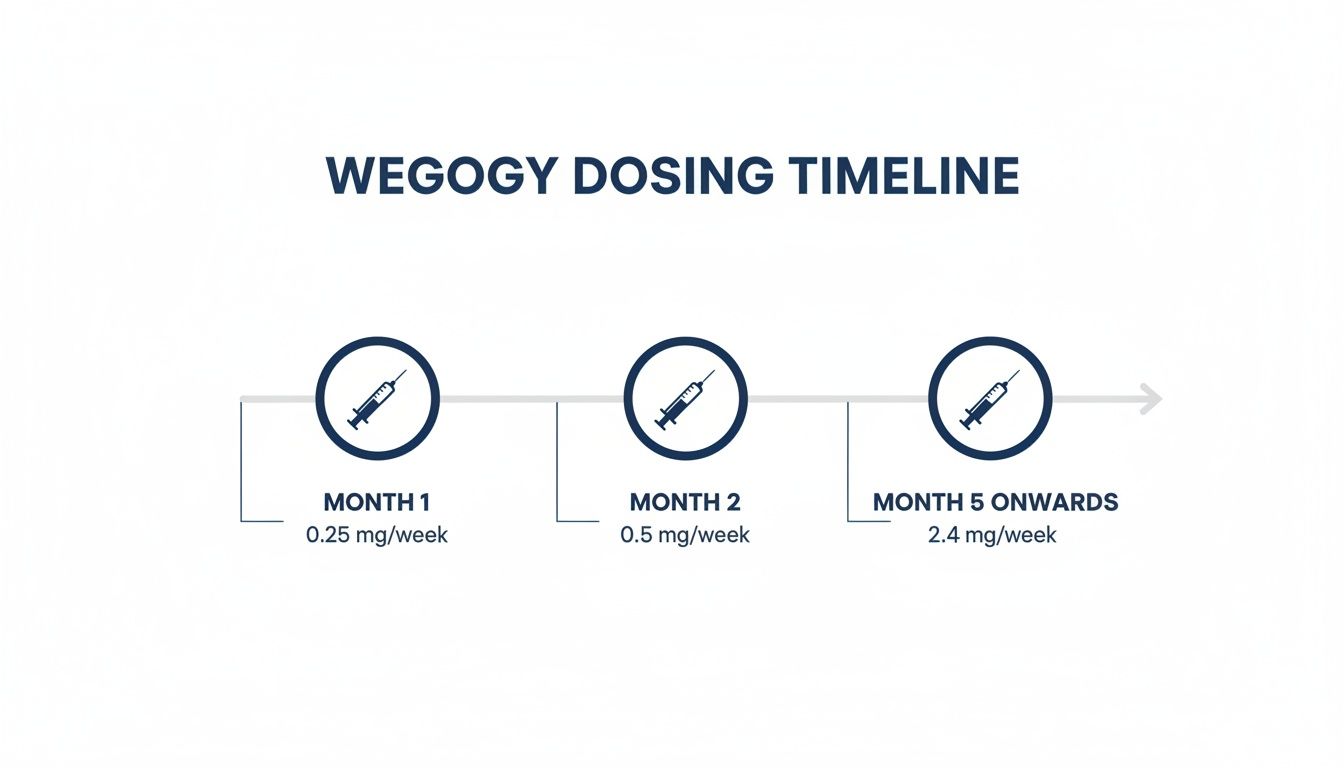
This predictable structure takes the guesswork out of the process and helps you know exactly what to expect at each stage. Just remember, this schedule is your roadmap, but your Blue Haven Rx provider is your personal guide. They're here to help you navigate every step and adjust the plan if needed.
Mastering Your Weekly Semaglutide Injection
Giving yourself a weekly injection might seem intimidating at first, but it quickly becomes a simple part of your routine. Gaining that confidence and taking an active role in your treatment is a powerful part of the process.

First things first, pick your injection day. Consistency is your best friend here, so choose a day and time that you can stick with each week. Maybe it's Sunday mornings or Wednesday evenings. Whatever it is, set a recurring reminder on your phone to help lock in the habit.
Choosing and Rotating Your Injection Site
You have three main options for where to inject: your stomach, your thighs, or the back of your upper arms. They all work equally well, so it comes down to what’s most comfortable for you.
- Abdomen: A popular choice. Just be sure to inject about two inches away from your belly button.
- Thighs: The front of your thigh is another great, easy-to-reach spot.
- Upper Arms: You can use the back of your upper arm, but this one can be tricky to do on your own. You may need a partner to help.
Here’s the most important tip: rotate your sites. Don't inject in the exact same spot every week. If you used your stomach last week, switch to a thigh this week. This simple habit is the key to preventing skin irritation. We have a great visual guide with more detail on choosing injection sites in our dedicated article.
A Simple Injection Process
The actual injection is quick and straightforward. Always start with clean hands and wipe the skin with an alcohol swab. Let it air dry.
Next, grab your pen. Give it a quick look to make sure the medicine is clear and colorless. Double-check that you’ve set the correct dose based on your Wegovy dosing schedule.
When you’re set, press the pen firmly against your skin and push the button. You'll hear a click. Keep holding it in place for about six seconds to make sure you get the full dose.
A Practical Tip for Comfort: If the cold sensation of the medicine bothers you, try taking the pen out of the fridge about 20 minutes before your injection. Letting it come to room temperature can make a big difference. Just be sure to put it right back in the fridge when you're done.
Storing Your Semaglutide Correctly
How you store your pens is critical for keeping the medication effective. They need to be stored in the refrigerator, between 36°F and 46°F (2°C and 8°C). The one thing you must never do is freeze them. If a pen freezes, it is no longer usable and should be discarded.
When traveling, most pens are fine at room temperature (under 86°F) for up to 28 days, but always check the specific instructions that came with your prescription. Keep them out of direct sunlight and heat.
What If I Miss a Dose?
It happens. If you forget a dose, don't worry. There’s a simple rule to follow.
- Is your next dose more than 2 days (48 hours) away? Go ahead and take the missed dose as soon as you remember.
- Is your next dose less than 2 days (48 hours) away? Simply skip it. Wait and take your next dose on your regularly scheduled day.
Whatever you do, don't take two doses close together. If you miss more than two doses in a row, it's best to contact your Blue Haven Rx provider. We can tell you the safest way to get back on your Wegovy dosing schedule.
Dealing with Side Effects as Your Dose Goes Up
As you move up the dosing ladder, it’s normal for your body to take some time to adjust. The most common side effects are mild stomach and gut issues, but the great news is they’re almost always temporary and manageable.
Having a few simple, practical strategies can make all the difference. For most people, side effects fade within a few weeks as their system gets used to the new dose. By being proactive, you can smooth out any bumps in the road and stay focused on your long-term wellness goals.
Taming Nausea and an Upset Stomach
Nausea is the most common side effect, particularly after an injection or a dose increase. It happens because semaglutide slows down how quickly food leaves your stomach—a key part of how it helps you feel full longer.
To manage this, try making small shifts in how you eat. Instead of three large meals, consider five or six smaller ones. This simple change can prevent an overstuffed feeling and reduce nausea.
A few more practical tips that work:
- Eat Slowly. Give your brain time to register that you're full. Put your fork down between bites and savor your food.
- Choose Lighter Foods. Greasy, fried, or very sugary foods can make nausea worse. Stick with lighter options like grilled chicken, steamed veggies, or simple soups.
- Sip, Don't Gulp. Stay hydrated by sipping water or herbal tea throughout the day rather than drinking large amounts at once.
Managing Constipation and Other Digestive Shifts
Another common adjustment is a change in your bathroom habits. Because your digestion is slowing down, you might experience some constipation. The solution often comes down to simple diet and lifestyle tweaks.
Upping your water and fiber intake is your best first move. Aim for at least 64 ounces of water daily and slowly add more fiber-rich foods to your meals.
A Practical Tip for Fiber: Introduce fiber gradually to avoid bloating. Start by adding a tablespoon of chia seeds to your yogurt or swapping white bread for a whole-grain slice. Small, consistent changes are easier on your system.
Here are a few high-fiber foods to start incorporating:
- Fruits: Berries, apples (with the skin), and pears.
- Veggies: Broccoli, Brussels sprouts, and leafy greens.
- Legumes: Lentils, chickpeas, and black beans.
- Whole Grains: Oatmeal, quinoa, and brown rice.
Handling Fatigue and Low Energy
Feeling a little more tired than usual is another thing some people experience. It might be your body adjusting to the medication or simply a result of eating fewer calories. It’s important to listen to your body and ensure you're getting the right nutrients to feel your best.
If your energy is dipping, check out our article on whether semaglutide can cause tiredness for a more detailed look.
These feelings are usually temporary. But if any side effect feels severe or doesn't improve after a week or two, please reach out. Your Blue Haven Rx provider can offer personalized advice and, if necessary, adjust your plan to make your journey smoother.
What to Expect From Your Weight Loss Journey
Starting any new health program is exciting, but it’s crucial to have a marathon mindset, not a sprint. Real, lasting change takes time. Patience and realistic expectations will be your best allies as you follow your semaglutide dosing schedule. The goal isn't just watching the number on the scale drop; it's about making steady, sustainable progress for long-term health.
It’s normal to be eager for quick results, but the gradual dose increases are designed for your comfort and safety. Because of this, the most noticeable changes often appear once you’ve settled into the higher, maintenance-level doses.
Understanding the Timeline for Results
So, what kind of timeline should you expect? Everyone’s body is different, but research gives us a good roadmap. Progress builds on itself, month after month, as you and your provider carefully increase your dose.
In the first couple of months, you'll likely notice a shift in your appetite and perhaps some initial weight loss. But the most substantial results tend to kick in after several months, once you’re consistently on your maintenance dose.
The Bottom Line: This is a journey of steady progress. The first few months are about letting your body adapt. The later months are when you can really start to see the full, powerful effects of the medication combined with your healthy habits.
Milestones Along the Dosing Schedule
Let's look at some numbers from clinical studies to help you set realistic expectations.
The table below illustrates the average weight loss seen at different milestones during dose escalation. Remember, these are averages—your own results may vary, but this provides a helpful benchmark.
Average Weight Loss Milestones During Dose Escalation
This table shows the average percentage of body weight loss observed in studies at different points in the Wegovy dosing schedule, helping you set realistic expectations.
| Time on Treatment | Weekly Dose Level | Average Body Weight Loss |
|---|---|---|
| 2 Months | 0.5 mg | ~4% |
| 3 Months | 1.0 mg | ~6% |
| 4 Months | 1.7 mg | ~8% |
| 2 Years | 2.4 mg | ~15.3% |
As you can see, the results are cumulative. The well-known STEP clinical trials, which looked at long-term outcomes, are even more encouraging. After two years on the 2.4 mg maintenance dose, participants lost an average of 15.3% of their starting body weight. It's a powerful demonstration of how sticking with the treatment leads to significant, life-changing outcomes.
It’s About More Than Just Weight Loss
While the numbers on the scale are a great motivator, the real win is in how you feel every day. As you move through your Wegovy dosing schedule, be sure to celebrate these other positive changes, too:
- More Energy: As you lose weight, you often get a noticeable boost in daily energy.
- Better Metabolic Health: Semaglutide is designed to help your body manage blood sugar more effectively, a cornerstone of long-term health and longevity.
- Easier Movement: Many people find that simple activities—like climbing stairs or playing with their kids—become easier and more enjoyable.
These "non-scale victories" are incredibly powerful. As you hit your goals, the focus naturally shifts to the future. It’s a great idea to learn how to maintain weight loss for good to ensure your new, healthier habits stick around for life.
Partnering With Your Healthcare Provider
Think of your journey with semaglutide as a partnership—with you as the most important team member. Open and honest communication with your healthcare provider is key to a successful and comfortable experience. They are your guide, here to help you navigate your unique path.
Feeling empowered to speak up is crucial. No question is too small, and no concern is unimportant. This partnership ensures your treatment plan stays perfectly in sync with your body’s needs and your long-term health goals.
When to Schedule a Check-In
Routine follow-ups are important, but some situations call for a more immediate conversation. Knowing when to reach out can make all the difference in keeping your progress on track.
It’s always a good idea to schedule a consultation if you run into any of these situations:
- Side Effects That Linger: If side effects like nausea or fatigue aren't improving after a week or two on a new dose, it's time to talk.
- Concerns About Your Progress: If you feel like your progress has stalled or you just have questions, a check-in can bring clarity and peace of mind.
- Missing Multiple Doses: If you happen to miss more than two weekly doses in a row, you should consult your provider before your next injection. They will advise on the safest way to get back on track.
Your wellness plan is not set in stone. We can adjust it based on how you’re feeling. A simple telehealth call can provide the personalized solutions you need to stay on course.
Taking an Active Role in Your Health
Being an active participant in your own health journey is incredibly powerful. You know your body better than anyone. Keeping a simple journal to track your energy levels, appetite, and how you feel can provide very useful information for your discussions with your provider.
This is especially important as medical understanding of these medications evolves. New research is exploring different dosing strategies beyond the standard schedule. The 2025 STEP UP trial is even investigating higher 7.2 mg maintenance doses for people who might need more than the current maximum. This shows why an ongoing conversation is so critical—your treatment can adapt as new findings emerge. You can read more at Applied Clinical Trials Online.
Making Adjustments to Your Dosing Schedule
Sometimes, the standard Wegovy dosing schedule needs a few tweaks. If you're finding the side effects from a dose increase to be challenging, your provider might suggest staying at your current dose for a few extra weeks. This gives your body more time to adjust.
This collaborative approach is designed to help you feel your best throughout the process. If you’re curious about what qualifies someone to start this type of treatment, we have some great info in our guide on how to qualify for a GLP-1 program.
Feeling supported makes all the difference for long-term success. The Blue Haven Rx team is here for you, ready to listen and provide the expert guidance you need.
Your Dosing Schedule Questions, Answered
Starting a new medication comes with questions. Being informed and feeling confident is a huge part of making your treatment work for you. Let’s walk through some of the most common questions about the semaglutide dosing schedule.
What Should I Do If I Miss a Weekly Dose?
First, don't worry. Life happens. What you do next depends on timing.
The key number to remember is 48 hours.
- If your next dose is MORE than 2 days (48 hours) away: Take the missed dose as soon as you remember. Then, continue with your normal weekly schedule.
- If your next dose is LESS than 2 days away: It's best to just skip the dose you missed. Do not double up. Simply wait and take your next dose on its regularly scheduled day.
If you happen to miss more than two doses in a row, it's time for a quick check-in. Just contact your Blue Haven Rx provider. They'll give you the best advice on how to get back on track safely.
Can I Change My Injection Day?
Absolutely. The once-weekly schedule is designed to be flexible. If your Saturday morning routine no longer works, you can switch to a Tuesday evening.
The only rule is to make sure there are at least two full days (48 hours) between your injections. The goal is to fit the treatment into your life, not the other way around.
Why Is Following the Escalation Schedule So Important?
This is one of the most critical parts of getting started. The slow, steady increase in your dose is the key to a comfortable and successful journey.
Your body, especially your digestive system, needs time to get used to the medication. This gradual titration schedule is specifically designed to give it that time.
Jumping ahead or starting on a dose that's too high is the fastest way to run into significant side effects like nausea or other gastrointestinal issues. By sticking to the plan, you are setting yourself up to tolerate the medication well, which helps you stay consistent.
Patience here is what allows you to comfortably reach the effective maintenance dose where you'll see the most significant, long-term results.
What Happens After I Reach the Full Maintenance Dose?
Reaching your maintenance dose—usually 2.4 mg, or 1.7 mg if that dose works well for you—is a major milestone. This means you've successfully moved from the "ramping up" phase to the long-term management part of your plan.
Now, the focus shifts. You'll continue on this same weekly dose to sustain your progress. This is where your medication becomes a consistent partner to the healthy habits you've been building in nutrition, movement, and overall lifestyle.
You’ll continue to have regular check-ins with your Blue Haven Rx provider to ensure the plan is still a perfect fit for your goals and to help you maintain the incredible progress you've made.
Your health journey is a partnership, and the Blue Haven Rx team is here to support you every step of the way. If you're ready to see how a science-backed, medically supervised plan can help you reach your goals for weight management and healthy living, we're ready to help.
Find out if you qualify and start your journey with Blue Haven Rx.