
How to Reduce Insulin Resistance Naturally: A Practical Guide for Healthy Living
If you've been struggling with stubborn belly fat or feeling drained all the time, the culprit might be something called insulin resistance. The good news is that you have the power to turn things around. By making smart, natural adjustments to how you eat, move, and live, you can improve your body's sensitivity to insulin. This is a crucial step toward managing your weight and feeling your best for the long haul.
Understanding Insulin Resistance and Its Impact
So, what's really going on in your body? Imagine insulin is a key. Its job is to unlock your cells to let in glucose (sugar) for fuel. With insulin resistance, those cell locks get a bit rusty. They don't respond to the key as well as they should.
To compensate, your pancreas goes into overdrive, pumping out more and more insulin to try and force that glucose into your cells. This cycle can leave you with high insulin and high blood sugar, which makes weight management feel like an uphill battle and fuels constant fatigue and nagging carb cravings. Left unchecked, it can set the stage for more serious conditions down the road.
Why It Matters for Healthy Aging
Insulin resistance is about more than just blood sugar; it's a major metabolic problem tied to chronic, low-grade inflammation that affects your entire body. It's also incredibly common. Research shows that roughly one in four adults globally is dealing with this. You can read more about the global impact of this condition here.
A major driver is excess body fat, especially the deep abdominal fat that wraps around your organs. This isn't just passive weight—it's metabolically active tissue that can throw your hormones out of balance. To get a better handle on this, you can learn more about visceral fat in our guide.
The journey to better health begins with understanding what's happening inside your body. Recognizing the signs of insulin resistance is the first empowered step toward taking back control of your metabolism, energy, and longevity.
By tackling insulin resistance head-on, you’re doing more than just trying to lose weight. You’re making a direct investment in a healthier, more energetic future. The practical, natural strategies we’re about to cover will show you how to build a solid foundation for lifelong well-being.
Building Your Anti-Insulin Resistance Meal Plan
Food is your most powerful ally in improving insulin sensitivity. This isn't about a miserable, restrictive diet. It’s about making smart, sustainable choices that support your health and weight management goals for the long haul. The secret is building meals that keep your blood sugar steady and your energy consistent all day long.
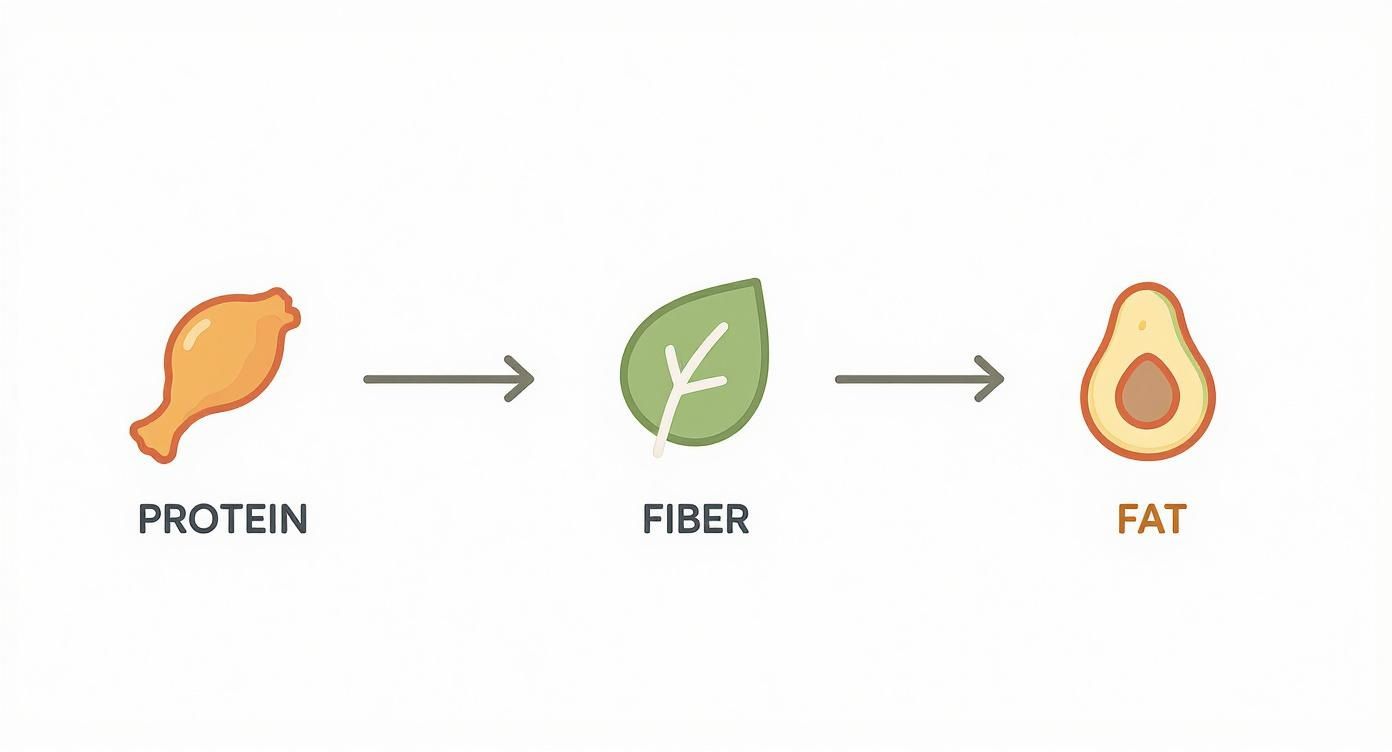
Imagine starting your day with a breakfast that actually powers you until lunch, instead of leaving you raiding the pantry by 10 AM. You get there by shifting your focus from cutting calories to prioritizing the right kinds of foods—specifically protein, fiber, and healthy fats. These three nutrients work together to slow down digestion, preventing the sharp blood sugar spikes that make insulin resistance worse.
The Power Trio: Protein, Fiber, and Fat
Think of protein and fiber as the foundation of every single meal. They are crucial for feeling full and satisfied, which helps you manage your weight without that constant feeling of deprivation.
Healthy fats play a critical role, too. They don’t just help with satiety; they can directly improve how your body responds to insulin. For example, research shows how olive oil can boost glycemic control, making it a simple, powerful addition to your meals.
Here’s a practical way to put this into action:
- Start with Protein: Make a source like eggs, Greek yogurt, chicken, or fish the star of your plate.
- Add Fiber: Load up on non-starchy veggies, beans, lentils, or a serving of whole fruit.
- Include Healthy Fats: Finish with avocado, a sprinkle of nuts or seeds, or a drizzle of olive oil.
This simple formula is a game-changer for building balanced meals that support your metabolic health. For more ideas, check out our guide on the best foods for weight loss.
The goal is to nourish your body with foods that stabilize your blood sugar, not shock it. When you focus on whole, unprocessed foods, you're giving your body the exact tools it needs to become more sensitive to insulin over time.
Making Smart Swaps for Lasting Change
Improving insulin sensitivity often boils down to making a series of simple, everyday swaps. It's not about declaring war on carbs, but about choosing the right ones. Refined carbohydrates, like white bread and sugary cereals, are digested quickly and can send your blood sugar on a rollercoaster. Whole grains, on the other hand, are packed with fiber that slows everything down.
Making a few easy substitutions can have a surprisingly big impact. Here are some simple food swaps you can start making today to help manage your blood sugar and support healthy insulin function.
Simple Food Swaps to Support Healthy Insulin Function
| Instead Of This (High Glycemic) | Choose This (Lower Glycemic) |
|---|---|
| White rice or pasta | Quinoa, brown rice, or whole-wheat pasta |
| Sugary breakfast cereal | Oatmeal topped with berries and nuts |
| Sweetened yogurt | Plain Greek yogurt with cinnamon |
| Fruit juice | A whole piece of fruit (like an apple or pear) |
| Potato chips | A handful of almonds or baby carrots with hummus |
By making these small adjustments, you're taking meaningful steps to improve your metabolic health, one plate at a time. The cumulative effect of these choices can make a world of difference to your weight, energy levels, and overall well-being.
Exercise: Your Most Powerful Tool for Metabolic Health
Think of exercise less as a chore for burning calories and more as a way to rewire your body's response to sugar. When you're active, your muscles become incredibly efficient at pulling glucose from your bloodstream for fuel, which is one of the most direct ways to combat insulin resistance.
Every time you move—whether it's a brisk walk, a bike ride, or dancing in your living room—your muscles get to work. They can soak up blood sugar without needing much insulin to give them the green light. This gives your hard-working pancreas a well-deserved break, helping to lower both your blood sugar and the amount of insulin your body needs to produce.
Why Building Muscle is a Game-Changer
While any movement helps, strength training is your long-term ally. Building lean muscle is like creating more parking spots for glucose in your body. The more muscle mass you have, the more places your body has to safely store blood sugar, keeping it out of your bloodstream where it can cause issues.
You don't have to become a bodybuilder to reap the benefits. A simple and consistent resistance training routine can make a world of difference for your long-term health.
- No Gym? No Problem: Bodyweight exercises are a fantastic starting point. Think squats, lunges, push-ups, and planks—all effective without any special equipment.
- Add Some Resistance: Incorporating dumbbells, kettlebells, or resistance bands two or three times a week is a proven way to build and maintain the muscle mass critical for metabolic health.
- Consistency Trumps Intensity: The goal is a routine you can stick with. 20-30 minutes of focused strength work a few times a week is far more powerful than a single, grueling session that leaves you too sore to move.
Pairing your fitness efforts with smart nutrition is key. Focusing on protein, fiber, and healthy fats helps keep blood sugar stable, making your exercise even more effective.
Getting the Most Bang for Your Buck
If you're short on time, high-intensity interval training (HIIT) can be your secret weapon. HIIT involves alternating short, explosive bursts of effort with brief periods of rest. Research has shown it can improve insulin sensitivity in much less time than traditional cardio.
Here’s a simple HIIT formula to try:
- Warm-up for 5 minutes (light jog, jumping jacks).
- Go all out for 30 seconds (sprinting, burpees, fast cycling).
- Actively recover for 60-90 seconds (walking, slow pedaling).
- Repeat the cycle for about 15-20 minutes.
At the end of the day, the best exercise plan is the one you actually do. Improving your metabolic health isn't about punishing yourself; it's about finding activities you enjoy and weaving them into your life consistently.
The ideal weekly routine blends different types of movement. Aim for a mix of aerobic activity (like walking or swimming), a couple of strength training sessions, and maybe one HIIT workout. Each plays a unique role in enhancing your insulin sensitivity and putting you on the path to better health and longevity.
Ready to build a plan that fits your life? Find out how Blue Haven Rx can help you reach your weight management and health goals. Take our quick quiz to get started.
The Hidden Impact of Sleep and Stress on Blood Sugar
You can be eating all the right things and exercising consistently, but if you're chronically stressed out and not sleeping well, you’ll feel like you’re spinning your wheels. These two factors play a massive, often underestimated, role in your hormonal health and your ability to manage your weight and blood sugar.
When you're running on empty from poor sleep or constant stress, your body defaults to survival mode. It doesn't care about your long-term health goals; it just wants to get through the immediate "threat."

The main player here is cortisol, the "stress hormone." When cortisol levels are high, it tells your liver to dump stored sugar into your bloodstream to provide a quick burst of energy. This process directly counteracts your efforts to keep blood sugar stable and, over time, can make your cells tune out insulin's signal.
Taming Cortisol for Better Blood Sugar
Managing stress isn't just a nice-to-have. It's an essential part of any effective plan to reverse insulin resistance. The great news is you don't need a silent retreat to start seeing benefits. Small, consistent actions can make a world of difference in lowering cortisol.
Mindfulness is one of the most powerful tools in your arsenal. Taking just a few minutes each day to quiet your mind can calm your entire nervous system and dial down the hormonal static that's messing with your metabolism.
Want to try it? Here’s a simple breathing technique you can do anywhere:
- Sit comfortably in a chair or on the floor.
- Breathe in quietly through your nose for a count of four.
- Hold that breath for a count of seven.
- Exhale completely through your mouth, making a whooshing sound, for a count of eight.
- Repeat this simple cycle 3-5 times.
Of course, stress often triggers emotional eating, which can derail your best intentions. If that’s a challenge for you, we've got some practical tips in our guide on how to stop stress eating.
Prioritizing Rest for Metabolic Repair
Sleep is when the magic happens. It’s your body’s dedicated time for repair, which includes resetting your sensitivity to crucial hormones like insulin. Research shows that even a single night of bad sleep can increase insulin resistance the very next day.
Creating a relaxing bedtime routine is one of the most powerful things you can do for your metabolic health. It signals to your body that it's time to wind down, paving the way for deep, restorative sleep.
Start thinking of your bedroom as a "sleep sanctuary." It should be cool, dark, and quiet—a space reserved purely for rest. One of the best things you can do is stick to a consistent sleep schedule, even on the weekends. This helps regulate your body’s internal clock, which is fundamental to hormonal balance.
By getting a handle on both stress and sleep, you're addressing two of the biggest underlying drivers of insulin resistance. These are foundational pillars for long-term metabolic health and healthy aging.
When to Consider Supplements and Clinical Support
While powerful, lifestyle changes are just one piece of the puzzle. For many people, adding targeted supplements or getting professional clinical support can be the key to breaking through a stubborn plateau and seeing real progress.
It’s crucial to think of supplements as assistants, not saviors. They work best when they're supporting the healthy habits you’re already building. Not all supplements are created equal, so it's smart to stick with those backed by evidence and always talk with your doctor before starting something new.
Evidence-Backed Supplements for Metabolic Health
A few specific compounds have shown promise in helping the body manage blood sugar more effectively. They aren’t meant to replace your efforts, but they can give your metabolism a helpful nudge in the right direction.
Two of the most well-researched options are:
- Berberine: This plant-derived compound has been studied for its ability to improve insulin sensitivity. It works through a few different pathways, including activating a key enzyme that helps regulate metabolism.
- Magnesium: As an essential mineral, magnesium is involved in hundreds of bodily processes, including glucose control. Since many people don't get enough, supplementing has been shown to positively impact insulin function.
If you're exploring different dietary aids, a practical guide to creatine benefits and side effects can offer valuable insights into another heavily studied supplement. The goal is to make informed choices that fit your body and your health goals.
When Lifestyle Changes Aren't Enough
Sometimes, you can do everything right—nailing your diet, staying active, and managing stress—and still, the scale won't budge. This is incredibly common, and it’s not a reason to get discouraged. It's often a sign that your body may need a more structured, supportive approach.
The rise in metabolic health issues is a serious global concern. In 2024, an estimated 589 million adults worldwide were living with diabetes, a number that's expected to keep climbing. The population with insulin resistance is even larger, underscoring how critical effective management strategies are.
This is where clinical support can make all the difference. Combining personalized guidance with advanced solutions provides a clear path forward when you feel stuck.
For those who need a bigger boost with weight management—a cornerstone of improving insulin sensitivity—clinically supervised programs can be a game-changer. For example, some people find success with treatments that target hormonal pathways to regulate appetite and improve how the body processes sugar. You can learn more about GLP-1 options in our detailed guide.
At Blue Haven Rx, we know this journey is personal. We're here to provide the tools and medical guidance you need to finally achieve your health and weight goals. If you're ready to explore a more supported path, take our quiz to see if our program is right for you.
Answering Your Top Questions About Insulin Resistance
When you start digging into your metabolic health, a lot of questions pop up. We've pulled together some of the most common ones to give you clear, practical answers that build on the strategies we've already covered.
How Long Until I Actually See Improvements?
This is a great question. While everyone's body is different, many people start feeling better remarkably quickly—often noticing more stable energy and fewer cravings within just a few weeks of consistent effort.
For measurable changes in your lab work, like your fasting insulin or A1c, you'll need a bit more patience. It's realistic to expect to see a meaningful shift in those markers within three to six months. The goal isn't a quick fix; it's about building habits that support your long-term health. Consistency is the key to lasting change.
Can I Still Eat Fruit?
Yes, absolutely! The trick is to choose the right fruits and think about how you eat them. Focus on options that are loaded with fiber, which naturally slows down how quickly sugar hits your bloodstream.
Some of the best choices include:
- Berries: Blueberries, strawberries, and raspberries are nutritional powerhouses, packed with fiber and antioxidants.
- Apples and Pears: The high fiber content in these makes them a fantastic, satisfying option.
- Citrus Fruits: Oranges and grapefruits are also great picks.
A good rule of thumb: always eat the whole fruit, not the juice. Juicing strips out all that beneficial fiber. To minimize any potential blood sugar spike, pair your fruit with a little protein or healthy fat. An apple with a small handful of almonds, or berries with a spoonful of plain Greek yogurt, is a perfect, blood-sugar-friendly combination.
Do I Need to Lose a Ton of Weight?
This is a huge misconception that can make the whole process feel daunting. The reality is far more encouraging. You don't need a dramatic transformation to see a profound impact on your insulin sensitivity.
Research is clear on this: losing just 5-7% of your body weight can dramatically improve how your body uses insulin. For someone who weighs 200 pounds, that’s just 10-14 pounds.
Shift your focus from the number on the scale to building healthy, sustainable habits. That's what leads to gradual, lasting change. This is exactly where a well-structured weight management program can provide the support and guidance you need.
What Are the Best Tests to Ask My Doctor For?
To really understand what's going on with your metabolic health, a few simple blood tests are essential. These are invaluable for getting a baseline and for tracking your progress as you put all your hard work into practice.
Here are the key tests to discuss with your healthcare provider:
- Fasting Insulin and Fasting Glucose: These two markers are used to calculate a HOMA-IR score, which is a direct measurement of insulin resistance.
- Hemoglobin A1c (HbA1c): This test provides a big-picture view, showing your average blood sugar levels over the past three months.
At Blue Haven Rx, we're all about a supportive, personalized approach to managing your weight and improving your metabolic health. Our programs are built to give you the medical guidance and practical tools you need to finally reach your goals.
Find out if our program is right for you by taking our quick quiz.