
Best Diet for Women Over 60: A Practical Guide to Thriving
The best diet for women over 60 isn't about deprivation or complicated rules. It’s about being smart and strategic, making sure every bite packs a powerful nutritional punch. The goal is to create a sustainable way of eating that focuses on high-quality protein, calcium-rich foods, and heart-healthy fats to keep you strong, active, and full of life.
Thriving After 60 Starts on Your Plate
Welcome! Think of this as your friendly roadmap to vibrant living. We're not talking about another restrictive diet. Instead, we're exploring a way of eating that fuels your energy, safeguards your strength, and boosts your well-being as you step into your sixties and beyond.
It’s no secret that our bodies change as the years go by. Metabolism naturally slows down, hormones shift, and our ability to absorb certain nutrients isn’t what it used to be. Acknowledging these changes is the first, most crucial step in building a nutrition plan that works with your body—not against it.
Making Every Calorie Count
The secret to a healthy diet after 60 is a simple shift in mindset: focus less on counting calories and more on making your calories count. It's like upgrading the fuel for your body's engine to a premium, more efficient blend for better health and longevity.
Dietary advice for women over 60 often points to slightly lower calorie needs but an even greater demand for nutrient density. Federal guidelines suggest a daily intake between 1,600 and 2,200 calories, but protein needs remain incredibly high to support muscle health and weight management. It’s surprising to learn that about half of all women over 70 aren't getting enough protein, a vital nutrient for preserving muscle.
A nutrient-dense approach is your best defense. It ensures your body gets all the vitamins, minerals, and protein it needs to support everything from bone density to sharp thinking, all within a reasonable calorie budget.
This guide will walk you through the essential food groups and lifestyle habits you need, offering simple, practical tips to help you feel your absolute best. We'll look at how to build a straightforward, sustainable eating plan that supports a healthy heart, maintains muscle, and keeps your bones strong. For more ideas on what to add to your grocery list, check out our guide on the best foods for weight loss.
To simplify things, we'll focus on the five nutritional pillars that form the foundation of a healthy plate after 60. Think of these as your non-negotiables for optimal health and healthy living.
Core Nutritional Focus for Women Over 60
| Nutritional Pillar | Why It's Crucial for Longevity and Weight Management After 60 |
|---|---|
| Protein Power | Protects against age-related muscle loss (sarcopenia) and keeps your metabolism active. |
| Bone-Building Nutrients | Calcium and vitamin D are essential partners for maintaining bone density and resilience. |
| Fantastic Fiber | Supports digestive health, helps manage blood sugar, and promotes a feeling of fullness. |
| Healthy Fats | Crucial for brain function, reducing inflammation, and absorbing certain vitamins. |
| Smart Hydration & Sodium | Key for managing blood pressure, supporting cardiovascular health, and maintaining energy. |
By building your meals around these core areas, you can create a diet that is not only delicious but also perfectly designed to nourish your body for the long haul.
Understanding Your Body's New Blueprint
Think of your body like a well-loved classic car. For decades, it's run beautifully, but now it needs higher-octane fuel and more specialized tune-ups to keep it performing at its best. This is exactly what happens to our bodies after 60; our nutritional needs shift for very specific, biological reasons.
Getting a handle on these changes is the first step toward building a diet that works with your body. It's about making smart, informed choices that directly support your health, weight management, and energy for the long haul.
Why Protein Becomes Your Best Friend
One of the biggest shifts we see is a natural, gradual loss of muscle mass. It has a scientific name—sarcopenia—but what it really means is that our bodies have a harder time holding onto the muscle that keeps us strong. This isn't just about lifting things; muscle is the engine of our metabolism and key to stability.
To fight back, high-quality protein is absolutely essential. It’s the raw material your body needs to repair and maintain that precious muscle tissue. Without enough of it, your body can't keep up, which can lead to weakness and a sluggish metabolism, making weight management more difficult.
The Metabolic Slowdown Is Real
And yes, it's not your imagination—your metabolism does tend to slow down as you get older. A big part of this is that loss of muscle we just talked about, since muscle burns more calories at rest than fat does. Hormonal shifts after menopause also play a significant role.
In practical terms, this means your body doesn't need as many calories to maintain its weight as it did in your 40s or 50s. It’s why the same eating habits you’ve had for years might now be causing the number on the scale to creep up. Understanding this is key to managing your weight without feeling deprived. If you want to dive deeper, we have a whole guide on how to speed up your metabolism with practical tips.
Protecting Your Bone Health
As we navigate our 60s and beyond, our bone density also begins to decline, which puts us at a higher risk for osteoporosis and fractures. The dynamic duo for protecting your skeleton? Calcium and Vitamin D.
Think of calcium as the bricks that build your bones. But Vitamin D is the foreman on the construction site—it’s what tells your body to absorb and use the calcium. Without enough of both, bones can become fragile over time, so getting enough of these two nutrients is a top priority for longevity.
A Note on Digestion and Nutrient Absorption
Even your digestive system changes with the decades. For many, the stomach produces less acid, which can make it trickier for the body to pull certain key nutrients out of food. One of the most common deficiencies is Vitamin B12, which is critical for healthy nerves and energy levels.
This really highlights why focusing on nutrient-dense foods is so important. It's not just about what you eat, but what your body can actually absorb and use. This is a serious concern, as malnutrition in older adults is a growing problem. You can read more about the nutritional challenges in aging populations in credible research reports.
Getting to know these key shifts—in your muscles, metabolism, bones, and digestion—is the foundation for crafting the perfect diet for this chapter of your life.
Building Your Plate for Optimal Health
So, we've talked about the big shifts happening in our bodies. Now for the fun part: turning that knowledge into delicious, satisfying meals that make you feel fantastic. This is where science hits the kitchen counter.
Crafting the best diet for women over 60 isn't about restriction; it's about being strategic. We'll focus on key nutritional areas that act as the foundation for everything from strong muscles to sturdy bones, all while supporting your weight management and longevity goals.
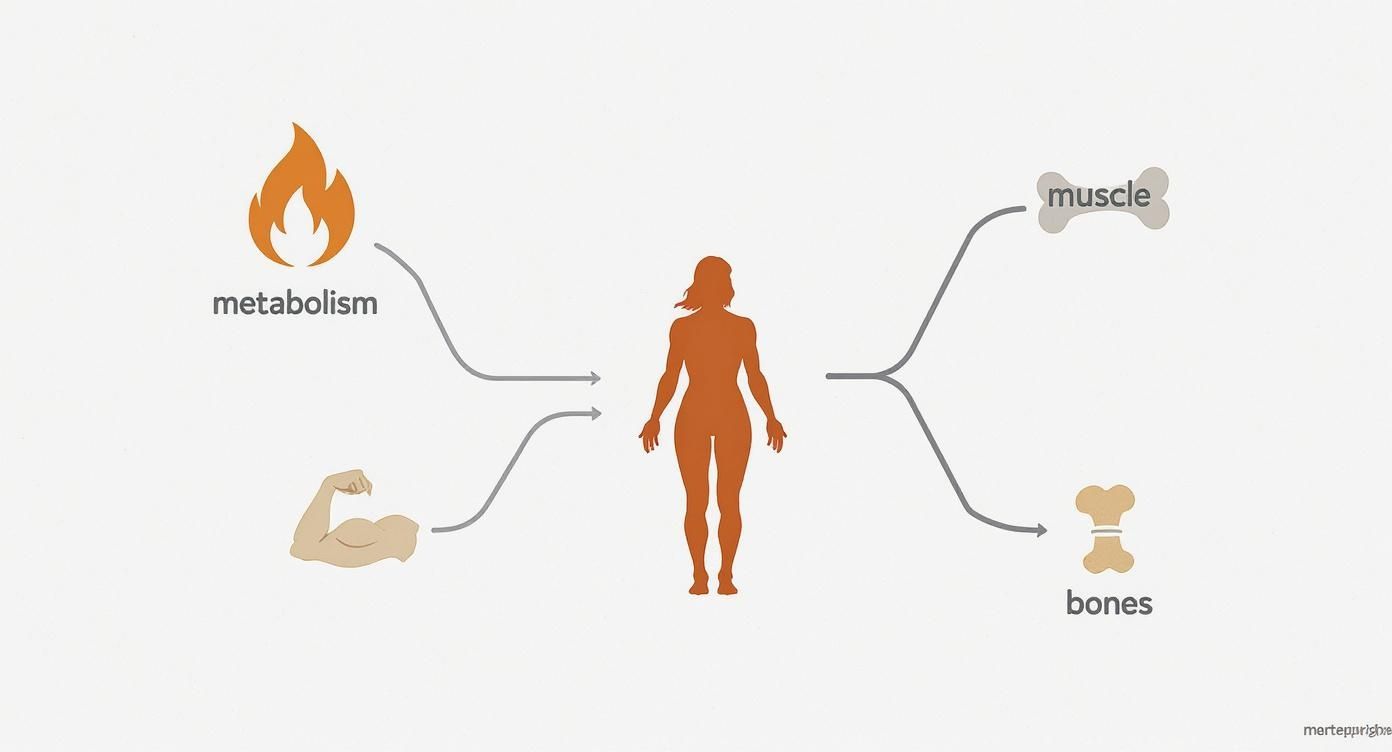
As you can see, these interconnected shifts make a targeted approach to nutrition more important than ever for staying strong and full of life.
Prioritize High-Quality Protein
As we discussed, protecting our muscle mass is job number one for a healthy metabolism and long-term strength. A practical tip is to aim for a good source of protein at every meal.
Here are some great options to choose from:
- Lean Meats: Think chicken breast, turkey, and lean cuts of beef.
- Fish: Salmon, cod, and tuna are wonderful choices that also deliver heart-healthy omega-3 fatty acids.
- Plant-Based Power: Lentils, chickpeas, black beans, tofu, and quinoa are fantastic, nutrient-packed options.
- Dairy and Eggs: Greek yogurt, cottage cheese, and eggs are incredibly easy ways to add a protein punch to any meal.
Boost Calcium and Vitamin D
Strong bones are your ticket to staying active and independent for years to come. Calcium and Vitamin D are the ultimate power couple for bone health, working together to keep your skeleton dense and resilient.
Practical Tip: Vitamin D is the key that unlocks the door, allowing calcium to get inside your bones where it can do its job. Without enough Vitamin D, a lot of the calcium you consume just passes right through.
Here’s where to find these bone-building champions:
- Dairy Products: Milk, yogurt, and cheese are classic sources. Look for fortified versions to get your Vitamin D at the same time.
- Leafy Greens: Don't forget plant-based sources of calcium like spinach, kale, and collard greens.
- Fortified Foods: Many cereals, orange juices, and plant-based milks have both calcium and Vitamin D added.
Making simple, intentional swaps is an excellent way to boost your nutrient intake without feeling like you're on a restrictive diet.
Nutrient-Dense Food Swaps for Your Daily Meals
| Instead Of This | Try This Nutrient-Rich Alternative | Key Benefit for Healthy Living |
|---|---|---|
| White bread sandwich | Whole-grain bread with avocado & turkey | More fiber, healthy fats, and lean protein |
| Sugary cereal | Oatmeal with berries and nuts | High in fiber, antioxidants, and protein |
| Creamy salad dressing | Olive oil and vinegar dressing | Heart-healthy unsaturated fats instead of saturated fats |
| Potato chips | A handful of almonds or walnuts | Provides protein, fiber, and healthy fats |
| White rice | Quinoa or brown rice | Complete protein (quinoa) and higher fiber |
| Soda or sweet tea | Sparkling water with lemon or herbal tea | Reduces sugar intake and improves hydration |
These small changes really add up over time, delivering more nutritional value in every bite.
Fill Up on Fantastic Fiber
Fiber is one of the unsung heroes of a healthy diet, especially as we get older. It keeps your digestive system running smoothly, helps stabilize blood sugar, and plays a role in managing cholesterol for better heart health. Plus, it helps you feel full, which is a huge advantage for weight management.
Look for delicious, fiber-rich foods like:
- Whole Grains: Oatmeal, brown rice, quinoa, and whole-wheat bread.
- Fruits and Vegetables: Berries, apples, broccoli, and Brussels sprouts are fiber superstars.
- Legumes: Beans, lentils, and chickpeas are loaded with both fiber and protein.
Embrace Heart-Healthy Fats
For years, fat got a bad rap, but we now know better. The right kinds of fats are absolutely essential for our health. Healthy unsaturated fats are critical for brain function, taming inflammation, and helping your body absorb key vitamins—all crucial for healthy aging.
A practical tip is to use olive oil when you cook, snack on a small handful of almonds, and add creamy avocado to your salads. Smoothies are another fantastic way to pack in nutrients, and having one of the best blenders for smoothies makes it a quick habit.
Manage Sodium and Stay Hydrated
Keeping an eye on sodium is crucial for maintaining healthy blood pressure. A lot of sodium hides in processed foods, so reading labels and cooking from scratch can make a world of difference. Get creative with herbs, spices, and lemon juice to flavor your food instead of just reaching for the salt.
And finally, drink your water! Staying hydrated is essential for everything from energy levels to clear thinking. Keep a water bottle with you and sip throughout the day. For more meal-planning inspiration, check out our guide to GLP-1 friendly foods that align perfectly with a healthy lifestyle.
What a Day of Healthy Eating Actually Looks Like
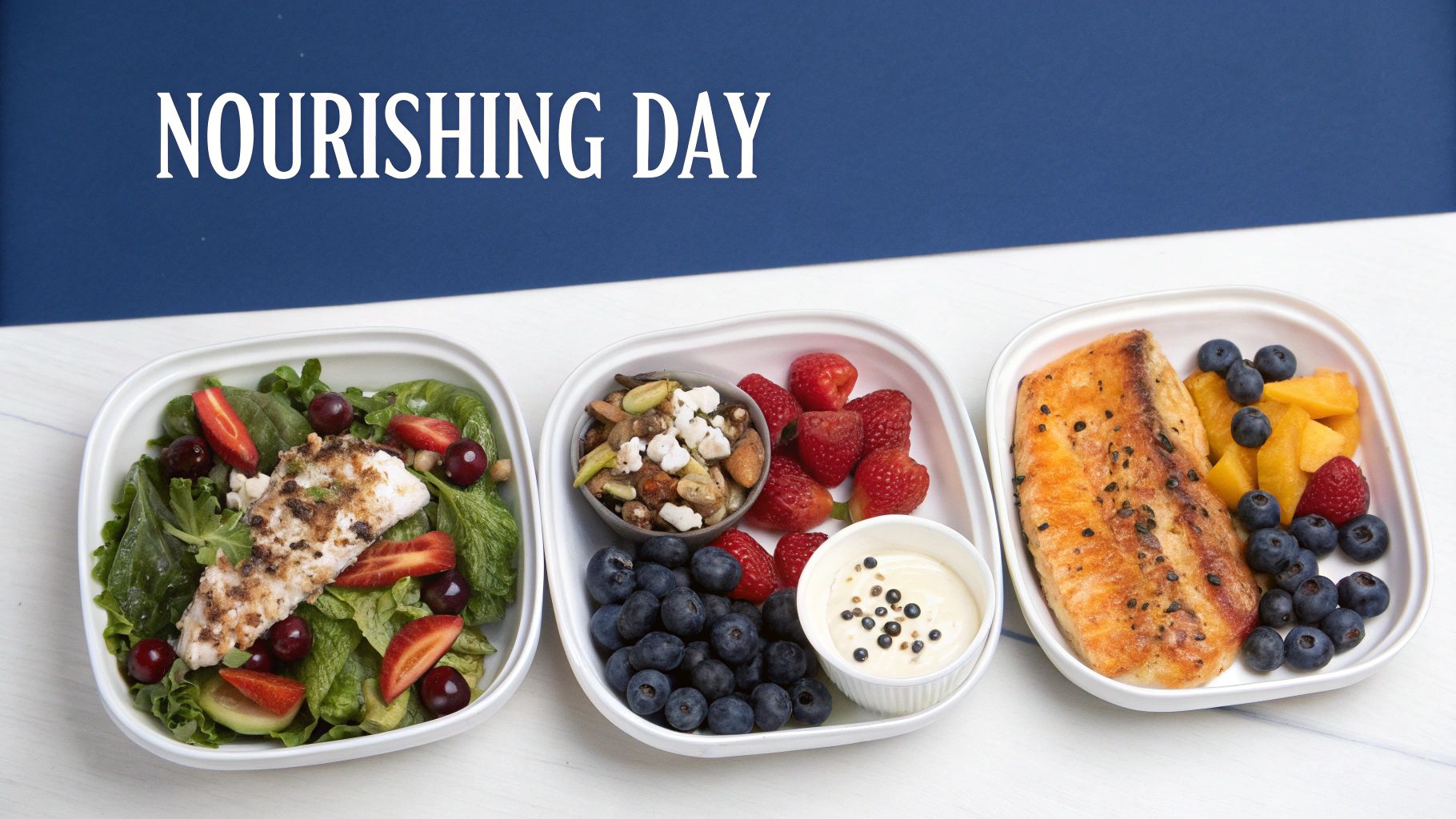
Knowing the "why" behind your nutritional needs is a great first step, but putting it all together into a daily menu is where the magic happens. Let’s walk through what a day of delicious, satisfying meals could look like.
Think of this as a flexible guide, not a rigid rulebook. It's designed to show you just how simple and enjoyable it can be to fuel your body for weight management and healthy living.
Kickstart Your Morning
A protein-rich breakfast is one of the best things you can do for your metabolism and muscle maintenance. It sets the stage for the rest of the day, helping to stabilize blood sugar and prevent mid-morning hunger.
A great practical choice is a bowl of plain Greek yogurt. Top it with a handful of berries for fiber and a sprinkle of chia seeds for healthy omega-3 fats. In just a few minutes, you get a powerhouse of protein and calcium that will keep you full and focused.
Think of your breakfast as the foundation for your day's energy. Starting with a balanced mix of protein, fiber, and healthy fats is like putting premium fuel in your tank.
The Midday Refuel
Lunch is your chance to load up on lean protein and a rainbow of vegetables. This combination gives you steady energy to power through the afternoon without that dreaded slump. A big, vibrant salad is a perfect way to do this.
Start with a base of mixed greens and pile on grilled chicken or a scoop of chickpeas for plant-based protein. Toss in colorful veggies—cherry tomatoes, cucumbers, bell peppers—for vitamins and fiber. For satisfying creaminess, add a quarter of an avocado and drizzle with a simple vinaigrette.
The Afternoon Smart Snack
Having a smart snack ready for that 3 p.m. energy dip is a game-changer. It keeps you from grabbing a sugary cookie and helps keep your energy on an even keel. Something as simple as an apple with a tablespoon of almond butter works beautifully.
This classic pairing gives you:
- Fiber and natural sweetness from the apple.
- Protein and healthy fats from the almond butter.
- A satisfying crunch that nips cravings in the bud.
Wind Down with a Nourishing Dinner
Your evening meal should be balanced and satisfying but not so heavy that it interferes with a good night's sleep. The goal is another serving of lean protein, plenty of non-starchy vegetables, and a sensible portion of a complex carbohydrate to support healthy living.
A perfect example is a filet of baked salmon seasoned with herbs, served with a side of roasted asparagus and a small scoop of quinoa. The salmon is packed with omega-3s, which are incredible for your heart and brain, contributing to longevity.
Eating well can be delicious and straightforward. If you're ready for more personalized guidance on your health journey, take our quick quiz to see how Blue Haven Rx can help you get started.
Pairing Your Diet with Modern Wellness Strategies
A powerful, nutrient-dense diet is the bedrock of good health, but it truly shines when it's part of a complete wellness plan. Think of your nutrition as high-quality fuel. Other healthy habits—like exercise and smart supplementation—are the regular engine tune-ups.
Together, they create a smoothly running system that helps you feel vibrant and strong. Let’s look at how to amplify your results by pairing your eating plan with other powerful strategies for longevity and weight management.
The Essential Role of Physical Activity
Movement is the non-negotiable partner to a healthy diet. It’s what tells your body how to use all those wonderful nutrients you’re consuming to build real strength and resilience.
Two types of exercise are particularly crucial now:
- Strength Training: This doesn't have to mean heavy lifting. Using resistance bands or light weights helps fight age-related muscle loss. Preserving muscle is vital for keeping your metabolism humming and supporting healthy aging.
- Weight-Bearing Exercises: Activities like brisk walking, dancing, or gardening put just enough stress on your bones to signal them to stay strong and dense. This is one of your best defenses against osteoporosis.
Modern Tools for Weight Management
Sometimes, even with the best diet and a consistent exercise routine, the scale won't budge. That's completely normal. Modern medicine now offers supportive tools that can work in harmony with your healthy habits.
For many women, medications like GLP-1s can be a valuable addition to a comprehensive weight loss plan. These treatments work with your body's own hormonal systems to help regulate appetite and blood sugar, which can make sticking to your nutrition goals feel less like an uphill battle. Another area of growing interest is NAD+ optimization, which focuses on cellular health and energy, supporting vitality as we age.
It's crucial to see these options as supporters, not substitutes. They are designed to enhance the positive effects of a healthy diet and active lifestyle, not replace them.
These tools can be particularly helpful for overcoming metabolic hurdles. To see if a modern, medically-supported plan is right for you, we invite you to take our quick quiz. You can also learn more about some of the best weight loss programs for women over 50.
Beyond medications, targeted supplements can also fill nutritional gaps. For a deeper dive, check out this a comprehensive guide to supplements for healthy aging for more insights.
Creating Your Personal Wellness Blueprint
Ultimately, the best approach is one that fits seamlessly into your life. Combining nutrient-rich foods with consistent, enjoyable movement and—when appropriate—modern medical support creates a powerful synergy for health.
Always talk with your healthcare provider before making big changes. They can help you create a personalized plan that safely and effectively supports your unique health goals.
It’s Your Time to Thrive
You now have a clear roadmap to eating in a way that truly supports your health and energy as you move through your 60s and beyond. The best diet isn’t about a rigid set of rules; it’s about finding a sustainable, enjoyable way of eating that gives your body exactly what it needs for longevity and healthy living.
Think of those key areas we covered—protein, calcium and Vitamin D, fiber, healthy fats, and hydration. Focusing on these isn't just about nutrition; it's about taking powerful, proactive steps toward feeling your best. These choices are the building blocks for more energy, stronger muscles, and a profound sense of well-being.
This Is About Empowerment, Not Restriction
This journey is about giving yourself the tools to feel strong, vital, and in charge of your own health. It's not about what you have to give up, but what you stand to gain in longevity and quality of life. Every meal you mindfully prepare is a meaningful step in the right direction.
Your health after 60 is a direct reflection of the small, consistent choices you make every single day. See each nourishing meal as an investment in your future strength, mobility, and vitality.
Remember to focus on progress, not perfection. Celebrate the small wins, whether it’s adding more vegetables to your dinner plate or making sure your breakfast is packed with protein. These habits build on each other, creating real, lasting benefits you can feel.
Take the Next Step with Confidence
Embracing this new chapter of wellness is an incredible opportunity to put yourself first. You have the knowledge and the power to build a healthier, more vibrant life from the inside out.
If you're interested in exploring how personalized support and modern medical insights can enhance your efforts, we're here to guide you. Start your journey with Blue Haven Rx today and discover a plan that feels right for you.
Your Questions Answered: Nutrition After 60
It's completely normal for your relationship with food and your body to change over the years. Let's tackle some of the most common questions women have about staying healthy and vibrant after 60, giving you the clarity you need to feel your best.
How Many Calories Do I Really Need to Lose Weight?
As we get older, the game shifts. It becomes less about obsessively counting calories and more about the quality of the food you're eating. The healthiest path is to create a small calorie deficit—burning a little more than you eat—by loading up on nutrient-rich foods.
A great practical tip is to focus on lean proteins, fiber-packed vegetables, and healthy fats. These foods are incredibly satisfying and keep you full longer, which naturally helps you manage your portions and consume fewer calories without feeling deprived.
What Supplements Should I Actually Consider?
Our bodies get less efficient at absorbing certain nutrients as we age, so a few key supplements can make a real difference. For women over 60, the big three are often:
- Vitamin D: This is the key that unlocks calcium absorption, which is vital for keeping your bones strong and supporting longevity.
- Calcium: Works as a team with Vitamin D to fight off bone density loss.
- Vitamin B12: Essential for healthy nerves and creating red blood cells. Our ability to absorb this from food can decline over time.
The most important part: supplements are not one-size-fits-all. You should always have a chat with your doctor before adding anything new to your routine to make sure it’s safe and necessary for you.
Is It Too Late to Build Muscle After 60?
Not a chance! The answer is a huge, definite yes, you can absolutely build muscle. It's true that we tend to lose muscle mass as the years go by (a process called sarcopenia), but we have the power to reverse that trend. Building muscle is one of the best things you can do to fire up your metabolism, improve your balance, and support healthy living.
The secret is a powerful one-two punch: consistently eating enough high-quality protein and doing regular strength training. Think of protein as the bricks and resistance exercise as the signal to your body to start building.
Can I Use Weight Management Medications with This Diet?
Sometimes, even with the best diet and a solid exercise routine, stubborn metabolic changes can make weight management a real challenge. This is where modern medical options, like GLP-1 medications, can come in as a powerful ally when prescribed and monitored by a healthcare professional.
These medications aren't a magic bullet. Instead, they work with your nutritious diet to help regulate your appetite and support your body's efforts. They can be an incredibly effective tool that makes it easier to stick to the positive lifestyle changes you’re already making for long-term weight management. If you're curious about how GLP-1s might fit into your plan, you can learn more about our approach to weight management.
Ready to create a wellness plan that’s tailored to your unique needs? At Blue Haven Rx, we provide the guidance and tools to help you achieve your health goals. Take our quick quiz to start your journey today.