
7 Proven Weight Loss Plateau Tips to Reignite Your Progress
You've been diligent with your diet and consistent with your exercise. The numbers on the scale were steadily dropping, but now, they've stopped. You've hit the dreaded weight loss plateau, a frustrating but completely normal part of any long-term health journey, especially for adults over 45. As we age, our metabolism and hormonal balance shift, requiring a more nuanced approach than simple calorie counting.
This isn't a sign of failure; it's a signal from your body that it's time for a strategic adjustment. What worked for the first few months may not be what you need now to reignite fat loss. Your body has adapted to your routine, becoming more efficient and burning fewer calories for the same amount of work.
This guide provides seven science-backed, actionable weight loss plateau tips designed to help you break through the stall. We'll move beyond generic advice to cover specific strategies you can implement today, from fine-tuning your nutrition and exercise to managing stress and sleep. These insights will help you restart your progress and get back on the path toward your health and longevity goals.
1. Change Your Exercise Routine with Progressive Overload
When you first start a new workout routine, the results can feel magical. The pounds drop, your energy increases, and you feel stronger. But over time, your body, an incredibly efficient machine, adapts. The same 30-minute walk or set of dumbbell curls that once challenged you becomes easy, and your progress stalls. This is a classic reason for hitting a weight loss plateau, and the solution is a foundational principle of fitness: progressive overload.
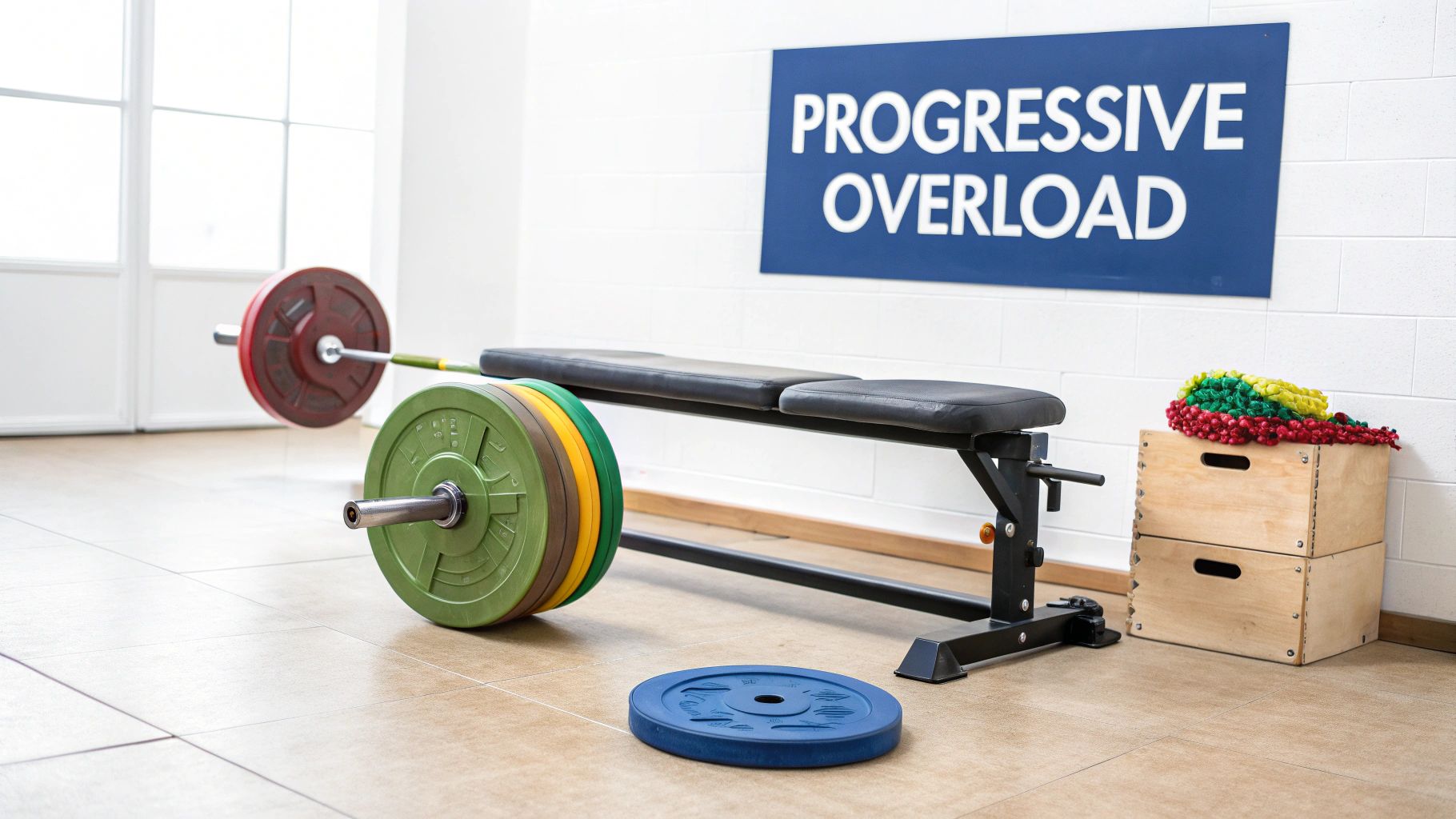
Progressive overload is the practice of gradually increasing the stress placed on your body during exercise. This constant, manageable challenge forces your muscles, cardiovascular system, and metabolism to keep adapting and growing stronger. This helps prevent the metabolic slowdown that contributes to a plateau. By making your workouts incrementally harder, you continue to stimulate muscle growth (which boosts your metabolism) and burn more calories.
How to Implement Progressive Overload
Breaking through a plateau doesn't mean you need to completely overhaul your life. Small, consistent changes are the key. Here are practical ways to apply this principle:
- Increase Resistance: If you lift weights, add a small amount of weight (e.g., 2.5-5 pounds) to your main lifts every week or two. If you use resistance bands, move to the next level of tension.
- Add Reps or Sets: Instead of lifting a heavier weight, try performing more repetitions with your current weight. If you did 3 sets of 10 squats last week, aim for 3 sets of 12 this week.
- Increase Volume or Duration: For cardio, this could mean adding five minutes to your run, cycling an extra mile, or increasing your weekly mileage by no more than 10% to prevent injury.
- Decrease Rest Time: Shorten the rest periods between your sets. Resting for 60 seconds instead of 90 forces your body to work harder and improves muscular endurance.
- Change the Exercise Type: Swap a familiar exercise for a more challenging variation. For example, progress from a standard plank to a plank with a leg lift, or switch from steady-state jogging to high-intensity interval training (HIIT) once or twice a week.
Remember to introduce these changes gradually to avoid injury and burnout. Tracking your workouts in a journal or app can help you see your progress and plan your next small step forward. This is one of the most effective weight loss plateau tips because it directly counteracts your body's natural tendency to adapt.
2. Implement Strategic Calorie Cycling
Just as your body adapts to a workout routine, it can also adapt to a consistent daily calorie deficit. Over time, your metabolism may slow down to match your lower intake, grinding your fat loss to a halt. This metabolic adaptation is a common cause of a weight loss plateau. A powerful way to address this is with strategic calorie cycling.
Calorie cycling involves intentionally varying your daily calorie intake while maintaining an overall weekly deficit. Instead of eating the same 1,600 calories every single day, you might eat more on days you are more active and less on rest days. This strategic fluctuation can help prevent your metabolism from fully adjusting to a low-calorie state, keeping your body's fat-burning processes more active and providing more energy for workouts.
How to Implement Calorie Cycling
The goal of this approach is to keep your body guessing, not to add complexity to your life. You can implement this strategy with a few simple adjustments. Here are some practical tips for getting started:
- Calculate Your Weekly Target: First, determine your target daily calorie intake for weight loss and multiply it by seven. For example, a 1,600-calorie daily goal equals a 11,200-calorie weekly target. This weekly total is your anchor.
- Align Calories with Activity: Plan to eat more calories on your most demanding days, like when you have strength training sessions. On lower-activity or rest days, consume fewer calories. For instance, you could eat 1,800 calories on three workout days and 1,466 calories on four rest days, still averaging 1,600 per day.
- Vary by a Modest Amount: Start with small variations. A difference of 200-400 calories between your high and low days is often enough to create the desired effect without feeling overly restrictive or complicated.
- Use Carb Cycling: A popular method is to increase your carbohydrate intake on high-calorie days to fuel performance and muscle recovery. On low-calorie days, you would reduce your carb intake while keeping protein relatively high to preserve muscle mass.
- Track Your Intake: Use a food tracking app to monitor both your daily fluctuations and your weekly average. This ensures you are staying within your overall deficit and not accidentally overeating.
This method provides psychological benefits as well, as having planned higher-calorie days can make a long-term diet feel more sustainable and less monotonous.
3. Increase Protein Intake and Prioritize Its Timing
Of all the nutrients, protein is your most powerful ally when battling a weight loss plateau. While calories matter, the type of calories you consume significantly impacts your metabolism, hunger levels, and body composition. Simply focusing on eating less without considering protein can lead to muscle loss and a slower metabolism, halting your progress. Prioritizing protein is one of the most effective weight loss plateau tips because it works on multiple fronts to get the scale moving again.

Protein has the highest thermic effect of food (TEF), meaning your body burns more calories just digesting it compared to fats and carbohydrates. It's also incredibly satiating, helping you feel fuller for longer and naturally reducing your overall calorie intake. Furthermore, adequate protein intake is crucial for preserving lean muscle mass during a calorie deficit. More muscle means a higher resting metabolic rate, which is essential for long-term, sustainable weight management.
How to Prioritize Protein
Making protein the star of every meal and snack is a strategic way to break through a frustrating stall. Here’s how to put this powerful principle into action:
- Calculate Your Target: Aim for 0.7 to 1.0 grams of protein per pound of your target body weight daily. For a 180-pound person aiming for 160 pounds, this would be 112-160 grams per day.
- Spread It Out Evenly: Instead of one or two large protein-heavy meals, distribute your intake across 4-5 smaller meals or snacks. This keeps you full all day and provides a steady supply of amino acids for muscle repair.
- Start Your Day Strong: A protein-rich breakfast (like Greek yogurt or eggs) can set the tone for the day by stabilizing blood sugar and reducing cravings later on.
- Time It Post-Workout: Consume around 25-30 grams of protein within a couple of hours after your workout to maximize muscle protein synthesis, which aids recovery and metabolic health.
- Choose High-Quality Sources: Focus on lean meats, fish, eggs, dairy, and legumes. You can learn more about the best foods for weight loss on bluehavenrx.com to build a nutrient-dense plan.
By shifting your focus to not just how much you eat, but what you eat, you can directly influence your body’s metabolism and hunger signals to overcome a plateau.
4. Address Sleep Quality and Quantity
If you're meticulously tracking calories and exercising consistently but the scale won't move, the culprit might not be your diet or workout plan. It could be your sleep schedule. Insufficient or poor-quality sleep can sabotage weight loss efforts by disrupting the hormones that regulate hunger, stress, and metabolism. Many weight loss plateaus have a significant sleep component, and fixing it can often restart progress without changing anything else.

When you're sleep-deprived, your body produces more ghrelin (the hunger hormone) and less leptin (the satiety hormone), leading to increased cravings and a bigger appetite. Cortisol, the stress hormone, also spikes, signaling your body to conserve energy by storing fat, particularly around the midsection. By prioritizing 7-9 hours of quality sleep, you allow these hormones to rebalance, improving your metabolic function, enhancing muscle recovery, and reducing cravings for high-calorie foods. To truly address sleep quality, it's important to understand the critical link between sleep and weight management.
How to Improve Your Sleep for Weight Loss
Optimizing your sleep hygiene is one of the most effective weight loss plateau tips because it works with your body's natural biology. Here are practical steps to get better rest:
- Create a Consistent Schedule: Go to bed and wake up at the same time every day, even on weekends. This reinforces your body's natural sleep-wake cycle, or circadian rhythm.
- Optimize Your Sleep Environment: Make your bedroom a sanctuary for sleep. Keep it cool (around 60-67°F), dark with blackout curtains, and quiet with a white noise machine if needed.
- Implement a Digital Curfew: The blue light from phones, tablets, and TVs suppresses melatonin production. Power down all screens at least 30-60 minutes before bedtime.
- Be Mindful of What You Consume: Avoid caffeine after 2 PM and limit alcohol in the evening. While alcohol might make you feel drowsy, it disrupts deep sleep later in the night.
- Consider Sleep Tracking: Devices like the Oura Ring or WHOOP can provide valuable data on your sleep stages and quality, helping you identify patterns and make targeted improvements.
By making these changes, you support your body’s hormonal balance and metabolic health, allowing your diet and exercise efforts to finally pay off and break through the frustrating plateau.
5. Incorporate Strength Training with Metabolic Conditioning
Extended periods of cardio-only exercise can lead to a common weight loss plateau. While effective for burning calories initially, relying solely on cardio can neglect a key component of a robust metabolism: muscle mass. The solution is to create a powerful synergy by combining traditional strength training with metabolic conditioning. This dual-pronged approach is one of the most effective weight loss plateau tips for revitalizing your progress.
This strategy works on two fronts. First, strength training builds lean muscle, which is metabolically active tissue. The more muscle you have, the more calories your body burns at rest. Second, metabolic conditioning (MetCon) involves short bursts of intense, full-body exercises with minimal rest. This style of training burns a significant number of calories during the workout and triggers a prolonged "afterburn effect" where your body continues to burn calories for hours.
How to Implement Strength and MetCon
Combining these two training styles provides a potent stimulus that forces your body to adapt in new ways, breaking through the metabolic slowdown that caused the plateau. Here’s how to structure your week:
- Build a Strength Foundation: Begin with 2-3 full-body strength training sessions per week. Focus on compound movements like squats, deadlifts, presses, and rows that engage multiple muscle groups for the biggest metabolic impact.
- Add Metabolic Finishers: At the end of your strength workouts, add a 5-10 minute "finisher" circuit. This could be a sequence of kettlebell swings, burpees, and battle ropes with minimal rest.
- Incorporate Dedicated MetCon Days: As you get stronger, dedicate 1-2 separate days per week to high-intensity metabolic conditioning. Think of workouts that combine strength, cardio, and endurance, keeping your heart rate elevated.
- Prioritize Recovery: This style of training is demanding. Ensure you get adequate sleep, manage stress, and consume enough protein to allow your muscles to repair and grow stronger. Without proper recovery, you risk burnout and injury.
By building muscle while simultaneously torching calories, this combined approach can reignite your fat loss. To get a deeper understanding of how these activities influence your body's calorie-burning engine, discover more about how to speed up your metabolism and support your fitness goals.
6. Reassess and Adjust Your Calorie Intake
One of the most common yet overlooked reasons for a weight loss plateau is that your body has changed. As you successfully lose weight, your Basal Metabolic Rate (BMR) decreases because a lighter body requires less energy to function. The calorie deficit that worked for you 15 pounds ago may now be your new maintenance level, effectively halting further progress. The solution is to strategically reassess your energy needs and adjust your intake accordingly.
This reassessment typically involves one of two powerful methods: recalculating your deficit or implementing a short "diet break." Recalculating means finding your new, lower Total Daily Energy Expenditure (TDEE) and creating a fresh deficit from that number. A diet break involves methodically increasing your calories for a short period to help reset metabolic adaptations before starting a new deficit. Both approaches are effective weight loss plateau tips because they realign your intake with your body's current needs.
How to Reassess and Adjust Your Intake
Recalibrating your calorie target is a crucial step to reignite fat loss. Whether you choose to create a new deficit or try a diet break, precision is key. Here are actionable ways to implement this strategy:
- Recalculate Your TDEE: After every 10-15 pounds of weight loss, use an online calculator to determine your new maintenance calories. A person who weighed 200 pounds might have a TDEE of 2,500, but at 180 pounds, it could drop to around 2,200.
- Establish a New Deficit: Based on your new TDEE, create a modest deficit of 200-300 calories. This ensures you are once again in a negative energy balance without resorting to drastic cuts. For more details on this, learn more about creating a calorie deficit.
- Consider a Diet Break: If you've been in a prolonged deficit, slowly increase your daily intake by 100-200 calories each week for 2-4 weeks. This can help restore hormonal balance and metabolic rate before you re-enter a cutting phase.
- Be Accurate with Tracking: To make informed adjustments, you need reliable data. Use a food scale for accuracy and consider exploring the best food tracking apps to monitor your intake precisely.
- Manage Expectations: During a diet break, expect a small, temporary increase in scale weight due to water and glycogen. This is a normal and healthy part of the process, not fat gain.
7. Manage Stress and Cortisol Levels
You can have the perfect diet and exercise plan, but if you're chronically stressed, your progress can grind to a halt. Persistent stress floods your body with the hormone cortisol. While essential in small doses, high cortisol levels promote the storage of visceral fat (especially around your midsection), increase cravings for high-sugar foods, and can interfere with the hormones that regulate your appetite. This creates a challenging hormonal environment that can trigger a stubborn weight loss plateau.
Managing stress is not a luxury; it's a physiological necessity for effective weight management. By intentionally activating your body's relaxation response through mindfulness practices like meditation, deep breathing, and yoga, you can lower cortisol levels. This shift helps improve insulin sensitivity, reduce cravings, and create a more favorable internal state for fat loss, allowing your diet and exercise efforts to work as intended.
How to Manage Stress for Weight Loss
Integrating stress reduction into your routine doesn't require a silent retreat. Small, consistent moments of calm can have a profound impact. Here are some of the most effective weight loss plateau tips related to stress:
- Start Small with Meditation: Begin with just five minutes of guided meditation each day. Use popular apps like Calm or Headspace to make it simple and accessible.
- Practice Intentional Breathing: Before meals, try the "4-7-8" breathing technique: inhale through your nose for 4 seconds, hold your breath for 7 seconds, and exhale slowly through your mouth for 8 seconds. This can lower acute stress and promote mindful eating.
- Incorporate Gentle Movement: Add two or three 20-minute yoga or stretching sessions to your week. This not only burns calories but actively reduces physical tension and lowers cortisol.
- Schedule "Non-Negotiable" Downtime: Block off time in your calendar for relaxing activities you enjoy, whether it's reading, taking a walk in nature, or listening to music. Treat this time with the same importance as a workout.
- Identify Your Stressors: Pay attention to what triggers your stress. Understanding the root cause is the first step toward managing your response. If stress eating is a specific challenge, you can learn more about how to stop stress eating on bluehavenrx.com.
By addressing the hormonal side of the equation, you tackle a powerful, often-overlooked cause of weight loss plateaus.
Weight-Loss Plateau: 7 Strategies Compared
| Strategy | Implementation complexity | Resource requirements | Expected outcomes | Ideal use cases | Key advantages |
|---|---|---|---|---|---|
| Change Your Exercise Routine (Progressive Overload) | Medium — requires progressive planning and technique monitoring | Access to varied equipment or gym, tracking tools, possible trainer | Increased calorie expenditure, strength gains, muscle growth → restart fat loss | When workouts are repetitive and adaptation limits progress | Prevents metabolic adaptation; builds lean mass to raise metabolism |
| Implement Strategic Calorie Cycling (Calorie Variation) | Medium — requires weekly planning and consistent tracking | Tracking app, calorie/macro knowledge, meal planning | Renewed fat loss potential while supporting training performance | Plateaus from prolonged steady deficits or variable activity levels | Maintains weekly deficit with metabolic variation; improves adherence |
| Increase Protein Intake and Prioritize Protein Timing | Low — dietary adjustments and meal timing | Higher-protein foods, possible supplements, meal prep | Greater satiety, preserved muscle, higher TEF → improved body composition | Plateaus with muscle loss, high hunger, or during calorie restriction | Preserves lean mass, increases fullness and caloric burn from TEF |
| Address Sleep Quality and Quantity | Low–Medium — habit changes and consistent schedule | Sleep hygiene changes, optional tracker or clinical help | Better hormonal balance, improved recovery and insulin sensitivity → gradual weight loss | Plateaus coinciding with poor sleep or high cortisol | Regulates hunger hormones, enhances recovery, low monetary cost |
| Incorporate Strength Training with Metabolic Conditioning | High — complex programming and recovery management | Gym access, equipment, coaching recommended, recovery time | Increased RMR, EPOC, lean mass gain → accelerated fat loss | When plateau follows cardio-only training or low muscle mass | Combines muscle-building and high calorie burn for durable results |
| Reassess and Adjust Calorie Intake (Reverse Diet or New Deficit) | Medium — requires recalculation and disciplined tracking | TDEE calculators, tracking app, food scale, optional coach | Restored deficit effectiveness, sustainable weight loss adjustments | Plateaus due to lower maintenance after prior weight loss | Personalized, math-driven approach; prevents unnecessary restriction |
| Manage Stress and Cortisol Levels Through Mindfulness Practices | Low–Medium — consistent daily practice and lifestyle changes | Time for meditation/yoga, apps or classes, possible therapy | Lower cortisol, reduced stress eating, improved sleep and insulin sensitivity over weeks | Plateaus linked to chronic stress, emotional eating, or poor recovery | Improves hormonal environment and adherence; benefits mental health |
Beyond the Plateau: When to Seek Additional Support
Navigating a weight loss journey is a dynamic process, and encountering a plateau is a sign that your body has adapted to your hard work. It's not a failure; it’s a biological checkpoint. By implementing the strategies we've covered—from introducing progressive overload into your workouts to strategically cycling calories and prioritizing protein—you have a powerful toolkit to reignite your progress. Addressing foundational pillars like sleep quality and stress management further equips you to overcome these stalls.
Think of these weight loss plateau tips as a series of sophisticated adjustments rather than a complete overhaul. The goal is to send your body a new signal, encouraging it to adapt in a new direction. You've learned how to fine-tune your approach by reassessing your calorie needs, increasing protein to protect lean muscle mass, and diversifying your exercise routine to challenge your body in fresh ways. Mastering these concepts means you can approach future plateaus with confidence and a clear, actionable plan.
However, sometimes even the most diligent efforts can be met with stubborn resistance, especially as we navigate the hormonal shifts that come with age. If you have consistently applied these tips for several weeks without seeing any change, it may be time to seek professional guidance. Persistent plateaus can sometimes signal underlying issues, such as hormonal imbalances or metabolic conditions, that require a more targeted, medical approach.
This is where modern, science-backed treatments can provide crucial support. Medically supervised weight loss programs can offer solutions that work in harmony with your body’s natural systems. For instance, therapies involving compounded GLP-1 medications help regulate appetite and support metabolic function, providing a powerful tool to break through a frustrating plateau when lifestyle changes alone are not enough. It's about intelligently combining your healthy habits with the right medical support tailored to your unique biology.
Ready to move beyond the plateau with a plan tailored to your body's unique needs? The team at Blue Haven RX specializes in creating comprehensive, medically supervised weight management programs that can help you achieve lasting results. Discover how a personalized approach, potentially including advanced therapies, can help you reach your goals by visiting Blue Haven RX to learn more.