
Mastering Your Semaglutide Injection Sites for Best Results
Starting a GLP-1 medication is a big step forward for your health journey, and getting the weekly injection right is key to your success. You have three great options for semaglutide injection sites: your abdomen, thigh, and upper arm. These spots have a layer of fatty tissue just under the skin, which is exactly where this medication needs to go to be absorbed properly and work effectively for weight management.
Learning how to use and rotate these spots will make your weekly routine feel like second nature in no time.
Where to Inject Semaglutide: Picking the Right Spot for You
When you begin your journey with a GLP-1 medication, one of the first things you'll learn is where to administer the weekly injection. Semaglutide uses a subcutaneous injection, which is a simple way of saying it goes into the layer of fat right below your skin. This placement is important because it allows the medication to be released slowly and consistently all week—perfect for supporting your weight management goals and keeping your energy steady.
Your abdomen, thigh, and upper arm are the recommended spots because they have enough of this fatty tissue. All three are equally effective, so the best choice comes down to what feels most comfortable and is easiest for you to reach. For many people, this is a new habit, and building confidence starts with finding a spot that feels right for you.
If you're curious to learn more about how GLP-1 medications support weight management, dive into our comprehensive guide on GLP-1 for weight loss.
Your Three Main Options
Let's look at why these specific areas are recommended and what makes each a solid choice for your weekly injection.
- The Abdomen (Stomach): This is a popular choice, and for good reason. It’s easy to see and reach, giving you full control over the process. Just be sure to inject at least two inches away from your belly button.
- The Thigh: The upper, outer part of your thigh is another very convenient spot. It’s simple to access on your own and offers a large area, which makes rotating your injection sites easy.
- The Upper Arm: The fleshy area on the back of your upper arm works well, too. This one can be a bit tricky to reach by yourself, so it's often a better option if you have a partner or family member who can help.
To help you decide, here’s a quick comparison of the three main injection sites. Think about what works best for your body and your healthy living routine.
Comparing Your Three Main Injection Site Options
| Injection Site | Ease of Access | Potential Discomfort | Best For |
|---|---|---|---|
| Abdomen | Excellent; easy to see and reach on your own. | Usually minimal; plenty of fatty tissue. | Self-injections, especially when starting out. |
| Thigh | Very good; easy to access while sitting. | Can be slightly more sensitive for some. | People who prefer to sit down during injection. |
| Upper Arm | Tricky; often requires assistance from someone else. | Generally low, similar to the abdomen. | Injections administered by a partner or caregiver. |
Ultimately, the goal is to find a site that feels manageable and comfortable as part of your weekly wellness routine.
Research has found that patient preference makes a real difference in sticking with the treatment. Roughly 65-70% of people prefer the abdomen because it’s so accessible and provides reliable absorption. About 20-25% opt for the thigh. Knowing you have options helps you build a routine that you can stick with for long-term success.
Choosing your first spot is just the beginning. The next, and equally important, part is learning why you need to switch it up every week—a practice called site rotation.
A Practical Walkthrough for a Smooth Injection
It’s completely normal to feel a bit nervous before your first few injections. We understand. The goal is to make this weekly step feel as routine and comfortable as brushing your teeth. Let's walk through the process together, breaking it down into simple, manageable actions that will build your confidence.
Think of this as your personal guide to mastering your injection technique. With a little practice, you'll turn a moment of hesitation into an empowering step on your health and wellness journey.
Preparing for a Safe and Easy Injection
First things first, gather your supplies on a clean surface. You'll need your semaglutide pen, a brand-new needle, and an alcohol swab. Before you do anything else, wash your hands thoroughly with soap and water. This simple but crucial step helps prevent infection and ensures a safe process.
Next, take a quick look at the medication inside your pen. It should be clear and colorless. This is also a perfect time to double-check that you have the correct dose dialed up.
Here's a critical tip: always use a fresh needle for every single injection. This is non-negotiable for both safety and comfort. Reusing a needle dulls the tip, which can make the injection more painful and significantly increase your risk of infection. A little preparation makes the whole process smoother and more pleasant.
The Injection Process Step by Step
Once you're ready, pick your injection spot for the week, remembering to choose a different area than last week. Grab your alcohol swab, clean the skin, and—this is important—let it air dry completely. A common mistake is injecting while the alcohol is still wet, which can cause a stinging sensation. That small pause makes a big difference.
Hold the pen firmly against your skin and press the needle straight in. Then, press and hold the dose button until you see the dose counter hit "0." You should hear or feel a "click" as the injection starts.
Expert Tip: After the counter shows zero, don't pull the needle out right away. Keep it in place and slowly count to six. This simple trick ensures you've received the full dose of medication before you withdraw the needle, maximizing its benefit for your weight management goals.
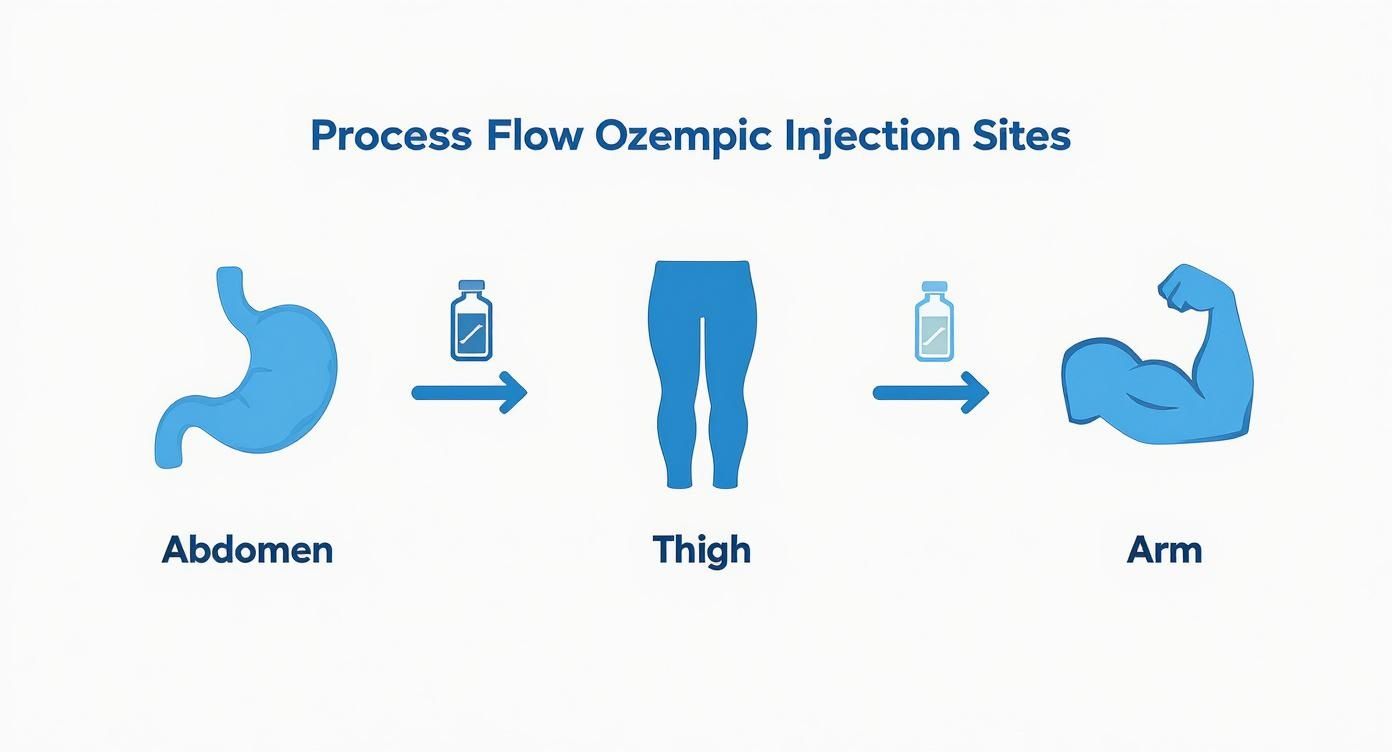
As you can see, the abdomen, thigh, and upper arm are all great options because they have a layer of fatty tissue just under the skin, which is exactly where this medication needs to go for proper absorption.
After you pull the needle out, you might see a tiny drop of liquid or blood. That’s perfectly normal. Just press the area lightly with a cotton ball or gauze. Avoid rubbing the site, as that can cause irritation.
Finally, dispose of the needle safely in a designated sharps container. If you’re often on the go, it helps to plan ahead. Our guide on how to travel with semaglutide offers practical advice for managing your medication away from home. Following these steps will help you build a safe and effective routine for healthy living.
The Critical Role of Injection Site Rotation
Does switching up your injection spot every week actually matter? Absolutely. Rotating your semaglutide injection sites is one of the most important habits you can build to keep your treatment comfortable and effective for your long-term health.
Your skin and the fatty tissue just beneath it need time to heal. If you inject into the exact same spot week after week, you can run into an issue called lipodystrophy. This is when the tissue hardens or develops small lumps. While not dangerous, it can interfere with how your body absorbs the medication, which might make it less effective for your weight management goals.
The real goal here is consistency—not just in taking your medicine, but in taking care of your body as you pursue a healthier, longer life. A simple rotation plan protects your skin and helps you get the predictable results you're aiming for.
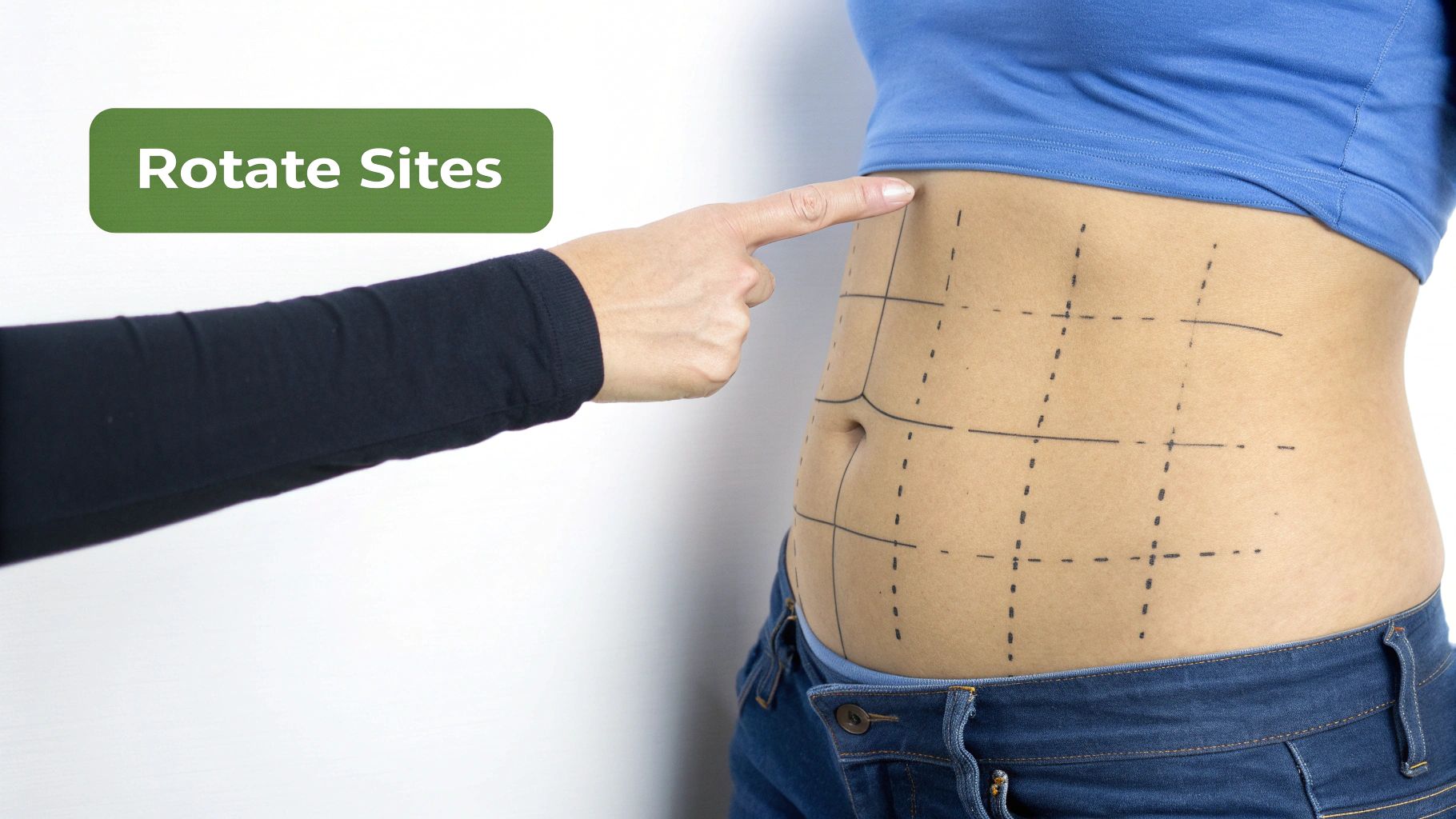
Simple Rotation Methods to Adopt
Creating a routine that sticks doesn't need to be complicated. You just need an easy way to remember where you injected last and where you're headed next. A little planning goes a long way in supporting your longevity goals.
Here are a couple of practical tips that work well:
- The Clock Face Method: Picture a clock on your stomach with your belly button in the middle. For your first injection, pick the 12 o'clock spot (at least two inches from your navel). The next week, move to 3 o'clock, then 6 o'clock, and so on.
- The Grid System: Mentally map out a grid on your abdomen or thigh, dividing it into four sections. Use the upper-right section one week, the lower-right the next, then switch to the left side for the following two weeks.
Keeping a quick log in a notebook or a note on your phone can be a game-changer. Just jot down the date and the location (e.g., "Left thigh, upper part"). It takes only a moment, removes the guesswork, and helps you stay in control of your treatment. For more on timing, our guide to semaglutide dosing schedules has some great tips.
Why Variety Is Your Ally
Beyond just preventing lumps and bumps, rotating sites helps your body absorb the medication consistently. While the abdomen, thigh, and upper arm are all good options, some research on similar medications shows slight differences in how quickly they are absorbed from each area.
By mixing it up—perhaps using your abdomen for a month, then switching to your thighs for the next—you give your body the variety it needs for steady, long-term success. It’s a small detail that makes a big difference in your health journey. In fact, some reports show that the 40-45% of patients who are diligent about site rotation tend to have better outcomes and fewer local side effects. You can read more about the market trends and patient adherence data to see the bigger picture.
At Blue Haven Rx, we know that understanding the 'why' behind these steps is empowering. If you're looking for a science-backed approach to weight management, take our quiz today to see if a GLP-1 program is right for you.
Common Injection Mistakes and How to Avoid Them
Knowing what not to do is just as important as knowing the right steps. It’s easy to slip into a few common habits with your injections, but thankfully, they’re just as easy to correct. By learning from the experiences of others, you can build a comfortable and effective routine right from the start.
One of the most frequent mistakes is reusing needles. It might seem harmless, but a needle is designed for a single use. After that, the tip becomes dull, which can make the injection more painful. More importantly, reusing needles significantly increases your risk of infection. Always use a fresh, sterile needle for every injection—this is a non-negotiable part of a safe and healthy routine.
Another common slip-up is accidentally injecting into a muscle instead of the fatty tissue just under your skin. This usually happens if you press down too hard or choose a spot without much cushioning. A muscle injection can be more painful and may change how the medication is absorbed, potentially making its effects less consistent.
Simple Fixes for a Better Experience
It’s the small details that often make the biggest difference in your wellness journey. A few minor adjustments to your technique can help you avoid common discomforts and ensure you’re getting the most from your treatment.
Here are a few common mistakes and their easy solutions:
- Forgetting to Let the Alcohol Dry: Injecting while the alcohol from the cleaning swab is still wet is a top cause of stinging. Just give it 30 seconds or so to air dry completely.
- Pulling the Pen Out Too Quickly: It's tempting to pull the needle out the second the dose counter hits "0." Instead, count slowly to six while keeping the needle in place. This simple pause ensures the full dose is delivered.
- Injecting Cold Medication: Taking your pen straight from the fridge and injecting can create a stinging sensation. It's much more comfortable if you let it sit at room temperature for about 30 minutes beforehand.
Mastering these small details helps transform the injection from a weekly chore into a seamless part of your health journey. It’s all about building confidence through a consistent, comfortable practice.
Finally, not holding the pen correctly can lead to an incomplete dose. Make sure you have a firm grip and press the pen straight against your skin, not at an angle. If you happen to feel any side effects like fatigue after your injection, you can learn more about whether semaglutide can make you tired in our detailed guide.
At Blue Haven Rx, we believe knowledge is key to a successful weight management journey. If you’re ready to learn more about our personalized approach, start by taking our quiz to see if you are a candidate.
What to Do After Your Injection (and When to Get Help)
You've completed the injection—great job. But don't put everything away just yet. A couple of quick aftercare steps are key to keeping your skin healthy and avoiding any issues as you continue your path to healthy living.
First, get that used needle into a proper sharps container immediately. This is a non-negotiable safety step. You might see a tiny bead of blood or a drop of medication at the injection site. That’s completely normal. Just take a clean cotton ball or gauze pad and apply gentle pressure for a few seconds until it stops.
The one thing you must not do is rub the site. Rubbing can irritate the skin and might even affect how your body absorbs the medication. If you have sensitive skin, it's also a good idea to keep the area clean with a mild soap, like a gentle goat milk soap for sensitive skin, when you bathe.
What's Normal, What's Not?
It’s common to have a minor reaction right where you injected, and knowing what to expect can save you a lot of unnecessary worry.
Most of these little reactions are harmless and usually disappear within a day or two. You might notice things like:
- A bit of pinkness or redness right around the injection point.
- Some mild, temporary itching.
- A small bruise, which can happen if the needle nicks a tiny blood vessel near the skin's surface.
These are just your body's typical responses. In fact, studies show that mild site reactions occur in about 5-10% of users worldwide, so you're not alone if you experience them. You can dig deeper into global medication trends and insights if you're curious.
Feeling confident in your self-care is a huge part of a successful health journey. Understanding what’s normal versus what’s not empowers you to manage your treatment with less worry and more focus on your goals.
When to Call Your Clinician
While most reactions are minor, you should always trust your instincts. If something feels off, or if a minor irritation starts getting worse, it's time to check in with a healthcare professional.
Get in touch with your provider if you notice any of these signs:
- Pain or swelling that’s severe or spreading well beyond the initial spot.
- Signs of an infection, like the area feeling warm to the touch, increasing redness, pus, or if you develop a fever.
- A rash or hives breaking out anywhere on your body after the shot.
- A hard lump that forms under the skin and doesn't soften or go away after a couple of days.
At Blue Haven Rx, your well-being is our priority. If you’re ever worried about an injection site or anything else related to your treatment, our telehealth services connect you directly with medical professionals who can give you the right advice, right away.
This is a partnership. Knowing you have an expert team to rely on can make all the difference in achieving your weight management and longevity goals. To learn more about our supportive approach, start your journey with Blue Haven Rx today.
Your Top Questions About Semaglutide Injections, Answered
When you’re starting a new medication like semaglutide, it’s completely normal to have a lot of questions. Getting comfortable with the details is a huge part of feeling confident and in control of your health and wellness journey.
We’ve gathered some of the most common questions our patients ask. Let's get them answered so you can focus on your long-term health goals.
Can I Inject in the Same General Area Every Week?
Yes, you can absolutely stick with one general area, like your abdomen, if that's what you prefer. The key, however, is to pick a different spot within that area each time you inject.
Think of it this way: if you used the right side of your stomach last week, switch to the left side this week. Or try a spot a little higher or lower. The golden rule is to keep each new injection at least an inch away from the last one. This simple practice is crucial for preventing skin irritation and ensuring the medication absorbs effectively for the best weight management results.
What If I Hit a Mole, Scar, or Stretch Mark?
It’s always best to avoid injecting directly into moles, scars, or stretch marks. The same goes for any skin that looks bruised, tender, hard, or irritated.
These areas have different tissue, which can affect how the medication gets absorbed and might make the injection more uncomfortable. Before you inject, just take a quick look and find a patch of clear, healthy-looking skin. This is a simple, practical tip for a better experience.
Is the Injection Painful and Can I Make It Better?
Honestly, most people are surprised by how little they feel. The needle is incredibly fine, so you'll likely feel a tiny pinch or maybe nothing at all. With practice, it quickly becomes a routine part of your week.
If you do experience discomfort, a few simple tricks can make a world of difference:
- Warm up the pen: Don't inject straight from the fridge. Let the pen sit at room temperature for about 30 minutes beforehand. Cold liquid is more likely to sting.
- Let the alcohol dry: After you wipe the area, give it a moment to air dry completely. Injecting through wet alcohol is a common cause of stinging.
- Relax your muscles: Take a breath and try not to tense the muscle in the area you're about to inject. A quick, decisive motion is usually more comfortable than a slow, hesitant one.
Your weekly injection should be a calm, routine moment of self-care, not something you dread. These small adjustments can completely change the experience, making it easier to stay on track with your treatment for long-term health and longevity.
Why Is the Upper Arm an Option If It’s Hard to Reach?
The upper arm is listed as a proper semaglutide injection site because the fleshy area on the back of the arm has a good layer of subcutaneous fat, just like the stomach and thigh. It's an effective spot for the medication to be absorbed.
However, you're right—it can be challenging to reach on your own.
This option is really intended for people who have a partner, caregiver, or trusted friend who can help them with their weekly injection. If you're injecting by yourself, you'll almost certainly find the abdomen and thigh far more practical and easier to use.
Here at Blue Haven Rx, we know that clear answers and steady support are the foundation of a successful weight management journey. Our telehealth platform is built to give you direct access to medical professionals and the resources you need to achieve your wellness goals.
Ready to see what a personalized, supportive approach can do for you? Start your journey today by taking our quiz.