
Semaglutide vs. Tirzepatide: Which Path to a Healthier You?
When comparing semaglutide and tirzepatide, the biggest difference is how they work in your body. Tirzepatide’s dual-action approach often leads to more significant weight loss than semaglutide's single-action method. Ultimately, the right choice for you depends on your unique health goals and medical history—a conversation best had with your healthcare provider.
A New Chapter in Weight Management
We're in a new era of medical weight management. If you're exploring your options, you've almost certainly heard about semaglutide and tirzepatide. These are two of the most effective tools available today for achieving lasting weight loss and improving long-term health.
This guide provides clear, straightforward insights for adults ready to make a sustainable change for a healthier, longer life.

Here, we'll compare these two powerful medications. We’ll break down how they work, what you can expect, and which one might be a better fit for your personal health journey. We understand the challenges that come with managing weight, and our goal is to empower you with trustworthy information to support your goals for healthy living.
Semaglutide vs. Tirzepatide at a Glance
For a quick overview, this table cuts straight to the chase, highlighting the core differences between semaglutide and tirzepatide.
| Feature | Semaglutide | Tirzepatide |
|---|---|---|
| Primary Mechanism | Mimics one hormone (GLP-1) to reduce appetite and slow digestion. | Mimics two hormones (GLP-1 and GIP) for enhanced appetite control and metabolic benefits. |
| Average Weight Loss | Studies show an average of around 15% of body weight. | Studies show an average of 20% or more of body weight. |
| Hormone Action | Single-agonist (GLP-1) | Dual-agonist (GLP-1 and GIP) |
| Administration | Once-weekly injection | Once-weekly injection |
By targeting two distinct hormonal pathways, tirzepatide often provides a more robust effect on both appetite and blood sugar regulation, which can translate to greater overall weight loss for many individuals.
This table gives you a snapshot, but there's more to the story.
As we explore these advanced options, it’s helpful to understand the bigger picture of your health. Many people who are candidates for these medications are also dealing with conditions that fall under metabolic syndrome. Getting a better handle on this by understanding metabolic syndrome can give you valuable context for your entire health journey.
This comparison isn’t about picking a "winner." It's about finding the right fit for your body and your long-term wellness goals. Both medications are a huge step forward in helping people live healthier, longer lives.
Ready to see if a GLP-1 medication is right for you? Take our quick 2-minute quiz to see if you're a candidate.
How These Medications Support Your Weight Loss Journey
To truly understand the semaglutide vs. tirzepatide comparison, we need to look at how they work inside your body. It all comes down to hormones. Both medications are designed to mimic a natural gut hormone called glucagon-like peptide-1 (GLP-1). This hormone is a powerhouse for making you feel full and satisfied after you eat.

Here's the simple version: when you eat, your body releases GLP-1. This hormone tells your brain, "Hey, we're full, you can stop eating." It also slows down how quickly your stomach empties, which keeps you feeling satisfied for much longer. This one-two punch is crucial for managing your appetite and reducing calories without feeling deprived.
We go into more detail in our guide on GLP-1 for weight loss.
The Single-Action Approach of Semaglutide
Semaglutide's strategy is direct and effective. It's known as a GLP-1 agonist, which means it mimics only the GLP-1 hormone. Think of it as a key that fits perfectly into your body’s GLP-1 receptors, turning on your natural appetite-curbing signals. This targeted approach has been incredibly successful for medical weight management.
Tirzepatide’s Dual-Hormone Power
Tirzepatide takes a different approach. It’s the first medication of its kind that mimics two different gut hormones: GLP-1 and another one called glucose-dependent insulinotropic polypeptide (GIP). This makes it a dual-agonist.
Why does that matter for your health? GIP is another key player in managing your body’s energy and metabolism. By activating both the GLP-1 and GIP pathways, tirzepatide creates a powerful synergistic effect. It’s believed this dual action sends a stronger signal to the brain to reduce appetite while also improving how the body handles sugar and fat.
Key Difference: This dual-hormone action is the biggest factor that sets tirzepatide apart from semaglutide. Experts believe that activating both GIP and GLP-1 receptors is the primary reason tirzepatide often produces more significant weight loss in clinical studies.
Both medications work by enhancing your body's own signaling systems to help you manage hunger and portions. For a holistic approach to your wellness journey, consider integrating these with strategies for natural hormone balance.
Comparing Weight Loss Results: What Studies Show
When choosing between semaglutide and tirzepatide, the biggest question is usually the most straightforward: which one will help me lose more weight? While everyone's body responds differently, clinical studies give us a very clear picture of what's possible.
Understanding what these numbers mean is key to setting realistic expectations for your own health and longevity goals.
Semaglutide: A Powerful and Established Performer
Semaglutide raised the bar for what medical weight management could achieve. In major clinical trials, participants who combined semaglutide with lifestyle changes saw consistently significant results.
On average, people taking semaglutide lost about 15% of their starting body weight. This level of weight loss is more than just cosmetic; it's enough to dramatically improve health markers like blood pressure, cholesterol, and joint pain, contributing to a longer, healthier life.
Practical Tip: For someone weighing 220 pounds, a 15% loss is a life-changing 33 pounds. It's about feeling better, having more energy, and lowering your risk for chronic diseases down the road.
Tirzepatide: The Impact of a Dual-Action Approach
This is where tirzepatide has truly made a name for itself. Because it targets both GLP-1 and GIP receptors, its dual-action mechanism often leads to even greater weight loss.
Clinical trials for tirzepatide have shown an average weight loss of 20% or more of a person's initial body weight.
Let's go back to our 220-pound example. A 20% loss is a staggering 44 pounds. That extra 11-pound difference can be a massive factor for anyone with higher weight loss goals or more significant health concerns tied to their weight.
This superior efficacy is why tirzepatide is often seen as a game-changer, especially for those who need a more powerful tool to get their health back on track.
What Do These Percentages Mean for You?
Seeing percentages is one thing, but translating them into actual pounds makes the potential impact much clearer.
Here’s a quick breakdown to help you visualize the outcomes based on different starting weights.
| Starting Weight | Average Loss on Semaglutide (15%) | Average Loss on Tirzepatide (20%) |
|---|---|---|
| 180 lbs | 27 lbs | 36 lbs |
| 200 lbs | 30 lbs | 40 lbs |
| 250 lbs | 37.5 lbs | 50 lbs |
| 300 lbs | 45 lbs | 60 lbs |
Of course, these are just averages. Your own results will depend on your commitment to lifestyle changes, how your body responds, and your consistency. You can get a more in-depth look in our article on how much weight you can lose on tirzepatide.
It's also crucial to remember that the real goal is sustainable, healthy living. Both medications are incredible tools that work best when paired with healthier eating and more movement.
Our medical team is here to help you make sense of these numbers in the context of your own life. The choice is personal, and we provide the guidance you need to pick the path that aligns with your long-term wellness.
Ready to see what’s possible for you? Take our quick eligibility quiz to find out if you're a candidate.
Side Effects and Dosing: A Practical Look
Starting a new medication naturally brings up questions about day-to-day life and potential side effects. Getting a clear picture of what to expect on semaglutide and tirzepatide will help you feel prepared and in control.
The good news is that both medications were designed with real life in mind. They share very similar side effects and both use a straightforward, once-weekly injection that’s easy to fit into any routine.
How to Handle Common Side Effects
The most common side effects for both semaglutide and tirzepatide are nearly identical. They mostly involve the digestive system—think nausea, constipation, or some general stomach upset.
These feelings are most likely to occur when you first begin treatment or after a dose increase. For most people, these are temporary issues that fade as your body adjusts over a few weeks.
Here are some practical tips to make the adjustment period smoother:
- Eat Smaller Meals: This helps prevent your stomach from feeling overly full, a common trigger for nausea.
- Stay Hydrated: Sipping water throughout the day aids digestion and can help with constipation.
- Choose Bland Foods: When you feel queasy, stick to simple, non-greasy foods like toast, crackers, or broth.
- Listen to Your Body: You'll feel full faster. Pay attention to that signal and stop eating when you're satisfied, not stuffed.
And remember, our care team at Blue Haven Rx is here for you. If you're dealing with any manageable side effects, we're ready to offer support and personalized advice.
The "Slow and Steady" Dosing Schedule
A core principle for both semaglutide and tirzepatide is a gradual increase in dose, a process called titration. This isn't a race. It's a carefully managed, medically supervised approach designed for your safety and long-term success.
You'll begin with a low starting dose, and your provider will slowly raise it every four weeks. This deliberate pace is crucial—it gives your body time to adapt, which is the best way to minimize side effects while finding the most effective dose for you.
This slow titration process is key for your comfort and safety. It allows your body to acclimate properly, making your path to sustainable weight management as smooth as possible.
While both drugs follow this once-weekly schedule, the actual dosages differ. For a detailed look at how the doses increase over time, take a look at our complete tirzepatide dosage chart. You can also dig deeper into its market projections by reading the full tirzepatide market research.
Both medications are fantastic tools for making significant strides in your health. Understanding the practical side of how they work demystifies the process and empowers you to move forward with confidence.
Curious about how a personalized weight management plan could fit into your life? Find out if you're a candidate by taking our simple 2-minute eligibility quiz today.
Choosing Your Path: Which Option is Right for You?
Deciding between semaglutide and tirzepatide is a personal choice you should make with a trusted healthcare provider. Everyone’s body, lifestyle, and health history is different.
To help you think through this, let's walk through a couple of common scenarios. This isn't about finding one "best" answer, but about understanding which path might align better with your specific health and longevity goals.
When Semaglutide Might Be the Right Starting Point
Consider someone new to medical weight management who wants a reliable, well-understood option. Let's call her Susan. Susan wants to lose around 15% of her body weight to improve her joint health and get her energy back. She's looking for a medication with a long, established track record.
For Susan, semaglutide could be an excellent fit. Its effectiveness is thoroughly documented, and its side effects are well-known to medical providers. Starting with semaglutide offers a clear, steady path toward her goals.
This scenario is common for people who:
- Are beginning their medical weight loss journey.
- Have a target weight loss in the 15% range.
- Prefer a medication with years of real-world data.
This protocol chart gives a great overview of how to manage common side effects, which is a key part of getting started with either medication.
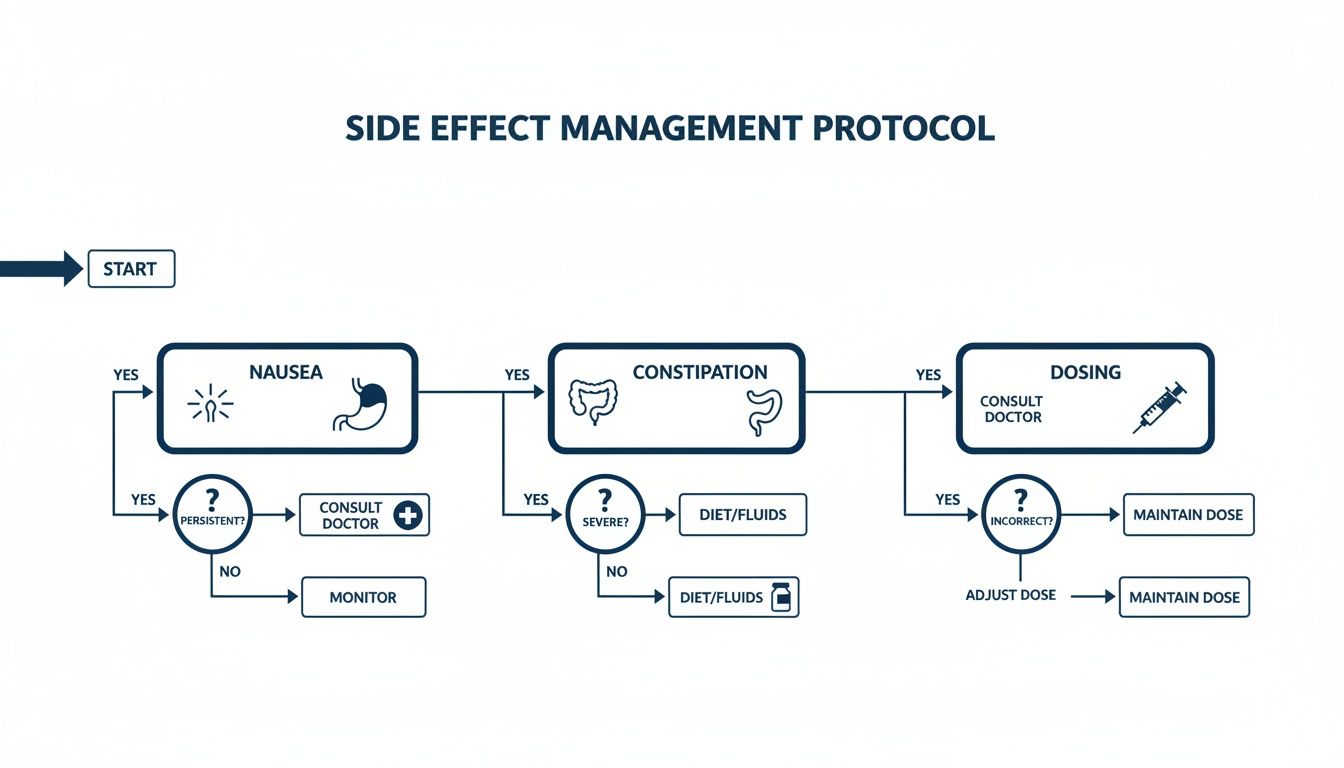
As you can see, a proactive approach is key. Simple adjustments for issues like nausea or constipation, combined with a gradual dosing schedule, are central to a smooth experience.
When Tirzepatide Could Be the More Powerful Tool
Now, let's consider David. He’s struggled with his weight for years. His goal is higher, aiming to lose over 20% of his body weight to address pressing metabolic health concerns and improve his long-term healthspan.
In David's case, tirzepatide might be the more direct route. Its dual-action mechanism typically results in more substantial weight loss. Because he needs a more powerful intervention, the higher efficacy of tirzepatide could be exactly what he needs to achieve his health goals.
This path often makes sense for individuals who:
- Have a significant amount of weight to lose, often 20% or more.
- Haven't seen the desired results with other weight loss methods.
- Are looking for the most potent tool available to improve their metabolic health.
The real takeaway here is that "stronger" doesn't always mean "better." The right medication is the one that safely and effectively helps you reach your personalized health objectives.
Making the Decision with Your Provider
Ultimately, the choice between semaglutide and tirzepatide is a collaborative one. Your medical history, how your body responds, and your comfort level all play a huge role. A provider might even suggest starting with semaglutide and then, if progress stalls, discussing a switch to tirzepatide.
This personalized approach ensures your treatment plan is tailored to you. It's about finding the right tool for the right job at the right time.
At Blue Haven Rx, our medical experts are here to help you navigate this choice with genuine care. We'll listen to your story, understand your goals, and guide you toward the path that makes the most sense for your long-term well-being.
Ready to figure out which path is right for you? Take our quick 2-minute quiz to check your eligibility.
How to Get Started with Blue Haven Rx
Taking the first step to reclaim your health is a big decision. We've designed our telehealth process at Blue Haven Rx to be as simple and direct as possible. You shouldn't have to deal with the hassle of in-person appointments or confusing insurance runarounds.
Your journey starts with a quick, confidential online quiz to see if our program is a good fit for you and your goals.
A Straightforward and Supportive Path
If the initial quiz shows you’re a good candidate, you’ll connect with a licensed US medical provider for a one-on-one telehealth consult. This is a real conversation—a chance to talk through your health history, what you hope to achieve, and any questions you have about semaglutide vs. tirzepatide. Your provider will help you determine which treatment makes the most sense for you.
Once you have a prescription, your medication is shipped discreetly to your door. We believe in clear, affordable pricing with no hidden fees. You can get a full breakdown in our guide on how to get semaglutide for your weight loss journey.
We don’t just send you medication and wish you luck. Our dedicated patient care team is a core part of our program, always there to answer questions, offer guidance, and give you the encouragement you need. We're here to make sure you feel supported every step of the way.
Your Partner in Health
The demand for real weight management solutions is growing. In the U.S., GLP-1 medications are front and center. While treatments using semaglutide held a large market share in 2024, medications with tirzepatide are quickly gaining ground due to their impressive results. With the landscape shifting so fast, having expert guidance is more important than ever. Discover more insights about the top-selling GLP-1 medications.
Deciding to start a medical weight management program is a powerful move toward a longer, healthier life. Our job is to make that process as smooth and supportive as possible.
If you’re ready to see what’s possible, the first step is easy. Take our 2-minute eligibility quiz to start your personalized journey with Blue Haven Rx today.
Frequently Asked Questions
When exploring powerful weight loss medications like these, it's natural to have questions. Here are straightforward answers to what we're asked most often about semaglutide and tirzepatide.
Which One Works Faster for Weight Loss?
Both medications get to work right away, but you won't see the numbers on the scale drop overnight. Most people start noticing meaningful weight loss within the first 4 to 8 weeks.
Think of it as a long-term strategy for healthy living. The doses are increased slowly to let your body adapt. The most significant results typically appear after a few months, especially when you pair the medication with positive changes to your diet and activity levels.
Can I Switch from Semaglutide to Tirzepatide?
Yes, switching from semaglutide to tirzepatide is a common option, especially for people who feel they've hit a weight loss plateau or want to achieve greater results. This must be done under the guidance of a medical provider.
Your provider will map out the best way to make the transition, including the right timing and starting dose of tirzepatide, to make the switch as smooth and effective as possible.
Practical Tip: Openly discussing your progress and goals with your provider is key. They are your partner in this and can help you decide if switching is the right call for your health.
Are the Side Effects Different?
For the most part, the side effects are very similar. Since both drugs target the GLP-1 hormone, the most common issues are gastrointestinal—things like nausea, mild constipation, or diarrhea. This is most common when you're just starting out or increasing your dose.
Because tirzepatide also involves the GIP hormone, some people might experience slightly different or more intense initial side effects. But for most users, these issues are temporary and easily managed with a slow and steady dosing schedule.
Do I Have to Stay on These Medications Forever?
Not necessarily. The goal is to use these medications as a powerful tool to help you reach a healthier weight while you build new, sustainable habits for a long life. While they can be used long-term to help maintain weight loss, the duration is a personal decision you'll make with your doctor.
Many people use the medication to reach their goal weight and then, with their provider's help, create a solid plan to maintain it through lifestyle alone. This is a great time to learn new eating patterns and find physical activities you enjoy.
Ready to see if a GLP-1 medication could be the right next step for you? The team at Blue Haven Rx is here to offer the expert guidance and support you deserve.
Start your journey today by taking our simple 2-minute eligibility quiz.