
A Clear Guide to Your Tirzepatide Dosage Chart
Your tirzepatide journey will typically begin with a 2.5 mg injection once a week for the first four weeks. This isn't a therapeutic dose, but rather a starting point to let your body get used to the medication. From there, your provider will likely increase the dose in 2.5 mg steps every four weeks until you find the right maintenance level for you. This "start low, go slow" method is key to balancing results and comfort.
Understanding Your Tirzepatide Dosage Journey
If you're looking for a clear guide to tirzepatide dosing, you've come to the right place. For adults, especially those aged 45+ who are serious about long-term weight management, knowing how this medication is dosed is the first step toward reclaiming your health. Tirzepatide isn't a one-size-fits-all solution; its real power comes from a carefully managed, gradual dosing schedule.
This guide breaks down the standard tirzepatide dosage chart and the titration process—the step-by-step increase in dosage. The aim is to help you work closely with your healthcare provider, like the experienced team at Blue Haven Rx, to reach your goals safely and effectively.
The Purpose of a Slow Start
You might be wondering, "Why start with such a low dose?" This methodical increase, called titration, is absolutely essential for your long-term success and healthy living.
- Minimizing Side Effects: A slow ramp-up gives your body time to adjust, which can reduce the chances of common gastrointestinal side effects like nausea or an upset stomach.
- Finding Your Sweet Spot: Not everyone needs to be on the highest dose. Titration allows you and your doctor to pinpoint the lowest possible dose that still gives you the results you're looking for.
- Building a Foundation: This careful process makes the treatment more tolerable, helping you stick with it and build sustainable health habits for the long haul.
This gradual approach is a hallmark of modern weight management treatments, especially those involving powerful GLP-1 medications. For a deeper dive into the numbers behind the medication's effectiveness, it's worth reviewing the Tirzepatide statistics and trial data, which offer great context on its performance and safety.
By embracing this steady process, you set yourself up for a more positive and successful experience. The focus is on long-term health and well-being, not just rapid, temporary changes.
Are you ready to see how a medically-supported plan can fit into your life? The first step is often the most important. Discover if you're a candidate and learn more about starting your personalized journey with Blue Haven Rx.
The Standard Tirzepatide Dosage Chart Explained
Getting familiar with the tirzepatide dosing schedule is one of the best ways to feel confident as you start your treatment. Think of it as a carefully planned journey—it’s a marathon, not a sprint. The dosing is designed to ease your body into the medication, making the whole process smoother and more effective for your weight management goals.
You'll begin with a starting dose of 2.5 mg once a week for the first four weeks. It's important to know that this initial phase isn't really about weight loss. The main goal here is to let your body get acquainted with tirzepatide, which helps keep side effects to a minimum.
After that first month, your provider will begin to gradually increase the dose. This slow, steady escalation is what makes the treatment so manageable for most people.
Understanding The Dose Escalation
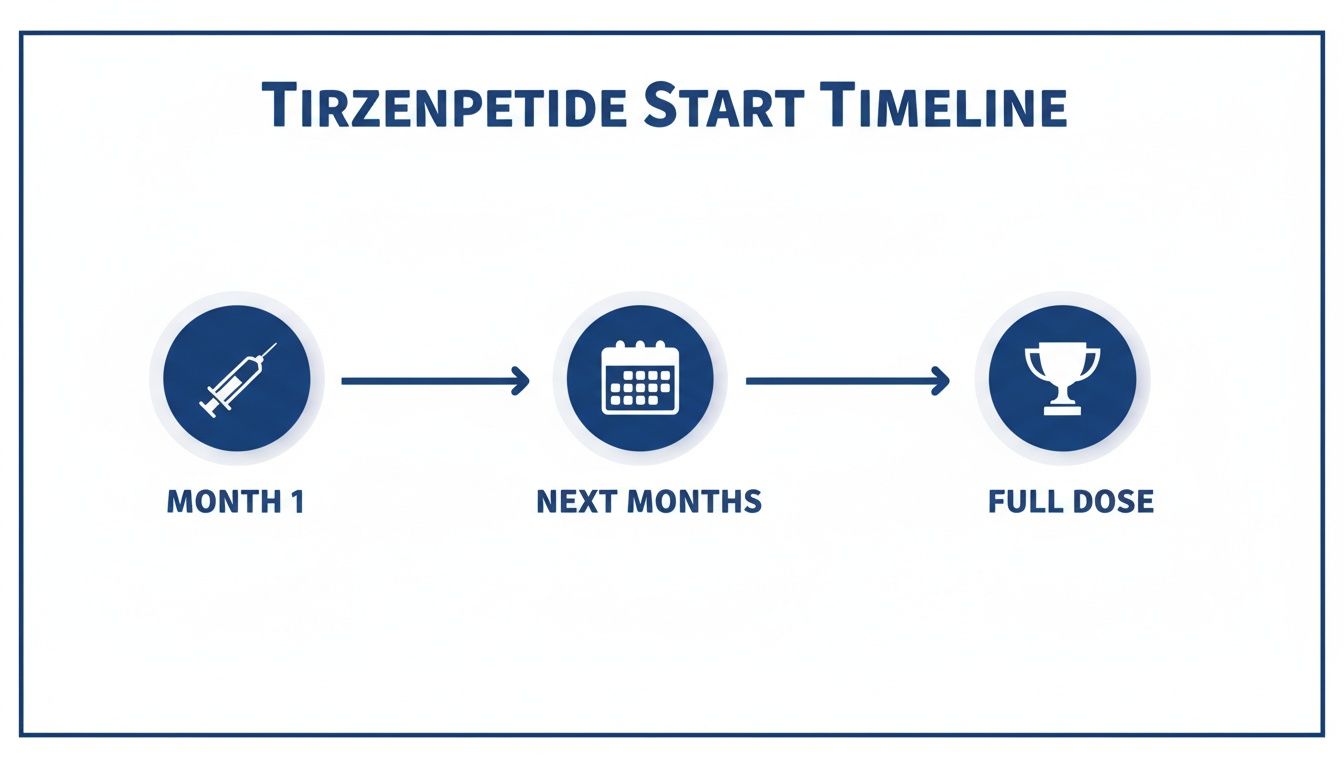
The standard approach, or titration schedule, is to increase your dose in 2.5 mg steps every four weeks, assuming you're handling the medication well. This methodical increase is backed by credible research and is all about finding that sweet spot between effectiveness and comfort. As documented in this study on tirzepatide administration, the "start low, go slow" method is a well-established practice.
The timeline visual above really captures it well—the first month is all about introduction, and the following months are for methodically building up to a dose that works for you.
To give you a clearer picture, here’s a detailed breakdown of what that schedule looks like week by week.
Detailed Tirzepatide Dosing and Titration Chart
| Weeks of Treatment | Weekly Dose (mg) | Key Focus/Goal |
|---|---|---|
| Weeks 1-4 | 2.5 mg | Starting Dose: Acclimate the body, minimize side effects. |
| Weeks 5-8 | 5 mg | First Increase: Begin therapeutic effects. |
| Weeks 9-12 | 7.5 mg | Second Increase: Continue dose escalation as tolerated. |
| Weeks 13-16 | 10 mg | Third Increase: Evaluate response and tolerability. |
| Weeks 17-20 | 12.5 mg | Fourth Increase: Moving toward maximum dose. |
| Week 21+ | 15 mg | Maximum Dose: Maintain at the highest effective dose. |
This table shows the most common path, but it's not set in stone.
It’s crucial to remember that not everyone needs to go all the way up to 15 mg. Many people achieve their goals and feel great on lower maintenance doses, like 5 mg, 10 mg, or 12.5 mg. Your Blue Haven Rx provider will be your partner in this, working closely with you to pinpoint the lowest dose that gives you the best results.
If you're curious how this approach stacks up against other popular medications, we've put together a helpful guide on Tirzepatide vs. Semaglutide Dosage for Weight Loss.
The key takeaway is that the "start low, go slow" approach is a deliberate strategy. It's designed to make your journey smoother and more sustainable for long-term health and well-being.
Why Gradual Dose Titration Is Key to Your Success
It’s natural to wonder why your tirzepatide dose starts low and increases so slowly. This careful, step-by-step process is called titration, and it’s the cornerstone of a successful and comfortable treatment experience. Think of it as a deliberate strategy to find the sweet spot—the most effective dose for you with the fewest possible side effects.
By starting with a low dose and gradually stepping it up, we give your body the time it needs to adjust. This methodical approach has been shown to reduce the chances of experiencing gastrointestinal issues like nausea or stomach upset. It's all about making your journey as smooth as possible.
A Journey of Five to Six Months
This patient, deliberate timeline isn't a bug; it's a feature. The entire titration schedule, from the initial 2.5 mg dose all the way up to the maximum 15 mg dose, is designed with your long-term safety and success in mind.
- Pacing for Comfort: Staying at each dose level for four weeks gives your system a chance to acclimate before moving up. This is crucial for building tolerance.
- Personalized Progress: It allows you and your healthcare provider to closely monitor how you're responding. Together, you can find the lowest effective dose that helps you meet your weight management goals.
- Building a Foundation: The "start low, go slow" method helps ensure you can stick with the treatment long enough to achieve meaningful, lasting results.
In practice, the full titration process—from the 2.5 mg starting dose to the maximum 15 mg weekly dose—typically takes about 20 to 24 weeks. This means most people who tolerate each increase well can reach a top maintenance dose in roughly five to six months. It’s a timeline that prioritizes both safety and efficacy above all else.
Think of titration like training for a marathon. You wouldn't try to run 26 miles on day one. You build up your mileage slowly to avoid injury and ensure you can cross the finish line strong.
Your Blue Haven Rx provider is your partner throughout this journey. They’ll work with you to tailor the titration schedule to your specific needs, making sure your path to better health is as manageable as it can be. This kind of personalized guidance is also essential if you're switching medications, for example, when navigating a semaglutide to tirzepatide conversion, which requires careful medical supervision.
Finding Your Personal Maintenance Dose
When you're starting tirzepatide, the goal isn't a race to the highest possible dosage. It's about finding what works for you. We call this your maintenance dose—it's the lowest amount of medication that helps you hit your goals comfortably and sustainably.
Many people discover they get fantastic, lasting results on doses well below the 15 mg maximum. In fact, that sweet spot for effective weight management often falls somewhere between 5 mg and 10 mg. This is typically where you strike the perfect balance between seeing the number on the scale go down and keeping side effects to a minimum.
This personalized approach is exactly how we handle treatment at Blue Haven Rx. Your provider is there to partner with you, guiding you through every adjustment.
Tailoring the Dose to Your Body
Your provider will check in with you regularly to see how you're progressing and, just as importantly, how you're feeling. This ongoing conversation is crucial for making sure your treatment plan is dialed in perfectly for your body's unique response and your health goals.
This careful management is key because, while higher doses can produce more significant weight loss, they also increase the chance of side effects. For example, major clinical trials have shown a direct link between dose strength and results, with participants on higher maintenance doses losing, on average, 15–20% of their body weight over 72 weeks. You can dig into the specifics by reading more about these tirzepatide findings.
But the main takeaway is this: "more" isn't always "better." The right dose is one that's effective, easy for your body to handle, and sustainable for the long haul. That's what sets you up for a comfortable and successful journey.
This focus on your individual experience is what makes a medically supervised program so effective. It’s a huge step up from a one-size-fits-all mentality, empowering you to find a treatment rhythm that supports both your weight management and overall well-being.
Ready to see what a customized plan could look like for you? Take the first step with our quick quiz to check if you're a candidate and get connected with one of our providers.
How to Manage Common Side Effects
While tirzepatide is a powerful tool for weight management, it helps to be ready for some potential side effects. The good news is that most are mild, temporary, and usually pop up right after you increase your dose. A few simple, proactive steps can make the whole experience much smoother.
The most common complaints are gastrointestinal—things like nausea, indigestion, or an upset stomach. This is completely normal and just a sign that your body is getting used to the medication. Making a few tweaks to your daily routine can often keep this discomfort in check.

Practical Tips for a Smoother Journey
Think of these tips as your go-to toolkit for navigating side effects, especially in those first few weeks after starting a new dose. Simply being more mindful of what you eat, and how you eat it, can make a world of difference for your long-term wellness.
Here are a few proven strategies that have helped others on this journey:
- Eat Smaller, More Frequent Meals: Instead of three big meals, try eating five or six smaller portions throughout the day. This keeps your stomach from getting too full and can really help dial down any feelings of nausea.
- Avoid Greasy or Fried Foods: Foods high in fat can be tough on your digestive system and might make an upset stomach feel worse. Stick with blander options like toast, rice, or baked chicken when your stomach feels sensitive.
- Stay Hydrated: Sip water consistently all day long. Dehydration is a known culprit for making nausea worse, so keeping up with fluids is key to feeling your best.
- Listen to Your Body: Tirzepatide is designed to make you feel full faster. Pay close attention to your body’s signals and stop eating when you’re satisfied, not stuffed.
For a deeper dive into this topic, check out our guide on how to handle common GLP-1 medication side effects.
The key is to be gentle with yourself as your body adapts. These temporary discomforts are usually a sign that the medication is beginning to work, and they often fade as your body gets used to each new dosage level.
Remember, the goal here is a comfortable and sustainable path to better health. If any side effects feel severe or just won't go away, it's really important to talk to your provider. The team at Blue Haven Rx is here to help and can adjust your tirzepatide dosage chart to make sure your journey is a positive one. Your long-term health is always the top priority.
Administering and Storing Your Medication
Following your dosage schedule is critical, but so is knowing how to properly administer and store your tirzepatide. Getting these simple routines right ensures the medication works exactly as intended and helps make your weekly injection a smooth, stress-free process.
Let's walk through the essentials so you can feel confident and in control of your treatment.
How to Administer Your Weekly Injection
Your provider will give you a hands-on demonstration, but here’s a quick overview of what to expect. Tirzepatide is a subcutaneous injection, which is just a technical way of saying it’s injected into the fatty tissue just under the skin—not deep into a muscle.
There are three primary injection sites that work best:
- Your abdomen (stomach): Just be sure to stay at least two inches away from your belly button.
- Your thigh: The top, outer part of your thigh is an easy-to-reach spot.
- Your upper arm: This one can be tricky to do on your own, so it’s best if you have someone to help you.
One of the most important habits to develop is to rotate your injection site each week. This simple practice is key to preventing skin irritation, bruising, or the formation of small lumps. If you use your abdomen one week, switch to your thigh the next. This gives your skin a chance to recover and makes a big difference in your long-term comfort.
Correct Storage for Your Medication
To maintain its potency, tirzepatide needs to be stored correctly. Keep your medication in the refrigerator at a temperature between 36°F and 46°F (2°C to 8°C). It's crucial that you never freeze it, as that can ruin the medication.
Think of storing your medication like keeping produce fresh. Proper refrigeration preserves its quality and ensures you get the full benefit every single time. It's a non-negotiable part of the process.
If you’re traveling or unable to refrigerate it for a short period, the medication can be kept at room temperature (up to 86°F or 30°C) for a maximum of 21 days. A key point here: once it's been stored at room temperature, it should not be put back into the fridge. And always, always keep it protected from direct light.
Following these straightforward administration and storage rules will help you get the most from your GLP-1 medication and make your health journey that much easier.
Ready to see if a personalized weight management plan is right for you? Find out if you're a candidate and get started with Blue Haven Rx today.
Your Personalized Plan: Working with Your Provider
Everyone's health journey is different, so it only makes sense that your treatment plan should be, too. This is exactly why building a strong, open relationship with your healthcare provider is so crucial. The licensed medical doctors at Blue Haven Rx don't just hand you a standard plan; they collaborate with you to craft a dosing schedule that genuinely fits your body, your goals, and your life.
Honest, two-way communication is the foundation of a successful treatment. When you regularly check in about your progress, any side effects, and just how you're feeling overall, you give your provider the information they need to fine-tune your tirzepatide dosage chart. This teamwork makes the entire process smoother and more effective.
How Your Dosing Schedule Can Be Adjusted
Think of the standard titration schedule as a well-researched starting point, not an unbreakable rule. Your comfort and well-being are always the priority. If side effects are bothering you or your body simply needs more time to acclimate to a higher dose, your provider can easily modify the plan.
A few common adjustments include:
- Staying at a dose longer: Instead of moving up every four weeks like clockwork, you might stay on the 5 mg or 7.5 mg dose for an extra month or two. This gives your body a chance to fully adapt before you increase again.
- Finding your unique maintenance dose: Not everyone needs to reach the maximum dose to see great results. The real goal is to find the lowest effective dose that helps you maintain your progress with the fewest side effects.
- Aligning treatment with your lifestyle: Your provider can also help you weave your tirzepatide plan into your broader health habits, like nutrition and exercise, for a more holistic approach. You can learn more by checking out our articles on healthy living and longevity.
Your treatment plan isn't set in stone. It's a dynamic guide that should evolve based on your body's response and your progress over time.
Taking an active role in your own care is incredibly powerful. We always encourage you to ask questions, share what you're experiencing, and lean on the support available to you. By working hand-in-hand with your provider, you can build a truly personalized plan that gets you the best possible results for your long-term health.
This is a partnership, and we're here to support you at every turn. If you're curious about what a personalized plan could mean for you, take our quick quiz to get started.
Common Questions About Tirzepatide Dosing
It’s only natural to have questions as you start or adjust your treatment. Feeling confident in your plan comes from having clear, direct answers, so let's walk through some of the most common queries we get about tirzepatide dosing.
Think of this as a quick-reference guide to supplement the conversations you have with your provider. Our goal is to make sure you feel supported and can manage your treatment with ease.
What Should I Do If I Miss a Dose?
Life happens, and it's easy to forget a dose now and then. Don't worry, there's a straightforward protocol for this.
The key is how much time has passed since your scheduled injection. According to clinical guidance, which you can read more about here, if it’s been four days (96 hours) or less, go ahead and take the missed dose as soon as you remember.
On the other hand, if more than four days have gone by, you should skip that dose completely. Just wait and take your next one on its regularly scheduled day. The one thing you absolutely shouldn't do is double up on doses to "catch up"—that can lead to unnecessary side effects.
Can I Change My Injection Day?
Absolutely. Your schedule needs to work for your life, and you can change your injection day if you need to.
The only rule is to make sure there are at least three days (72 hours) between your injections. For instance, if you normally take your shot on a Monday but want to move it to Friday, you'd take your Monday dose, then take the next one on Friday of that same week. After that, Friday becomes your new weekly injection day. This flexibility helps you fit the treatment into your routine without disrupting its effectiveness.
What If Side Effects Are Too Strong After a Dose Increase?
Feeling some mild side effects after bumping up your dose is pretty common, but if they feel too intense, the first thing to do is talk to your provider. Your comfort is a top priority.
Remember, your tirzepatide dosage chart is a guide, not a rigid set of rules. Your provider has options to help, such as:
- Holding at the current dose: You might stay on the dose you tolerate well for another four weeks before attempting to increase it again.
- Adjusting the maintenance dose: Not everyone needs the maximum dose to see great results. If the 10 mg dose is causing issues, your provider might decide that staying at 7.5 mg is the right long-term plan for you.
The most effective treatment is one you can actually stick with. Openly discussing how you feel with your provider allows them to fine-tune your plan so it works for your body.
Your health journey is a partnership, and the team at Blue Haven Rx is here to support you with any questions or concerns.
At Blue Haven Rx, we believe in providing the guidance and support you need to succeed. Our dedicated medical team uses a science-backed approach to help you create a personalized plan for real, sustainable results.
Ready to see how our program can support your long-term health and wellness goals? Start your journey with Blue Haven Rx today.