
Ozempic And Headaches: What You Really Need To Know
Starting a new medication on your weight management journey often comes with questions about new symptoms. If you're wondering about Ozempic and headaches, you're definitely not alone. It's a common concern, but the good news is that these headaches are often just an indirect signal from your body as it adjusts to all the positive changes you're making.
Understanding The Ozempic Headache Connection

Taking a big step toward a healthier life with a GLP-1 medication is something to be proud of. While your focus is on the long-term benefits for your weight and health, it's totally normal to be curious about how your body will adapt along the way. Headaches are one of the most common topics that come up when people first start this kind of treatment.
Instead of thinking of it as a direct side effect, it helps to see it as your body's response to big shifts in things like your hydration and blood sugar levels. For most people, these symptoms are a temporary and manageable part of that initial adjustment period. Our goal is to give you the information you need to feel confident and in control of your treatment.
What The Research Shows
Here’s something that might surprise you: research suggests semaglutide itself isn't the direct culprit behind the headaches. It's the medication's secondary effects—how it changes your body's internal environment—that can trigger the discomfort.
For example, one major review of clinical trials found no significant difference in how often people got headaches when taking semaglutide compared to those on other diabetes medications. This points to the headaches being more about the body's overall adjustment process rather than the drug itself.
To better understand the various triggers behind head pain, this article explaining what causes frequent migraines provides some helpful background.
Headaches are just one of several potential symptoms you might run into. For a more complete picture, we’ve put together a guide covering other common experiences with GLP-1 medication side effects. Knowing what to expect can provide a lot of reassurance and help you stick with your health goals. Here at Blue Haven Rx, we believe that knowledge is power on your path to wellness.
To help you quickly grasp the key points, we've put together a simple table.
Quick Overview Of Semaglutide Headaches
Here is a quick reference guide to understand the key factors related to headaches while using semaglutide for your weight loss journey.
| Key Factor | What It Means For You |
|---|---|
| Indirect Cause | The headache likely isn't from the drug itself, but from your body adjusting to changes in diet, hydration, and blood sugar. |
| Common Timing | Most people notice headaches when first starting the medication or after a dose increase. They usually fade as your body adapts. |
| Key Triggers | Dehydration and low blood sugar (hypoglycemia) are the most common culprits. Staying hydrated and eating regular meals is crucial. |
| Management | Simple self-care like drinking plenty of water, eating balanced meals, and getting enough rest can make a huge difference. |
Ultimately, understanding these factors helps you partner with your body during its adjustment phase, making your wellness journey smoother and more successful.
Why Semaglutide Can Trigger Headaches
So, what's really going on when you start a GLP-1 medication and a headache shows up? It helps to think of your body as a high-performance engine. Semaglutide fundamentally changes how that engine uses fuel (sugar) and manages its fluid levels. Sometimes, those initial tune-ups can cause a bit of temporary discomfort.
Seeing these triggers for what they are—your body's way of communicating as it adapts—can make all the difference. The three most common reasons you might be feeling that tension in your head are dehydration, blood sugar fluctuations, and simply your body getting used to the medication.
Interestingly, most of the side effects people report are actually gastrointestinal, like nausea or diarrhea. These are often the real culprits behind the headaches, as they can easily lead to dehydration. Some people even report migraine-like symptoms, but again, these are typically a knock-on effect of other changes, not a direct action of the drug itself. You can find a deeper dive into these mechanisms on this informational page.
Dehydration: The Primary Culprit
Hands down, one of the most common reasons for Ozempic and headaches is plain old dehydration. The medication can sometimes blunt your thirst signal or cause a little nausea, which makes you less likely to drink enough water throughout the day.
Even minor dehydration can cause your brain tissue to shrink just a tiny bit. This slight contraction can pull the brain away from the skull, irritating pain receptors and—voila—a headache appears. Think of a plant that starts to wilt when it's thirsty; your body is sending you a very clear signal that its fluid balance is off.
Key Takeaway: Staying ahead of thirst is your best strategy. Don't wait until you feel parched to grab a glass of water. Sipping consistently is a game-changer for managing side effects and feeling your best.
Shifting Blood Sugar Levels
Another major factor is the very thing semaglutide is designed to do: stabilize your blood sugar. As your body gets used to having lower, steadier glucose levels, you might experience temporary dips into hypoglycemia (low blood sugar), especially as you're adjusting your diet.
The classic signs of low blood sugar often include:
- A dull headache or dizziness
- Feeling shaky or weak
- A sudden wave of tiredness or irritability
These symptoms are just a sign that your body's internal "fuel gauge" is being recalibrated. Just as headaches can pop up, so can fatigue. If you're also feeling wiped out, you might find some helpful tips in our article about semaglutide and fatigue.
Eating smaller, protein-rich meals more frequently can be a huge help in preventing those blood sugar nosedives and keeping the associated headaches at bay. Once you learn to read these signals, you can tweak your daily routine to make the transition feel much smoother.
Here at Blue Haven Rx, our team is committed to guiding you through this adjustment period. We want to help you reach your goals comfortably and confidently. Understanding how your body responds is a huge part of your success—start your quiz today to learn more.
What To Expect: The Headache Timeline
Starting any new medication can come with a little uncertainty. Knowing what to expect with Ozempic can make all the difference, helping you feel prepared and in control rather than anxious about new symptoms. When it comes to Ozempic and headaches, there's a fairly predictable pattern that most people experience. Seeing the headache as a temporary sign that your body is adjusting can really help frame it as a manageable part of the process.
For most people, these headaches aren't random. They tend to follow a timeline, especially when you're just getting started.
When Headaches Typically Appear
You're most likely to notice a headache within the first few weeks of starting a GLP-1 medication like semaglutide. This is the main adjustment period where your body is getting used to everything—from more stable blood sugar levels to new metabolic signals.
A very common experience is for a headache to crop up the day of your weekly shot, or maybe the day after. The good news? These are usually temporary and mild, often fading within a day or two as your body gets the hang of things.
This timeline shows what you can generally expect as your body gets used to the medication.
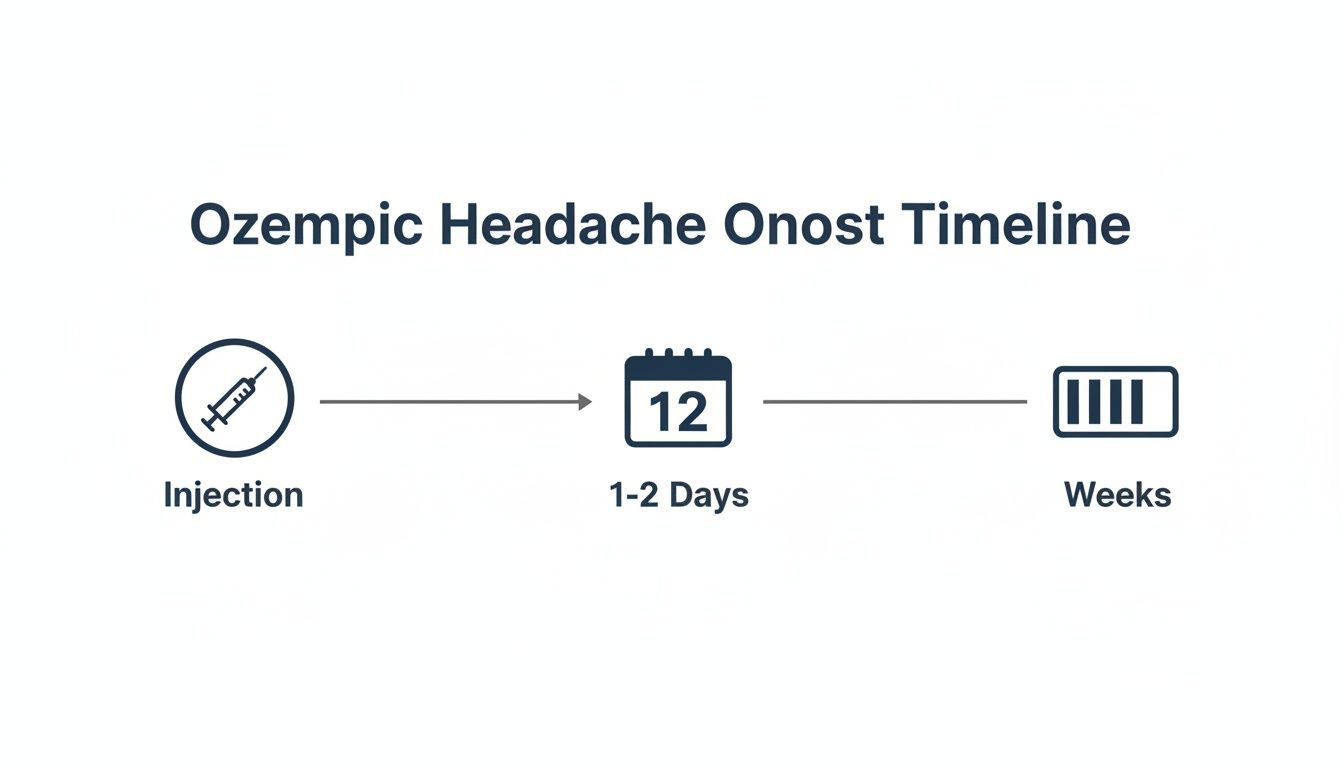
As you can see, the headaches are most common right after an injection and tend to become less of an issue as the weeks go on.
Adjusting Your Dosage And Headaches
Don't be surprised if headaches make a brief comeback when you and your provider decide to increase your dose. Think of each dosage increase as a mini-adjustment period for your body. It's completely normal to have a temporary return of side effects as your system gets used to the new level.
This pattern is totally normal and expected. It’s just part of the process as your body recalibrates to a higher dose, which is often necessary to get the full benefits of the medication for your health goals.
Knowing this can help you anticipate and manage any discomfort. If you're curious about how the titration schedule works, our detailed guide provides a clear overview of the typical semaglutide dosage chart.
As your body gets fully accustomed to Ozempic over several weeks, the headaches usually become much less frequent or disappear altogether. A little patience during this initial phase goes a long way. Here at Blue Haven RX, our team is here to support you through every step, helping you navigate these adjustments on your way to a healthier you.
Practical Strategies to Prevent and Manage Headaches

Dealing with headaches while on Ozempic can be a nuisance, but the good news is you have a lot of control over them. A few simple, proactive steps can make all the difference, often stopping a headache before it has a chance to start. Think of these tips as your personal toolkit for staying comfortable and focused on your health goals.
The goal is to weave these strategies into your daily life so they become second nature. This way, a temporary side effect doesn't derail your long-term success.
Prioritize Proactive Hydration
If you do just one thing on this list, make it this: stay on top of your hydration. Since dehydration is one of the biggest culprits behind these headaches, keeping your fluid intake high is non-negotiable.
Don't wait until you feel thirsty to reach for water—by that point, you're already playing catch-up. The key is to sip consistently all day long to keep your body in balance.
Here are a few practical tips to make it easier:
- Get a marked water bottle: Seeing your progress throughout the day is a great visual nudge to keep drinking.
- Add electrolytes: A low-sugar electrolyte powder can be a game-changer for replenishing minerals, especially if you're also dealing with digestive side effects.
- Set reminders: A simple hourly alert on your phone or watch is often all it takes to build the habit.
Staying ahead of your body's hydration needs is one of the most powerful ways to prevent headaches from developing in the first place. It's a small habit that delivers big results on your wellness journey.
Stabilize Your Blood Sugar With Smart Eating
Just as crucial as hydration is keeping your blood sugar levels steady. When your glucose drops too low, it's a direct trigger for a headache. The best way to avoid this is to prevent long gaps between meals that lead to those energy crashes.
Instead of three big meals, try eating smaller, protein-rich meals and snacks every few hours. This gives your body a slow, steady stream of fuel, preventing the sharp dips that cause discomfort.
For more general strategies, it can also be helpful to understand how to treat tension headaches naturally for lasting relief. Even though your headaches might be from the medication, these holistic approaches can be a great complement to your efforts.
Consider Over-the-Counter Options
For those times when a headache does break through, common over-the-counter (OTC) pain relievers can definitely help. Medications like acetaminophen or ibuprofen are generally safe to take with GLP-1 medications.
Still, it’s always a good idea to run it by your healthcare provider before adding any new medication, even an OTC one. They can give you the green light and confirm it’s a good choice for your specific health situation. And remember, proper technique matters—our guide on semaglutide injection instructions can help ensure you’re administering your dose correctly.
By combining these simple but powerful strategies, you can take control of headaches and keep moving forward on your path to better health. If you're ready to see how a personalized plan can support your goals, start your journey with Blue Haven Rx today.
When To Discuss Headaches With Your Provider
Think of your wellness journey as a partnership between you and your healthcare provider. While most headaches from semaglutide are temporary and fade with the tips we've covered, it’s crucial to know when a headache is more than just a passing annoyance.
Listening to your body and being open with your provider is key to keeping your treatment plan both safe and effective. They can't help if they don't know what's going on.
Red Flags: When to Call Your Doctor
Mild headaches are fairly common as your body gets used to the medication. But certain symptoms are signals that you need to get in touch with a medical professional right away. This isn't about causing alarm—it's about knowing what to watch for.
You should reach out to your provider if you experience any of these:
- A sudden, severe headache: If a headache comes on fast and feels like the "worst pain of your life," it's time to seek immediate advice.
- Pain that won't quit: Headaches that stick around for several days without getting better, even with at-home care, are worth a call.
- Headaches plus other symptoms: Be on the lookout for headaches accompanied by vision changes, confusion, a stiff neck, or severe dizziness.
- Headaches that disrupt your life: If the pain is so bad it keeps you from doing your normal daily activities, that's a clear sign you need support.
Your well-being is always the top priority. Never second-guess reaching out if a symptom feels wrong or just worries you. It's always better to be cautious and get an expert opinion.
How Telehealth Support Can Help
This is exactly where a service like Blue Haven RX can make a real difference. Instead of waiting days or weeks for an in-person appointment, you get direct access to medical professionals who can assess your symptoms from wherever you are.
Our team can help figure out if your dose needs adjusting, suggest different ways to manage the pain, or simply give you the reassurance that what you're feeling is normal. This kind of ongoing support is designed to help you handle side effects without derailing your progress.
We'll work with you to find the right balance, making your path to better health as smooth as possible. If you’re looking for a more supportive approach to weight management, you can start your journey with us today.
Your Top Questions About Ozempic and Headaches, Answered
Let's dive into some of the most common questions people have when they start experiencing headaches on semaglutide. We'll get straight to the point with practical answers to help you understand what's going on and what you can do about it.
How Long Do Ozempic Headaches Usually Last?
This really varies from person to person, and it often depends on the cause. If low blood sugar is the culprit, a small snack with some protein and carbs can sometimes clear it up pretty quickly. If you're dealing with dehydration, it might take a little longer to feel relief as your body absorbs the fluids it needs.
For headaches that seem directly tied to the medication itself, there’s good news. Most people find they are a temporary issue. They tend to pop up most often during the first few weeks of treatment and then gradually fade away as your system acclimates.
Can I Take Painkillers for an Ozempic Headache?
Yes, for the most part, reaching for a common over-the-counter pain reliever is perfectly fine. Medications like acetaminophen (Tylenol) or ibuprofen (Advil, Motrin) don't have known negative interactions with GLP-1 medications like semaglutide.
That said, it's always a smart move to run it by your healthcare provider first. They can give you the green light based on your specific health profile, especially if you have other conditions or are taking other medications. It's also worth remembering that while these can mask the pain, they don't solve the root issue if it's something like dehydration.
Important Note: Think of pain relievers as a temporary fix. Your real goal should be to tackle the underlying cause—like staying on top of your water intake and keeping blood sugar stable—to prevent headaches from happening in the first place.
Should I Stop Taking Semaglutide if I Get Headaches?
A mild headache, especially when you're just starting out, isn't usually a reason to stop your medication. It’s often just a sign that your body is adjusting, and it's typically a manageable part of that initial phase.
But—and this is a big but—you should absolutely get in touch with your provider if the headaches are severe, won't go away, or are messing with your ability to go about your day. They can help you figure out what's really going on and decide on the best next step, whether that's adjusting your dose or exploring other solutions to keep you on track safely and comfortably.
Everyone's health journey looks a little different, and our team at Blue Haven RX is committed to giving you the personalized support you deserve. If you're looking for a science-backed approach to weight management with a team that has your back, start your free quiz today.