
How to Lose Weight Fast The Right Way
The proven formula for losing weight isn't a secret: you need to create a safe calorie deficit. This is achieved through a smart combination of what you eat and how you move your body. When done correctly, this can lead to a healthy, sustainable loss of 1-2 pounds per week—without the frustration of a crash diet.
A Realistic Path to Faster Weight Loss
If you're looking for ways to lose weight fast, you've likely seen promises that sound wonderful but end in frustration. Many plans are too restrictive or complicated, making them nearly impossible to stick with for more than a few days. Our goal here is different. We want to provide a practical, health-focused roadmap that balances results with safety and actually fits into your life.
This guide goes beyond generic advice. We'll focus on actionable strategies that build a real foundation for long-term health and wellness. True success isn't just about a number on the scale—it’s about having more energy, improving your longevity, and feeling in control of your well-being.
Understanding the Modern Approach
Today, we understand that effective weight management is about more than just willpower. It’s a complex process involving lifestyle adjustments and a deeper understanding of our bodies. We now recognize how factors like hormonal shifts, metabolism, and even our mindset play a significant role in our ability to manage our weight. If you’re seeking support on this journey, you are far from alone.
The demand for effective solutions is massive. The global market for weight management is projected to grow from around USD 165.10 billion in 2025 to a staggering USD 295.09 billion by 2032. This shows just how many people are actively working to improve their health, just like you.
The Core Principles of Effective Weight Loss
To get started, let's focus on the fundamentals that truly drive results. This isn't about perfection; it's about consistency in your healthy living habits.
A successful weight management strategy hinges on several key pillars working together. Each one plays a distinct but interconnected role in helping you achieve your goals safely and effectively.
Key Pillars of Rapid Yet Safe Weight Loss
This table summarizes the core components of a balanced and sustainable weight management plan.
| Component | Primary Goal | Why It's Important |
|---|---|---|
| Caloric Deficit | Consume fewer calories than your body burns | The fundamental driver of weight loss. Without it, your body has no reason to use stored fat for energy. |
| Nutrient-Dense Foods | Maximize nutrition while managing calories | High-protein and high-fiber foods keep you feeling full and satisfied, which helps prevent overeating and cravings. |
| Consistent Movement | Burn calories and build lean muscle | Exercise not only burns calories but also supports a healthy metabolism long-term by increasing muscle mass. |
| Medical Support | Overcome biological barriers to weight loss | For many, medical guidance can address underlying issues and make lifestyle changes significantly more effective. |
By integrating these four elements, you're not just dieting—you're building a comprehensive system for lasting change and healthy living.
- Caloric Deficit: This is the bedrock of weight management. It simply means using more energy than you consume. A critical first step is to learn how to calculate your daily calorie needs so you can create a deficit that works for you without feeling deprived.
- Nutrient-Dense Foods: Focus on foods packed with protein, fiber, and healthy fats. These are your best allies for feeling full and energized, making it much easier to stick to your calorie goals. These foods are essential for both weight management and longevity.
- Consistent Movement: Regular physical activity burns calories and builds muscle. More muscle supports a faster metabolism, which helps you burn more calories even at rest.
- Medical Support: For many people, especially those who feel they've tried everything, modern medical options can be a game-changer. Telehealth now provides convenient access to treatments that can help your healthy efforts finally pay off.
A healthy rate of weight loss is widely considered to be about one to two pounds per week. This pace ensures you're losing mostly fat while preserving precious muscle mass, which is vital for a healthy metabolism and long-term wellness.
This guide will walk you through each of these components, giving you the tools and knowledge you need. To see what options might be right for you, start by taking our quick online quiz.
Building Your Plate for Sustainable Fat Loss
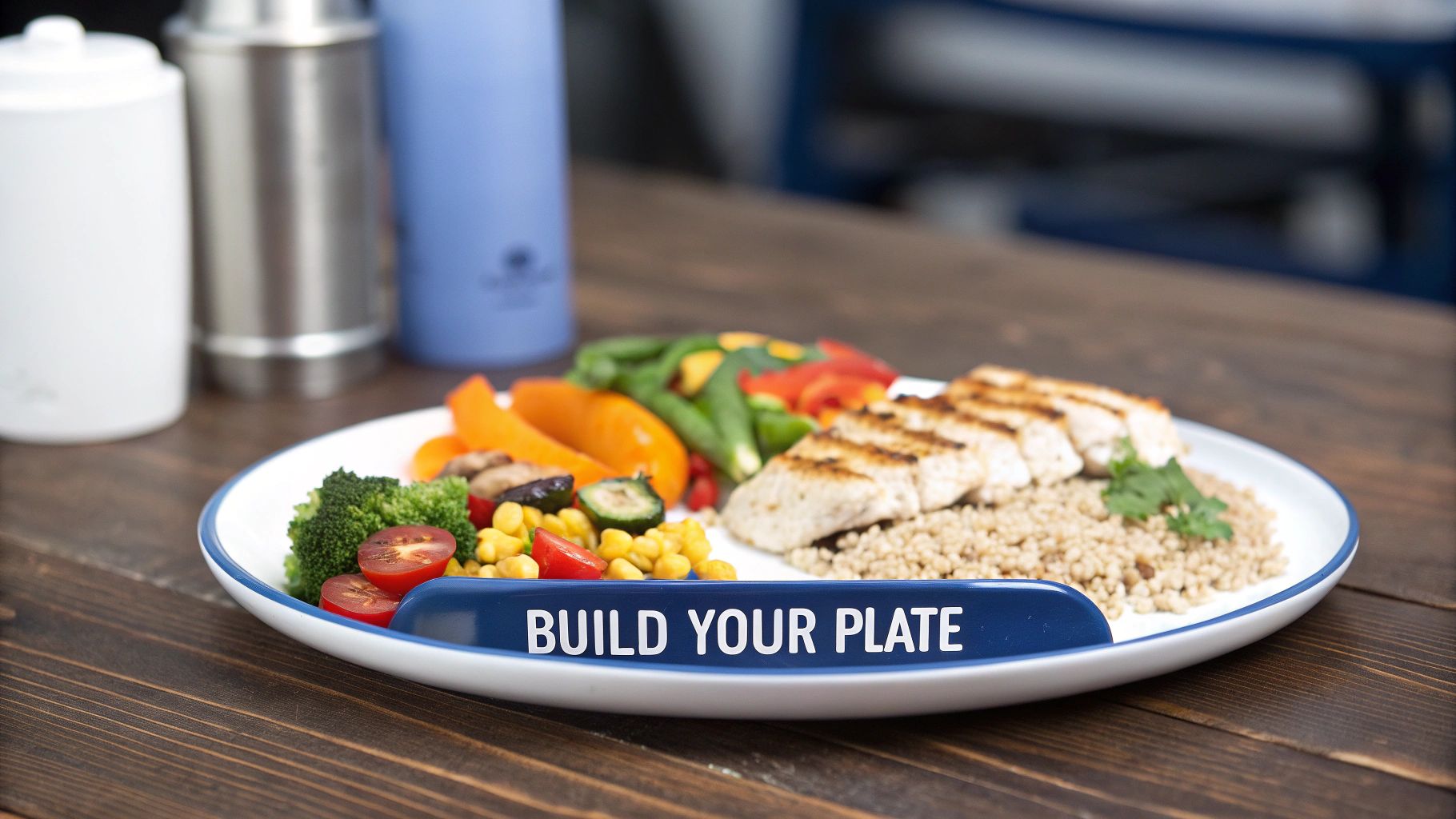
A calorie deficit might be the engine for weight loss, but the food you choose is the premium fuel that makes the journey smooth. When most people think about losing weight quickly, they imagine restrictive diets. That’s an outdated approach. A smarter, more sustainable method is to build a plate that fuels your body, keeps you full, and promotes fat loss without making you feel deprived.
The secret is a simple shift in mindset: Stop focusing on what you can't eat and start focusing on the powerful, nutrient-packed foods you can add to your plate. This small change makes the entire process feel more positive and achievable for the long haul.
The Power Trio: Protein, Fiber, and Healthy Fats
When you build your meals around protein, fiber, and healthy fats, you create a powerhouse combination that works with your body’s natural hunger cues. This trio is your best defense against cravings and energy slumps, tying directly back to effective weight management.
- Protein is your anchor. It is the most satiating macronutrient, meaning it keeps you feeling full and satisfied longer. Your body also burns more calories digesting protein compared to fats or carbs—a small metabolic bonus.
- Fiber adds bulk and slows digestion. Found in vegetables, fruits, and whole grains, fiber adds volume to your meals without adding many calories. It also helps stabilize blood sugar, preventing the spikes and crashes that lead to cravings.
- Healthy Fats are essential. Sourced from foods like avocado, nuts, seeds, and olive oil, healthy fats are crucial for hormone function and absorbing key vitamins. They also play a major role in satiety, helping you feel full so you’re not tempted to overeat.
By ensuring each meal has these three components, you create a natural buffer against hunger, making it easier to stick to your calorie goals.
Practical Tips for Building a Better Plate
Putting this into practice is easier than you think. A great practical tip is using the "plate method" as a visual guide.
Imagine your dinner plate and divide it:
- Fill half of it with non-starchy veggies (like broccoli, spinach, or a large salad).
- Fill one-quarter with a quality source of lean protein (like chicken, fish, or tofu).
- Fill the final quarter with a high-fiber carbohydrate (like quinoa, sweet potato, or beans).
Top it with a drizzle of olive oil or a sprinkle of nuts for your healthy fat, and you have a perfectly balanced, fat-fighting meal. This approach to eating supports not just weight management, but overall healthy living.
For more ideas, we've created a comprehensive guide to the best foods for weight loss to help you stock your kitchen for success.
Weaving Smart Movement into Your Life
Exercise is often viewed as a way to "burn off" what you eat, but it’s much more than that. Think of it as remodeling your body into a more efficient, resilient machine. Smart movement is your secret weapon for firing up your metabolism and, crucially, holding onto valuable lean muscle as you lose fat. This is key for both weight management and longevity.
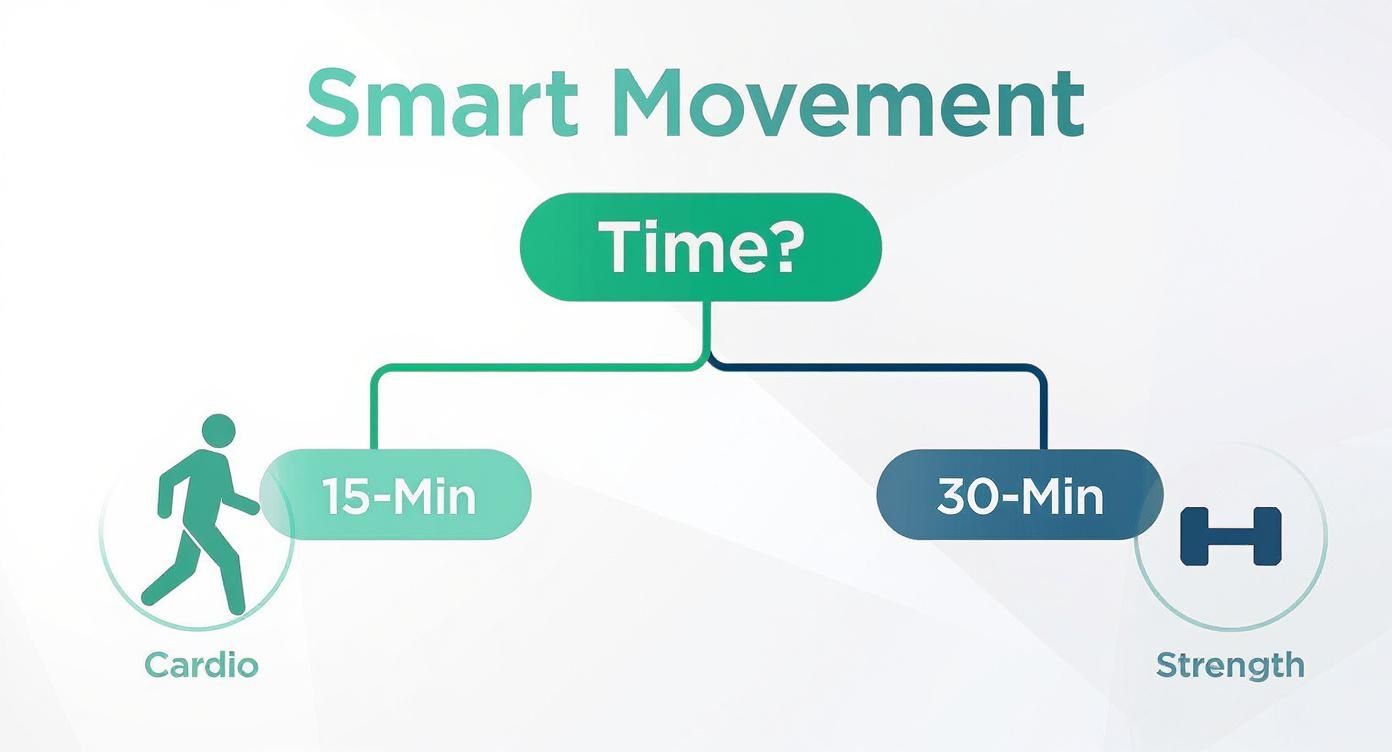
This isn't about spending hours in the gym every day. It's about finding a smart blend of activity you can stick with because it feels good. The most effective plans combine two key types of exercise: strength training and cardio.
Strength Training: Your Metabolic Foundation
When you lose weight, your body can lose muscle along with fat. We want to prevent that. Why? Because muscle is your metabolic engine. The more lean mass you have, the more calories you burn around the clock—even when you’re resting.
Strength training sends a powerful signal to your body to preserve this muscle. You don't need a fancy gym to start.
Practical tips for starting strength training:
- Bodyweight Moves: Squats, lunges, and push-ups (starting on your knees is perfectly fine) build functional strength using your own body.
- Resistance Bands: These are inexpensive, portable, and challenge your muscles effectively.
Aim for two or three strength sessions a week, focusing on all major muscle groups. Consistency is more important than intensity, especially when you're starting out.
The Role of Cardio in Your Weight Loss Plan
Cardio is fantastic for your heart health and for burning calories. The key is to choose activities that are kind to your joints, especially if you're carrying extra weight.
Instead of high-impact exercises that can be tough on the knees and hips, focus on joint-friendly options that still get your heart rate up.
Gentle Yet Powerful Cardio Options
For most people, low-impact exercise is the best way to start. These activities provide all the cardiovascular and calorie-burning benefits without stressing your joints. Finding the best low-impact workout for weight loss for your body is a great first step.
A few excellent options include:
- Brisk Walking: This is one of the most underrated exercises. A crisp 30-45 minute walk most days of the week is a phenomenal way to burn fat and improve your mood.
- Swimming or Water Aerobics: The water supports your body, making movement feel easier while still providing a great workout.
- Cycling: Whether on a stationary bike or outdoors, cycling is a superb way to build endurance with zero impact.
These consistent efforts build on each other, creating lasting changes in your body, your metabolism, and your energy levels. If you've been feeling sluggish, it might be worth investigating the common symptoms of a slow metabolism.
Taking A Closer Look At Modern Medical Weight Loss
For many people, especially as we get older, losing weight can feel like an uphill battle. You might be eating well and staying active, but the scale refuses to move. This is rarely a failure of willpower; it's often your biology, influenced by hormonal shifts, a slowing metabolism, or insulin resistance.
This is where modern medicine can provide meaningful support. It’s not about a magic bullet, but about using a medically-guided tool to help your body cooperate with your healthy lifestyle efforts. For many, this is the missing piece that finally helps them achieve lasting results.
How GLP-1 Medications Fit Into The Picture
One of the biggest breakthroughs in weight management comes from a class of treatments called GLP-1 receptor agonists. You may have heard of medications like semaglutide and tirzepatide, which are in this category. These are not stimulants; they work by mimicking natural hormones your body already produces to regulate appetite and blood sugar.
In simple terms, these treatments send signals to your brain that you’re full and satisfied. This naturally reduces cravings and helps you feel comfortable eating smaller portions. This process also helps your body become more sensitive to its own insulin, which is excellent for your overall metabolic health. For those exploring options that go beyond diet and exercise, our GLP-1 for weight loss article offers more detail.
If you're curious about other wellness innovations, treatments like NAD+ therapy are also being explored for their role in cellular energy and healthy aging, which complements a holistic approach to weight management and longevity.
Who Is A Good Candidate For This Approach?
Medical weight loss is not a one-size-fits-all solution, but it is a powerful option for people who meet certain criteria. A healthcare provider will typically consider these treatments for adults who have:
- A Body Mass Index (BMI) of 30 or higher.
- A BMI of 27 or higher plus a weight-related health condition like high blood pressure or type 2 diabetes.
The goal is to provide support for those whose weight is directly impacting their health and quality of life. It’s a way to address the root biological factors that make weight loss difficult, giving you a better chance at long-term success.
A New Way To Access Care: Telehealth
Getting this kind of medical support is more convenient and discreet than ever before. Through a telehealth provider like Blue Haven Rx, the entire process can be handled from the comfort of your home.
Here's how it typically works:
- Online Assessment: It starts with a comprehensive online quiz. You’ll share your health history and goals to see if you might be eligible.
- Physician Review: A licensed U.S. physician reviews your information to determine if a prescription is safe and appropriate for you.
- Ongoing Support: A quality program provides ongoing support from healthcare professionals to track your progress and help you build sustainable, healthy habits for the long term.
This approach is gaining momentum. The global market for clinical weight loss services was valued at $39.07 billion in 2023 and is projected to climb to $60.48 billion by 2030. This growth shows a real shift toward embracing medically-supported strategies that work.
Comparing Weight Loss Approaches
| Approach | How It Works | Best For | Considerations |
| :--- | :--- | :--- |
| Traditional Diet & Exercise | Relies solely on calorie restriction and physical activity. | Individuals with a smaller amount of weight to lose or those just starting their journey. | Can be a slow process; doesn't address underlying biological factors like hormone imbalances. |
| Medically Supervised Plan | Combines lifestyle changes with medication to regulate appetite and improve metabolism. | People with a BMI over 27 (with health conditions) or 30, or those who have struggled with diet alone. | Requires a prescription and medical supervision; potential for side effects that need management. |
Ultimately, the right path depends on your unique health profile. A medical approach isn't a replacement for healthy habits—it's a powerful tool to make those habits more effective.
Building the Mindset for Long-Term Success
What you eat and how you move are huge pieces of the puzzle. But the work that makes the changes stick for good happens in your mind. Getting your mindset right is the foundation that supports everything else, long after you’ve reached your goal weight. Healthy living is as much a mental journey as a physical one.
This is about learning to be resilient, forgiving yourself for missteps, and staying patient through plateaus. Let’s talk about some real-world strategies for building a mindset that lasts.
Navigating Mental Roadblocks
Life has a way of derailing our best-laid plans. A stressful day at work might lead you to the fridge, or a week of perfect eating results in the scale not moving. The key is not to avoid these moments, but to have a plan for when they happen.
A common challenge is emotional eating—reaching for food because of stress, boredom, or sadness, rather than hunger. The first step is to recognize it. When you feel a sudden craving, pause and ask yourself, "Am I actually hungry, or am I trying to soothe a feeling?"
That pause is powerful. Practical tips for managing emotional eating include:
- Stepping outside for a five-minute walk to clear your head.
- Texting a friend to talk about what's really bothering you.
- Trying one minute of deep, slow breathing to calm your nervous system.
Finding healthier ways to cope with life's challenges is a crucial skill for long-term weight management and overall wellness.
Setting Goals That Keep You Going
It’s tempting to set a huge goal, but when it feels far away, it's easy to lose motivation. A more effective approach is to break that big goal into smaller, manageable wins.
Instead of fixating on the total pounds you want to lose, celebrate the small victories along the way. Did you stick to your meal plan this week? Did you get an extra walk in? Acknowledge it and give yourself credit. This creates positive feedback that keeps you motivated.
The Overlooked Pillar of Weight Management: Sleep
You can have a perfect diet and exercise routine, but if you're not getting enough quality sleep, you're fighting an uphill battle. Sleep is critical for regulating the hormones that control hunger and cravings, making it a cornerstone of healthy living.
When you’re sleep-deprived:
- Your body produces more ghrelin, the "I'm hungry" hormone.
- It produces less leptin, the "I'm full" hormone.
This hormonal imbalance is why you often crave unhealthy foods after a bad night's sleep. Aiming for 7-9 hours of quality sleep is one of the most powerful things you can do to support your metabolism and keep your appetite in check.
At Blue Haven Rx, we understand that this is a journey for your mind as much as your body. To learn more about how we can support you, start your journey with us today.
Your Questions on Fast Weight Loss, Answered
When you're considering how to lose weight fast, it's natural to have questions. This is a good thing—it means you're taking your health seriously. Let's address some of the most common concerns we hear, so you can move forward with confidence.
Is It Actually Safe to Lose Weight Fast?
This is a common question, and the answer is: it can be, if done correctly. The danger with many "fast" weight loss plans is that they cause you to lose water and precious muscle, which can harm your metabolism and lead to weight regain.
The key to safe and rapid weight loss is to focus on fat loss while preserving muscle. This requires a structured plan that provides your body with the protein, vitamins, and minerals it needs, even in a calorie deficit. A well-designed approach, often with medical guidance, can help you get results without sacrificing your long-term health and wellness.
How Do I Know If I Am a Candidate for GLP-1 Medications?
Determining if a prescription medication like a GLP-1 is right for you is a decision to be made with a healthcare professional. They will review your entire health profile, including your medical history and weight management goals.
Generally, these medications are considered for adults who meet specific Body Mass Index (BMI) criteria. The typical threshold is a BMI of 30 or higher, or a BMI of 27 or higher if you also have a weight-related health condition like high blood pressure. The first step is always a proper medical evaluation, which is why our process starts with a detailed online quiz.
What Happens If I Stop Taking a GLP-1 Medication?
GLP-1 medications are a powerful tool to help reset your eating habits and daily routines. When you eventually stop taking the medication, its direct effect on appetite hormones will diminish.
This is why the time you spend on the medication is so critical. It’s an opportunity to build and solidify the lifestyle habits that will help you maintain your weight for good. These habits include mindful eating, regular physical activity, and understanding your body's true hunger cues. A good provider will work with you on a long-term strategy for healthy living.
How Can I Avoid Regaining the Weight I Lose?
Maintaining weight loss comes down to consistency. It’s not about being perfect, but about making your new healthy habits your default.
True maintenance is a continuation of the same principles that led to your success. Practical tips include:
- Stick to a balanced diet high in protein and fiber.
- Stay active most days of the week.
- Prioritize 7-9 hours of quality sleep to regulate hunger hormones.
- Find healthy ways to manage stress, a major trigger for weight regain.
You're not just "on a diet"—you’re building a new, healthier lifestyle. This commitment to healthy living is the key to turning short-term success into a permanent change.
At Blue Haven RX, we believe lasting weight loss is built on knowledge, support, and the right medical tools. If you're ready to see how a guided plan can help you reach your goals, we're here to help you begin.
Start your journey today by taking our free online assessment.