
How to Lose Weight After Hysterectomy: A Practical Guide
If you've noticed the numbers on the scale creeping up after your hysterectomy, you're not alone, and it’s certainly not in your head. Trying to lose weight after this major surgery feels different because it is different. Your body is navigating some pretty big hormonal and physical shifts.
The path forward isn't about dieting harder; it's about working with your body. This means understanding your new metabolic reality, focusing on nutrition that supports your hormones, and reintroducing movement in a way that safely rebuilds your strength for the long haul. This friendly guide offers practical, actionable tips to help you feel your best.
Why Weight Gain Happens After a Hysterectomy
It can be incredibly frustrating to struggle with weight after a hysterectomy, especially when you feel like you're doing all the right things. This is a shared experience for so many women, and it’s rooted in real biological changes happening inside your body—whether your ovaries were removed or not.
Getting a handle on the "why" is the first step. It allows you to trade frustration for a clear, compassionate, and effective plan for healthy living.
The Hormonal Shift and Your Metabolism
The biggest player in post-hysterectomy weight gain is hormonal change. Estrogen is a powerhouse hormone that does more than manage your reproductive cycle; it plays a huge role in regulating your metabolism, influencing how your body uses energy and where it decides to store fat.
When your estrogen levels drop, a few things start to shift:
- Your Metabolism Slows Down: Your body just doesn't burn calories as efficiently as it used to. The diet and exercise routine that kept you stable before might now lead to slow and steady weight gain.
- Fat Storage Patterns Change: Lower estrogen often tells the body to start storing fat around the abdomen. This is why so many women suddenly notice more belly fat, even if they’ve never carried weight there before.
- Appetite and Cravings Can Increase: Those hormonal fluctuations can mess with your hunger signals (hello, ghrelin and leptin!), making you feel hungrier and less satisfied after eating.
Even if you kept your ovaries, the surgery can sometimes impact their blood supply. This can cause a slow decline in their function, leading to a gradual drop in estrogen over time. The whole experience mirrors what many women go through during perimenopause and menopause, which is why the strategies for managing weight often overlap. You can learn more about menopause-related weight gain here.
The Impact of Surgery and Recovery
Let's not forget you just had major surgery! The recovery period itself can inadvertently set the stage for weight gain. For several weeks, your activity is strictly limited to give your body a chance to heal properly.
This forced rest can lead to a loss of muscle mass. Since muscle is your metabolic engine—it burns calories even when you're just sitting on the couch—losing it can slow your metabolism down even further.
This isn't just anecdotal; research backs it up. Credible studies have found that women tend to gain an average of three pounds in the first year after a hysterectomy. More significantly, nearly 23% of patients gained more than 10 pounds in that same timeframe.
To put it all together, here’s a quick look at the key factors at play.
Key Factors Influencing Weight Gain After Hysterectomy
This table breaks down the primary biological and lifestyle changes that can make managing your weight more challenging after surgery.
| Factor | How It Contributes to Weight Gain | What You Can Do |
|---|---|---|
| Hormonal Changes | Decreased estrogen slows metabolism and promotes abdominal fat storage. | Focus on hormone-balancing foods (fiber, protein, healthy fats) and consider discussing hormone replacement therapy (HRT) with your doctor. |
| Reduced Activity | Mandatory rest during recovery leads to muscle loss, further slowing metabolic rate. | Follow a gradual, pelvic-floor-safe exercise plan to rebuild strength without causing injury. Start with walking. |
| Appetite Dysregulation | Fluctuating hormones can increase hunger and cravings for high-calorie foods. | Prioritize protein and fiber at every meal to promote satiety and stabilize blood sugar. Stay well-hydrated. |
| Sleep Disruption | Pain, discomfort, or hormonal shifts (like night sweats) can lead to poor sleep, which increases cortisol and drives weight gain. | Create a consistent sleep routine, make your bedroom a cool, dark sanctuary, and talk to your doctor if sleep issues persist. |
Understanding these factors is crucial because it shifts the conversation from self-blame to proactive strategy and healthy living.
Acknowledging these biological hurdles is key. It's not about a lack of willpower; it’s about your body adjusting to a new normal. This understanding allows you to approach weight management with patience and a smarter, more targeted strategy.
By combining this knowledge with practical steps for nutrition, exercise, and lifestyle adjustments, you can work with your body to feel strong and healthy again.
Navigating Movement And Recovery After Your Surgery
Getting back to physical activity after a hysterectomy is a process that absolutely cannot be rushed. It’s all about patience, grace, and listening carefully to what your body is telling you. Pushing too hard, too soon can seriously set back your healing. A slow, steady, and thoughtful approach is what will help you rebuild strength, kickstart your metabolism, and finally feel like yourself again.
Every woman's recovery timeline is a little different, but the general roadmap is pretty consistent. The graphic below lays out the typical sequence of events your body goes through—from the initial surgery and healing phase right through to the hormonal shifts that can really impact your weight.
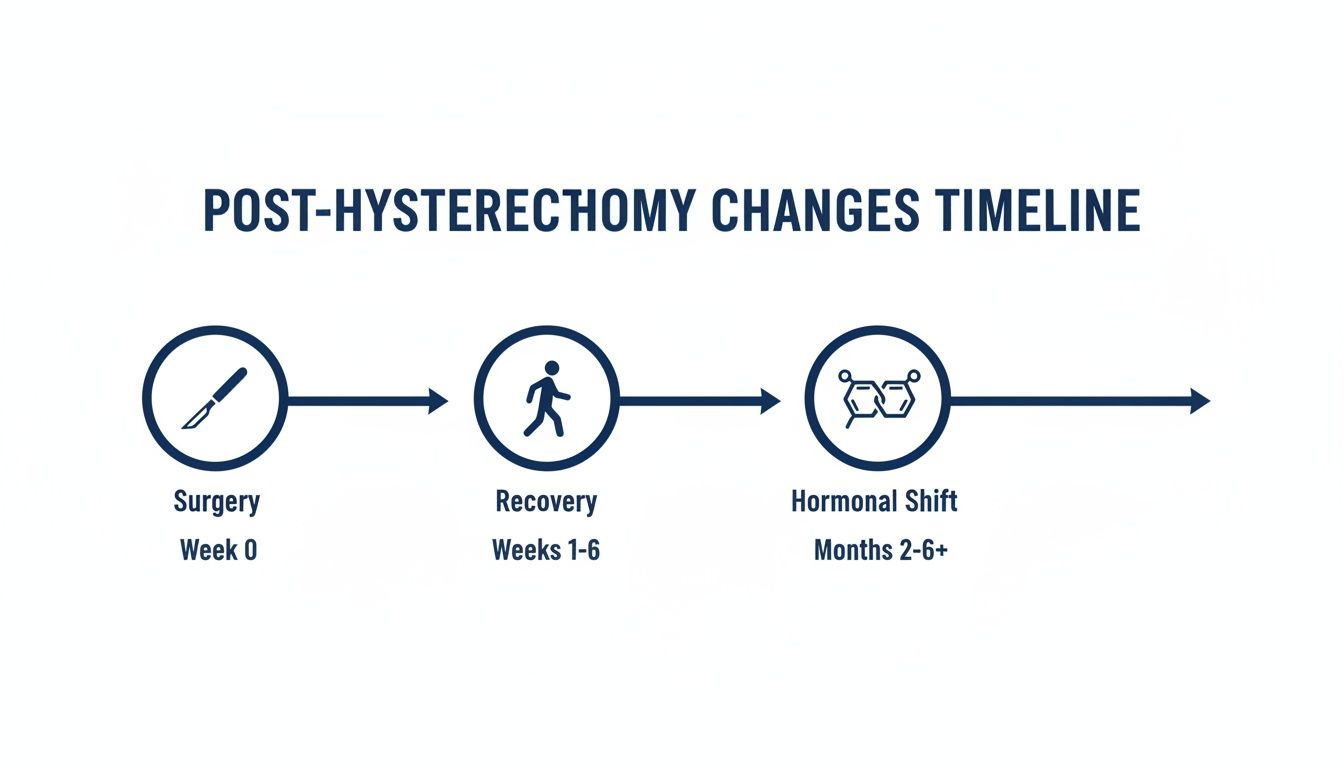
You can see how the first chunk of time is dedicated to healing, followed by those hormonal adjustments. This is often the exact point when women start noticing frustrating changes on the scale. Understanding this natural progression is key to setting realistic goals for yourself.
The First Six Weeks: Gentle Beginnings
Those first six to eight weeks after surgery are sacred healing time. Period. Your only "workout" during this critical window should be walking. These short, gentle walks are doing more for you than you can imagine.
Walking gets your blood circulating, which is fantastic for speeding up healing and preventing dangerous blood clots. It also gently wakes up your core and pelvic floor muscles without putting any real strain on them. Start with just five or ten minutes a day and only add more time when you feel ready. Stick to flat ground for now—no hills or tricky terrain.
Your goal right now is not about burning calories. It's about giving your body the support it needs to recover. Think of this consistent, gentle movement as the foundation for all the fitness you'll build later.
Pay close attention to any warning signs from your body. If you feel any sharp pain, notice spotting, or have a strange feeling of heaviness in your pelvis, that’s your cue to stop and rest. And, of course, don't even think about moving on to new exercises until you get the official all-clear from your doctor.
Moving Forward Safely After Your Doctor’s OK
Once you get that green light from your healthcare provider—usually around the six-to-eight-week mark—you can start to carefully branch out with other low-impact activities. The name of the game is still building strength without putting a ton of pressure on your healing abdomen and pelvic floor.
Here are some excellent, practical options to ease back into a more active routine:
- Swimming and Water Aerobics: The water is your best friend right now. Its buoyancy supports your body, letting you get a great full-body workout without any harsh impact on your joints.
- Restorative or Gentle Yoga: Look for classes that focus on gentle stretching, core stability, and mindfulness. You’ll want to steer clear of deep twists or anything that puts intense pressure on your belly.
- Stationary Cycling: This is a fantastic way to get your heart rate up and improve your cardiovascular fitness without the jarring impact of running.
- Light Bodyweight Exercises: Simple moves like glute bridges, clamshells, and gentle leg lifts are perfect for reactivating and strengthening your glutes and core.
As the months go by and you feel stronger, you can start to slowly bring strength training back into the picture. This is so important for rebuilding muscle and boosting your metabolism for long-term health. Once your doctor clears you for more strenuous activity, looking into a structured beginner gym routine for women can be a smart and safe way to take the next step.
The most effective strategy is to approach your post-hysterectomy fitness with a patient and mindful mindset. By truly honoring your body's healing process, you're setting yourself up for long-term health, strength, and success with your weight.
Nutrition Strategies for Your New Hormonal Reality
Losing weight after a hysterectomy isn't about jumping on the latest restrictive diet. It’s about learning to eat in a way that works with your body’s new hormonal state, not against it. The right foods can help stabilize your blood sugar, calm inflammation, and give your metabolism the nudge it needs to get going again.
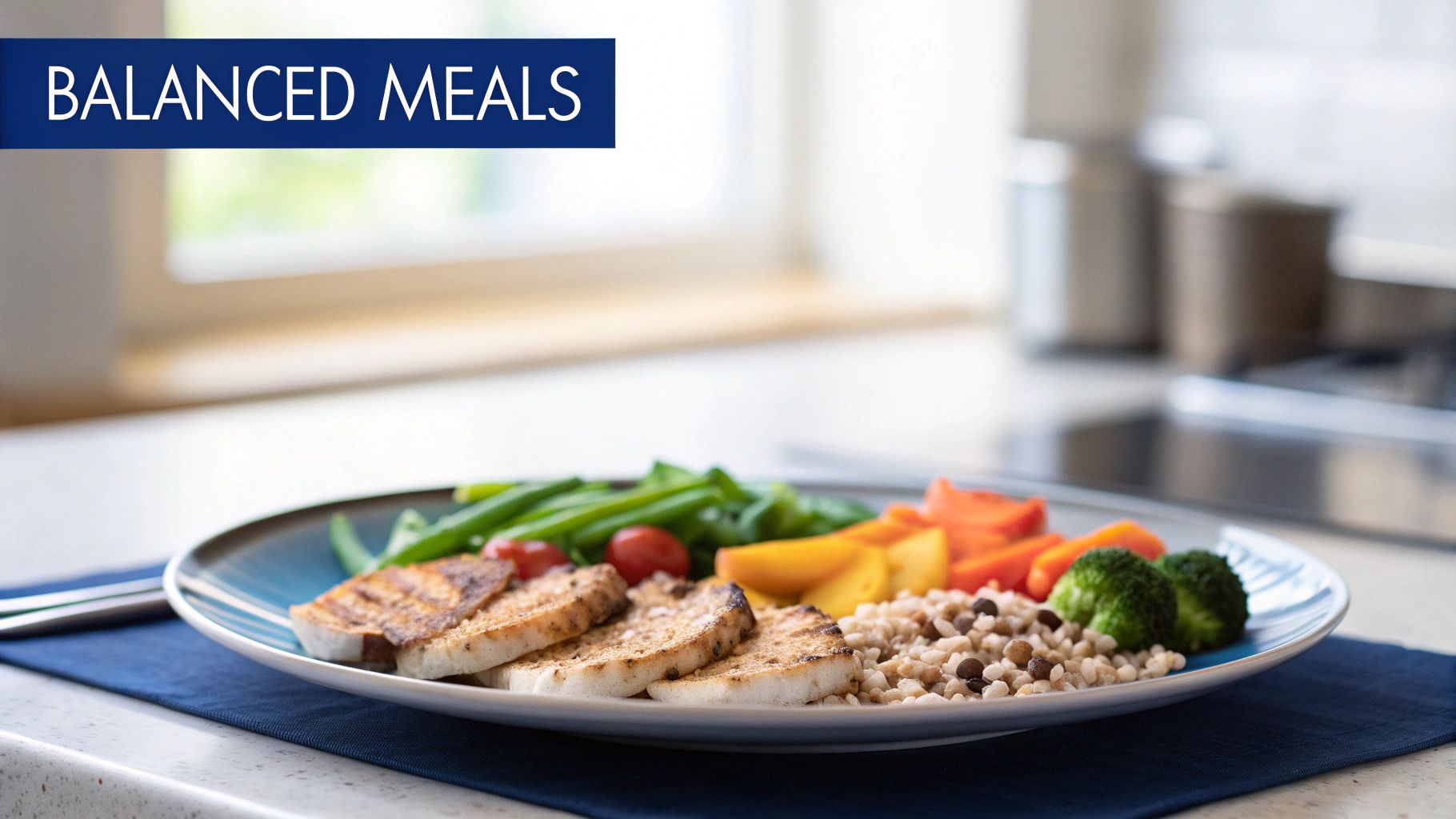
Think of food as information. You're sending signals to your body with every meal. By sending the right signals, you can encourage it to burn fat, hold onto precious muscle, and keep your energy levels from tanking mid-afternoon. It's a powerful mindset shift that makes all the difference for long-term weight management.
Prioritize Protein at Every Meal
If there's one single change to make, this is it. Protein is your new best friend. After a hysterectomy, hormonal shifts can slow your metabolism, and the recovery period can lead to muscle loss. Protein is the antidote to both. It keeps you feeling full and satisfied, which is a game-changer for taming those sudden cravings.
More importantly, it's the building block for lean muscle. And because muscle burns more calories than fat, protecting it is absolutely essential for keeping your metabolic rate from dropping.
The goal is to get a solid source of lean protein with every single meal and snack. Here are some practical tips:
- Breakfast: A smoothie with a scoop of protein powder, or a bowl of Greek yogurt topped with berries.
- Lunch: A big salad with grilled chicken, salmon, or a hearty serving of chickpeas.
- Dinner: Build your plate around a piece of baked fish, some lean turkey, or tofu.
A great rule of thumb is to aim for a palm-sized portion of protein with each meal. This simple visual cue helps you stay on track without getting bogged down in counting every gram. It makes healthy eating feel more natural.
This steady stream of protein also does wonders for your blood sugar, helping you avoid those draining energy slumps that send you running for the nearest sugary fix.
Embrace Fiber and Healthy Fats
Right after protein, your focus should be on fiber and healthy fats. Fiber—from all those wonderful fruits, veggies, and whole grains—adds satisfying bulk to your meals and is crucial for a happy gut. We're learning more every day about how a healthy gut microbiome is tied to better weight management and lower inflammation.
Healthy fats, like the kind you find in avocados, nuts, and good olive oil, are absolutely vital. Your body uses them to produce hormones, and since you’re navigating a major hormonal shift, giving your body these raw materials is incredibly important. They also help you feel full and absorb key vitamins.
For more on how to build these foundational routines, check out our guide on developing healthy eating habits for weight loss.
A Simple Meal-Building Formula
Forget about complicated rules. Here's a simple, repeatable way to build a balanced, fat-burning meal every single time. Just picture your plate:
- Half Your Plate - Non-Starchy Vegetables: Load it up with colorful veggies like broccoli, spinach, bell peppers, or cauliflower. They’re packed with nutrients and fiber but low in calories.
- A Quarter of Your Plate - Lean Protein: This is for your grilled chicken, fish, tofu, or lentils.
- A Quarter of Your Plate - Complex Carbs & Healthy Fats: Add a small serving of quinoa or sweet potato, or top your meal with some avocado or a sprinkle of nuts.
This "plate method" ensures you’re getting the right mix of macronutrients to support stable energy and sustainable weight loss without feeling like you're on a diet. It’s a way of eating you can stick with for the long haul, supporting not just weight loss but your overall health and longevity.
If you’ve put these habits in place and still feel like you’re spinning your wheels, it might be time to look at what’s happening on a biological level. The team at Blue Haven Rx can help you understand all your options. To see if a personalized medical approach could be right for you, take our quiz today.
Building a Lifestyle That Supports Sustainable Weight Loss
Diet and exercise are powerful tools, but they’re only two pieces of a much larger puzzle. To get lasting results, especially when your body is navigating big hormonal changes, you need a lifestyle that supports your goals from the ground up. This means we have to look at two often-overlooked factors that have a massive impact on post-hysterectomy weight loss: stress and sleep.

Think of it this way: if nutrition and exercise are the engine of your car, stress and sleep are the oil and coolant. Without them, the engine overheats and breaks down. Let's dig into how we can get these foundational elements working for you.
Taming the Stress Hormone Cortisol
Life after 45 is rarely a walk in the park. But chronic stress does a lot more than just tank your mood; it floods your body with a hormone called cortisol. When it's constantly elevated, it becomes a major roadblock to weight loss, particularly after a hysterectomy.
High cortisol literally signals your body to store fat, especially right around your middle. It also revs up your appetite, making you crave high-fat, sugary foods. This creates a frustrating cycle where all your best efforts in the kitchen and gym are completely undermined by a hormone working against you. The key is to find simple, sustainable ways to manage your daily stress.
Here are a few practical tips I've seen work for countless women:
- Schedule "Worry Time": Set a timer for 10-15 minutes each day to actively think about your stressors. When the timer goes off, consciously move on. This helps contain anxious thoughts instead of letting them run on a loop all day.
- Try Mindful Moments: You don’t need to meditate for an hour. Just take three deep, slow breaths before you get out of your car or start a new task. This tiny reset can lower cortisol levels in real-time.
- Get Outside: Just 20 minutes of walking in a natural setting can significantly lower stress hormones. Think of it as a prescription for calm.
Managing stress isn't a luxury; it's a non-negotiable part of any successful plan for how to lose weight after hysterectomy. By lowering cortisol, you’re creating a hormonal environment that allows your body to finally let go of stubborn belly fat.
The Critical Role of Quality Sleep
If stress is a problem, poor sleep is its partner in crime. A lack of quality rest sends your hunger hormones into a complete tailspin. It causes levels of ghrelin (the "I'm hungry" hormone) to skyrocket while suppressing leptin (the "I'm full" hormone).
The result? You wake up feeling hungrier, less satisfied by your meals, and much more likely to crave junk food. Research shows that even a single night of poor sleep can increase cravings for calorie-dense snacks by as much as 45%. When this happens night after night, making progress feels nearly impossible.
This is where improving your sleep hygiene—the habits and routines surrounding your bedtime—can be a total game-changer.
Creating a Restful Bedtime Routine
Your body thrives on routine. A consistent wind-down ritual is a powerful signal to your brain that it’s time to prepare for sleep. This isn’t about adding more to your to-do list; it’s about creating a peaceful, deliberate transition.
- Power Down Electronics: The blue light from phones, tablets, and TVs messes with your body’s production of melatonin, the sleep hormone. Try to put them away at least an hour before bed.
- Create a Sanctuary: Make your bedroom cool, dark, and quiet. If you're a light sleeper, blackout curtains or a white noise machine can make all the difference.
- Find Your Calm: Read a real book (not on a screen!), take a warm bath with Epsom salts, or listen to calming music. Whatever helps you disconnect from the day's worries is the right choice.
These small, consistent actions build a strong foundation for healthy living. When your stress is managed and your sleep is restorative, your body becomes a partner in your weight loss journey, not an obstacle.
If you feel like you're doing everything right but still hitting a wall, it’s a sign that something deeper might be at play. Blue Haven Rx can help you explore personalized medical options that support your unique biology. To learn more, take our quiz today.
Exploring Medical Support for Post-Hysterectomy Weight Loss
If you've been doing everything "right"—diligently changing your diet, committing to gentle movement, and making sleep a priority—but the scale just won't budge, please hear this: it's not a personal failing. For many women, the profound metabolic and hormonal shifts after a hysterectomy create a biological headwind that lifestyle changes alone struggle to overcome.
This is the point where looking into medical support isn't about finding a shortcut. It's about giving your body the right tools to finally respond to all your hard work. Sometimes, the internal signaling system that governs hunger and fullness gets thrown out of whack. Modern medical approaches can be a true game-changer here, working with your body’s own biology to restore that balance.
Understanding GLP-1 Therapies
You've probably heard about a class of medications called GLP-1s (glucagon-like peptide-1 receptor agonists). While they were originally developed to help manage blood sugar, they’ve proven to be remarkably effective for weight loss. Why? Because they target the exact metabolic issues many women face after a hysterectomy.
GLP-1s work in a few key ways:
- They quiet the "food noise." By acting on the appetite centers in your brain, they help turn down the volume on constant cravings and the mental chatter about food.
- They slow down digestion. This simple mechanism helps you feel fuller and more satisfied for a longer period after a meal, making it naturally easier to manage portions.
- They improve how your body uses insulin. This helps your system use energy more efficiently instead of storing it as fat—a crucial benefit for tackling that stubborn abdominal weight.
This isn't about overriding your body with a stimulant. It’s a science-backed approach that helps recalibrate your body's natural hunger and metabolic signals so they work for you, not against you. To get a deeper understanding of how these therapies function, you can read our in-depth guide on GLP-1s for weight loss.
Why Is Post-Hysterectomy Weight Loss So Hard?
The biological reasons for weight struggles after this surgery are complex. The mechanisms driving post-hysterectomy weight gain involve a mix of hormonal disruption and deep metabolic changes. Even when the ovaries are surgically preserved, research indicates a gradual decline in their function over time.
This drop in estrogen increases a woman's risk of losing both bone density and lean muscle mass. These metabolic challenges are often compounded by the limitations of post-operative recovery, making the journey feel even more uphill.
Is Medical Support Right for You?
Deciding to explore medical weight loss is a personal choice, but it’s one you don't have to make alone. The best next step is having a productive conversation with a clinician who understands this space. It’s a chance to discuss your health history, your frustrations, and your goals in a supportive environment.
A clinician can help you connect the dots between your post-hysterectomy symptoms and the underlying biological changes, offering a plan that addresses the root cause of your weight gain.
You might be a good candidate if:
- You've consistently implemented lifestyle changes (nutrition, exercise, sleep) without seeing meaningful results.
- You struggle with constant hunger, cravings, or a feeling of never being truly full.
- You have other health markers, like elevated blood sugar or blood pressure, that could be improved with weight loss.
While you're gathering information for your doctor's visit, learning about the best supplements for weight loss can also provide some useful context for your discussion.
The goal of medical support is to provide a biological boost that makes your healthy habits more effective. Think of it as the key that unlocks progress, helping you finally feel in control of your health and well-being again.
If you're curious whether a personalized medical approach could be the right fit for your journey, the first step is simple. Learning more can empower you to make the best decision for your long-term health and vitality.
Your Questions Answered: Weight Loss After a Hysterectomy
Going through a hysterectomy is a major life event, and it’s completely normal to have a ton of questions about what comes next—especially when it comes to your weight and body. Let's tackle some of the most common concerns with clear, trustworthy answers so you can feel more confident and in control of your health.
Is It Really Harder to Lose Weight After a Hysterectomy?
The short answer is yes, for many women, it is. And it’s not just in your head. Your body has gone through some very real physiological shifts. You’re often dealing with a perfect storm of hormonal changes (especially that drop in estrogen), a slower metabolic rate, and a loss of muscle mass from the recovery period.
But harder doesn't mean impossible. The key is to realize that the strategies that worked for you in the past probably won't work now. You have to start collaborating with your body's new reality. This means pivoting to nutrition that supports hormonal balance and focusing on rebuilding that lost muscle through strength training.
The biggest mental hurdle is accepting that this is a new chapter. It requires more patience and a lot more self-compassion than losing five pounds in your 20s ever did. Be kind to yourself.
How Long Until I Feel Normal and Can Actually Lose Weight?
This is where patience becomes your best friend. Just healing from the surgery itself takes a solid six to eight weeks. But the internal recalibration—your hormones settling, your metabolism finding its new normal—can easily take a few more months.
Most women who are consistent with the right lifestyle changes start seeing steady, sustainable progress within three to six months post-op. Think of it as a marathon, not a sprint. The real wins come from building small, consistent habits. A daily walk, adding more protein to each meal—these are the practical things that build momentum over time.
Am I Guaranteed to Get Belly Fat After My Hysterectomy?
It's a very common concern because, for many, it's a very real experience. A lot of women notice that fat storage seems to shift, settling more around the midsection. This is directly tied to the decline in estrogen, which is a key hormone that influences where your body stores fat. With less estrogen, the body often defaults to storing it around the abdomen, much like what happens during menopause.
The good news? You're not powerless here. You can absolutely counteract this tendency with a targeted approach:
- Tackle Your Stress: High cortisol (the stress hormone) is a major culprit in storing belly fat. Prioritizing stress management is non-negotiable.
- Improve Insulin Sensitivity: A diet higher in protein and fiber, with fewer processed carbs and sugars, helps your body manage energy better and store less fat.
- Build Your Core (Safely): Once you’re cleared by your doctor, gentle and progressive core exercises do more than just tone. They strengthen the deep abdominal muscles that support your new shape.
This is also where medical therapies can be incredibly helpful. Treatments like GLP-1s, for example, work by helping your body process sugar more effectively, which can directly impact visceral (belly) fat.
Can I Use Weight Loss Medications After a Hysterectomy?
Absolutely. For many women, this is a fantastic option, especially when you feel like you're doing everything right with diet and exercise but the scale just won't budge.
Medications like Semaglutide (a GLP-1 therapy) get to the root of the metabolic issues that are so common after a hysterectomy. They can help address insulin resistance and regulate your appetite signals, which are often thrown out of whack by hormonal changes.
Think of it less as a "magic pill" and more as a powerful tool. It provides the biological support that makes your healthy habits far more effective. It can quiet the constant "food noise" in your head and help you feel full and satisfied, making it so much easier to stick with a nutritious eating plan.
The best first step is always an open conversation with a medical professional, like the team here at Blue Haven Rx. A qualified clinician can walk you through your options, determine if you're a good candidate, and create a plan that aligns with your specific health needs and longevity goals.
At Blue Haven Rx, we understand the unique challenges women face trying to lose weight after a hysterectomy. Our friendly team is here to offer trustworthy medical support that works with your body, not against it.
Ready to see how a personalized plan could make a difference? Take our free online quiz to start your journey today.