
How to Lose Weight After 60 Safely and Sustainably
If you're asking how to lose weight after 60, the answer isn't about the punishing diets you might remember from your younger years. Instead, it's about a smarter, more strategic approach: one focused on preserving precious muscle, fueling your body with protein-rich foods, and weaving in consistent, gentle movement. This isn't a quick fix; it's a blueprint for staying strong, healthy, and vibrant.
This guide provides actionable health and wellness insights to help you feel your best.
Why Weight Management After 60 Is Different
Losing weight in your 60s, 70s, and beyond is a different experience. Your body simply doesn't play by the same rules it did at 30 or 40. We're dealing with natural hormonal shifts, a metabolism that's geared down a bit, and a tendency to lose muscle mass over time—a condition called sarcopenia.
But this isn't a reason to get discouraged. Understanding these changes is your greatest advantage. It allows you to create a plan that works with your body, not against it. The goal shifts from just dropping pounds to gaining strength, boosting your energy, and protecting the independence you need to live life on your own terms. It’s about longevity and healthy living, not just the number on the scale.
The Real Stakes of Weight After 60
Let's be frank: carrying extra weight past 60 is more than a cosmetic issue—it can become a serious roadblock to your health. The CDC reports that nearly 39% of adults aged 60 and older in the US are living with obesity. This isn't just a number; it's directly linked to a higher risk for major health problems like type 2 diabetes and heart disease. It can also chip away at the physical function you rely on every day.
But there's good news. Credible research has shown that even a modest weight loss of 10% can lead to significant improvements in physical function and overall metabolic health for older adults.
It's never too late to make a positive change. A focused, intelligent approach to weight management after 60 can dramatically lower your health risks and add so much more quality to your life.
Here's a quick look at the core components of a successful plan.
Your Quick Start Guide to Weight Loss After 60
| Pillar | Key Focus | Why It's Critical After 60 |
|---|---|---|
| Medical Clearance | Get a green light from your doctor. | Ensures your plan is safe and accounts for any existing health conditions or medications. |
| Nutrition Shift | Protein-forward, nutrient-dense foods. | Fights muscle loss (sarcopenia) and keeps you feeling full and energized. |
| Strength-Focused Exercise | Resistance training and gentle movement. | Builds and preserves muscle, which is key to a healthy metabolism and strong bones. |
| Mobility & Balance | Exercises like tai chi, yoga, or simple stretches. | Reduces the risk of falls and keeps you stable, confident, and independent. |
| Holistic Health | Quality sleep, stress management, hydration. | These factors have a huge impact on hormones that control appetite and fat storage. |
This table gives you a bird's-eye view, but a truly successful plan recognizes that everything is connected.
Creating a Holistic Plan for Longevity
You can't just focus on diet and exercise and expect lasting results. Other pieces of the puzzle, like getting quality sleep and managing stress, play a huge role in your success. When you're over 60, it's even more important to look at the whole picture. For instance, poor sleep can throw your hunger hormones out of whack, which is why things like specialized sleep solutions for seniors can be an important part of the conversation.
The core principles of healthy weight loss don't change drastically with age, and you can find more great insights in our guide on how to lose weight over 50.
At Blue Haven Rx, we believe in supporting your health with a complete, medically-guided approach. To learn more about how we can support your journey to healthy living, Take our quiz to get started.
Building Your Foundation for Safe, Lasting Weight Loss
When you're over 60, a weight loss journey doesn't start with a new diet or a gym membership. It starts with a conversation in your doctor's office. This is the single most important step you can take. It’s all about creating a safe, effective plan that’s built around your specific health profile.
Think of it as a strategy session. You and your doctor can go over your current medications to make sure nothing will work against your efforts. You can also talk through any chronic conditions, like arthritis or high blood pressure, and design a plan that supports your overall health instead of complicating it. This partnership is what makes a weight loss plan truly sustainable.
Start with a Conversation
Before changing a single thing, book that appointment with your primary care doctor. This isn't just a box to check; it’s the bedrock of a safe and successful outcome.
Here are a few key things to discuss:
- Medication Review: Go through everything you take—prescriptions, over-the-counter meds, and even supplements. Some can impact your metabolism or appetite, and it's crucial to know what you're working with.
- Existing Health Conditions: Be open about any health challenges you manage, from achy joints to heart issues. Your plan has to be tailored to accommodate and even help these conditions.
- Setting Realistic Goals: A modest 5-10% reduction in body weight is a fantastic starting point. It’s achievable and has been shown to deliver huge health wins, like better blood pressure and cholesterol numbers.
Once your doctor gives you the green light, you can move on to the next piece of the puzzle: nutrition.
Your Nutritional Blueprint After 60
This isn't about restrictive, miserable dieting. The secret to losing weight and keeping it off after 60 is shifting toward smart, satisfying foods that fuel your body and protect your long-term health. It’s more about what you can add to your plate, not just what you take away.
This simple visual breaks down the core pieces of a successful plan.
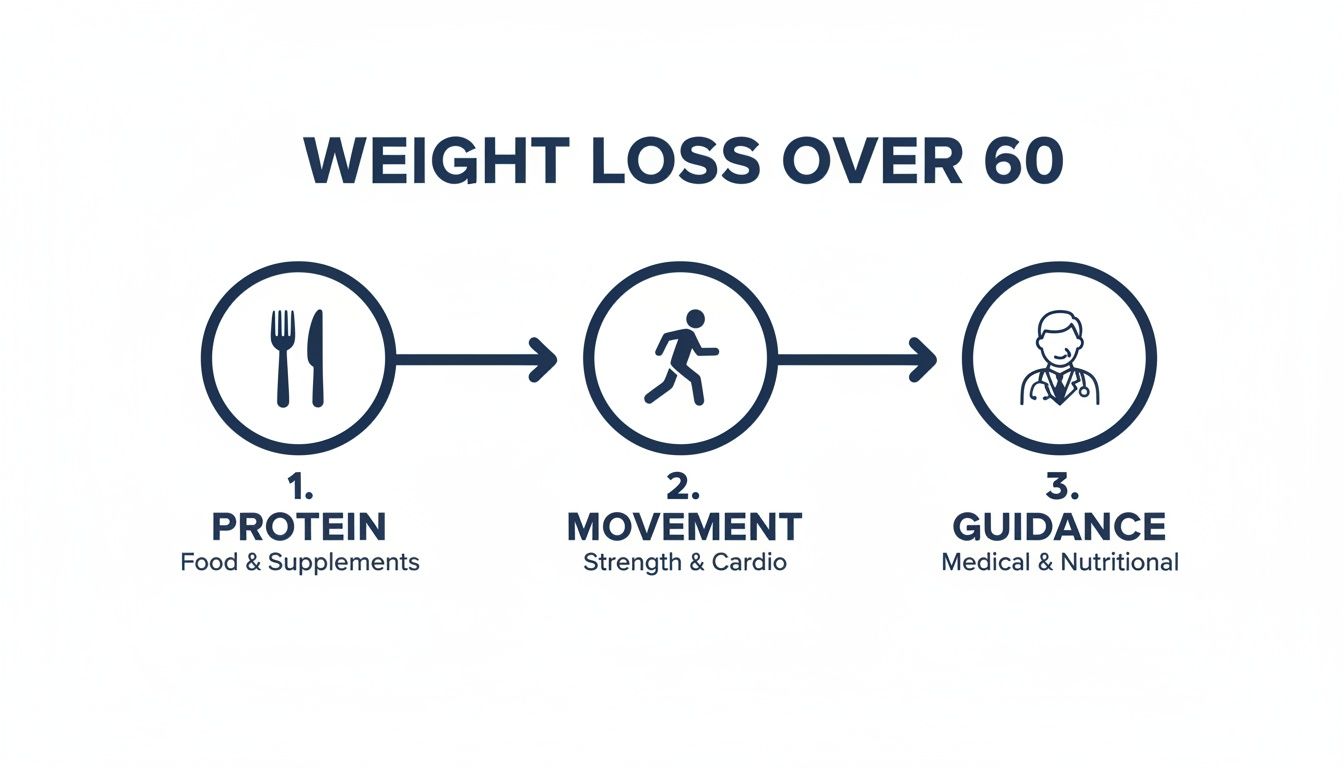
As you can see, it comes down to three interconnected pillars: prioritizing protein, moving your body consistently, and having the right medical guidance along the way.
Prioritize Protein to Protect Your Muscle
As we get older, we naturally start to lose muscle mass. It’s a process called sarcopenia, and it’s a big deal. Why? Because muscle is your body's metabolic engine—it burns more calories at rest than fat does. To combat this, protein becomes your most valuable player.
Making sure you have a source of lean protein at every meal is a game-changer. It helps you hold on to that vital muscle tissue, ensuring that the weight you lose is primarily fat, not the muscle you need to stay strong and independent. A practical tip is to aim for a palm-sized portion of protein with each meal.
Some great protein sources to focus on include:
- Lean Meats: Think chicken breast, turkey, and lean cuts of beef.
- Fish: Salmon, tuna, and cod are fantastic choices that also deliver healthy omega-3 fats.
- Plant-Based Options: Lentils, beans, tofu, and edamame are loaded with both protein and fiber.
- Dairy: Greek yogurt and cottage cheese are easy, protein-packed staples.
By focusing on protein, you're not just managing weight; you're investing in your strength, mobility, and long-term independence.
Embrace Fiber for Fullness and Gut Health
Fiber is another unsung hero of weight management. It helps you feel full and satisfied, which makes portion control feel natural rather than forced. Plus, it's essential for healthy digestion and keeping your blood sugar stable.
You don't need to get complicated here. The best way to boost your fiber intake is by focusing on whole foods. Try to fill your plate with a variety of colorful vegetables, fruits, whole grains like oats and quinoa, and legumes. This "eat the rainbow" approach also ensures you're getting a wide array of essential vitamins and minerals.
Making these nutritional shifts is a powerful first step. If you'd like to explore this topic further, our guide on the best diet for women over 60 is a great resource.
Building a Stronger You Through Smart Exercise
When you're trying to figure out how to lose weight after 60, exercise can feel like an intimidating subject. But forget the high-intensity, joint-pounding workouts you might see on TV. For this stage of life, exercise is about building functional strength for a vibrant, independent life.
It's about movement that feels good, protects our bodies, and delivers real-world results. Think of it as investing in your future self—making sure you have the stamina to play with your grandkids, the strength to carry in the groceries, and the balance to navigate the world with confidence.
Start with Gentle Cardio
The whole point of cardio is to get your heart and lungs stronger, improve circulation, and burn some calories—all without punishing your joints. This is where low-impact options really shine.
A brisk walk is probably the most accessible and effective thing you can do. It requires zero special equipment and can be done just about anywhere. Swimming or water aerobics are also fantastic choices because the water supports your body, making movement nearly stress-free on your joints. Another great one is cycling, whether it’s on a stationary bike at home or a gentle, flat path outdoors.
A practical tip is to start small. A 10-minute walk after dinner is a perfect beginning. The key is consistency, not intensity.
The Power of Strength Training
I can't stress this enough: strength training is non-negotiable after 60. We naturally lose muscle as we age (a process called sarcopenia), which slows down our metabolism and can make us feel weak. Resistance training is your number one defense against this.
You don't need to become a bodybuilder. Simple, effective exercises make a world of difference.
- Bodyweight Exercises: Moves like chair squats—simply sitting down and standing up from a sturdy chair without using your hands—build crucial leg strength for daily activities.
- Resistance Bands: These are versatile tools for strengthening your arms, back, and legs with gentle, consistent tension.
- Light Weights: Small dumbbells, even starting with 2-3 pounds, are perfect for bicep curls and overhead presses to maintain upper-body strength.
Preserving muscle is one of the most important things you can do for your metabolism and long-term health. It ensures that when you lose weight, you’re losing fat, not the muscle that keeps you strong.
Flexibility and Balance are Crucial
Cardio and strength are the engine, but flexibility and balance are the steering and suspension that keep everything running smoothly. These practices help prevent stiffness, improve your posture, and most importantly, reduce the risk of falls—a major health concern for all of us.
Gentle activities like Tai Chi or a beginner's yoga class are wonderful for this. They combine slow, deliberate movements with stretching and mindfulness, improving both your physical stability and your mental calm. Even simple daily stretches, like reaching for your toes while seated or doing ankle circles, keep your joints mobile.
Knowing the right moves is key. Learning about essential mobility exercises for seniors can give you a great starting point for staying safe and active. The goal is to feel steady on your feet and move through your day with ease.
Putting it all together can seem like a lot, but a simple schedule can make it manageable. Here’s an example of what a week could look like.
Weekly Sample Exercise Plan for Beginners Over 60
| Day | Morning Activity (15-20 mins) | Afternoon Activity (15-20 mins) |
|---|---|---|
| Monday | Brisk Walk | Gentle Stretching (focus on legs & back) |
| Tuesday | Strength (chair squats, resistance band rows) | Rest or very light walk |
| Wednesday | Water Aerobics or Stationary Bike | Balance Practice (standing on one foot near a counter) |
| Thursday | Strength (light dumbbell curls, wall push-ups) | Rest or very light walk |
| Friday | Brisk Walk | Gentle Stretching (focus on neck, shoulders, & arms) |
| Saturday | Active Hobby (gardening, dancing, longer walk in a park) | Rest |
| Sunday | Rest | Gentle Stretching or Tai Chi |
This is just a template, of course. The most important thing is to listen to your body. If something hurts, stop. If you're tired, take an extra rest day. The best exercise plan is the one you can stick with consistently and safely.
The Mental Side of Weight Loss: Your Mindset Matters
Let's be honest: changing habits you've had for decades isn't just about what you eat or how much you move. It’s a huge mental and emotional undertaking. The real work often happens in your head, and acknowledging that is the first step toward making changes that actually stick.
This isn't about willpower; it's about building a supportive mindset. You need to be kind to yourself, figure out what truly motivates you, and lay a foundation for a lifestyle that feels good for the long haul.
Break It Down to Build Yourself Up
Staring at a big goal, like losing 30 pounds, can feel completely paralyzing. It’s so far off that it's easy to get discouraged before you even start. The secret is to forget the big number for now.
Instead, focus on small, manageable wins. A practical tip: what if this week, your only goal was to take a 15-minute walk after dinner each night? Or to simply add a side of green beans to your plate every evening?
These little actions feel achievable. When you accomplish them, you get a small but powerful hit of success. That success builds on itself, creating momentum that keeps you going, turning a daunting chore into a series of small, satisfying victories.
Figure Out Your "Why" and Your "When"
We all have triggers. It might be the boredom that sets in around 8 p.m., the stress from a difficult phone call, or the loneliness that creeps in on a quiet afternoon. These are the moments when we often reach for comfort food without even thinking.
The key is to become a detective in your own life. Pinpoint what sets you off. Once you know your triggers, you can make a new plan. If you snack while watching TV out of habit, could you have a warm mug of herbal tea instead? If stress sends you to the pantry, maybe a five-minute walk around the block could be your new go-to.
Realizing your emotional connection to food isn’t a weakness. It’s an incredible tool for self-awareness that puts you back in the driver's seat.
Emotional eating is a hurdle for so many of us. If you want to dig deeper into this, our guide on how to overcome emotional eating has some really practical tips.
Celebrate Wins That Have Nothing to Do With the Scale
The number on the scale is just one tiny data point. It doesn't tell the whole story of your progress. The most meaningful changes—the ones that truly improve your day-to-day life—are what we call non-scale victories.
Start looking for these real-world wins. They're happening all around you:
- More Stamina: Suddenly having the energy to keep up with your grandkids at the park.
- Waking Up Refreshed: Getting a solid night's sleep and not feeling exhausted in the morning.
- Easier Movement: Bending down to tie your shoes without that familiar grunt or groan.
- A Looser Waistband: Sliding into a pair of pants that felt too snug a few weeks ago.
- Fewer Aches: Noticing that your knees don't ache as much when you get out of a chair.
These are the victories that truly matter. They're tangible proof that your hard work is making a real difference in your quality of life and provide the fuel to keep you going, even when the scale is being stubborn.
Your wellness journey is a personal one, and Blue Haven Rx is here to provide the support you need. Find out if our program is right for you by taking our quiz.
How Modern Medicine Can Support Your Goals
There are times when you’re doing everything by the book—eating well, staying active—but the scale stubbornly refuses to move. It’s a deeply frustrating experience, and it's important to know this isn't a reflection of your willpower. Our bodies change as we get older, and metabolic shifts can make losing weight a real uphill battle.
This is often where modern medicine can step in and provide a much-needed boost. It’s not about a magic pill. Think of it as adding a powerful, evidence-based tool to your wellness toolkit, one that works with your healthy habits to help you finally achieve the results you’ve been working so hard for.
Understanding Modern Medical Options
When we talk about medical support for weight loss today, we're referring to sophisticated prescription options that work in harmony with your body’s own systems. These are miles away from the old-school diet pills of the past. Today's medications are built on a deep understanding of the hormones that regulate hunger, satiety, and blood sugar.
One of the most effective classes of these medications is the GLP-1 receptor agonists. These were initially developed for managing type 2 diabetes but were soon found to have a remarkable impact on weight loss. They work by mimicking a natural gut hormone that signals to your brain that you're full, which can dramatically reduce cravings and make sticking to a healthy eating plan feel much more manageable.
You can dive deeper into the science behind these treatments in our guide to GLP-1 medications for weight loss.
How Telehealth Makes This Support Accessible
Getting this kind of specialized medical care used to mean booking appointments and traveling to a doctor’s office, which isn't always easy or convenient. This is where telehealth services like Blue Haven Rx are making a real difference. We bring the entire consultation process directly to you, right from the comfort of your home.
The process is designed to be simple, private, and respectful of your time.
- Start with a confidential online quiz. This gives our medical team an initial overview of your health profile and what you're hoping to achieve.
- Consult with a licensed physician. If you seem like a good candidate, you'll have a virtual appointment with a U.S.-licensed doctor. This is your time to discuss your health history, ask questions, and decide on the best plan together.
- Receive your medication at home. If a prescription is right for you, it's shipped discreetly to your door.
This streamlined approach makes it simpler than ever for people over 60 to access the support they need without disrupting their lives.
For years, a common misconception was that trying to lose weight could be detrimental for older adults. Solid research has since proven that belief wrong.
In fact, a landmark study revealed that older adults who intentionally lost weight were 50% less likely to die over an eight-year follow-up compared to those who didn't. This powerful finding underscores that proactively managing your weight after 60 is one of the most impactful things you can do for your long-term health. You can read more about this study on the Wake Forest University Baptist Medical Center newsroom.
A Supportive Partner, Not a Quick Fix
It's vital to see medical support as one component of a holistic lifestyle change. These medications deliver the best results when paired with the very things we’ve been discussing: a nutritious diet, consistent physical activity, and a positive mindset.
The medication helps quiet the constant "food noise" and persistent cravings. This creates the mental space you need to make mindful food choices and build sustainable habits that will serve you for the rest of your life.
Many of our members at Blue Haven Rx tell us this integrated approach was the turning point. Having medical support finally allowed their efforts in the kitchen and their daily walks to pay off, leading to lasting, meaningful change.
If you feel like you've been putting in the work but are still stuck, it might be time to explore if modern medicine is the missing piece of your puzzle.
Ready to see how a medically-supported plan could work for you? Take our quick quiz to find out if you're a candidate for Blue Haven Rx.
Common Questions About Losing Weight After 60
It’s completely normal to have questions when you're thinking about losing weight later in life. In fact, it’s smart. You’ve got a lifetime of experience, and you know that a thoughtful approach is always best. Let’s tackle some of the most common concerns we hear from people just like you.
Is It Really Safe to Lose Weight at My Age?
Absolutely. When it's done the right way—thoughtfully, gradually, and with medical guidance—losing excess weight after 60 is one of the best things you can do for your health. Credible research consistently shows that for older adults, shedding even a modest amount of weight can dramatically lower the risk of chronic diseases and boost your overall quality of life.
The key is to lose fat while holding onto your precious muscle mass. This is exactly why the first step is always a conversation with your doctor. They can help you map out a strategy that works with your specific health profile, making sure the entire process is safe, effective, and truly makes you healthier, not just lighter on the scale.
I Feel Like My Metabolism Has Ground to a Halt. Can I Still Succeed?
This is probably the number one concern we hear, and it’s a valid one. Your metabolism does tend to slow down as the years go by, but it’s not an unsolvable mystery. Much of that slowdown is tied to the natural decline in muscle tissue that happens with age. But this doesn’t mean weight loss is off the table—not by a long shot. It just means we need to be smarter about our strategy.
This is precisely why strength training is a non-negotiable part of any effective plan for older adults. Building and maintaining muscle is the single most powerful tool you have to give your metabolism a natural boost. Pair that with a diet rich in protein, and you’re giving your body the one-two punch it needs to burn energy more efficiently again.
Think of your metabolism less like a switch that's been flipped off and more like an engine you can tune up. With the right fuel (protein) and activity (strength work), you can get it running smoothly at any age.
What's the Deal with GLP-1 Medications? Are They for Me?
You've probably heard about GLP-1s—they're a class of prescription medications that have become a very effective tool for weight management. They work by helping to manage your appetite and blood sugar, which can make sticking to a healthy eating plan feel much less like a battle. For older adults who have tried diet and exercise without seeing the results they need, they can be a real game-changer.
However, they aren't a magic bullet and they certainly aren't right for everyone. This is where a proper medical evaluation is critical. A telehealth service like Blue Haven Rx allows you to have a thorough, one-on-one virtual consultation with a licensed physician. They'll review your full medical history and goals to determine if a GLP-1 medication is a safe and appropriate option for your specific situation.
How Can I Possibly Exercise with Arthritis and Achy Joints?
Joint pain is a huge, and understandable, roadblock for many people. But here's the paradox: one of the best things for managing joint pain is gentle, consistent movement. The secret is to choose activities that don't pound on your body.
You want to focus on low-impact exercises that get your heart rate up without jarring your knees, hips, or back. Some of the best options include:
- Swimming or water aerobics: The water’s buoyancy is incredible. It supports your body, taking almost all the stress off your joints while you get a fantastic workout.
- Stationary biking: This lets you build cardiovascular endurance from a stable, supported position. No impact, just smooth pedaling.
- Seated strength training: You'd be amazed at how much muscle you can build in your upper body and core right from a sturdy chair.
- Resistance bands: These are perfect for adding a bit of challenge to your movements to build strength without the strain of heavy weights.
The most important rule? Always listen to your body. Start slow. Never push through sharp pain. A little bit of gentle movement done consistently is infinitely better than one big, painful workout that sidelines you for a week.
If I Lose Weight, Will I Just Feel Weak and Tired?
That’s a common fear, and it comes from memories of old-school, crash diets that left you feeling completely drained. A modern, medically-guided weight loss plan is designed to do the complete opposite.
We focus on prioritizing lean protein to give your body the essential building blocks for muscle and energy. We incorporate strength training to actively build the muscle that makes you feel strong and capable in your daily life. And we fill your plate with nutrient-dense foods that properly fuel your body, rather than deprive it.
When you do it right, losing excess weight should make you feel more energetic, not less. You’ll start to notice that everyday tasks feel easier and you have more gas in the tank for the hobbies and people you love.
The path to a healthier weight after 60 is unique to you, and having the right guide in your corner can change everything. At Blue Haven Rx, we specialize in medically-supported programs designed to help you reach your goals safely and sustainably.
If you're ready to learn more about how a personalized plan could look for you, start by taking our quiz today.