
How to Lose Perimenopause Belly Fat: A Practical Guide
Losing belly fat during perimenopause isn’t about dieting harder or spending hours on the treadmill. It’s about working with your body's new hormonal landscape, not against it. The game has changed, and so our strategy must too.
Success comes from a smart combination: strength training to fire up your metabolism, a diet rich in protein to keep you full and protect muscle, and simple lifestyle shifts to get stress under control. This is about making targeted, hormone-friendly choices that lead to lasting results for your health and longevity.
Why Perimenopause Triggers Stubborn Belly Fat
If it feels like any extra weight goes straight to your midsection, you're not imagining things. That soft layer of belly fat that seems to appear overnight is one of the most common—and frustrating—parts of the perimenopausal journey. It can show up even if you haven't changed your diet or workout routine.
Let me be clear: you are not doing anything wrong. This shift is a completely normal biological response to the hormonal changes happening inside your body. It has nothing to do with willpower and everything to do with your body adapting to a new set of rules. Understanding what's happening is the first, most empowering step you can take.

The Hormonal Shift and Fat Storage
The primary culprit here is declining estrogen. For most of your life, estrogen has been telling your body to store excess fat on your hips, thighs, and buttocks—a pattern designed to support fertility.
As you enter perimenopause, your estrogen levels start to drop erratically. This dip signals your body to switch its fat-storage strategy, now favoring your abdomen. It’s why so many women notice their body shape changing from a “pear” to more of an “apple,” even if the scale hasn't budged. You can learn more by exploring the specific causes of menopausal weight gain in our in-depth guide.
To give you a clearer picture of what's happening, this table breaks down the main factors at play.
Understanding Perimenopause Belly Fat Key Factors
| Contributing Factor | How It Affects Belly Fat |
|---|---|
| Declining Estrogen | Signals the body to shift fat storage from the hips and thighs to the abdominal area. |
| Insulin Resistance | Makes it harder for your body to process sugar, leading to increased fat storage, especially visceral fat. |
| Increased Cortisol | Chronic stress elevates this "stress hormone," which is directly linked to an increase in belly fat. |
| Loss of Muscle Mass | Slows down your metabolism, meaning you burn fewer calories at rest and are more prone to fat gain. |
These factors work together, creating a perfect storm for abdominal weight gain. But knowing the "why" gives us the power to create a targeted "how."
Visceral Fat vs. Subcutaneous Fat
It’s also crucial to know that not all belly fat is created equal. The fat that shows up during this phase is usually a mix of two different types:
- Subcutaneous Fat: This is the soft, pinchable fat just under your skin. While it can be a cosmetic concern, it’s less of a health risk.
- Visceral Fat: This is the deeper, more dangerous fat that wraps around your internal organs like your liver and intestines. It's metabolically active and pumps out inflammatory substances that can disrupt your body’s functions.
The accumulation of visceral fat is one of the biggest health challenges women face in midlife. During the menopausal transition, visceral fat can actually double, jumping from 5-8% to 10-15% of a woman's total body weight.
Key Takeaway: This isn't just about how your jeans fit. The increase in visceral fat makes addressing perimenopause belly fat a critical part of protecting your long-term health and wellness. Tackling it is one of the most proactive things you can do for your longevity.
Rethinking Your Plate for Hormonal Balance
Let's be honest: the diet rules you swore by in your 20s and 30s often don't cut it anymore. During perimenopause, your body is playing by a new set of hormonal rules. That means the old playbook of strict calorie counting and low-fat everything can backfire, leaving you feeling exhausted and stuck.
Instead of focusing on restriction, it's time to shift your perspective to nourishment. This is about eating smarter, not less, to support your changing hormones and promote healthy living. By rethinking what’s on your plate, you can work with your body to fight insulin resistance, fire up your metabolism, and cool the inflammation adding to that stubborn belly fat.
Make Protein Your Top Priority at Every Meal
If you only make one change, let it be this: make protein the star of every meal. Think of protein as your best friend in the battle against a slowing metabolism. As we get older, we naturally start to lose muscle mass—and muscle is what keeps our metabolic fire burning bright.
Getting enough protein helps you hang onto, and even build, this precious muscle. It also has a higher thermic effect, which means your body burns more calories simply digesting it compared to fats or carbs. On top of that, it's incredibly satisfying, keeping you feeling full and shutting down nagging sugar cravings.
A great target to aim for is 25-30 grams of protein with each meal. This is a practical and achievable goal. It could be a Greek yogurt parfait for breakfast, a large salad topped with grilled chicken for lunch, or a nice piece of salmon with roasted veggies for dinner.
Embrace Fiber and Healthy Fats
Fiber is another unsung hero for hormonal health and weight management. It’s fantastic for stabilizing blood sugar, preventing the dramatic spikes and crashes that trigger cravings and tell your body to store fat. Soluble fiber—the kind you find in oats, beans, and avocados—is especially great for helping reduce that deep, visceral belly fat.
And please, don't fear fat! For decades, we were taught that fat was the enemy, but your body needs healthy sources like olive oil, nuts, and seeds to produce hormones and keep inflammation in check.
Here are a few simple swaps to get more of the good stuff in:
- Instead of white rice, go for quinoa or brown rice.
- Toss a tablespoon of chia seeds or ground flaxseed into your morning smoothie.
- Grab a handful of almonds or walnuts for a snack instead of crackers.
- Top your salads with avocado and a simple olive oil-based dressing.
These small, practical tips add up, creating a strong foundation for better metabolic health and healthy living. For a deeper dive, it's also worth looking into specific vitamins for female hormone balance to round out your support.
Tame Insulin Resistance by Dialing Down Sugar
One of the biggest culprits behind the stubborn perimenopause belly is insulin resistance. This is when your cells start to ignore the signal from insulin, the hormone that manages your blood sugar. In response, your body pumps out more insulin, which is a major signal to store fat, especially around your middle.
The most direct way to tackle this is to cut back on processed sugars and refined carbs. This includes things like white bread, pastries, sugary sodas, and most packaged snacks. These foods send your blood sugar on a rollercoaster, putting your insulin response into overdrive.
Focusing on whole foods is an incredibly powerful strategy here. Research has shown that a diet full of nuts, fruits, dairy, and whole grains, combined with regular exercise, makes a huge difference. One study found that women who followed this kind of balanced lifestyle, getting at least 150 minutes of moderate exercise a week, saw a 10-15% reduction in visceral fat over just six months. Read the full research about these findings.
A Simple Guide to Building Your Plate
You don't need a complicated plan to build a hormonally balanced meal. A simple visual trick is all you need for this practical tip.
Next time you fix a meal, picture your plate divided up like this:
- Half the Plate: Load it up with non-starchy vegetables. Think broccoli, spinach, bell peppers, zucchini, or cauliflower. They're packed with fiber and nutrients.
- One Quarter: Fill this section with a quality source of lean protein.
- The Final Quarter: Add a complex carbohydrate (like a small sweet potato or some quinoa) and a serving of healthy fat (like a few slices of avocado or a drizzle of olive oil).
This simple framework ensures you get the right mix of macronutrients to fuel your metabolism and keep you satisfied. For more specific meal ideas, check out our guide on GLP-1 friendly foods, as the principles align perfectly with this approach.
Making these mindful shifts gives your body the tools it needs to navigate perimenopause with more ease. This isn't a quick fix; it's a sustainable way to not just manage your weight, but to feel energized and strong for years to come.
Move Smarter, Not Harder, for Better Results
If you've spent years believing that endless hours of cardio were the ticket to a flat stomach, it’s time for a major mindset shift. During perimenopause, your body doesn't respond to exercise in the same way. In fact, long, grueling workouts can backfire by raising your cortisol levels—the stress hormone directly linked to storing fat around your middle.
The new rule is simple: move smarter, not harder. This is about choosing movements that work with your changing hormones to build metabolism-boosting muscle, burn visceral fat efficiently, and keep stress in check. It's about getting the best results for your weight management and longevity goals without exhausting your body.
Strength Training Is Your New Best Friend
If there’s one non-negotiable for tackling perimenopause belly fat, it’s strength training. As estrogen levels drop, we naturally lose muscle mass, which is a huge reason our metabolism slows. Think of muscle as your metabolic engine; the more you have, the more calories you burn all day long, even when relaxing.
Strength training is the most powerful tool you have to rebuild and maintain that precious muscle. It also helps improve your body’s insulin sensitivity, making it easier to manage blood sugar and prevent fat from accumulating around your waist. This doesn't mean you need to become a bodybuilder.
Effective and practical strength training can be as simple as:
- Bodyweight Exercises: Moves like squats, lunges, and push-ups (starting on your knees is perfect!) are incredibly effective and require zero equipment.
- Light Weights: Using dumbbells or resistance bands adds just enough challenge to signal your muscles to get stronger.
- Consistency is Key: Aim for two to three sessions per week. Focus on compound movements—exercises that work multiple muscle groups at once—to get the biggest metabolic bang for your buck.
Making strength training a priority is how you actively fight the metabolic slowdown that defines this stage of life.
This infographic shows how the right food choices can support your new workout routine by helping to balance your hormones.
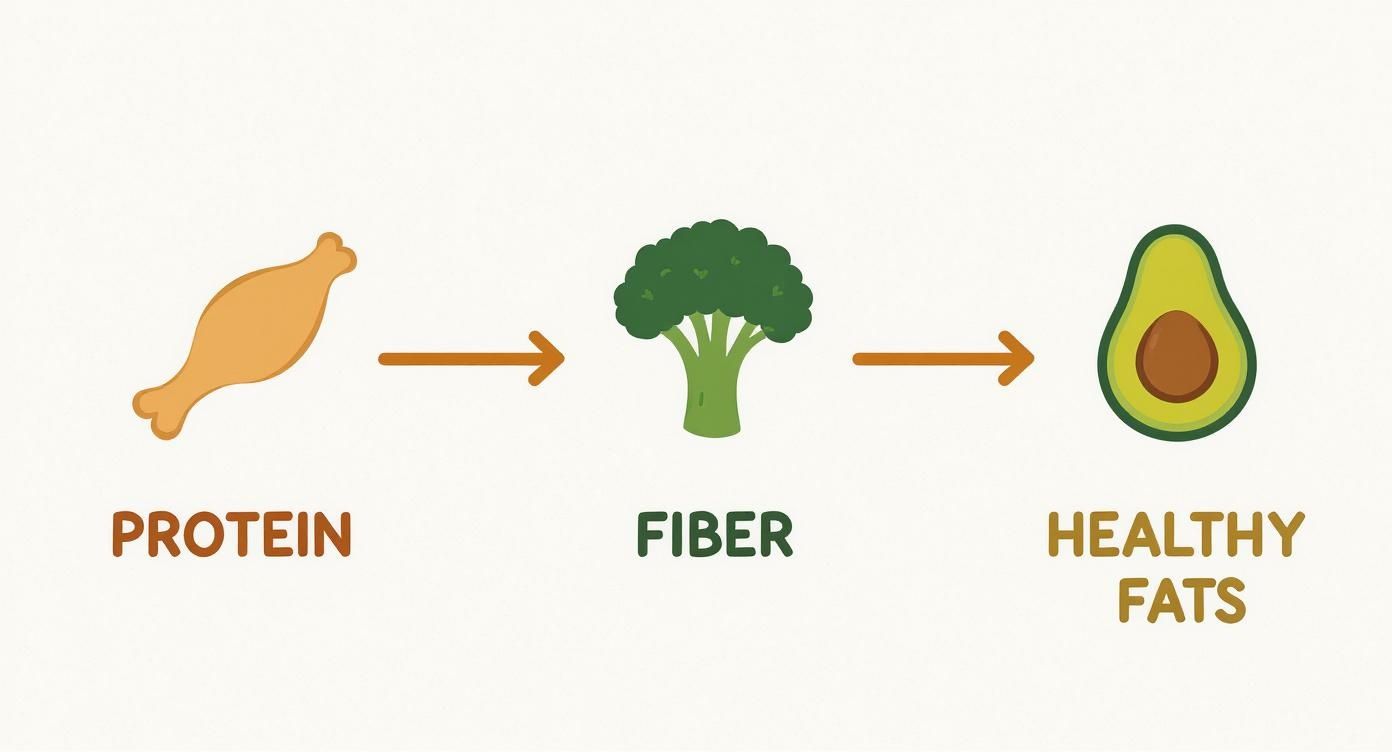
As you can see, protein, fiber, and healthy fats are the building blocks your body needs to create muscle and fight off the inflammation that can make weight loss harder.
Finding the right mix of exercises is key to a sustainable and effective routine. This table breaks down what to focus on and why.
Perimenopause Workout Focus Comparison
| Exercise Type | Primary Benefit for Perimenopause | Recommended Frequency |
|---|---|---|
| Strength Training | Builds muscle to boost metabolism and improves insulin sensitivity. | 2–3 times per week |
| HIIT (High-Intensity) | Effectively burns visceral fat in short bursts without spiking cortisol. | 1–2 times per week |
| Restorative Movement | Lowers cortisol, reduces stress, and prevents workout burnout. | 3–5 times per week |
A well-rounded plan that includes all three types of movement will give you the best shot at feeling strong, energized, and in control.
The Power of Short, Intense Workouts
While long cardio sessions can elevate cortisol, short bursts of high-intensity interval training (HIIT) are a different ballgame. HIIT is about alternating between brief periods of all-out effort and short recovery periods. Think 30 seconds of high knees followed by 30 seconds of rest, repeated with different exercises for about 20 minutes.
Why It Works: Research shows that HIIT is especially good at targeting and shrinking dangerous visceral fat without putting excessive stress on your body. These quick, powerful workouts are a fantastic, time-efficient way to boost your cardiovascular health and kick your metabolism into a higher gear.
You can apply HIIT principles to almost any activity you love, whether it's cycling, walking, or doing a bodyweight circuit in your living room. The secret is to push yourself during the "on" intervals and let your body recover during the "off" periods.
Don't Forget Restorative Movement
Finally, balancing your more intense workouts with restorative activities is crucial for managing stress. Chronic stress is a direct trigger for belly fat, which means activities that lower cortisol are just as important for weight management as the ones that burn calories.
Gentle, mindful movement helps calm your nervous system and gives you a much-needed sense of well-being.
- Yoga and Pilates: These are fantastic for building core strength, improving your flexibility, and melting away stress.
- Daily Walks: Never underestimate the power of a simple walk, especially if you can get outside. It’s a low-impact way to stay active, clear your head, and lower those cortisol levels.
For a broader look at this topic, our guide on the challenges and strategies for losing weight after 40 offers even more insight.
Ultimately, your exercise routine should leave you feeling energized, not depleted. This balanced approach—blending strength, intensity, and restorative movement—is the most effective way to tackle perimenopause belly fat and build a strong, resilient body for the years ahead.
Mastering Stress And Sleep To Reduce Belly Fat
If you're doing everything "right" with diet and exercise but still grappling with stubborn belly fat, you're not alone. But what if the missing pieces have less to do with your plate or workout and more to do with your stress levels and sleep quality?
During perimenopause, our bodies become highly sensitive to both. Getting a handle on stress and sleep isn't just about feeling better mentally—it's a non-negotiable strategy for convincing your body to release that abdominal fat.

How Chronic Stress Fuels Belly Fat
Think of chronic stress as a fire alarm that’s stuck in the "on" position. When that alarm is constantly blaring, your body pumps out cortisol, the infamous "stress hormone." While we need cortisol in short bursts, consistently high levels send one clear signal to your body: store fat, and store it right around your middle.
This is pure biology, not a lack of willpower. Elevated cortisol revs up your appetite, triggers intense cravings for sugary and high-fat "comfort" foods, and can lead to stress eating.
Key Insight: High cortisol essentially tells your body to prepare for a prolonged crisis by stockpiling energy. The problem is, our modern "crisis" is more likely a demanding job or family drama, and that stockpiled energy turns directly into visceral fat, impacting your weight and long-term health.
Learning how to quiet that internal alarm is one of the most powerful moves you can make. For a deeper dive into breaking this cycle, we have an article on how to stop stress eating that can help.
Simple Stress-Management Techniques That Work
You don’t need to book a week-long retreat to make a real difference. Small, consistent stress-reducing habits can dramatically lower your cortisol levels over time. It's all about finding practical tips that resonate with you and weaving them into your daily life.
Here are a few ideas to get you started:
- 5-Minute Mindful Breathing: Feeling overwhelmed? Just stop. Close your eyes and take ten slow, deep breaths. A simple "box breathing" technique—inhale for four, hold for four, exhale for six—can calm your nervous system in minutes.
- A Quick Walk in Nature: Even a 15-minute walk outside has been shown to slash cortisol levels. Try to leave your phone behind and just notice the sights and sounds around you.
- Schedule "Worry Time": It sounds strange, but it works. Instead of letting anxieties simmer all day, set aside 10 minutes to jot down everything on your mind. Getting it out on paper can help contain it.
These aren't just "self-care" tips; they are powerful tools for hormonal regulation that directly support your weight management goals.
The Critical Role Of Sleep In Weight Management
Perimenopause is notorious for wrecking sleep, thanks to hot flashes, night sweats, and a racing mind. That lack of quality rest does more than make you groggy; it throws the hormones that control appetite and metabolism into chaos.
When you're sleep-deprived, a disastrous hormonal shift happens:
- Ghrelin (the "go" hormone): Levels of this hunger hormone skyrocket, making you feel ravenous.
- Leptin (the "stop" hormone): Levels of this fullness hormone plummet, so your brain never gets the message that you're satisfied.
It’s a hormonal double-whammy that makes sticking to any healthy eating plan feel nearly impossible. You're left battling intense cravings and a bottomless appetite, all because you didn't get enough restorative sleep.
Actionable Tips For Better Sleep Hygiene
Improving your sleep is one of the single most impactful things you can do for your weight and healthy living. The key is to create a consistent, calming bedtime routine that signals to your body it’s time to wind down.
Try incorporating these simple but effective changes:
- Create a Cool, Dark Sanctuary: Your bedroom should be for sleep. Keep it cool and pitch-black to optimize the production of melatonin, your natural sleep hormone.
- Power Down Electronics: The blue light from phones, tablets, and TVs messes with your body's sleep-wake cycle. Make a pact to put them away at least an hour before you want to be asleep.
- Consider Your Bedding: A comfortable, breathable sleep environment is essential. If you're struggling with night sweats, exploring a guide to better sleep with quality bedding can offer some practical solutions.
By prioritizing sleep and managing stress, you create an internal environment that’s primed for weight loss. You’re not just chasing a number on the scale; you're building a foundation of calm and well-being that makes the entire journey more successful and sustainable.
How Modern Medicine Can Support Your Journey
You're doing everything right—eating more protein, lifting weights, managing stress, and getting enough sleep. But even with all that effort, the scale just won't budge. This is an incredibly common and frustrating experience during perimenopause, and it's important to know you have more tools in your corner.
https://www.youtube.com/embed/zRXC2pEbj5w
When your body's hormonal shifts create serious resistance, modern medical support can make a huge difference. It’s not a magic pill, but it can give your healthy habits the boost they need to finally deliver the results you're working so hard for.
Understanding GLP-1 Medications
You’ve probably heard about a class of medications called GLP-1s (glucagon-like peptide-1). These are not old-school diet pills. Instead, they work with your body's own systems to tackle some of the biggest metabolic challenges that pop up during perimenopause.
Think of GLP-1 medications as a way to help regulate your body’s complex internal communication system. They essentially mimic a hormone your gut produces naturally, sending signals to your brain and digestive tract that help restore balance.
Here’s how they help:
- They quiet the "food noise." GLP-1s act on the appetite centers in your brain, dialing down constant cravings and the mental chatter that revolves around food.
- They help you feel full. These medications slow down how quickly your stomach empties, which helps you feel satisfied with smaller portions and stay full for longer.
- They improve blood sugar control. By helping your body use insulin more effectively, they directly address the insulin resistance that drives fat storage right around your midsection.
This isn't about overriding what your body is trying to do; it's about helping it get back to a healthier baseline. For many women navigating perimenopause, this can be the missing piece of the puzzle that makes their nutrition and exercise efforts finally pay off.
A Partner to Your Healthy Lifestyle
It’s crucial to see these medical options as a partner to your lifestyle changes, not a replacement for them. GLP-1 medications work best when paired with the exact habits we’ve been talking about—a nutrient-dense diet, consistent strength training, and solid stress management.
They provide the biological support that can make sticking with those habits feel less like a battle. When you aren’t fighting intense cravings or a bottomless appetite, it becomes so much easier to make nourishing food choices and feel energized for your workouts.
Key Takeaway: The goal of medical support is to help your healthy efforts stick. It creates a more favorable internal environment, allowing the benefits of good nutrition and consistent movement to finally shine through.
This integrated approach is exactly what we do at Blue Haven Rx. By combining medical science with sustainable lifestyle habits, you create a powerful strategy for overcoming the unique hurdles of this life stage. You can see if this approach is right for you by taking our quick eligibility quiz.
Why Medical Support Can Be a Game-Changer
The shift in fat storage to your abdomen isn't in your head—it's a well-documented biological reality of this transition. A comprehensive 2021 review found that between 50-70% of women see an increase in abdominal fat during perimenopause.
Another large study noted that 68% of women gained weight after starting perimenopause, with most of it settling around their belly. This really highlights why a multi-faceted strategy that includes medical support is so important. You can read more about these menopause belly findings at WomensHealthNetwork.com.
When biology is a major part of the problem, using a science-backed medical tool can be an incredibly effective part of the solution. Being informed about all your options is the first step in making the best choices for your personal health journey.
If you’re curious about how a supportive medical program can help you lose perimenopause belly fat, learn more about how GLP-1 treatments from Blue Haven Rx work.
We Hear You: Answering Your Perimenopause Weight Loss Questions
If you're feeling frustrated because the old rules of weight loss suddenly stopped working, you're not alone. It's a common and completely valid experience during perimenopause. Let's tackle some of the most frequent questions I hear from women just like you, so you can move forward with a clear, confident plan.
How Long Does It Take to Lose Perimenopause Belly Fat?
This is the big question, and the honest answer is: it’s different for everyone. Patience is truly your best friend here. The hormonal shifts happening in your body mean progress will likely look different—and maybe a bit slower—than it did in your 20s or 30s. And that’s okay.
Instead of getting fixated on the number on the scale, I encourage my clients to look for other signs of progress. Are your favorite jeans fitting a little looser? Do you have more energy for your afternoon walk? Are you sleeping through the night more often? These are all fantastic wins that contribute to healthy living.
By sticking with the right strategies—like focusing on protein, lifting weights, and getting a handle on stress—many women start feeling and seeing positive changes within a few weeks. However, making a real dent in that stubborn visceral fat often takes a few months of consistent, dedicated effort.
Can I Just Do Crunches to Target My Belly Fat?
Ah, the age-old myth of "spot reduction." It would be nice if it were true, but unfortunately, our bodies just don't work that way. You can do a thousand sit-ups a day, and while you'll build some seriously strong abs, it won't magically melt the layer of fat sitting on top of them.
A much smarter strategy is to focus on reducing your overall body fat. When you do that, your body will pull fat from everywhere, including your midsection. The best way to achieve this is with a combination of total-body strength training (which fires up your metabolism), some high-intensity interval training (great for burning visceral fat), and a diet packed with whole, nutrient-rich foods.
Is It Even Possible to Lose Weight During Perimenopause?
Absolutely. It’s definitely trickier, but it is far from impossible. The key is realizing that the game has changed. You need a new playbook that works with your new hormonal reality, not against it.
This is the time to shift your thinking from old-school, restrictive dieting to nourishing your body for hormonal balance. Prioritize building muscle with strength training, actively manage your cortisol levels through stress reduction and better sleep, and make sure protein is the star of every meal. For some women, adding medical support to the mix can be the missing piece that helps overcome these new metabolic hurdles.
If I Can Only Make One Change, What Should It Be?
Feeling overwhelmed? I get it. If you want to start with the single most impactful change, my advice is always the same: up your protein intake. It's an absolute game-changer during perimenopause for a few critical reasons.
- It Protects Your Muscle: As estrogen declines, we're more prone to losing precious, metabolism-revving muscle. Protein is the essential building block to fight back.
- It Crushes Cravings: Protein keeps you feeling full and satisfied for hours. This is your best defense against the blood sugar swings and cravings that can derail your efforts.
- It Boosts Your Metabolism: Your body burns more calories digesting protein than it does fat or carbs. It's a small but meaningful metabolic advantage that adds up over time.
A great starting point is to aim for 25-30 grams of high-quality protein with every meal. Making this one simple adjustment can create a powerful ripple effect, making all your other efforts that much more effective.
At Blue Haven Rx, we understand the unique challenges you're facing. If you’re ready to learn more about how a science-backed, supportive program can help you finally reach your goals, we’re here for you.
Take our quiz to see if you're a candidate and start your journey today.