
How to Get Medication Without Insurance and Lower Costs
Facing a needed prescription without insurance can be a stressful and uncertain experience. If you're worried about the high cost of medication, you should know that you have more options than you might think.
From modern online health platforms to community programs, there are practical and effective ways to get the treatments you need. The key is knowing where to look and what questions to ask. This guide is here to help you navigate your choices and find a path forward that supports your long-term health and wellness.
Your Guide to Prescription Costs Without Insurance
This guide is designed to be your roadmap for getting necessary medications, such as those for weight management, without letting cost become a barrier to your health. Your well-being is too important to put on hold.
We'll walk you through your options, from telehealth services that deliver care to your door to manufacturer discount programs and local clinics. Think of this as your personal toolkit for managing your healthcare spending and staying on track with your health goals, whether that's managing your weight or living a longer, healthier life.
Making Sense of Your Options
The path to affordable medication can seem complicated, but it becomes much clearer with a map. The flowchart below simplifies the process, breaking down your choices based on what you need.
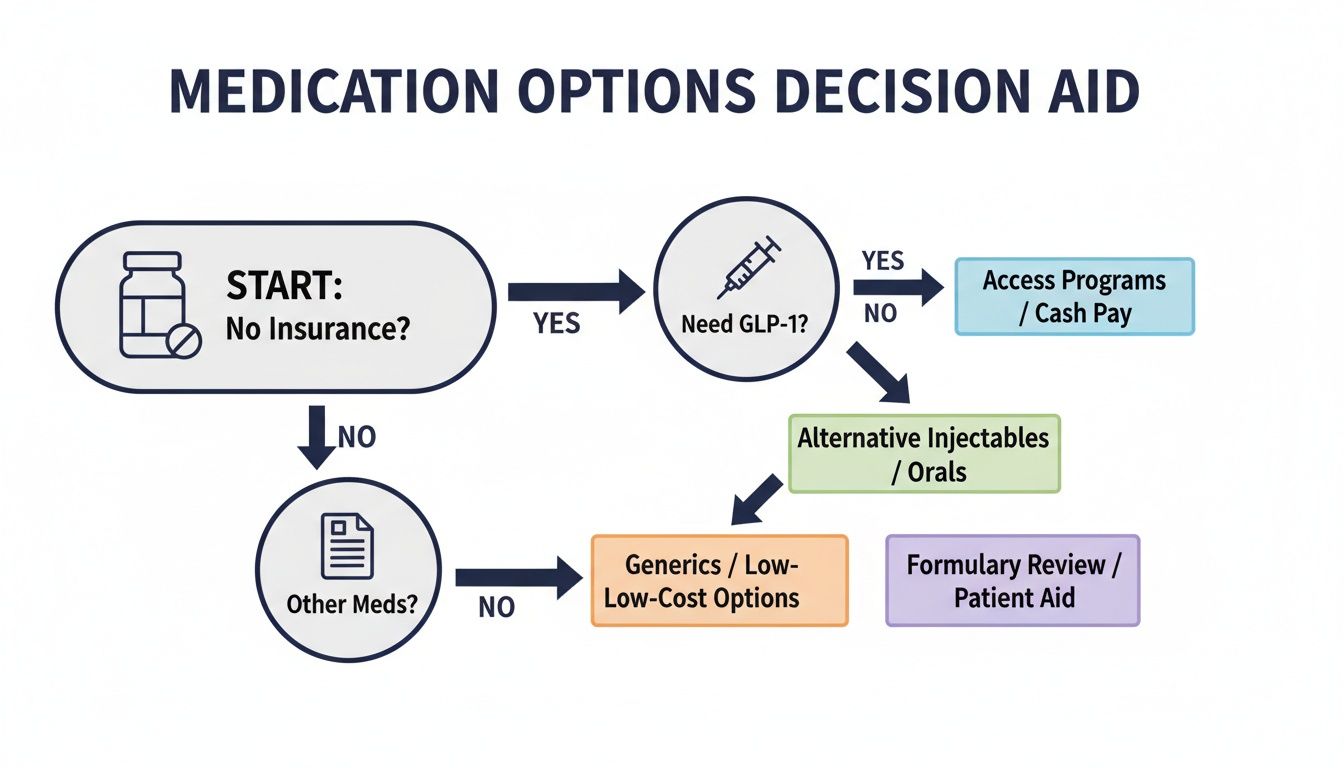
As you can see, the first step is understanding the type of medication you need. From there, specific pathways to savings open up, putting you in a better position to manage your health.
This isn't just an individual struggle; it’s a systemic problem. A recent survey revealed that 65% of patients faced delays in getting their prescriptions, and for more than half of them, the primary reason was cost. That’s not just a number—it represents millions of people trying to manage their health against a backdrop of high drug prices and administrative hurdles.
The good news is that you have more power here than you might realize. Being informed and proactive can dramatically lower what you pay at the pharmacy, making your health goals feel much more attainable.
Securing your medication is a huge part of the puzzle. For a complete picture of managing your health without coverage, our guide on how to get medical care without insurance offers a broader perspective.
Your Options for Medication Without Insurance at a Glance
To give you a quick overview, here’s a breakdown of the most effective strategies for getting your prescriptions without insurance. Each path has its own set of pros and cons, so you can decide what fits your situation best.
| Method | Best For | Potential Savings |
|---|---|---|
| Telehealth Services | Convenience, privacy, and direct access to prescribers for specific conditions like weight management. | Moderate to High: Often includes the cost of medication in a monthly fee, potentially saving hundreds on brand-name drugs. |
| Manufacturer Programs | Individuals with low income needing expensive, brand-name medications directly from the drug maker. | Very High: Can reduce costs to little or no out-of-pocket expense for those who qualify. |
| Discount Cards/Apps | Anyone paying cash for generic or common brand-name drugs at local pharmacies. Quick and easy savings. | Low to Moderate: Typically 10-85% off the retail price, with the biggest discounts usually on generics. |
| Community & Local Clinics | Uninsured or underinsured patients who need comprehensive care, including prescriptions, on a sliding scale. | High: Costs are based on your income, making both care and medications much more affordable. |
This table is just a starting point. As we dive into the details, you'll get a clearer idea of how to combine these methods to get the best possible price. Ready? Let's explore your options.
Using Telehealth for Direct Access to Medication
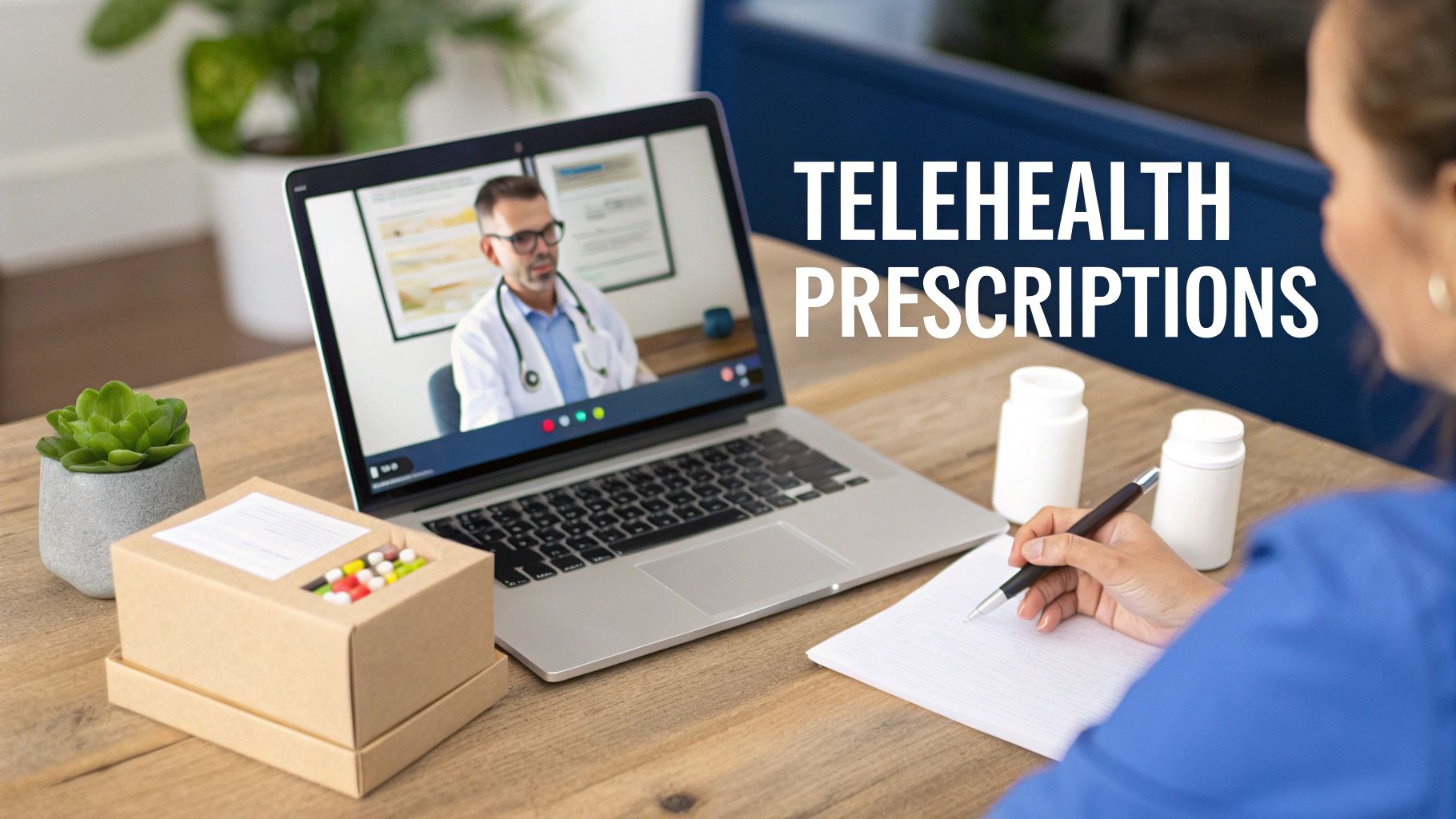
Imagine getting a prescription from a licensed doctor without ever leaving your house or wrestling with insurance paperwork. That’s exactly what modern telehealth makes possible. These platforms give you a direct, and often much more affordable, route to care by connecting you with medical professionals through secure online assessments and video chats.
For many people, this completely sidesteps the biggest hurdles to getting consistent care: finding the time for appointments and navigating the traditional healthcare system. It's especially useful if you're focused on a long-term goal like healthy aging or weight management, as it makes sticking with your treatment plan much simpler.
The process is refreshingly straightforward. You typically fill out a confidential health questionnaire, a licensed doctor reviews your history to see if a particular treatment is right for you, and if it is, the medication is shipped discreetly right to your door.
The Convenience of At-Home Care
One of the best things about telehealth is just how accessible it is. This isn't just about convenience; it's a genuine lifeline. The unfortunate reality is that "pharmacy deserts" are a growing problem. Over 48 million Americans live in areas where they have to travel more than 15 minutes just to reach a pharmacy.
This crisis has only gotten worse, with over 1,300 pharmacy closures since 2021 alone, leaving many people struggling to fill a basic script. Telehealth services bridge this critical gap, effectively bringing both the doctor and the pharmacy directly to you. This is a game-changer for anyone with mobility issues, a packed schedule, or who simply lives far from the nearest clinic.
Transparent Pricing for Better Budgeting
A huge source of anxiety when you're paying for healthcare out-of-pocket is the fear of surprise bills. Telehealth platforms tackle this issue head-on by offering transparent, upfront pricing. You know exactly what you’re going to pay before you even start, and that price usually includes both the consultation and the medication itself.
This model lets you budget for your health needs without any guesswork, whether you're looking at ongoing treatments like GLP-1 medications for weight management or other therapies focused on longevity, like NAD+. No hidden fees, no confusing copays—just a clear, predictable cost.
With direct-to-consumer telehealth, you bypass the entire insurance negotiation process. The price you see is the price you pay, putting you back in control of your healthcare spending.
This direct approach helps you avoid the common roadblocks of high deductibles and getting denied for drugs that aren't on your plan's formulary. For anyone interested in this modern path to healthcare, our article on how to get a prescription online dives into even more detail.
A Focus on Privacy and Personalized Support
Talking about health concerns, especially things related to weight or aging, can feel deeply personal. Telehealth creates a private, comfortable space for these conversations. You can communicate with your medical team from your own home, knowing the entire process is confidential.
On top of that, the best telehealth services provide ongoing support. This isn’t a one-and-done transaction. It’s about building a relationship with a clinical team that actually monitors your progress, answers your questions, and adjusts your treatment when needed. That continuous care is what really helps you achieve lasting results for a healthier life.
- Initial Consultation: A U.S.-licensed doctor will do a thorough review of your health history.
- Personalized Treatment: If you're a good candidate, they'll create a care plan designed around your specific health goals.
- Ongoing Check-ins: You'll have regular communication with your medical team to make sure the treatment is working effectively and safely.
This kind of dedicated support can make you feel confident and empowered on your journey to better health. It’s a modern, patient-first way to manage your wellness that’s making essential treatments more accessible than ever.
Finding Big Savings with Discount Cards and Manufacturer Programs
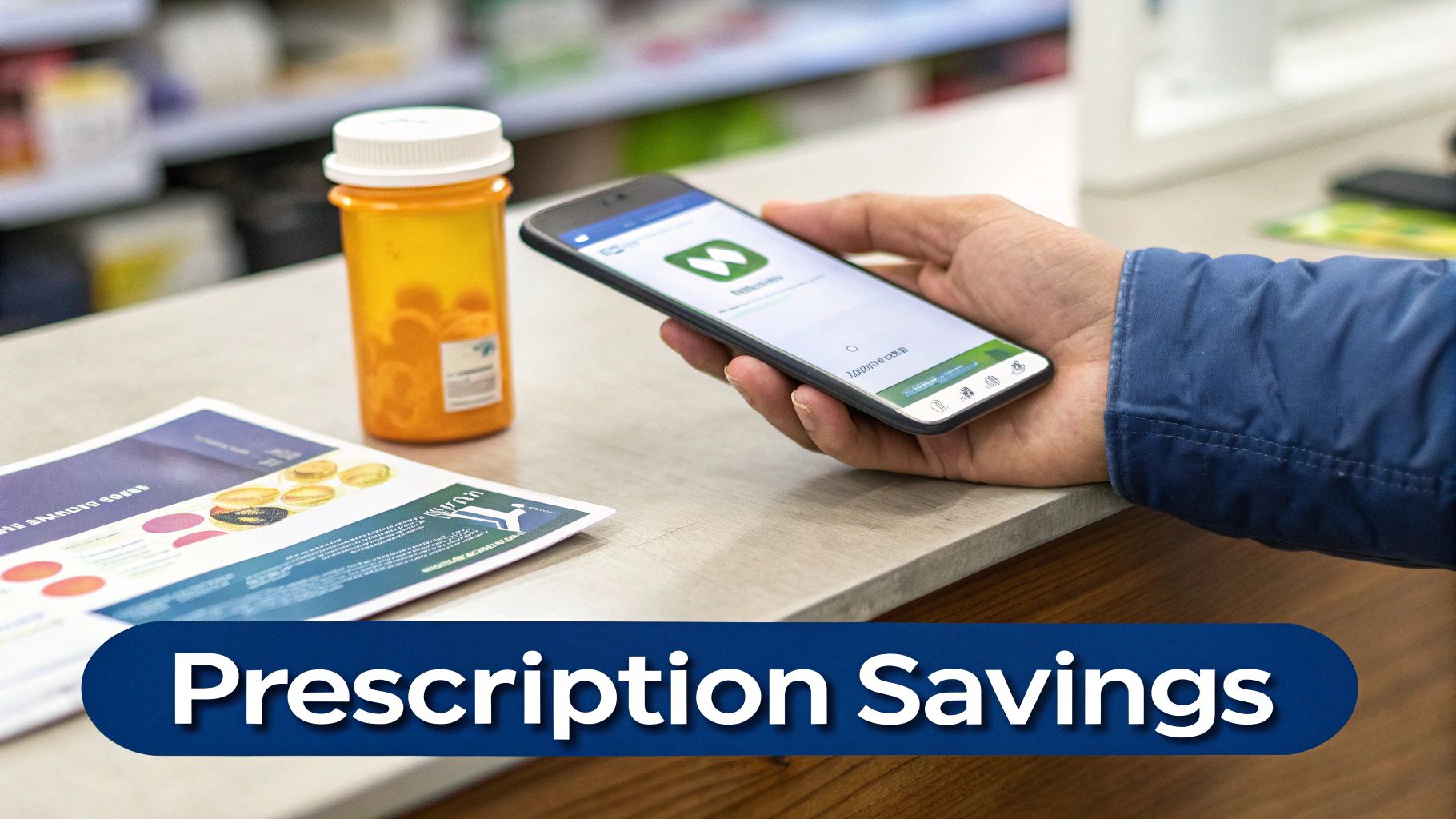
Beyond getting a prescription through telehealth, your next step is to tackle the pharmacy counter. This is where two incredibly useful tools come into play: prescription discount cards and programs run directly by drug manufacturers.
Both are designed for people paying out-of-pocket and can make a huge difference in what you actually spend. Think of discount cards as your go-to for immediate savings on common drugs, while manufacturer programs are the heavy hitters for expensive, brand-name medications.
Learning to use both is a crucial part of figuring out how to get medication without insurance and sticking with your treatment plan for a healthier life.
Your First Line of Defense: Prescription Discount Cards
If you’ve never used a prescription discount card, you're missing out on one of the easiest ways to save money. They're completely free and function like a coupon, giving you access to pre-negotiated lower prices at most pharmacies. You just show the pharmacist your card—or a code on your phone—when you're checking out.
The savings can be impressive, often anywhere from 10% to 85% off the cash price. You’ll usually see the biggest discounts on generic drugs, which have the same active ingredients and work just as well as their brand-name versions for a fraction of the cost.
A little bit of homework here can save you a lot of cash.
- Price-shop from home. Before you even leave the house, use a couple of different discount card websites or apps. You can enter your prescription and zip code to see what different pharmacies near you are charging. You’ll be shocked by the price differences.
- Check the independents. Don't just look at the big chains like CVS or Walgreens. Smaller, local pharmacies often have fantastic prices through these discount programs.
- Always double-check at the counter. Ask the pharmacist to run the price with the discount card and their standard cash price. Once in a while, the pharmacy’s own price is lower. It only takes a second to ask.
When Costs Are High: Tapping into Patient Assistance Programs
Sometimes, even with a discount card, the price of a brand-name medication is just too high. This is especially true for newer drugs. That’s where Patient Assistance Programs (PAPs) come in—they are run by the pharmaceutical companies and can be an absolute lifesaver.
These programs are specifically designed to help people with lower incomes who don’t have insurance get their medications for free or at a steep discount.
For many people, a PAP is the only path to affording a critical medication. It can mean the difference between getting a life-changing treatment and having to go without.
Each manufacturer has its own rules, but eligibility is typically based on your household income and lack of prescription coverage. It takes some paperwork, but the payoff is more than worth the effort.
The best place to start is the drug manufacturer's official website. Look for a section on "Patient Assistance" or "Financial Support." They’ll lay out all the requirements and provide the application forms. For example, if you're exploring GLP-1s for weight management, our guide on how much Wegovy costs without insurance can give you an idea of the costs involved and why a PAP might be essential.
By combining these strategies—using discount cards for routine savings and applying for PAPs for pricier medications—you can build a smart, sustainable plan to manage your health expenses.
Your wellness journey is too important to be derailed by cost. These tools exist to help you move forward. If you're ready for personalized treatment with transparent pricing, see how Blue Haven Rx can support your goals.
Finding Affordable Generic and Community Health Options
Sometimes the best ways to cut healthcare costs are hiding in plain sight. You might be surprised to learn that significant savings can be found right in your own community and at your local pharmacy, especially if you know what to ask for. Two of the most reliable strategies are tapping into community health resources and having a straightforward chat with your doctor about generic drugs.
These two approaches are foundational for managing your health affordably without insurance. By pairing local support with smart choices at the pharmacy counter, you can build a realistic plan to get the treatments you need for your long-term wellness.
Talk to Your Doctor About Generic Medications
One of the easiest—and most effective—ways to slash your prescription spending is to simply ask about generic alternatives. Generics contain the exact same active ingredients, come in the same dosage, and work just as effectively as their brand-name counterparts. The big difference? The price tag, which is often a fraction of the cost.
Because generic manufacturers don't have to sink money into the initial research and development, they can pass those savings on to you. It's a simple switch that can make your healthcare much more manageable.
The next time you get a prescription, just ask a simple question: "Is there a generic version of this available?" This one sentence can unlock substantial savings without compromising the quality of your care.
For instance, a popular brand-name statin used for cholesterol might set you back over $100 for a month's supply. The generic version, however, could be less than $15. Those savings add up fast, particularly for medications you need to take long-term to manage a chronic condition and support healthy aging.
Tap into Community Health Centers
Don't overlook the resources in your own backyard. Community health centers are set up specifically to provide comprehensive, affordable healthcare to everyone, regardless of their insurance status or income level.
These clinics often operate on a sliding-scale fee model. This means what you pay is based directly on what you can afford. This model doesn't just apply to doctor visits; it frequently extends to lab work and prescriptions filled at their on-site or partner pharmacies, making them a cornerstone of accessible care.
Finding a clinic near you is easier than you might think:
- Use the HRSA Finder Tool: The U.S. Health Resources & Services Administration (HRSA) has a great online tool to help you locate federally qualified health centers in your area.
- Search Local Directories: A quick Google search for "community health clinic near me" or "sliding-scale clinic" will usually pull up local options.
- Ask for Referrals: Your local health department or a hospital social worker can also point you in the right direction.
These centers are staffed by dedicated professionals focused on providing quality care to their community. They're an excellent answer to how to get medication without insurance, especially when you need consistent, ongoing support.
The Power of Being Proactive
Ultimately, getting your prescription costs under control comes down to being an active participant in your own healthcare. It’s about asking the right questions, exploring local resources, and knowing that you have options.
Whether you're managing a chronic illness, focusing on weight management, or just need a one-time prescription, these strategies put you back in control. They give you the power to build a healthcare plan that is both effective and financially sustainable.
Your health is your most valuable asset. By using community resources and making smart choices at the pharmacy, you can ensure cost doesn't become a barrier to living a long and healthy life.
If you’re ready to explore personalized treatment options with transparent pricing, see what’s possible with a modern approach to care. Take our quick online quiz to start your journey with Blue Haven Rx today.
Safely Accessing GLP-1 Medications for Weight Management
The new wave of highly effective weight management medications has been a game-changer. For many, treatments like Semaglutide and Tirzepatide are helping them achieve health milestones they once thought were out of reach. But let's be honest—the price tag can feel like a brick wall without good insurance coverage.
It’s a common and incredibly frustrating roadblock, but it doesn't have to be the end of the story.
Safe, legitimate, and more affordable paths to these treatments do exist. One of the most practical solutions involves working with a provider who offers compounded medications. For a bit of background, you can learn more about GLP-1 receptor agonists like Semaglutide and how they function.
What Exactly Are Compounded Medications?
Compounding isn’t some new workaround; it’s a long-standing, legitimate practice in pharmacy. It's when a licensed pharmacist creates a customized medication from scratch based on a doctor’s prescription. Think of it as a tailor-made prescription instead of an off-the-rack one.
This is especially vital when a brand-name drug is on the national shortage list, or when a patient needs a version without a specific ingredient, like a dye they're allergic to.
When it comes to weight management, compounding pharmacies can prepare medications that contain the exact same active pharmaceutical ingredient as the big-name brands. This makes these powerful treatments accessible to more people.
But—and this is a big but—your safety has to be the top priority. The source of your medication is everything. Choosing a trustworthy provider is the single most important decision you'll make in this process.
When it comes to your health, there are no shortcuts. A reputable provider will always prioritize your well-being with thorough medical oversight, transparent processes, and unwavering clinical support.
Finding a Telehealth Provider You Can Trust
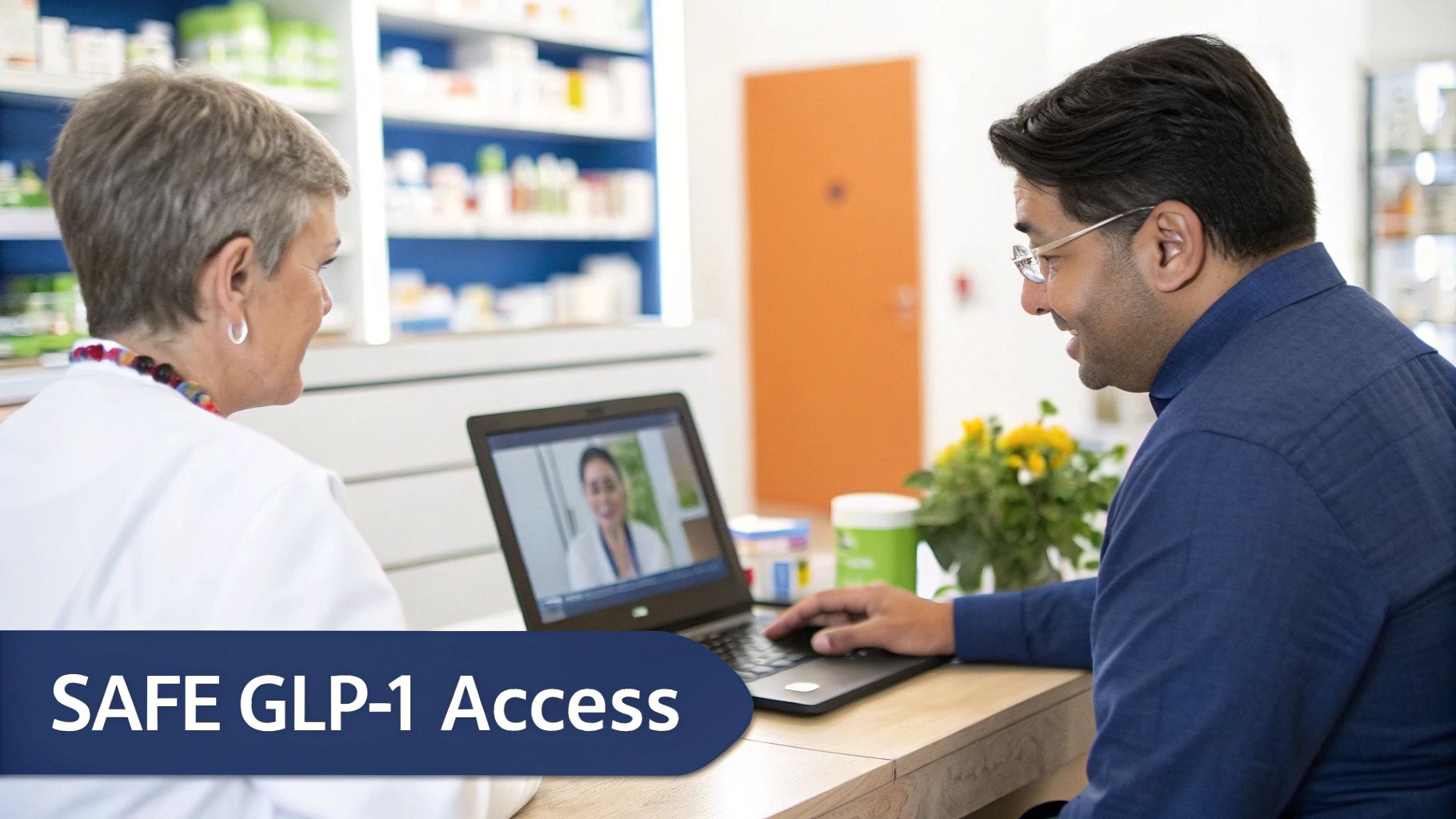
The only way to safely access compounded medications is by partnering with a high-quality telehealth service. The online space is crowded, and not all platforms are created equal. You need to know what to look for to protect yourself and ensure you’re getting an effective treatment.
A reliable telehealth provider will always operate with these standards:
- Real Consultations with U.S. Licensed Doctors: Your journey must start with a comprehensive health evaluation by a real, licensed U.S. medical doctor. This is non-negotiable.
- Prescriptions from Licensed U.S. Pharmacies: The provider must work exclusively with state-licensed compounding pharmacies that follow strict quality and safety protocols.
- Ongoing Clinical Support: This isn't a one-and-done prescription. A good provider offers continuous access to their clinical team to monitor your progress, answer questions, and make adjustments.
- Transparent Pricing: You deserve to know the full cost upfront. No hidden fees, no surprise charges. This includes the medical consultation, the medication itself, and any ongoing support.
This framework ensures you receive care that’s not just affordable, but also safe and suited to your specific health needs. For a more in-depth look at this process, our guide on how to get GLP-1 medication online breaks down what you should expect from a reputable service.
Taking Control of Your Health Journey
For many adults, especially those in the 45-65+ age range, managing weight is directly tied to long-term health and quality of life. Gaining access to effective treatments can be a pivotal moment.
Compounded medications, when prescribed through a credible telehealth partner like Blue Haven Rx, offer a responsible way forward without the staggering costs of brand-name drugs. Your path to better health should be built on trust and professional medical guidance.
By choosing a provider who is transparent, supportive, and absolutely committed to your safety, you can confidently take the next step toward your wellness goals. This modern approach to healthcare puts the power back in your hands, so you can prioritize your well-being without financial barriers holding you back.
Your Questions About Affordable Medication, Answered
Trying to figure out prescription costs on your own can feel overwhelming, and it's natural to have questions. Let's break down some of the most common concerns people face when trying to get medication without insurance. My goal here is to give you the clear, straightforward answers you need to take the next step with confidence.
Are Telehealth Prescription Services Legitimate and Safe?
Absolutely. Reputable telehealth services are a safe, legitimate, and increasingly common way to get medical care and prescriptions. The key is to stick with established platforms that prioritize your safety and well-being.
For example, services like Blue Haven Rx connect you directly with licensed doctors right here in the U.S. These doctors conduct a thorough review of your medical history to make sure any prescription is right for you. They also work only with licensed U.S. pharmacies.
To stay safe, make sure any telehealth provider you consider has consultations with real medical professionals, transparent pricing, and ongoing support. It’s a modern approach designed to bring quality care to more people, helping you pursue goals like healthy aging and weight management from the comfort of home.
Can I Use a Prescription Discount Card for Any Medication?
For the most part, yes. Prescription discount cards are incredibly versatile and cover a huge range of medications, both brand-name and generic.
The actual discount, however, can vary widely. It depends on the drug, the pharmacy, and the card itself. I always recommend checking a few different discount card websites or apps before you buy to see who has the best price for your specific prescription. They're fantastic for immediate savings but might not be the best bet for super expensive specialty drugs—that's where a manufacturer's program usually shines.
Think of a discount card as a great first step. It’s a quick, easy way to knock down the cost of common prescriptions, but it’s just one tool in your cost-saving toolkit.
What Is the Difference Between a Generic and a Brand-Name Drug?
The biggest difference is the price, not how well it works. A generic drug has the exact same active ingredient, dosage, and strength as the brand-name version. It does the same thing in your body.
Generics have to meet the same strict quality and safety standards. The reason they're so much cheaper is that the manufacturers didn't have to spend millions on the initial research, development, and marketing.
Always ask your doctor if a generic is a good option for you. This simple switch is often the single most effective way to slash your medication costs, especially for long-term treatments that are crucial for your health and longevity.
How Do I Qualify for a Patient Assistance Program?
Each drug company has its own set of rules for its Patient Assistance Programs (PAPs), but eligibility usually boils down to your household income and whether you have prescription drug coverage.
Your first stop should always be the drug manufacturer’s official website. You can also use fantastic online databases like NeedyMeds or RxAssist, which are designed to help you find these programs easily.
You'll likely need to provide proof of income and fill out some forms. It takes a bit of legwork, but the payoff can be huge—many people who qualify get their medication for little to no cost.
At Blue Haven Rx, we believe managing your health should be straightforward and accessible. If you're ready for a personalized approach to weight management with transparent pricing and dedicated medical support, we're here to help you get started.
Take our quick online quiz to see if you're a candidate and begin your journey today.