
How to Break Through a Weight Loss Plateau
It's one of the most common and frustrating moments in any weight loss journey. You've been doing everything right, the pounds have been coming off, and then suddenly… nothing. The number on the scale just stops moving.
If this sounds familiar, the first thing to know is you haven't failed. Hitting a weight loss plateau is an incredibly normal—and even predictable—part of the process. For those of us aged 45 and over, it’s a particularly common experience, but it’s one you can absolutely overcome.
Don't Worry, You're Not Alone When The Scale Stops Moving
Nearly everyone who tries to lose weight runs into this wall at some point. It’s not a sign of failure; it’s a sign your body is adapting to your new, healthy lifestyle.
For those of us over 45, this stall can feel even more stubborn, as natural hormonal shifts and metabolic slowdowns enter the picture. But the key is to reframe this moment. Don't see it as a roadblock; see it as your body asking for a new challenge. It’s successfully adjusted to your new, lighter weight and healthier routine. Now, it just needs a new signal to get moving again.
What's Really Happening During a Plateau?
Think of a plateau as a natural checkpoint. Your body is essentially saying, "Okay, I'm comfortable here. What's next?" Your job is to give it an answer, and this guide will show you exactly how.
We're going to walk through the most effective strategies to get the scale moving again, focusing on smart, sustainable adjustments—not drastic overhauls. We'll cover things like:
- How to find and fix "calorie creep" in your daily diet.
- Simple ways to evolve your fitness routine to keep your body guessing.
- The surprising impact of hidden factors like stress and sleep.
- When modern medical support, like a compounded GLP-1 program, can make all the difference.
And this isn't just talk—the research backs it up. A major study from Australia's CSIRO Total Wellbeing Diet program looked at over 6,500 people and found that plateaus are just a temporary detour.
Even with stalls along the way, a remarkable two-thirds of participants (66%) lost at least 5% of their starting body weight in a year. Even better, one in three lost 10% or more.
The takeaway is clear: persistence pays off. You can read the full research about weight loss plateaus for yourself and see just how common—and conquerable—this experience is.
If you feel like you've tried everything and your own biology is putting up a fight, it might be the right time to see how a medically guided plan could help.
Take our quick eligibility quiz to find out if a personalized weight management program is the right next step for you.
Understanding The Science Behind a Weight Loss Stall
When the scale suddenly stops moving, it’s all too easy to feel like you've failed or done something wrong. The reality is, a weight loss plateau isn't a sign of failure—it’s actually a sign of success. Your body is just doing its job and adapting to a new, lighter you.
Let's break down the science behind this common frustration. Seeing it as a biological checkpoint, rather than a roadblock, is the first step to moving past it.
Your Metabolism Recalibrates
As you successfully lose weight, your body fundamentally changes. It’s smaller, and a smaller body simply needs less energy—fewer calories—to run its daily operations. This isn't a myth; it's a well-documented survival mechanism known as metabolic adaptation.
Your Basal Metabolic Rate (BMR), which is the number of calories you burn just by being alive, naturally decreases. Think about it: there's less of you to heat, pump blood to, and move around.
In fact, dropping just 10% of your body weight can slash your daily calorie burn by a surprising 20-25%. This means the calorie goal that helped you lose the first 15 pounds is now too high to continue creating a deficit. Your body has caught up.
Your Hunger Hormones Fight Back
It's not just your imagination—you probably do feel hungrier. As you lose weight, your body mounts a hormonal defense to regain what it perceives as lost energy stores.
Two key hormones are at the center of this battle:
- Ghrelin: Known as the "hunger hormone," levels of ghrelin often surge, sending powerful "I'm hungry" signals to your brain more frequently.
- Leptin: This is the "satiety hormone" that tells your brain you're full. Its levels tend to drop, meaning it takes more food for you to feel satisfied.
This hormonal tug-of-war is a potent biological drive that makes sticking to your plan feel ten times harder than it did in the beginning.
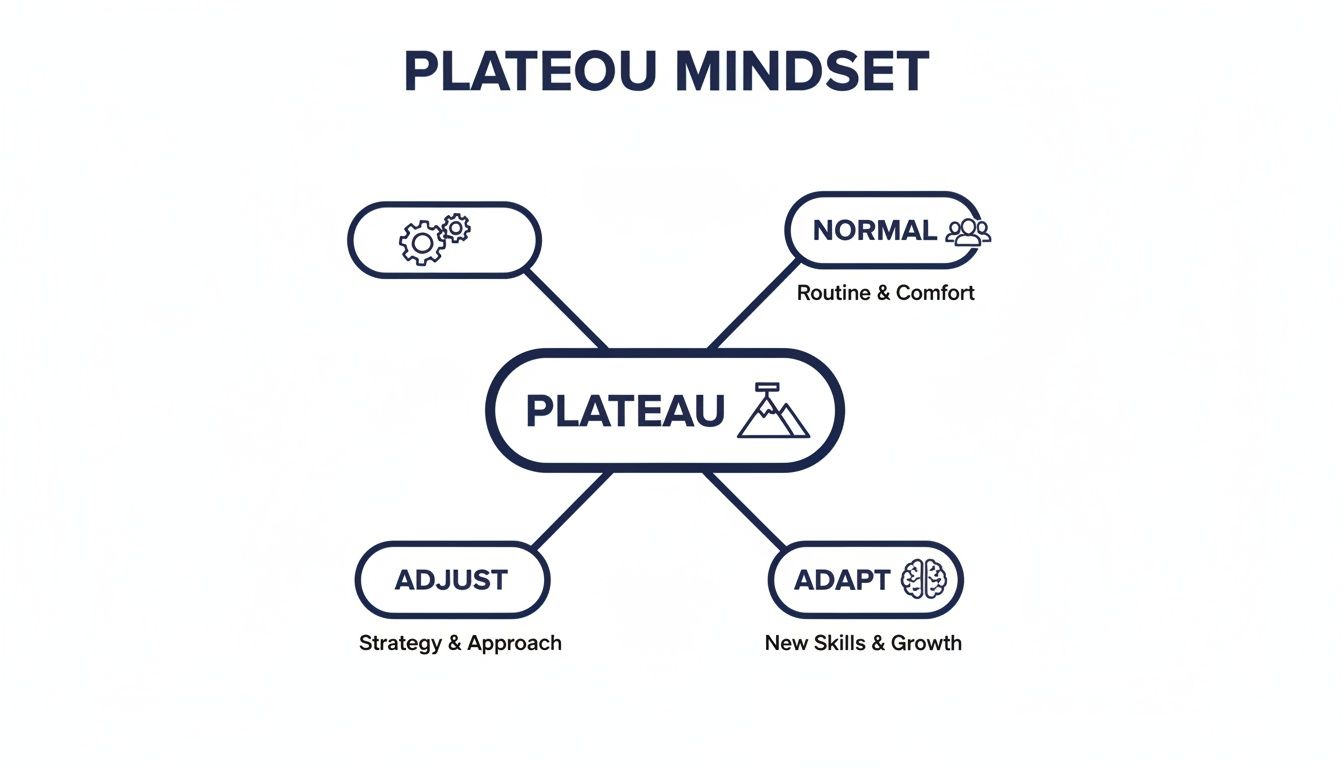
The key is to shift your mindset. A plateau is normal. It's a signal to adjust and adapt your strategy, not to give up.
This process is complex, but understanding the interplay of metabolism, protein, and muscle is a huge advantage when you're trying to push through a stall.
The Sneaky Decline in Daily Movement
There's one more piece of the puzzle, and it's something you probably haven't even noticed: Non-Exercise Activity Thermogenesis (NEAT). This fancy term refers to all the calories you burn from daily activities that aren't structured exercise—fidgeting at your desk, taking the stairs, doing laundry, or even just standing up.
When you're eating fewer calories and losing weight, your body instinctively tries to conserve energy by quietly dialing down your NEAT. You might find yourself sitting more or fidgeting less without a conscious thought. This subtle drop in background activity can be a major, and often overlooked, reason for a stalled metabolism.
This isn't just you. Weight loss plateaus are estimated to affect around 85% of people trying to lose weight. It's a predictable combination of a lower BMR, a hormonal surge in hunger, and a subconscious drop in daily activity.
This combination creates the perfect storm for a weight loss stall. It’s not your fault; it's your body's incredible efficiency at work. You can take a deeper dive into what causes weight loss plateaus in our detailed guide.
By understanding these powerful biological forces, you can stop fighting your body and start working with it.
Recalibrating Your Nutrition Without Extreme Diets
When the scale suddenly stops moving, your first impulse might be to slash your calories. We’ve all been there. But that kind of drastic reaction can often backfire, slowing your metabolism down and making the whole process feel like a grind.
The real key to breaking through a stall isn't about extreme measures. It's about making small, intelligent tweaks to what and how you're eating. Think of it as a strategic recalibration. Your body has just gotten a little too comfortable with your current routine, so we need to introduce some subtle changes to get things moving again without causing a ton of stress.
Uncover the 'Calorie Creep'
Over time, it's incredibly easy for little habits to sneak back in. An extra splash of creamer in your coffee, a slightly more generous pour of olive oil, a handful of nuts that turns into three—this is what’s known as “calorie creep.”
These little additions seem harmless, but they can easily add up and quietly erase the very calorie deficit that was driving your progress.
To figure out what’s really going on, try honestly tracking your food for just one week. You don’t have to do it forever. A short-term audit using a simple notebook or a free app can be incredibly eye-opening. This isn't about judging yourself; it's purely about gathering data to see where you can make smart adjustments.
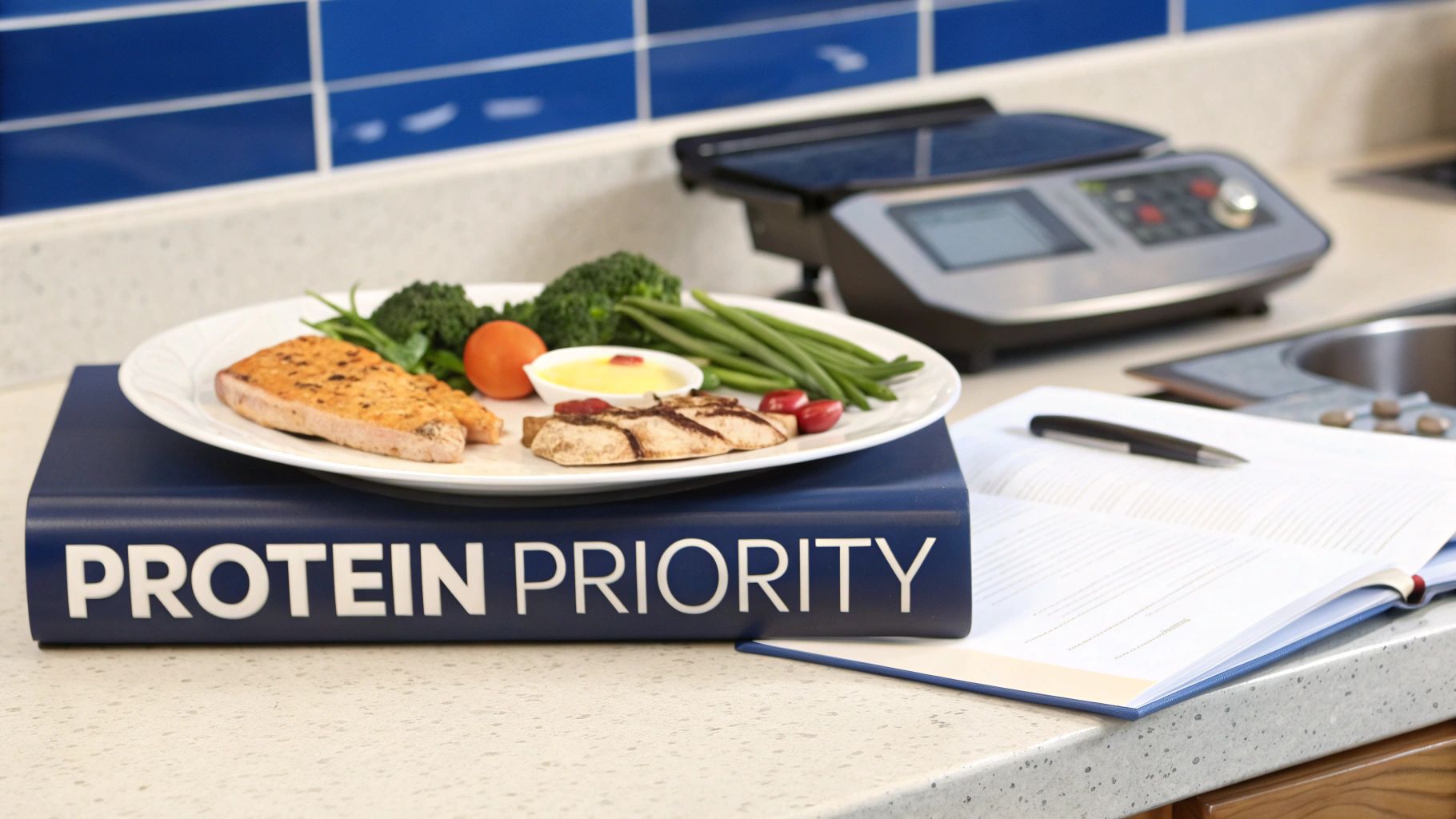
Make Protein Your Priority
If there's just one piece of nutrition advice for breaking a plateau, it would be this: prioritize protein. It's an absolute game-changer for a few critical reasons for weight management and healthy living:
- It keeps you feeling full. Protein is far more satiating than fats or carbs, which is a huge help in managing cravings and preventing mindless snacking.
- It protects your metabolism. When you lose weight, you risk losing metabolically active muscle mass right along with fat. Eating adequate protein helps you hold onto that muscle, keeping your metabolic engine running strong.
- It actually burns more calories. Your body uses more energy to digest protein than other macros. This is called the thermic effect of food, and it gives your daily calorie burn a nice little boost.
A simple but incredibly effective goal is to aim for 25-30 grams of protein at every single meal. This doesn't mean you need to start eating boring chicken breasts all day. It’s about making smarter choices, like swapping a morning pastry for Greek yogurt with berries or adding chickpeas to your salad.
Focusing on protein does more than just fill you up. It sends a powerful signal to your body to preserve muscle and burn fat, helping you push through a plateau by supporting the very metabolism that drives results.
Sometimes seeing simple swaps laid out can make all the difference. Here are a few practical ideas to get you started.
Simple Nutrition Swaps to Reignite Progress
This table shows easy, practical food swaps you can make today to increase protein and fiber, helping you feel fuller longer and support your metabolism.
| Instead Of This | Try This Smart Swap | Why It Helps |
|---|---|---|
| Cereal or a Plain Bagel for Breakfast | 2 Scrambled Eggs with Spinach or Greek Yogurt with Berries | Boosts morning protein from ~5g to 20-25g, keeping you full until lunch. |
| Ranch Dressing on Your Salad | A Vinaigrette Made with Olive Oil and Vinegar, or a Dollop of Hummus | Cuts down on hidden sugars and unhealthy fats while adding fiber or healthy fats for satiety. |
| A Bag of Chips for a Snack | A Handful of Almonds or an Apple with Peanut Butter | Provides a balanced mix of protein, fiber, and healthy fats to stabilize blood sugar and prevent energy crashes. |
| White Pasta or Rice with Dinner | Quinoa, Chickpea Pasta, or an Extra Serving of Roasted Vegetables | Increases fiber and micronutrients, slowing digestion and helping you feel satisfied with a smaller portion. |
Making a few of these simple changes consistently can have a surprisingly big impact on your progress.
Leverage Fiber and Healthy Fats
Along with protein, fiber and healthy fats are your best friends for managing hunger. Fiber, which is abundant in vegetables, fruits, and whole grains, adds bulk to your meals and slows everything down, so you feel genuinely satisfied on fewer calories.
Likewise, healthy fats from sources like avocado, nuts, and olive oil are essential for satiety. A slice of avocado on your toast or a small handful of walnuts in the afternoon can make a world of difference in keeping you full and focused for hours.
Consider a Strategic Shake-Up
If you've been eating the exact same way for weeks on end, your body may have adapted a little too well. This is where something like "calorie cycling" or adding a planned "refeed day" can provide the metabolic jolt you need.
Now, this isn't a free-for-all cheat day. It's a planned, temporary increase in your calorie intake, mostly from healthy, complex carbohydrates. This strategic boost helps refill your body’s energy stores and can positively influence hunger-regulating hormones, signaling to your body that it’s safe to start burning fat efficiently again.
Shaking Up Your Movement and Exercise Routine
Once you've taken a hard look at your nutrition, the next big lever to pull is your physical activity. If that daily walk or go-to spin class has started to feel a bit too comfortable, your body has probably adapted. It's gotten too good at it. Just like it adjusts to a lower calorie intake, your body becomes more efficient with familiar exercises, meaning it burns fewer calories to do the same amount of work.
The answer isn't always to just grind out more hours at the gym. It's about working smarter. By introducing new challenges, you can send a clear signal to your metabolism that it's time to fire back up. This often means looking beyond endless cardio and embracing the power of building and maintaining muscle.

Prioritize Building and Preserving Muscle
Think of muscle as your body's metabolic engine. Unlike fat, muscle tissue is active, constantly burning calories—even when you’re just sitting on the couch. The catch? We naturally start losing muscle mass as we age, especially after 45, a process that can really slow down our resting metabolism and glue us to a plateau.
This is exactly why strength training becomes non-negotiable for healthy living and longevity. Challenging your muscles tells your body to hang onto (and even build) this valuable tissue. It directly counteracts the metabolic slowdown that often accompanies weight loss, keeping your calorie-burning furnace stoked. The focus shifts from just losing weight to losing fat while preserving muscle. A fantastic way to monitor this is by learning how to measure your body fat percentage right at home.
You don't need a fancy gym membership or heavy equipment to make a difference. Simple, effective exercises can be done from your living room.
Here are a few great starting points:
- Glute Bridges: Lie on your back, knees bent, and feet flat on the floor. Squeeze your glutes to lift your hips toward the ceiling, then lower back down. It's a powerhouse for your entire posterior chain.
- Bodyweight Squats: Stand with your feet shoulder-width apart and lower yourself down as if you're about to sit in a chair, making sure to keep your chest up. This is a foundational move for leg and core strength.
- Wall Push-ups: Face a wall, place your hands on it, and perform a push-up. This is a much more joint-friendly way to build upper body strength.
Try to weave strength training into your week 2-3 times on non-consecutive days. Focus on good form first. As you get stronger, you can add more reps or introduce light resistance with bands or dumbbells. If you feel like your current routine has gone stale, understanding the principles of breaking through an exercise plateau is a great way to kickstart your progress.
Don't Underestimate Everyday Movement
Formal workouts are great, but the calories you burn outside of those sessions are a huge piece of the puzzle. This is what experts call Non-Exercise Activity Thermogenesis (NEAT)—basically, all the movement that isn't planned exercise, like fidgeting, walking to the mailbox, or taking the stairs.
As we lose weight, our bodies can get a little lazy, subconsciously reducing NEAT to hang onto energy. This "hidden" slowdown is a classic, sneaky cause of a weight-loss stall.
The trick is to intentionally weave more activity into the fabric of your day. It’s all about small, consistent actions, not huge, exhausting efforts.
- Set a timer to get up and stretch or walk around for 5 minutes every hour.
- Park in the farthest spot from the store entrance.
- Always opt for the stairs over the elevator.
- Pace around the house when you're on a phone call.
These little bursts of activity really do add up, helping keep your metabolism humming along all day. By pairing a solid strength training routine with a conscious effort to boost your NEAT, you create a powerful one-two punch to finally get the scale moving again.
The Hidden Factors: Sleep, Stress, and Hydration
When you’re doing everything right—tracking your food, hitting the gym—it’s maddening when the scale just won’t budge. But often, the real reason for a weight loss plateau has nothing to do with your diet or exercise plan. The culprits are hiding in plain sight: your sleep habits, stress levels, and even how much water you’re drinking.
Think of sleep, stress, and hydration as the foundation for your body's entire metabolic and hormonal system. If that foundation is shaky, everything you try to build on top of it will be, too. Let's dig into why these areas are so critical and what you can do to shore them up.
How Poor Sleep Sabotages Your Progress
A single rough night can throw your body's hormones completely out of whack, and the impact on your weight is immediate. When you're sleep-deprived, your body pumps out more cortisol, the infamous stress hormone that tells your body to store fat, particularly around your midsection.
At the same time, it messes with the two hormones that control your appetite:
- Ghrelin, the "I'm hungry" hormone, goes through the roof. This is why you crave carbs and sugary foods after a bad night's sleep.
- Leptin, the "I'm full" hormone, takes a nosedive. That means you have to eat more just to feel satisfied.
This hormonal one-two punch is a recipe for overeating and stalled progress. The good news is you can start to fix it tonight by focusing on your sleep hygiene.
A consistent lack of quality sleep doesn't just make you tired; it actively works against your weight loss goals by cranking up hunger and promoting fat storage. Making 7-9 hours of solid sleep a priority is one of the most powerful changes you can make.
Master Your Stress to Master the Scale
In our go-go-go world, chronic stress feels normal, but its effect on your body is anything but. Just like with poor sleep, constant stress keeps your cortisol levels high. Over time, this can lead to insulin resistance, making it harder for your body to manage blood sugar and far more likely to store it as fat.
Stress also hits our behavior hard. It zaps your willpower, making it all too easy to skip a workout or grab comfort food after a draining day. To push past a plateau, you have to break this cycle.
The solution isn't a week-long spa retreat (though that sounds nice!). It’s about building small, stress-reducing moments into your daily life.
- Practice Mindful Breathing: Seriously, just take two minutes. Close your eyes and focus on slow, deep breaths. It’s a surprisingly effective way to lower cortisol right in the moment.
- Take a Nature Break: A quick, 15-minute walk outside can do wonders for your mindset and your metabolism.
- Schedule Downtime: Be intentional about it. Block off little pockets of time for something you actually enjoy, whether it’s reading a book, listening to a podcast, or just sitting in silence for a few minutes.
For those looking to go a step further in supporting their cellular health against stress, options like NAD+ therapy can help boost energy and overall resilience. You can learn more about our NAD+ program and how it fits into a longevity-focused lifestyle.
The Overlooked Power of Proper Hydration
Finally, let's talk about water. It's the simplest tool we have, yet it's so often ignored. Every single metabolic process in your body, including the one that burns fat, requires water to function properly. Even mild dehydration can cause your metabolism to slow down, putting the brakes on your progress.
On top of that, our brains are terrible at telling the difference between thirst and hunger. That craving for a snack might just be your body crying out for a glass of water.
A simple strategy? Start your day with a big glass of water before you do anything else, and keep a water bottle glued to your hand throughout the day. Eight glasses is a classic goal, but listen to your body. Making hydration a non-negotiable habit can help fire up your metabolism, prevent mindless snacking, and get the scale moving again.
When lifestyle adjustments like these still aren't enough, it might be a sign that a deeper hormonal imbalance is the real issue. Thankfully, modern medical solutions can provide the support you need to overcome these biological hurdles. To see if a personalized medical plan could be right for you, start by taking our quick quiz.
When It's Time to Consider Professional Guidance
Let’s be honest: sometimes you can do everything "right"—track your food, hit the gym, manage stress, get your sleep—and the scale just won’t budge. It's incredibly frustrating. If you’ve genuinely tightened up your habits and are still stuck, it’s not a sign you’ve failed. It’s a strong signal that there might be deeper biological factors at play.
This is the point where bringing in professional help makes all the difference. Thankfully, you don't have to rearrange your life for a doctor's appointment anymore. Private and secure telehealth services let you talk to a qualified healthcare provider right from your home, making it easy to get an expert opinion on your specific situation.

Modern Medicine Can Help Tip the Scales
For many of us, especially over the age of 45, hormonal shifts can make weight loss feel like an uphill battle against our own bodies. Biology is a powerful force, and sometimes, healthy habits alone aren't enough to overcome it. This is where modern medicine offers some truly effective tools that can work with your body, not against it.
One of the biggest advancements is in compounded GLP-1 medications, which include active ingredients like semaglutide or tirzepatide. These aren’t old-school diet pills. They are sophisticated, medically supervised treatments designed to address the root biological causes of a weight stall. To get a better sense of the process, check out our guide on how online prescription weight loss programs work.
GLP-1s are game-changers because they target the natural hormonal pathways that control hunger and fullness. By helping you feel satisfied with less food and improving how your body uses energy, they tackle the very reasons a plateau happens in the first place.
Think of it this way: when you're in a calorie deficit, your body often fights back by cranking up hunger hormones like ghrelin. GLP-1s help quiet that noise, making your healthy eating and exercise efforts far more effective. It finally allows you to see the results of all your hard work.
Is a Medically Guided Plan Right for You?
Deciding to explore medical options is a personal choice, and it should always be based on your unique health profile and circumstances. A telehealth consultation is the perfect, no-pressure environment to have that conversation. You can openly discuss your struggles, ask all your questions, and figure out if a prescription is a safe and appropriate tool for you.
It's crucial to remember that these medications are meant to complement a healthy lifestyle, not replace it. They provide a powerful boost to overcome the biological hurdles that have been holding you back, empowering you to finally break through that plateau for good.
If you feel like you've hit a wall and are ready for a more supported approach, a personalized, medically supervised plan could be the key you've been searching for.
Frequently Asked Questions
It’s completely normal to have questions when the scale stops moving, especially after you've been putting in the work. Let's tackle some of the most common concerns we hear from people navigating a weight loss plateau.
How Long Does a Typical Weight Loss Plateau Last?
This is the million-dollar question, isn't it? A weight loss plateau can stick around for a few weeks or even a couple of months. Think of it less as a roadblock and more as a signpost—it’s your body's signal that it has adapted to your current routine.
The trick is to stay patient while you introduce a few strategic changes. It’s often the small, consistent tweaks, not a massive overhaul, that get things moving again.
Should I Drastically Cut Calories to Break a Plateau?
We know how tempting it is to slash calories when you feel stuck, but this almost always backfires. Taking an extreme approach can actually slow your metabolism down further and cause you to lose valuable muscle mass, which makes keeping the weight off in the long run much harder.
A much better, more sustainable approach is to make smarter, not more drastic, adjustments. Try focusing on these areas first:
- Bump up your protein and fiber. Both are fantastic for helping you feel full and satisfied.
- Track your intake honestly for a week. It's amazing how easily little bites and sips—what we call "calorie creep"—can add up without you noticing.
- Drink more water. We often mistake thirst for hunger, so staying hydrated can make a real difference.
A small, manageable calorie deficit will always beat out a severe cut for long-term success.
Could My Plateau Be Related to a Medical Issue?
Sometimes, yes. If you feel like you're doing everything right and the scale absolutely refuses to budge, an underlying medical issue could be the culprit. Conditions like an underactive thyroid (hypothyroidism) or other hormonal imbalances can make weight loss incredibly difficult. Certain medications can also interfere with your body's ability to lose weight.
If you've been consistent with your efforts for several weeks and see zero progress, it’s a good idea to talk to a healthcare professional. A private telehealth service like Blue Haven Rx offers a discreet and convenient way to get a medical opinion without leaving your home.
At Blue Haven Rx, we can help you take a closer look at your situation, explore all the options available, and determine if a medically supervised plan is the right path forward for you. Start your journey by taking our free eligibility quiz today.