
Hit a Weight Loss Plateau: Break Through Your Stall and Thrive
Why Weight Loss Plateaus Happen
Hitting a weight loss plateau happens when your body adapts to fewer calories and the same workouts. At the same time, sneaky bites—like an extra spoonful of peanut butter—can add up without you noticing.
- Metabolic Adaptation lowers your resting energy needs, so old meal plans burn fewer calories.
- Hidden Intake from sauces, snacks or drinks goes unlogged and stacks up.
- Routine Workouts lose their challenge once your muscles adapt.
A CSIRO analysis of 6,500 participants found two in three people still lost at least 5 % of their body weight over a year, despite hitting plateaus. Learn more in this research deep dive: Discover more about plateau research.
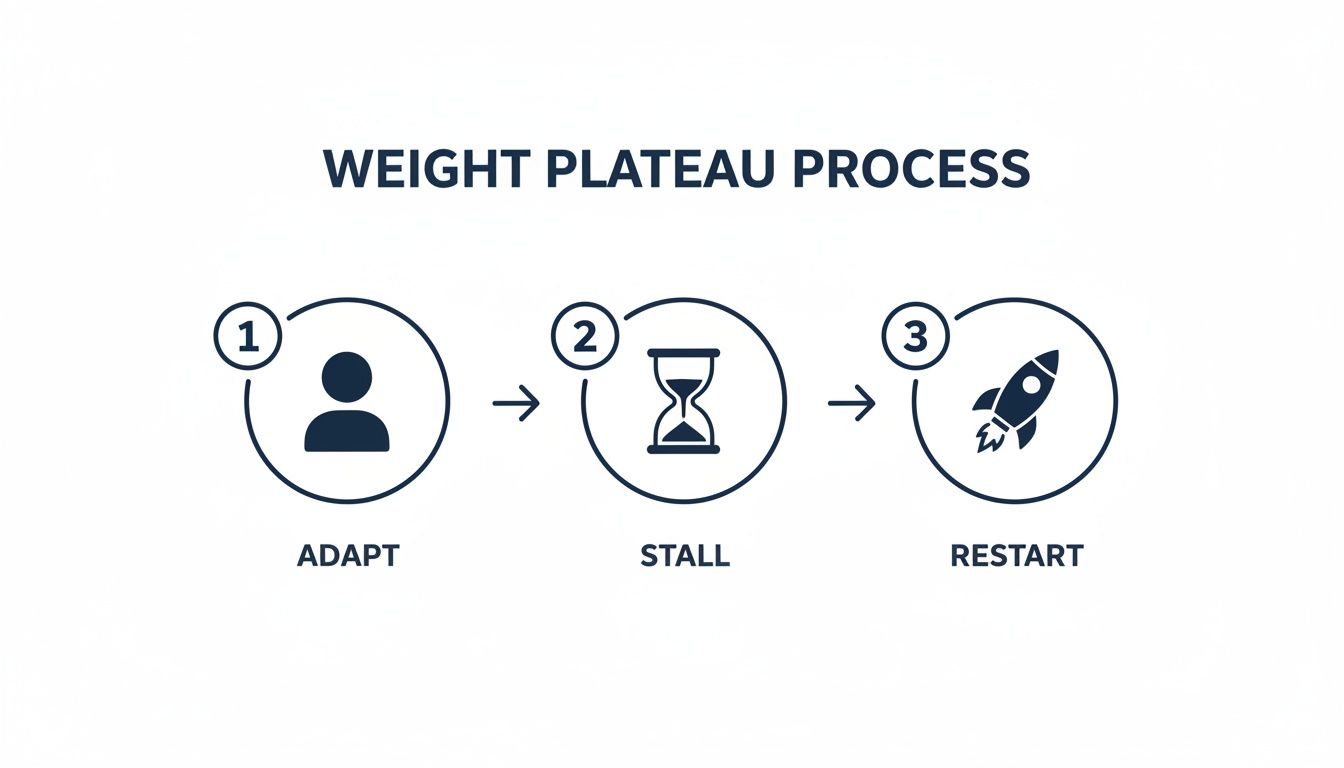
Restarting Fat Loss
Plateaus follow a predictable flow. Identify your stage and apply the right tweaks to spark renewed fat burn.
Plateau Overview Summary
| Phase | Typical Duration | Key Characteristics |
|---|---|---|
| Adapt | 2–4 wk | Resting energy expenditure begins to decline |
| Stall | 4–8 wk | Calorie burn levels off despite consistent effort |
| Restart | 1–2 wk | Targeted changes kickstart renewed fat oxidation |
Use this as your roadmap—adjust based on where you are in the cycle.
Tactical Adjustments To Break The Stall
- Log every bite in a food-tracking app—no extra snack goes unnoticed.
- Swap steady cardio for mixed circuits: 3 min rowing + bodyweight moves.
- Trade refined carbs for high-fiber swaps like cauliflower rice.
- Monitor sleep and stress; poor rest often coincides with a stalled scale.
- Add one HIIT session every five workouts to surprise your muscles.
Ready for extra help? Explore GLP-1 telehealth options with Blue Haven Rx—take the full quiz to see if it fits your needs.
Key Takeaway
Plateaus signal your body’s recalibration—not a dead end. Small tweaks build momentum toward healthy living and longevity.
Assessing Your Weight Loss Plateau
When the scale refuses to budge, step back and gather the details you need to make smart changes.
Pull up your food diary and check for hidden bites. Record sleep, stress patterns and each workout—you’ll spot where adjustments matter most.
Assessment Checklist
• Daily calorie entries to the nearest 10 calories
• Workout logs noting intensity and duration
• Sleep hours plus a simple quality rating
• Stress levels recorded morning and evening
Track Daily Calories
Clear food logs are vital, especially when metabolism naturally shifts after 45.
For example, Susan found she’d been adding two extra tablespoons of creamer—150 calories—every morning. Over a year, that habit added a 5 lb stall.
- Weigh portions on a kitchen scale
- Note every condiment, topping and snack
- Review entries weekly to spot hidden calories
Monitor Workouts And Activity
Your workouts can slip into autopilot. A brisk 3 mph walk that slows to 2.5 mph costs about 50 calories each outing.
- Record duration and average heart rate
- Log reps, sets or intervals for resistance work
- Boost NEAT with small moves—a 5 min post-lunch stroll
Monitor Sleep And Stress
Sleep deprivation throws off leptin and ghrelin, the hormones that signal fullness or hunger. Stress spikes cortisol—and suddenly you crave sweets.
Carla tracked six hours of shut-eye and saw her evening cravings skyrocket.
- Track bedtime, wake time and night awakenings
- Rate stress on a 1–10 scale, morning and night
- Build a wind-down ritual: deep breathing or gentle stretching
Interpret Metabolic Signals
Resting metabolic rate often dips by 100 cal per day after weight loss. Constant hunger or fatigue means it’s time to adjust.
| Rating | Feeling | Action |
|---|---|---|
| 1 | Very Full | Hydrate or wait 30 minutes |
| 3 | Mild Hunger | Snack on protein or veggies |
| 5 | Intense Hunger | Adjust your meal macros |
“Accurate tracking uncovers the small habits that stall results.”
Link these metrics together—patterns emerge when you view your data holistically.
Recognize Hunger And Fullness
Mindless snacking blurs true hunger. Pause and ask, “Am I really hungry?” before reaching for a bite.
| Time | Hunger Level | Action |
|---|---|---|
| 10 AM | 2 | Drink water or wait |
| 2 PM | 4 | Opt for a protein-rich snack |
| 6 PM | 3 | Check portion sizes at dinner |
Dive deeper into triggers in our guide on what causes weight loss plateaus.
Tweak Nutrition to Restart Weight Loss

Small nutrition tweaks can nudge fat-burning back into gear. Fine-tune your macros and meal timing for sustained energy and healthy aging.
At a glance:
- Dial up protein to preserve muscle and curb hunger
- Make strategic carb swaps for steadier blood sugar
- Include quality fats to support hormones and satisfaction
Adjust Macro Ratios
Aim for a 30 % protein, 40 % carbs, 30 % fat split to break through stalls. For instance, trade morning oats for Greek yogurt and berries—you’ll gain ~10 g extra protein.
Swap High Fiber Ingredients
Cauliflower rice instead of white rice cuts carbs and boosts fiber. Zucchini noodles under tomato-basil sauce keep dinner light. Toss in lentils or chickpeas for plant protein and satiety.
Use Meal Timing Windows
A 10-hour eating window often curbs evening nibbling.
- Start with a 12-hour fast and shift by 10–15 min weekly
- Drink only water, herbal tea or black coffee during fasting
- Break your fast with a balanced meal of protein, fiber and healthy fats
Add Savory Protein Snacks
Keep roasted chickpeas or turkey roll-ups on hand for 10–15 g protein per bite. A sprinkle of nutritional yeast or a handful of nuts adds flavor and nutrients.
Small protein boosts can cut up to 150 cal per day without hunger.
Monitor Portion Sizes
A kitchen scale or measuring cups help you hit targets. Use the plate hack:
- Half the plate non-starchy veggies
- A quarter lean protein
- A quarter whole grains or healthy fats
Stay Hydrated For Satiety
Drink a glass of water before meals to kickstart fullness signals. Aim for 2 L daily, more if active.
- Infuse water with cucumber or lemon
- Sip herbal teas to curb snacking
- Log hydration to spot gaps
Lock in these changes for two weeks and watch how your body responds. For more on energy balance, see what is calorie deficit.
Ready for personalized support? Take the quiz and discover which steps fit your journey.
Enhance Activity And Lifestyle Habits
Mix up your routine to kick metabolism back into gear. Strength moves, interval bursts and extra steps can restart progress.

One busy professional slipped ten-minute resistance circuits between calls—100 cal burned and muscles engaged, no gym needed.
- Desk-friendly band sets burn 100 cal in 10 min and protect lean mass
- Walking meetings ramp up NEAT and boost focus
- Stair intervals fire up heart rate and engage muscles
Boost Workout Variety
Resistance work sparks fat burn even at rest.
- Swap one cardio day for a full-body circuit
- Alternate push, pull and lower-body moves
- Increase weight by 5–10 % weekly
- Try AMRAP sets for added intensity
- Track progress with our exercise plan templates
Incorporate NEAT Movements
Tiny tweaks burn an extra 200–300 cal daily.
- Park farther away or stand at your desk
- Take two five-minute stretch breaks each afternoon
- Sneak in calf raises during calls
- Turn chores into calorie burners
Manage Stress And Sleep
Cortisol holds onto belly fat and poor sleep disrupts hunger hormones.
- Schedule 7–9 hr of sleep to reset appetite cues
- Add a midday mindfulness break: breathing, yoga or a short walk
- Wind down with a cool, dark room and consistent bedtime
Quality rest and stress relief are hidden keys to breaking a plateau.
Implement Hydration Strategies
Hydration supports metabolism and curbs cravings.
- Start each morning with 16 oz of water
- Sip toward 64 oz daily
- Infuse water or enjoy herbal teas to fend off hunger
Track Progress And Adjust Intensities
Logging workouts and steps reveals trends.
- Aim for a 5 % NEAT boost next week
- Extend HIIT intervals by 15 sec every two weeks
Pair movement with smart nutrition or explore GLP-1 telehealth options via Blue Haven Rx for an added edge.
Explore Advanced Tactics And Telehealth Options

When diet and workouts stall, advanced therapies can nudge you forward. Telehealth brings GLP-1 treatments straight to your door.
Blue Haven Rx connects you with licensed providers who review your health history, select the right dose and monitor results remotely. Adjustments happen quickly as you track progress.
How GLP-1 Therapies Work
GLP-1 drugs mimic a natural hormone that controls hunger and blood sugar. They slow stomach emptying so you feel fuller longer.
- Appetite Suppression: Reduces brain hunger signals
- Blood Sugar Control: Improves insulin sensitivity
- Slower Digestion: Extends fullness between meals
- Hormonal Balance: Manages gut hormones linked to cravings
“GLP-1 treatments can be the nudge some need after months of stalled progress.”
Dose Considerations And Side Effects
Providers start low and ramp up slowly to minimize nausea or fatigue. They may tweak timing or split doses for better tolerance.
In the SURMOUNT trials, higher doses and greater obesity extended weight loss progress. Read the full SURMOUNT trial findings.
| Demographic | Weeks to Plateau |
|---|---|
| Overweight | 24.3 |
| Class II & III | 36.1 |
Combining Medication And Lifestyle
Medication works best with solid nutrition and activity tweaks.
- Aim for 30–35 % of calories from protein
- Load up on veggies, legumes and whole grains
- Keep moving with mini bursts throughout the day
- Prioritize 7–8 hr of sleep and stress breaks
Preparing For A Telehealth Consult
Gather the right details for a productive visit:
- Two weeks of weight entries and food logs
- List of supplements and medications
- Description of your exercise routine and limits
- Questions on side effects and dosing
A well-prepared consult leads to smarter dose adjustments and faster progress.
To explore medical options, check our guide on weight loss telehealth options. Blue Haven Rx supports you through every plateau phase.
Ready to push past your plateau? Start your journey with Blue Haven Rx today.
Monitor Progress And Stay Motivated
Tracking small wins beyond the scale sparks fresh energy. Focus on data and celebrate daily victories.
- Body Weight: Weekly trends with a morning weigh-in
- Body Composition: Waist circumference and body fat
- Energy & Mood: Daily journal entries
- Sleep & Stress: Recovery ratings to adjust intensity
Setting Mini Goals
Time-bound targets keep you motivated.
- Lose 0.5 lb per week by logging every meal
- Fit in four strength sessions over seven days
- Eat at least four servings of veggies daily
- Sleep seven hours or more each night
Combine scale readings with body composition insights. See how to measure body fat percentage.
Use Habit Stacking
Pair new actions with existing routines:
- Jot gratitude notes after brushing teeth
- Do five push-ups when you refill water
- Log meals right after checking email
- Stretch at the end of video calls
Tracking non-scale victories—better mood, comfier jeans or higher energy—fuels your drive.
Celebrating small successes keeps motivation high and builds unstoppable momentum.
Community Support
| Challenge | Action | Outcome |
|---|---|---|
| Feeling Isolated | Joined a weekly walking group | Lost 3 lb and stayed accountable |
| Mid-week Setback | Shared goals with a friend | Bounced back stronger |
Real stories remind you that plateaus aren’t permanent—support makes all the difference.
Sustaining Your Journey
- Review metrics every Sunday to catch trends early
- Reward mini-goals with healthy treats
- Tweak one habit at a time to avoid overwhelm
Blue Haven Rx offers workshops, peer groups and expert guidance to keep you on track well beyond your first milestone.
FAQ On Weight Loss Plateaus
How Long Does A Weight Loss Plateau Usually Last
Most people stall for 2–6 weeks as the body adjusts to fewer calories and familiar workouts. After six weeks without change, dig into your logs for hidden calories or skipped sessions. Often, one small tweak reignites progress.
When To Tweak Calories Or Training
If weight and energy stay flat for 2–3 weeks, adjust one variable at a time. Cut 5–10 % of daily calories or swap a cardio day for strength to jump-start fat burn.
- Weigh yourself and note mood each morning
- Replace a 200 cal cookie with a handful of nuts (100–200 cal)
- Add two resistance-band circuits to your routine weekly
Are Plateaus Normal After Age 45
Absolutely. Hormone changes and gradual muscle loss slow metabolism over time. To push past a midlife stall, up your protein, keep resistance workouts and add daily stress-busting breaks.
When To Seek Professional Guidance
If tweaks over a month don’t budge the scale, consider a telehealth consult. Persistent fatigue or intense hunger may signal hormonal or thyroid issues—licensed providers can help investigate.
Key Takeaways
• Plateaus are common and usually brief
• Minor calorie cuts or workout swaps restart fat burn
• Mid-40s+ call for extra protein, strength work and stress relief
• Telehealth support can uncover underlying issues and introduce GLP-1 options
For personalized support and access to GLP-1 telehealth options, take our quick quiz and explore a plan that fits your lifestyle.
Ready to learn more and break your stall? Start your journey with Blue Haven Rx at Blue Haven Rx.