
GLP-1 and Gallbladder: Risks, Symptoms, & Steps
You may be feeling something many people feel on a GLP-1 journey at the same time. Relief that the scale is finally moving, and uneasiness after hearing that these medications can affect the gallbladder.
That mix of hope and worry is understandable, especially if you're in midlife and have spent years trying to lose weight without much success. When semaglutide or tirzepatide starts helping, it can feel like your body is finally cooperating. Then a friend mentions gallstones, or you read about upper abdominal pain, and suddenly your progress feels less simple.
The good news is that the connection between glp-1 and gallbladder health is real, but it isn't a reason to panic. It's a reason to stay informed, pay attention to your body, and work closely with your clinician so your weight loss plan stays both effective and safe.
Your Weight Loss Journey and Your Gallbladder's Health
You finally find a treatment that quiets constant hunger, helps the scale move, and makes daily choices feel less like a battle. Then a question pops up in your patient portal or during a late-night search. What about the gallbladder?
That concern is reasonable, especially if weight loss has felt hard for years and you do not want a new problem to replace an old one. The helpful way to frame this is simple. GLP-1 medications can be linked with gallbladder or biliary problems in some people, but risk is not the same as certainty, and careful follow-up can make treatment much safer.

Why this topic matters during weight loss
Your gallbladder is a small storage pouch that holds bile until your body needs it to digest fat. It works a bit like a squeeze bottle in the kitchen. It stores, then releases, at the right time. During active weight loss, that timing can change, and the gallbladder may not empty in the same way it did before.
GLP-1 treatment and weight loss can both become part of that story. For telehealth patients, that means your progress is strongest when you track more than the number on the scale. It helps to also tell your clinician about digestive symptoms, changes in how fast you are losing weight, and any personal history of gallstones.
Some research has found an association between GLP-1 receptor agonists and gallbladder or biliary disease, including gallstones and gallbladder inflammation. The key point is not fear. The key point is awareness, especially if you are losing weight quickly or already have other risk factors.
If you are still getting familiar with these medications, this overview of how GLP-1 medications support weight loss gives useful background before you get into the gallbladder details.
Practical rule: Treat gallbladder check-ins as part of routine preventive care, the same way you would track blood pressure, blood sugar, or side effects from any new medication.
A calm way to think about it
Your treatment plan works best when you know what to watch for and when to speak up. An owner's manual is a good comparison here. You do not read it because you expect something to go wrong every day. You read it so small issues stay small.
That perspective supports sustainable weight management, better mobility, and long-term metabolic health. It also gives you a clearer role in your care. In telehealth, that means asking good questions, reporting symptoms early, and working with your provider to adjust the plan before discomfort turns into a setback.
A Quick Refresher on GLP-1 Medications
GLP-1 medications work by mimicking signals your body already uses to regulate hunger, digestion, and blood sugar. The result is that many people feel full sooner, stay satisfied longer, and find it easier to eat less without feeling like they're fighting themselves all day.
If you want a broader overview, Blue Haven Rx has a helpful guide on GLP-1 medications for weight loss.
What they do in simple terms
You can think of a GLP-1 medication as turning down the noise around food. Meals often feel more filling. Snacking feels less automatic. Portions that once seemed too small may suddenly feel just right.
These medications also slow stomach emptying. Food leaves the stomach more gradually, which can support fullness after meals. For many people, that's one reason weight loss finally becomes possible in a steadier, less exhausting way.
Why that helps with weight management
Weight loss rarely fails because people don't know vegetables are healthy. It often fails because appetite, habits, stress, sleep, and metabolism pull in the opposite direction. GLP-1s help by changing that internal push and pull.
For adults in their 40s, 50s, and 60s, this can be especially meaningful. Hormonal changes, reduced muscle mass, and years of weight cycling can make weight management harder than it was decades earlier. A treatment that reduces appetite and improves meal control can support a more realistic path toward longevity and better daily function.
Common names you may hear
People often talk about semaglutide and tirzepatide by brand names they see in the news or hear from friends. Regardless of the name used, the key point is that these medications influence digestive and metabolic signaling. That benefit is exactly why they can help with weight loss, and it's also why clinicians pay attention to related digestive side effects.
A medication can be effective and still require monitoring. Those two things often go together.
How GLP-1s Can Affect Gallbladder Function
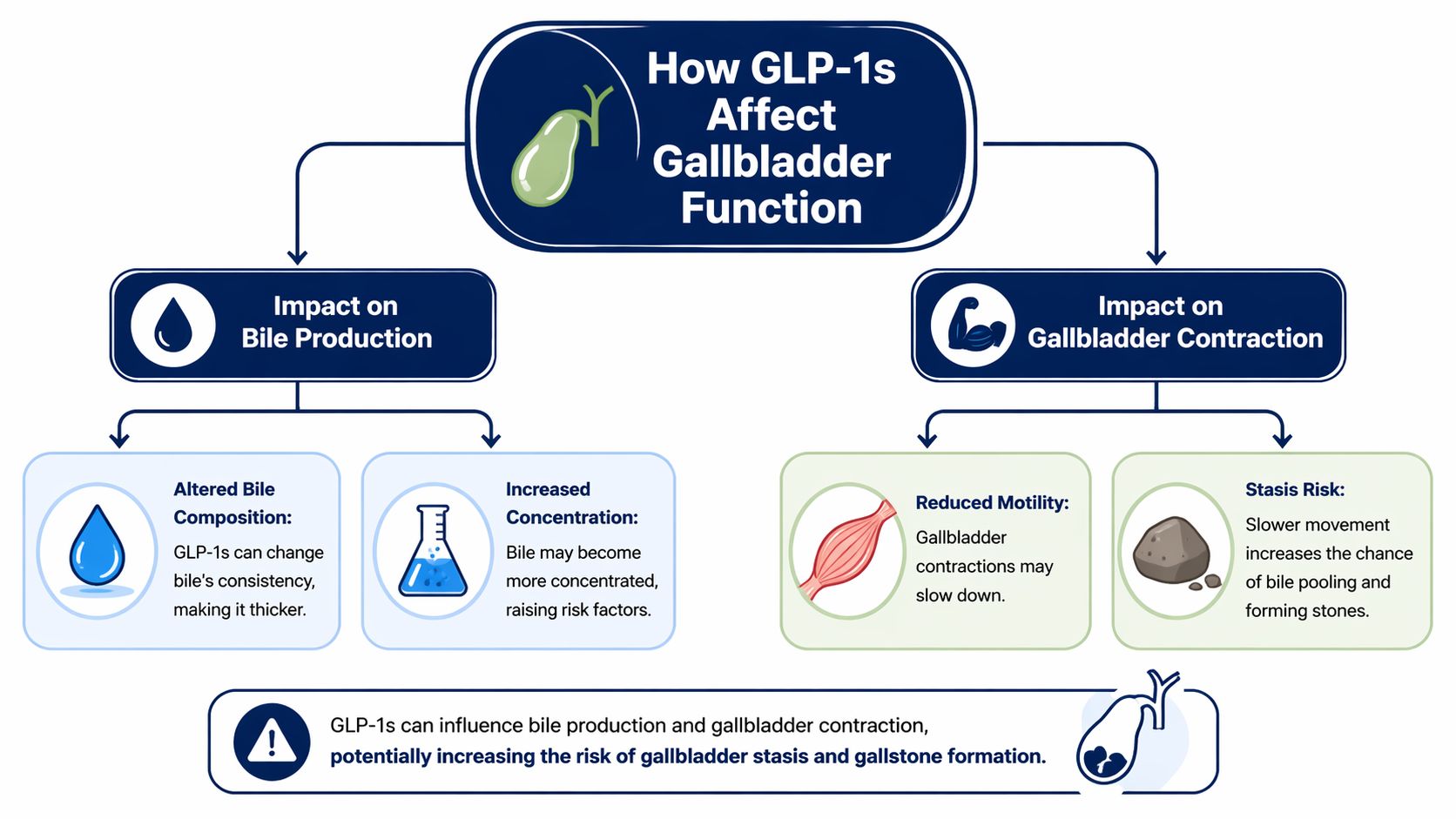
The connection between glp-1 and gallbladder health usually confuses people because it happens through more than one pathway. One pathway involves gallbladder movement. The other involves what happens during rapid weight loss.
The gallbladder can start emptying more slowly
Your gallbladder is supposed to squeeze and release bile when you eat, especially when a meal contains fat. With GLP-1 medicines, that squeezing action may slow down. When bile sits around longer, it can become stagnant.
A useful analogy is a creek. When water moves well, it stays relatively clear. When flow slows too much, sediment collects. In the gallbladder, that "sediment" can mean thicker bile, sludge, or eventually stones.
A 2024 systematic review and meta-analysis summarized by GoodRx reported an odds ratio of 1.361 for gallbladder or biliary disease linked to weight loss from GLP-1 therapies. The same source explains the underlying mechanism as inhibition of gallbladder contraction, which can lead to bile stasis and increase the chance of gallstone formation.
If you've already noticed that these medications can slow digestion in general, this broader explanation of how GLP-1 medications can slow your gut can help connect the dots.
Weight loss itself can change the bile
There's a second layer to this. When weight comes off quickly, the chemistry of bile can change in a way that makes stone formation more likely. In plain language, the bile can become more "stone-friendly."
That helps explain why gallbladder issues are not only about the medicine itself. They can also reflect the speed and intensity of the weight loss response. Someone losing weight very rapidly may face a different gallbladder environment than someone losing at a steadier pace.
If you'd like a plain-language primer on the hormones behind this family of medications, Blue Haven Rx also explains what incretin hormones are.
Why some people never have a problem
Not every person on a GLP-1 develops gallstones or gallbladder pain. Bodies vary. So do medical histories, dose levels, eating patterns, hydration, and the pace of weight loss.
A few factors can shape what happens:
- How quickly weight drops: Faster change can put more pressure on bile chemistry.
- How strongly digestion slows: Some people notice this more than others.
- Whether silent gallstones already existed: A person may start treatment with stones they didn't know they had.
- Meal patterns: Very low food intake or highly erratic eating may affect gallbladder emptying.
The simple mental model
If you want the shortest explanation, it's this:
- GLP-1s may slow gallbladder contractions.
- Rapid weight loss can thicken and alter bile.
- Slow-moving, altered bile is more likely to form sludge or stones.
- Stones or blockage can irritate the gallbladder and cause pain or inflammation.
That doesn't mean trouble is inevitable. It means there is a mechanism clinicians take seriously, especially during active weight loss.
Are You at Higher Risk? Key Factors to Consider
Some people read about gallbladder issues and assume the risk is the same for everyone. It isn't. Personal risk depends on what your body is already dealing with before treatment starts, and how the treatment unfolds once weight loss begins.
Rapid weight loss is the main modifiable factor
The clearest factor you can influence is the speed of weight loss. According to Norman Regional Health System's discussion of GLP-1 gallbladder risks, the primary modifiable risk factor is rapid weight loss of 15 to 20 percent of body weight quickly. That level of fast loss can change bile composition, increase cholesterol secretion, and create a cholesterol supersaturation environment that favors stone formation.
That same explanation notes that reduced gallbladder motility adds to the problem. In other words, the bile is changing while the storage pouch is also emptying less efficiently.
This is one reason an aggressive mindset can backfire. Faster isn't always healthier. If your body is losing weight so quickly that digestion, hydration, and bile flow can't keep up, the gallbladder may become the weak link.
Slow, steady progress often protects more than your metabolism. It may also protect the gallbladder.
Other factors that can matter
Gallbladder issues tend to be more relevant for people who already carry some background risk. That can include adults over 40, women, people with obesity, and people who may already have gallstones without symptoms.
For women in perimenopause or menopause, this topic can feel especially personal. Hormonal shifts, central weight gain, and years of dieting may all be part of the picture. None of that means you shouldn't consider treatment. It means your plan should be individualized and monitored with care.
Here's a practical way to think through risk factors.
| Risk Factor | Why It Matters | What You Can Do |
|---|---|---|
| Rapid weight loss | Quick loss can alter bile and make stones more likely | Talk with your clinician about a steady pace and dose changes |
| Higher GLP-1 dose | Stronger medication effect may increase digestive slowing | Report side effects early and don't rush titration |
| Female sex and midlife | Gallbladder issues are often more relevant in this group | Mention menopause, hormone changes, and prior gallbladder symptoms |
| Obesity history | Prior metabolic strain may already affect bile balance | Build a realistic nutrition plan, not a crash diet |
| Past gallstones or gallbladder attacks | Existing issues can flare during active weight loss | Tell your provider before starting treatment |
| Unexplained upper abdominal pain in the past | It may point to a silent gallbladder issue | Ask whether further evaluation makes sense |
Risk is not destiny
A higher-risk profile doesn't mean a bad outcome is coming. It means prevention matters more. In telehealth, that starts with being very specific during intake. Don't leave out old episodes of pain after meals, nausea that felt unusual, or a prior urgent care visit for abdominal discomfort.
People often underreport those details because the symptoms seemed to pass. But those little history clues can shape a safer treatment plan.
Recognizing the Warning Signs of Gallbladder Distress
Individuals on a GLP-1 often have some digestive adjustment at first. Mild nausea, reduced appetite, or a temporarily unsettled stomach can be part of the expected early experience. Gallbladder distress usually feels different because it tends to be more focused, persistent, and painful.

Symptoms that deserve attention
The most classic warning sign is pain in the upper right part of the abdomen. Some people feel it after eating, especially after a richer or fattier meal. Others describe it as pressure under the ribs, pain that spreads toward the back, or a pain episode that doesn't ease the way simple indigestion does.
Other signs can include:
- Nausea that feels different from routine medication nausea: It may come with pain rather than just low appetite.
- Vomiting with abdominal pain: This combination is more concerning than nausea alone.
- Fever or chills: These can suggest inflammation or infection.
- Changes in urine or stool color: Dark urine or pale stools can signal a bile flow problem.
- Yellowing of the skin or eyes: This can happen if a stone affects the bile ducts.
Mild medication effects versus something more concerning
A brief wave of nausea after a dose increase isn't the same thing as a gallbladder attack. Common GLP-1 side effects are often diffuse. You may feel queasy, full quickly, or mildly bloated.
Gallbladder symptoms are more likely to be localized and recurring. If the pain repeatedly shows up in the same area, especially in the upper right abdomen, don't assume it's just part of your medication adjustment.
If a symptom is new, strong, and keeps returning in the same place, it deserves a real medical conversation.
A quick visual overview may also help some readers sort out symptoms and urgency:
When to stop guessing
Call your medical provider promptly if you have persistent upper abdominal pain, especially if it comes with vomiting or fever. Seek urgent care right away if pain is severe, if you can't keep fluids down, or if you notice yellowing of the skin or eyes.
A calm response is best. Don't self-diagnose, but don't minimize symptoms either. The goal is to catch a problem early, when it's easier to evaluate and manage.
Proactive Steps to Protect Your Gallbladder Health
A common telehealth moment goes like this. You are losing weight, your appetite is down, and the medication seems to be working. Then a new question pops up: how do you keep the process safe while your body adjusts?
That is the right question to ask. The goal is not just weight loss. The goal is weight loss your body can tolerate well, with a plan you can stick with and clear steps for speaking up early if something changes.

Favor steady weight loss over aggressive loss
Your gallbladder works a bit like a storage pouch that empties on cue when you eat, especially when a meal contains some fat. When weight loss becomes very fast, or meals become too sparse, that rhythm can get disrupted.
A steadier pace usually gives your digestive system more predictable signals. That matters on GLP-1 therapy, because higher treatment intensity and rapid dietary changes can put more strain on the gallbladder than a slower, more measured approach.
Work with your clinician on dose pacing
Dose increases should match how your body is responding, not just what the calendar says. If nausea is stacking up, your food intake has dropped sharply, or you are losing weight faster than expected, it is reasonable to ask whether staying at the current dose longer makes sense.
For a telehealth visit, specific details help your clinician make better decisions. Try sharing:
- Your recent weight trend: gradual, faster than expected, or hard to maintain
- What your eating pattern looks like now: smaller meals, skipped meals, or very low intake
- Any pain after eating: where it occurs, how long it lasts, and whether it keeps coming back
- Past gallstones or prior digestive issues: even if they happened years ago
- How side effects changed after the last dose increase: better, worse, or mixed
If you want a broader overview of common digestive reactions, this guide to GLP-1 medication side effects can help you sort out what is expected and what deserves a message to your prescriber.
Support normal gallbladder emptying with everyday habits
Perfection is not required. Consistency helps more.
A simple way to think about it is this: your gallbladder responds best to regular signals. Long gaps without eating can make digestion feel less predictable, especially if your appetite is already lower on medication. Many patients do better with balanced meals they can tolerate, even if portions are smaller than before.
Helpful habits include:
- Drink fluids regularly: dehydration can make an already queasy day feel worse
- Avoid extreme low-fat eating unless your clinician advised it: some dietary fat helps trigger gallbladder emptying
- Build meals around protein, fiber, and a modest amount of healthy fat: this often feels steadier than eating very little all day
- Keep meal timing fairly regular when possible: a routine can be easier on digestion than long stretches with no intake
Use telehealth visits strategically
Telehealth works best when you bring a clear symptom story. “I feel off” is hard to act on. “I had right upper abdominal pain twice after dinner, and one episode lasted an hour” gives your clinician something concrete to assess.
A brief note on your phone is often enough. Write down the location of the pain, whether it followed a meal, whether you had vomiting or fever, and whether the symptom was new after a dose change.
That kind of preparation helps your clinician decide whether to adjust the dose, watch things more closely, or send you for in-person evaluation.
Before your visit, jot down timing, location, meal triggers, and any fever, vomiting, or repeated episodes. A short symptom log can make a telehealth appointment far more useful.
Questions worth asking
Good questions can lead to a safer plan. Consider asking:
- Is my weight loss pace appropriate for me?
- Should I stay at this dose longer before increasing?
- Do my symptoms sound more like routine side effects or possible gallbladder irritation?
- What changes in pain, nausea, fever, or vomiting should prompt a same-day message?
- Given my history, would any testing or in-person follow-up make sense?
These questions are practical. They help you and your clinician shape a plan that supports progress without ignoring early warning signs.
A Safe and Successful Weight Loss Partnership
A good GLP-1 journey isn't just about appetite control or the number on the scale. It's also about how well the plan fits your body, your health history, and the signals your body gives you along the way.
The key takeaway is simple. GLP-1 and gallbladder issues are connected, but the connection is manageable. The biggest advantages come from understanding the mechanism, recognizing warning signs early, and staying in close contact with your clinician if anything changes.
For many adults, especially women navigating midlife weight gain, this kind of informed approach supports more than weight loss. It supports confidence, better day-to-day function, and a healthier long-term routine.
You don't need to monitor yourself obsessively. You do need to stay aware. If pain shows up in the upper right abdomen, if nausea feels different than usual, or if symptoms keep returning, it's time to speak up.
A successful treatment plan is rarely the most aggressive one. It's the one you can stay on safely, comfortably, and consistently.
Frequently Asked Questions About GLP-1s and Gallbladder Health
A few practical questions tend to come up after people learn about this topic.
| FAQ | Answer |
|---|---|
| Can GLP-1 medications cause gallstones? | They can increase the risk in some people because they may slow gallbladder contraction, and rapid weight loss can change bile in a way that favors stone formation. It doesn't happen to everyone. |
| Should I stop my medication if I feel nausea? | Not automatically. Mild nausea is common early on. But if nausea comes with focused upper abdominal pain, vomiting, fever, or yellowing of the skin or eyes, contact a medical provider promptly. |
| If I already had gallstones before, can I still use a GLP-1? | Sometimes, but your clinician should know that history before or during treatment planning. Prior gallbladder problems can affect how closely you should be monitored. |
| Does slower weight loss help? | In many cases, a steadier pace is more gallbladder-friendly than rapid loss. That's one reason dose pacing and nutrition consistency matter. |
| Where can I read more about longer-term side effects? | Blue Haven Rx has an article on long-term side effects of Ozempic that may help you think through broader treatment questions. |
If you're uncertain whether a symptom is routine or concerning, don't sit with that uncertainty for too long. A short message or follow-up visit can prevent a lot of second-guessing.
The goal isn't to become fearful of treatment. It's to use treatment wisely, with the same long-view mindset you'd want for any meaningful change in your health.
If you're exploring medical weight loss and want a clinician-guided plan that considers your full health picture, including questions about digestive side effects and treatment fit, learn more about Blue Haven RX and take the eligibility quiz to see whether it's a good next step for you.