
Does Trulicity Cause Constipation? An Honest Guide
Yes, Trulicity can cause constipation. It’s a known gastrointestinal side effect, but it's important to understand the context—it happens because of the very way the medication works to support your health and weight management goals.
While it can be an uncomfortable side effect, many people find it manageable. Constipation is often reported less frequently than other digestive issues, like nausea, which tends to be more common when starting a GLP-1 medication. Understanding this from the start can help you feel prepared and in control.
How Trulicity Affects Your Digestion
If you're looking into Trulicity, understanding its effects on your digestive system is a great first step. Trulicity is part of a class of medications called GLP-1 receptor agonists. These are designed to mimic a natural hormone in your body that helps you feel full, which is a cornerstone of healthy, long-term weight management. You can learn more about Trulicity to get the full picture.
One of the main ways Trulicity creates that feeling of fullness is by slowing down gastric emptying—the rate at which food leaves your stomach. This is a huge benefit for managing weight because it keeps you feeling satisfied longer and helps reduce your overall calorie intake.
However, this intentional slowdown can sometimes create a bit of a "traffic jam" in your digestive tract, leading to constipation. Think of it as a predictable trade-off for the medication's benefits. Knowing this ahead of time empowers you to get in front of it with simple, proactive adjustments to your daily routine.
Why GLP-1 Medications Can Affect Your Digestion
To understand why a medication like Trulicity might lead to constipation, it’s helpful to know how it works. At its core, Trulicity slows down gastric emptying, which is simply the technical term for how quickly food moves from your stomach into your intestines.
This is actually a huge advantage for anyone focused on weight management. By slowing things down, the medication helps you feel fuller for much longer after you eat, which naturally supports you in eating less. It's a key reason these medications are so effective for achieving sustainable health goals.
But here’s the trade-off: when you slow down the front end of your digestive system, it can sometimes cause a delay further down the line. That delayed transit is what can lead to constipation for some people.
A Gentler Option for Your Gut
While digestive side effects are fairly common across all GLP-1 medications, they aren’t all created equal. When you're thinking about long-term health and well-being, finding a medication that feels comfortable is crucial.
Real-world data shows that while GLP-1s can cause gastrointestinal issues, dulaglutide (Trulicity) had the lowest rate of severe GI events at 12.29%, compared to liraglutide's 23.31%. You can read the full study about these findings here.
This data suggests Trulicity might be a gentler choice for many, which is a big deal when you’re committing to a medication for the long haul. Understanding these nuances is a key part of the personalized care we provide at Blue Haven Rx. We want to find the right fit for your body so you can focus on your health goals with confidence.
If you want to dive deeper into how this class of medication works, you can explore our complete guide to GLP-1s for weight loss.
Ultimately, you can think of this digestive slowdown as a feature, not a bug—it’s a clear sign the medication is doing exactly what it's supposed to do to support your weight and health goals.
How Common Is Constipation with Trulicity?
If you're starting Trulicity, it’s completely normal to wonder about potential side effects. While Trulicity can cause constipation, it’s not the most frequent digestive issue people experience.
Many find that other symptoms, like nausea or diarrhea, are more likely to appear, especially when they first begin treatment as their body adjusts.
Looking at the Clinical Data
Putting a number on it often helps ease concerns. In one major clinical trial, constipation was reported in about 7.9% of Trulicity users. This rate was almost identical to a similar GLP-1 medication, which tells us that this side effect is a known, but not universal, part of the experience. You can see the details of this comparative study for yourself.
Knowing the actual odds can help you feel prepared instead of worried. We believe that understanding what to expect is half the battle on your journey to better health.
A Visual Comparison of GI Side Effects
This chart gives you a quick visual on how Trulicity stacks up against another common GLP-1 when it comes to severe gastrointestinal events.
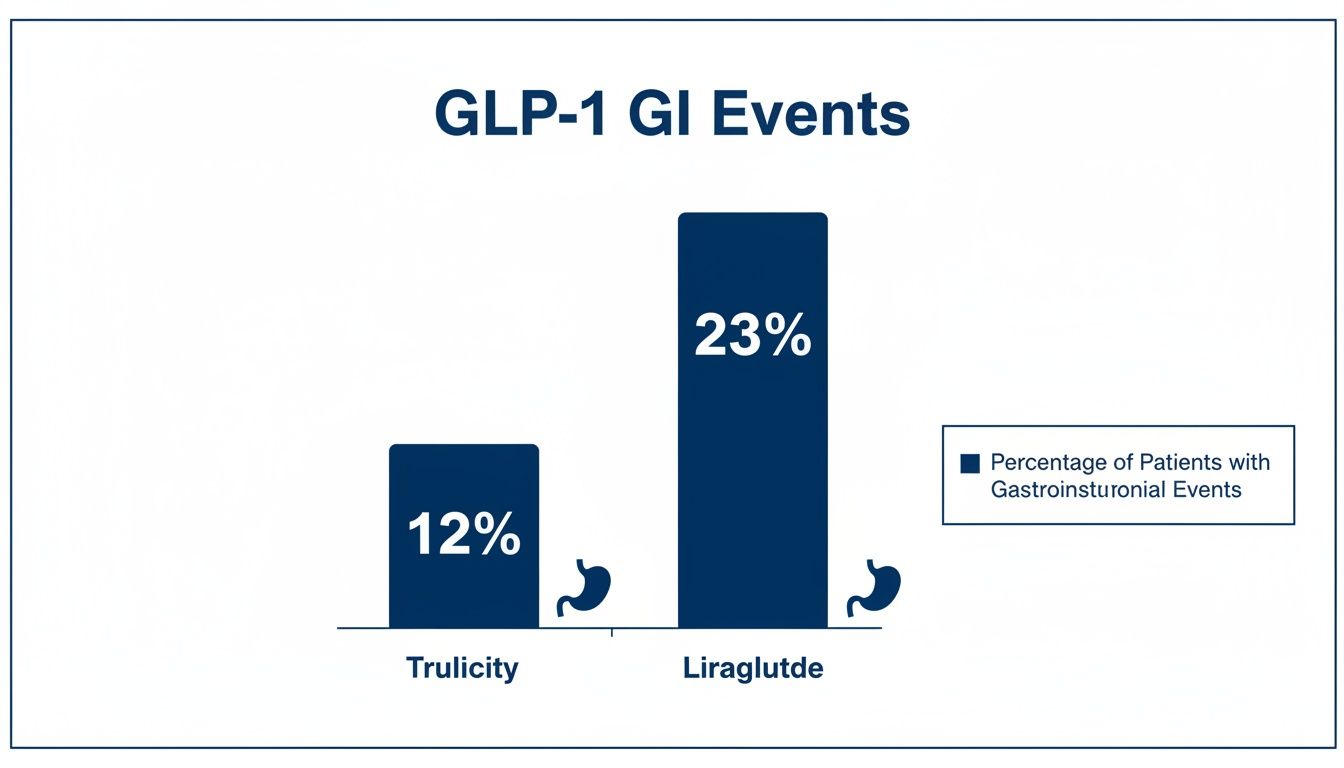
The data here suggests Trulicity might be a gentler choice for some people who are sensitive to these types of side effects. To learn more, check out our guide on GLP-1 medication side effects.
The takeaway is simple: while constipation is a possibility with Trulicity, it only affects a small fraction of people. This allows you to stay focused on the bigger picture—reaching your health and weight management goals.
At Blue Haven Rx, our clinical team relies on this kind of real-world data to create a plan that works for you. We're here to make sure you feel supported and confident every step of the way.
Simple and Effective Ways to Manage Constipation
Dealing with constipation while on Trulicity can be frustrating, but the good news is that relief is often found in simple, everyday habits. You don't need a massive overhaul—just a few consistent tweaks to your routine can make a world of difference for your digestive comfort and keep you on track with your long-term health goals.
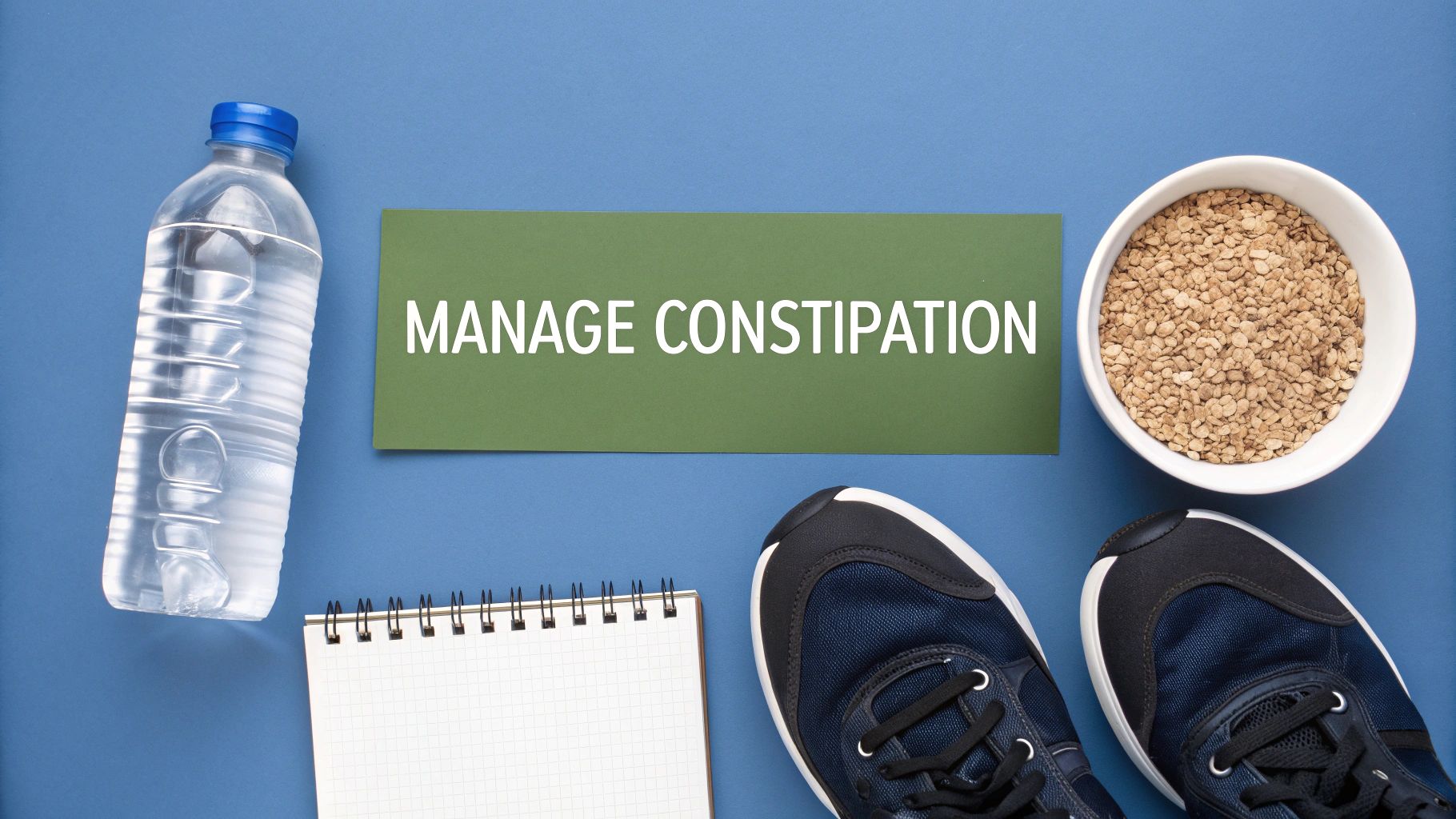
Let's start with the basics. Think of these lifestyle adjustments as the foundation for a happy gut, especially while your body gets used to a new medication.
Boost Your Daily Hydration
Water is your digestive system's best friend. It helps soften stool, making it much easier to pass. When you're dehydrated, your body pulls water from your colon, which only makes constipation worse.
A good goal is to drink half your body weight in ounces of water daily. So, if you weigh 160 pounds, aim for about 80 ounces. The key is to sip steadily throughout the day.
Incorporate Gentle Movement
Getting your body moving is one of the best ways to get your bowels moving, too. You don't have to run a marathon; even light, consistent activity can work wonders for your health and longevity.
- Take a daily walk: A brisk 20–30 minute walk can stimulate the natural contractions in your intestines.
- Try gentle yoga: Specific poses and twists can gently massage your digestive organs and encourage movement.
- Stay active: Little things add up! Gardening, stretching, or taking the stairs helps keep your system running smoothly.
Add More Fiber to Your Meals
Fiber acts like a broom for your digestive tract, adding bulk that helps push things along. The trick is to increase your intake slowly to give your body time to adjust and avoid uncomfortable gas and bloating.
Practical Tip: An easy way to start is by mixing a tablespoon of chia seeds or ground flaxseed into your oatmeal or yogurt each morning. Aim for 25 to 30 grams of total fiber per day from whole food sources like fruits, vegetables, and whole grains.
If these lifestyle changes aren't enough, over-the-counter options like stool softeners can offer gentle relief. It’s always smart to have a quick chat with your provider before starting any new supplement or medication.
This isn't just a Trulicity issue—it’s common for this class of drugs. You can learn more by checking out our guide on what to do about constipation from Ozempic.
Comparing Trulicity to Other GLP-1 Options
It’s smart to weigh your options when it comes to medications for weight management. A common question we hear is how Trulicity stacks up against other GLP-1 medications, especially when it comes to side effects like constipation.
The short answer is that they all share a similar potential for digestive issues. Because these medications work by slowing down how quickly your stomach empties, constipation is a possibility across the board. Whether you're using Trulicity or exploring other GLP-1 options like Wegovy, learning to manage these changes is often part of the process.
Do Other GLP-1s Also Cause Constipation?
Yes, they do. While specific studies might show slight variations in the frequency of side effects, the general experience is quite similar from one GLP-1 to another.
Interestingly, when you look at large-scale data, the concern about Trulicity causing constipation might not be as significant as it seems.
A major assessment by the European Medicines Agency, which looked at data from thousands of patients, found that constipation occurred in 12.0% of those taking Trulicity. Surprisingly, this was slightly lower than the rate in the placebo group, which was 13.4%. This suggests Trulicity may not increase the risk of constipation much, if at all, compared to the general population.
This is a perfect example of why personalized medicine is so important. Your own body, lifestyle, and health history will ultimately determine which medication is the best fit for you.
If you want to dig deeper into how these medications compare, check out our guide on Trulicity vs. Wegovy.
The medical team at Blue Haven Rx is here to help you navigate these choices. We look at your unique health profile to find a medication that aligns with your body and your wellness goals.
When to Check In With Your Doctor
It's one thing to deal with mild constipation that gets better with a few lifestyle changes. It's another thing entirely when it starts to become a real problem. Knowing the difference is key to staying safe and healthy on your wellness journey.
You should always listen to your body. Give your healthcare provider a call if you're experiencing any of these issues:
- Constipation that is severe or doesn't improve after trying to add more water, fiber, and activity to your day.
- Serious stomach pain, cramping, or bloating that feels like more than minor discomfort.
- You haven't had a bowel movement for several days.
These symptoms could be a sign of a more significant issue, and getting a professional opinion is the safest and smartest choice.
At Blue Haven Rx, our licensed physicians and dedicated support team are here for you. We help you navigate side effects and ensure your treatment plan is working for you, not against you.
If you're looking for a weight management program where your health and longevity always come first, we're here to help.
Trulicity and Digestion: Your Questions Answered
Let's tackle a few common questions about Trulicity and digestive side effects. Having clear, straightforward answers can make all the difference as you navigate your treatment.
How Long Does Constipation From Trulicity Last?
For most people, constipation is a temporary hurdle. It often appears as your body gets used to the medication, which can take anywhere from a few days to several weeks. Sticking with healthy habits—like drinking plenty of water and eating fiber-rich foods—is your best bet for shortening this adjustment period.
But if the constipation lingers or becomes very uncomfortable, don't just tough it out. Talk to your healthcare provider. They can help find a solution that works for you.
Can Certain Foods Make Constipation Worse on Trulicity?
Yes, definitely. Since Trulicity is already slowing down your digestion, certain foods can make things even more sluggish. The biggest culprits are usually foods low in fiber and high in fat.
To help your system run more smoothly, try to limit:
- Processed foods like white bread, pastries, and fast food.
- High-fat meats and large portions of dairy, especially cheese.
- Sugary desserts and sweets, which don't offer much fiber.
Focusing on whole foods—like fruits, vegetables, and whole grains—gives your body the fiber it needs to stay on track for better health and longevity.
Does the Dose of Trulicity Affect Constipation?
The connection isn't always what you'd expect. While higher doses of GLP-1 medications can sometimes increase side effects, constipation can happen at any dose of Trulicity.
Some doctors have noticed that lower doses of GLP-1s can sometimes be more likely to cause constipation, while higher doses might lead to diarrhea. Everyone's body responds differently.
This is exactly why keeping an open line of communication with your medical team is so important. They can help you track how you're feeling and adjust your plan to get the best possible results.
Here's a quick-glance table to answer a few more pressing questions you might have.
| How long does constipation from Trulicity last? | Can certain foods make constipation worse on Trulicity? | Does the dose of Trulicity affect the risk of constipation? | Is it safe to use laxatives while taking Trulicity? |
|---|---|---|---|
| For many, it's temporary and improves within a few days to a few weeks as the body adjusts. Consistent hydration and fiber intake can help. | Yes. Low-fiber, high-fat, and processed foods can worsen constipation. Focusing on whole grains, fruits, and vegetables helps promote regularity. | Not always directly. Constipation can occur at any dose, and individual responses vary. Some clinical observations suggest lower doses may be more constipating for some. | It can be, but you should always consult your healthcare provider first. They can recommend the right type and ensure it's safe for your situation. |
Remember, these are general guidelines, and your experience may be different.
At Blue Haven Rx, we're committed to providing personalized support for your weight management journey. Our licensed physicians are here to help you manage side effects and reach your goals with confidence. If you're ready to take the next step, take our quiz to see if our science-backed approach is right for you.