
Why Am I Not Losing Weight? Uncovering the Reasons Beyond Diet and Exercise
You’re eating well and exercising, but the number on the scale refuses to budge. If this sounds familiar, you are not alone. It's a frustrating place to be, and for many adults—especially after age 45—the answer is rarely as simple as "eat less, move more."
Often, a complex mix of biological factors is at play. Your body might be working against your best efforts due to subtle shifts in metabolism, hormones, and even your stress levels. This guide will help you understand these hidden roadblocks and find a path forward.
The Frustrating Reality of a Weight Loss Plateau
Hitting a wall on your health journey can be demoralizing. You’ve been diligent, making real changes to your lifestyle, only to see your progress grind to a halt. This experience, known as a weight loss plateau, can feel like a personal failure, but it's a very common part of the process.
This isn't just a personal struggle; it’s a massive public health challenge. The World Obesity Federation predicts that the number of adults living with obesity will climb to a staggering 1.13 billion by 2030. A major hurdle is that two-thirds of countries simply don't have adequate policies to address the problem, highlighting that these aren't just individual battles.
Why Your Best Efforts Might Not Be Enough
As we age, our bodies change in ways that can make managing weight feel like an uphill battle. Your body is incredibly intelligent and hardwired for survival. When you lose weight, it can perceive this as a threat and activate powerful countermeasures to conserve energy and hold onto fat stores.
Think of this guide as your roadmap to understanding what’s happening beneath the surface. We'll explore the most common culprits behind stalled progress:
- Metabolic Adaptation: How your body's internal engine naturally slows down as you shed pounds.
- Hormonal Shifts: The significant impact of hormonal changes during perimenopause and menopause.
- The Stress-Sleep Connection: Why high cortisol and poor rest are silent saboteurs of fat loss.
- Hidden Medical Factors: Underlying health conditions or medications that could be getting in the way.
Now, let's take a quick look at these hidden roadblocks in a simple table.
Hidden Reasons Your Weight Loss Has Stalled
Here's a quick look at the key factors we'll explore that often halt weight loss, even when you’re putting in the effort.
| Factor | How It Sabotages Weight Loss | Common Signs to Watch For |
|---|---|---|
| Metabolic Adaptation | Your body burns fewer calories at rest as you lose weight, making it harder to maintain a calorie deficit. | Persistent fatigue, feeling cold, and the scale not moving despite consistent effort. |
| Hormonal Changes | Shifts in estrogen, progesterone, and testosterone (especially during menopause) can increase fat storage and slow metabolism. | Hot flashes, night sweats, mood swings, increased belly fat, and sleep disturbances. |
| Stress & Sleep | High cortisol (the stress hormone) and lack of sleep both drive fat storage, particularly around the midsection. | Feeling wired but tired, sugar cravings, trouble falling/staying asleep, anxiety. |
| Medical Conditions | Issues like hypothyroidism, PCOS, or insulin resistance directly interfere with your body's ability to regulate weight. | Unexplained weight gain, fatigue, irregular periods, and hair loss or thinning. |
| Medications | Certain prescription drugs for depression, diabetes, or blood pressure can cause weight gain as a side effect. | Gradual weight gain that started after beginning a new medication. |
Seeing it laid out like this makes it clear that a plateau is rarely about a lack of willpower. It's often your body's natural response to change, complicated by a host of other factors.
A weight loss plateau isn't a sign to give up. It’s a signal from your body that it’s time to investigate deeper and adjust your strategy with more personalized insights.
Understanding these factors is the first step toward breaking through the frustration. Once you know why you're stuck, you can explore effective, evidence-based solutions that work with your body, not against it.
If you want to dive deeper into this common issue, check out our guide on what causes weight loss plateaus. Throughout this article, we’ll provide actionable advice to help you get back on track.
How Your Metabolism Adapts and Slows Down
Think of your metabolism as your body's internal engine. It’s always running, burning calories to fuel everything from your heartbeat to your morning walk. When you were younger, that engine probably ran a bit faster. But as we age, it naturally becomes more efficient, learning to burn fewer calories to do the same job.
This is a huge piece of the puzzle for anyone wondering, "why am I not losing weight?" Your body is incredibly smart. When it senses weight loss, it often shifts into a low-power mode, slowing your metabolic rate to conserve energy. This self-preservation mechanism is called metabolic adaptation.
Your body learns to function on fewer calories, which can bring your weight loss progress to a dead stop. This is a key reason why staying healthy and managing weight contributes to longevity.
The Critical Role of Muscle Mass
One of the biggest factors determining your metabolic rate is your muscle mass. Muscle is "active" tissue, meaning it burns calories around the clock, even when you're relaxing.
Here's the catch: after age 30, most adults lose 3-5% of their muscle mass with each passing decade if they aren't actively working to maintain it.
This gradual muscle loss, known as sarcopenia, is a primary reason our metabolism slows as we age. With less muscle, your body's baseline calorie-burning furnace isn't as powerful. This makes it easier to gain weight and harder to lose it, turning muscle preservation into a crucial part of healthy aging.
Your metabolic rate is directly tied to how much muscle you have. Prioritizing strength training isn't just about toning up; it's about keeping your body's engine running strong for years to come.
If you feel your metabolism has downshifted, you can learn more about the common symptoms of slow metabolism in our detailed guide.
Actionable Tips to Rekindle Your Metabolic Fire
While you can't completely stop metabolic adaptation, you can take powerful, proactive steps to counteract it. This is about working with your body, not against it.
Here are a few practical tips you can start using today:
- Prioritize Protein: Protein is the building block for muscle. Your body also burns more calories digesting protein compared to fats and carbs. Aim to include a quality protein source with every meal.
- Embrace Strength Training: Lifting weights, using resistance bands, or doing bodyweight exercises two or three times a week signals your body to build and maintain calorie-burning muscle.
- Don't Drastically Cut Calories: Slashing your calorie intake too low can backfire. It can signal "famine" to your body, triggering an even bigger metabolic slowdown. A moderate, sustainable calorie deficit is more effective for long-term success.
Supporting Your Cellular Energy
Beyond diet and exercise, supporting your body at a cellular level can play a vital role in your overall wellness. Our cells depend on key molecules like NAD+ to power hundreds of critical processes, including energy production. The problem is, our natural NAD+ levels decline as we get older, which can impact how our cells function and how energetic we feel.
By taking a comprehensive approach—smart nutrition, consistent strength training, and support for your cellular health—you can effectively push back against a slowing metabolism and build a solid foundation for lasting health.
Ready to understand all the factors at play? The expert team at Blue Haven Rx can help you create a personalized plan. Take our quiz to get started on your journey.
The Invisible Forces: Hormones, Stress, and Sleep

While we often focus on diet and exercise, powerful, unseen forces can derail your weight loss efforts. Hormones, stress, and sleep quietly work behind the scenes, dictating your appetite, fueling cravings, and even telling your body where to store fat. Getting a handle on them is often the missing piece of the puzzle for successful weight management.
Hormones: The Body's Chemical Messengers
Hormones are powerful messengers that tell your body what to do. When they’re balanced, things run smoothly. But when they fluctuate, especially after age 45, it can feel like your body is working against you.
A few key players have a direct impact on your weight:
- Insulin: You can think of insulin as the "fat-storage hormone." When your cells stop responding to insulin properly (a state called insulin resistance), your body pumps out more of it, signaling it to store fat—especially around your middle.
- Cortisol: This is your primary stress hormone. Chronic stress keeps cortisol levels high, which encourages belly fat storage and triggers cravings for sugary, high-fat foods.
- Sex Hormones: For women, the hormonal shifts of perimenopause and menopause are a game-changer. As estrogen levels decline, the metabolic rate naturally slows, and the body tends to store more abdominal fat.
Hormonal changes can feel like a major roadblock, which is why a practical guide to hormone balance supplements for women can be a useful resource for navigating this phase.
The World Obesity Federation projects that by 2025, global obesity prevalence will hit 18% in men and over 21% in women. These numbers show how tough it is to lose weight when our biology and environment are working against us. It's clear that individual effort often needs to be supported by a deeper understanding of these complex factors.
The Vicious Cycle of Chronic Stress
Modern life is full of stress, and it does more than put you in a bad mood. When you’re constantly stressed, your body is flooded with cortisol. This doesn't just make you store fat; it makes you crave the exact foods that are worst for your waistline.
It's a survival mechanism gone haywire. Your brain thinks you're in constant danger, so it pushes you to load up on high-energy, high-calorie foods to prepare for a fight that never happens.
This creates a cycle: you feel stressed, you reach for comfort food, and you get a moment of relief, often followed by guilt. Breaking this pattern is essential for healthy living, and our guide on how to stop stress eating offers practical strategies.
How Poor Sleep Sabotages Your Progress
If you're asking, "why am I not losing weight?" and consistently burning the midnight oil, you may have found your answer. Sleep isn't a luxury—it's a biological necessity that directly impacts your weight.
Just one night of bad sleep can throw your key appetite hormones into chaos:
- Ghrelin Spikes: Ghrelin is your "I'm hungry" hormone. When you're sleep-deprived, your body produces more of it.
- Leptin Dips: Leptin is your "I'm full" hormone. When you don't get enough sleep, leptin levels drop, so you never feel truly satisfied.
This hormonal combination is a recipe for weight gain. You’re hungrier, the food you eat is less satisfying, and your tired brain is more likely to give in to cravings.
Tackling these three areas—hormones, stress, and sleep—can help you break through the most stubborn weight loss plateau. Simple, consistent habits, like a calming bedtime routine or a 10-minute walk to de-stress, can make a huge difference.
When Health Conditions and Medications Get in the Way
Sometimes, the answer to "Why am I not losing weight?" has nothing to do with your diet or fitness routine. The real roadblock can be an underlying health condition or a necessary medication, quietly working against your best efforts.
It's an incredibly frustrating spot to be in. Acknowledging this isn't about making excuses; it's about arming yourself with the knowledge to find a better way forward.
Underlying Health Conditions and Weight
Certain medical issues can directly interfere with your metabolism, hormones, and how your body stores energy. If your weight loss has stalled despite consistent effort, it might be time to see if one of these common culprits is at play.
A few key conditions are known for making weight management a challenge:
- Hypothyroidism: An underactive thyroid doesn't produce enough of the hormones that run your metabolism. This makes weight gain common and weight loss a real uphill battle.
- Polycystic Ovary Syndrome (PCOS): This hormonal disorder is closely tied to insulin resistance. When your body resists insulin, it has a tough time managing blood sugar, often leading to increased fat storage.
- Insulin Resistance: This condition forces your body to produce extra insulin, and high insulin levels are a powerful signal for your body to store fat instead of burning it for energy.
These conditions are not a life sentence of weight struggles. With a proper diagnosis, you can work with a doctor on a medically-guided plan to manage the symptoms and finally get your weight loss journey moving again.
How Everyday Medications Can Affect Your Weight
A wide range of common medications can lead to weight gain or make losing it harder. They can do this by increasing your appetite, slowing your metabolism, or causing fluid retention. The point is not to be alarmed, but to be informed. Never stop or change a medication's dose without medical supervision.
Some types of medications that can affect your weight include:
- Certain Antidepressants: Some classes of these drugs are known to have weight gain as a common side effect.
- Steroids: Often prescribed for inflammation, they can increase appetite and change how your body stores fat.
- Beta-Blockers: Used to treat high blood pressure, some can slow down your metabolic rate.
If you suspect a medication might be interfering with your goals, talk to your healthcare provider. For those considering newer options, it’s also wise to understand potential GLP-1 medication side effects and how they fit into a comprehensive wellness strategy.
By working with a medical professional, you can investigate these possibilities and make smart adjustments, ensuring you’re tackling the true root cause of your plateau, safely and effectively.
A Modern Way to Break Through Weight Loss Plateaus
If you've been doing everything right but the scale won't budge, the problem may not be your effort, but your tools. It's time to stop fighting your body's biology and start working with it.
Medical science has made incredible leaps in understanding the hormonal and metabolic hurdles that hold people back. We now have sophisticated, medically-guided solutions that can help you overcome challenges like insulin resistance and relentless hunger signals. This isn't about a shortcut; it's about giving you the right support to make your hard work pay off.
How Hormonal Support Can Help
One of the most significant breakthroughs in modern weight management is a class of medications called GLP-1 receptor agonists. These aren't just diet pills; they work by tapping into your body's own hormonal communication system.
GLP-1 therapies mimic a natural hormone that sends powerful signals to your brain, telling it you're satisfied. This process also slows down how quickly your stomach empties and helps your body manage blood sugar more effectively.
The result is a trio of powerful effects:
- A Quieter Appetite: You naturally feel less hungry, making it easier to stick to a healthy eating plan.
- Freedom from "Food Noise": The persistent preoccupation with your next meal often fades.
- Better Blood Sugar Control: By improving how your body uses insulin, these therapies address underlying metabolic issues.
It’s crucial to view these treatments as a biological reset. They provide the support needed to make new, healthy lifestyle habits finally feel sustainable.
Why a Comprehensive, Doctor-Led Program Matters
Willpower alone is rarely enough to navigate today's food environment. Even with powerful medications, a holistic approach is what drives long-term success. While these therapies helped contribute to a modest decline in U.S. adult obesity rates from a peak of 39.9% in 2022 to an estimated 37.0% by 2025, they are just one piece of a much larger, personalized puzzle.
This is where a program like Blue Haven Rx makes a difference. Our telehealth platform gives you private, convenient access to medical experts who specialize in weight management. We know that a one-size-fits-all plan is destined to fail.
Our physician-led program gives you a complete support system:
- Expert Medical Evaluation: Our licensed physicians review your health history to see if a compounded therapy like Semaglutide or Tirzepatide is a safe and fitting choice for you.
- Personalized Treatment: If you're prescribed a medication, we create a plan just for you, starting with the right dose to maximize effectiveness while managing potential side effects.
- Continuous Guidance: You get ongoing support to help you navigate the process, make lasting lifestyle changes, and achieve your goals.
Pairing a medical program with a structured nutrition plan can be a game-changer. For instance, this detailed BistroMD review explores a doctor-designed meal service that can take the guesswork out of healthy eating.
If you’re tired of hitting a wall and are ready to explore a solution that gets to the root biological cause, we're here to guide you.
Take the first step. You can learn more about our GLP-1 programs or take our simple online quiz to see if a medically-guided approach is right for you.
Creating Your Sustainable Path Forward
Let's shift the question from "why am I not losing weight?" to a more empowering one: "what's my next move?" Getting stuck in a plateau doesn’t mean you’ve failed. It's a signal from your body that it needs a smarter, more personalized strategy.
Real, sustainable weight management is about understanding the interplay between your hormones, metabolism, and lifestyle. Blaming yourself for a biological reality is a dead end. The way forward is to get curious, investigate the root causes, and find the right support for healthy living.
The Cornerstones of Real Success
As you map out your plan, these pillars are your foundation. Think of them as the core principles for building a healthier, more resilient body.
- Make Strength Training a Priority: This is your best tool for protecting calorie-burning muscle mass and keeping your metabolic engine humming as you age.
- Get Serious About Sleep: Aiming for 7-9 hours of quality sleep is essential for keeping your hunger hormones, ghrelin and leptin, in check.
- Tame Your Stress: Chronic stress floods your body with cortisol, a hormone that sabotages fat loss. Simple daily habits like a short walk or deep breathing can make a huge difference.
- Acknowledge Your Hormones: Get familiar with the signs of hormonal shifts. Don't just suffer through them—bring them up with your doctor.
- Lean on Medical Experts: You were never meant to figure this all out alone. A qualified medical professional can help uncover hidden issues and craft a plan that’s both safe and effective for you.
This flowchart breaks down the two main paths to consider when the scale won't budge. It’s a simple guide to help you decide whether to focus on lifestyle tweaks or if it’s time for a medical evaluation.
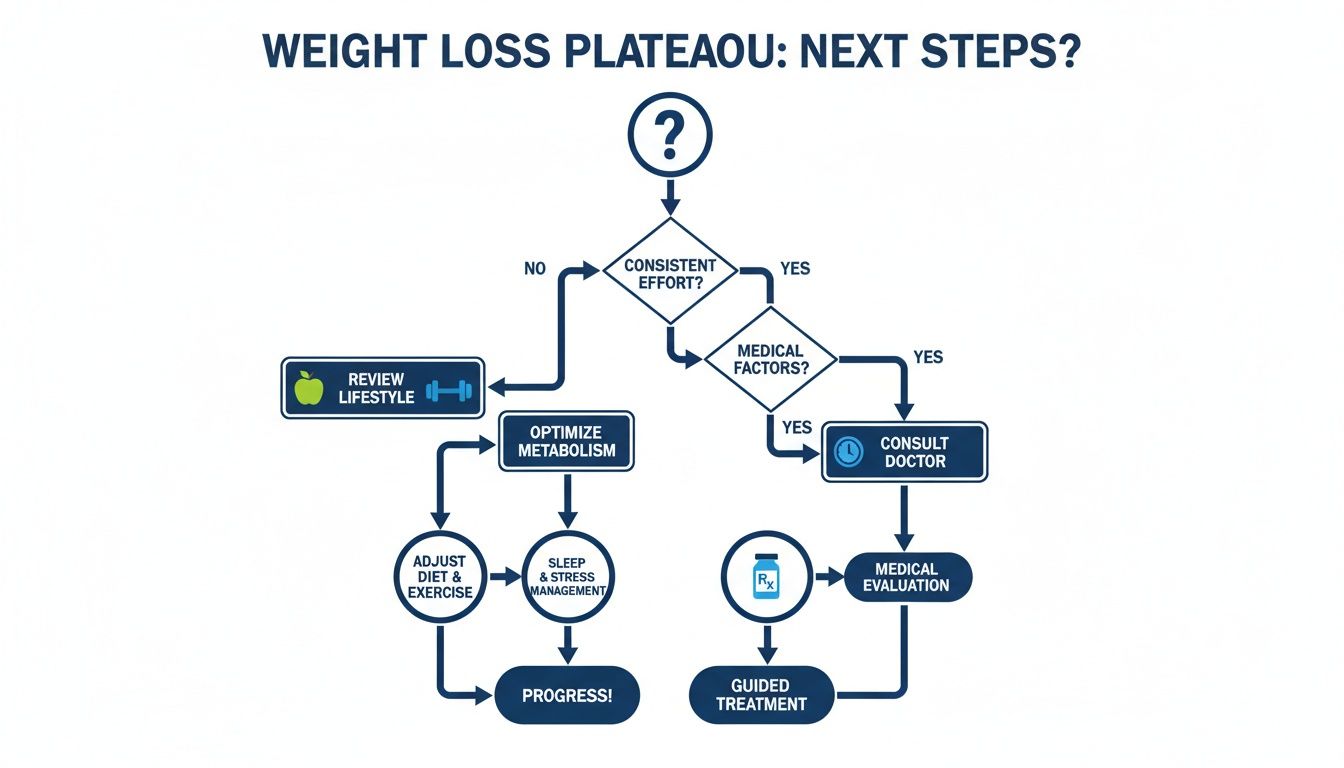
As you can see, both lifestyle and medical factors are equally valid reasons for getting stuck. This isn't about judgment; it's about empowering you to choose the right next step for your unique situation.
Your health journey is yours alone, and your strategy should reflect that. If you’ve been diligently working on these lifestyle cornerstones and still feel like you're spinning your wheels, it might be time for a more targeted medical solution.
The team at Blue Haven Rx provides exactly that kind of expert guidance. We specialize in creating personalized, medically supervised programs designed to work with your body's biology. Find out more about our approach, or take our quick quiz to start your journey today.
Answering Your Top Questions
When you hit a bump in your weight loss journey, it’s natural to have questions. Let’s tackle some of the most common ones with clear, straightforward answers.
How Long Does a Weight Loss Plateau Last?
It can feel like an eternity, but a true weight loss plateau typically lasts for a few weeks to a couple of months. The timeline depends on your starting point and your body's individual response.
If the scale has been stuck for over a month despite your best efforts, that's your cue to stop waiting and start investigating what needs to change in your weight management plan.
Could I Be Losing Fat but Gaining Muscle?
Yes, and this is a great sign! This is often called body recomposition, and it means you're improving your overall health even if the number on the scale isn’t budging. Muscle is much denser than fat, so you can be dropping inches and getting stronger while your weight stays the same.
Look for other, more meaningful signs of progress:
- Are your clothes fitting better, maybe a little looser around the waist?
- Have you taken your measurements? A smaller waist or hip measurement is a huge win.
- Do you feel stronger during workouts or have more energy through your day?
When Should I Talk to a Doctor?
Plateaus are normal, but sometimes they signal an underlying issue. It’s a good idea to book an appointment with your doctor if your stalled weight loss comes with other symptoms, such as:
- Deep, persistent fatigue you can't shake.
- Major shifts in your mood or appetite.
- Symptoms like hair loss, feeling cold all the time, or dry skin.
- Noticing the plateau began right after you started a new medication.
Are Telehealth Weight Loss Programs a Safe Option?
Absolutely, as long as they are medically supervised. A high-quality telehealth program can be an incredibly safe, effective, and convenient way to get expert guidance on your health and wellness journey.
Reputable platforms like Blue Haven Rx connect you with licensed medical providers who conduct a proper evaluation to create a safe and personalized plan. The key is to choose a program that insists on a thorough medical review and offers continuous support from a real healthcare team.
Your health journey is unique, but you don't have to navigate it by yourself. At Blue Haven Rx, we specialize in medically supervised programs that help you understand and overcome the challenges of weight loss after 45.
Take our simple quiz to see if a personalized plan is right for you.