
A Clear Wegovy Dosing Chart and Titration Guide
When you begin a weight management journey with a GLP-1 medication like semaglutide, you don't just jump to the full dose. The standard Wegovy dosing chart is built around a gradual increase, a process called titration. This approach is designed to let your body get used to the medication over time, which is key to minimizing side effects and setting you up for long-term success.
The whole idea is to start low and go slow, eventually settling on a steady maintenance dose that works for you. This careful process supports your long-term wellness goals.
Your Guide to the Semaglutide Dosing Schedule
Getting familiar with the dosing schedule for semaglutide (the active ingredient in Wegovy and similar medications) is one of the most important first steps you'll take. The process isn’t rushed; it’s methodical and designed to help your body adapt smoothly. This careful approach is what makes the treatment a sustainable part of achieving a healthier lifestyle.
At the heart of the schedule is titration. It’s a simple concept: instead of starting at the highest dose, you begin with a very small one and slowly increase it month by month. This gives your system, especially your digestive tract, time to adjust to the medication’s effects.
The journey from the first injection to the final maintenance dose follows a clear timeline: you start, you increase, and then you maintain.
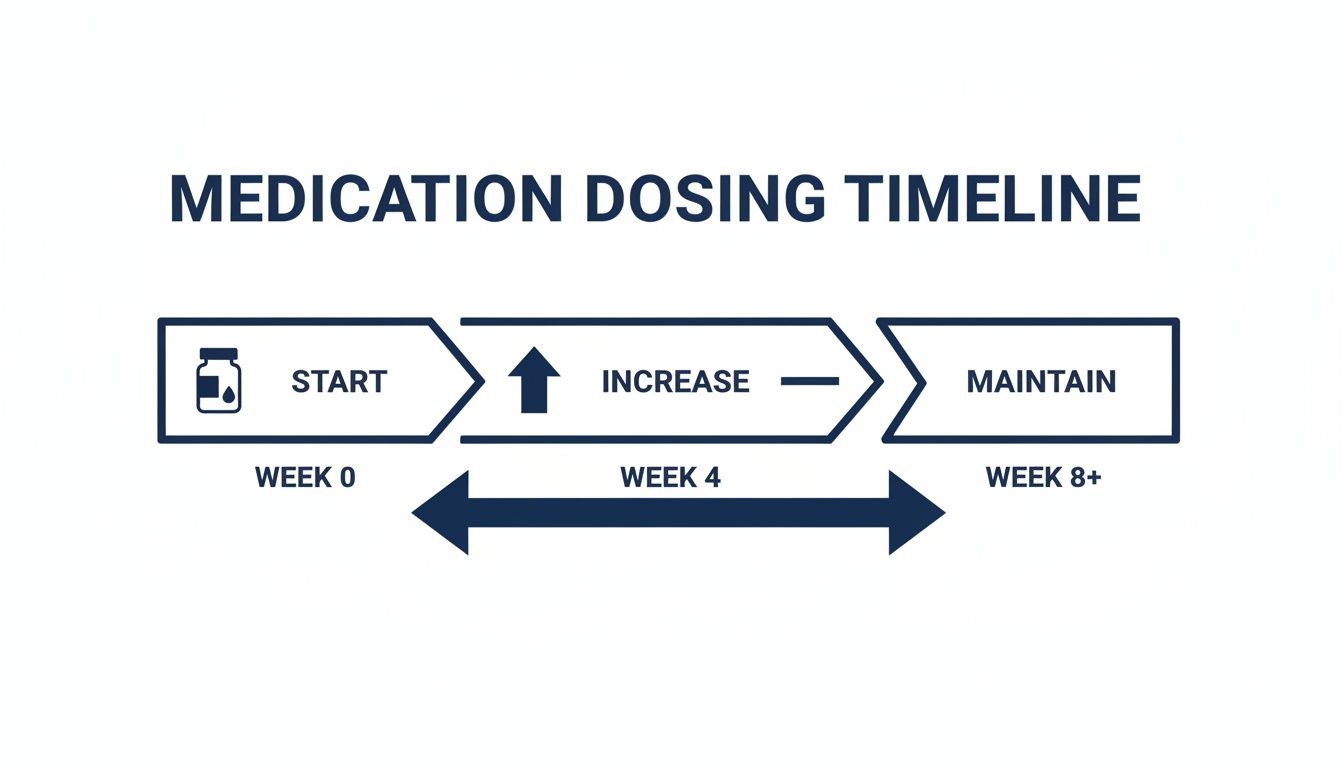
This timeline breaks down the entire process into three simple phases, showing how the dose escalates over several months until it reaches a consistent, effective level for healthy living.
Understanding the Starting Dose
Your journey begins with a very low dose: 0.25 mg, injected once a week for your first four weeks. The reason for this gentle start is to let your body get acquainted with the medication while keeping potential side effects at bay.
Starting low is particularly important for managing common gastrointestinal issues like nausea, which clinical trials showed can affect up to 44% of patients. This initial phase is all about building tolerance and ensuring your journey to better health is a comfortable one.
The Standard Titration Path
The table below outlines the standard dose-escalation schedule for Wegovy. This is the typical path most patients follow, but it's important to remember that your provider might adjust it based on how you're feeling and responding to the treatment.
| Standard Wegovy (Semaglutide) Dosing and Titration Schedule | | :--- | :--- | :--- | :--- | | Month | Weeks | Weekly Dose (mg) | Primary Goal of This Phase | | Month 1 | Weeks 1-4 | 0.25 mg | Initiation: Introduce the medication and allow the body to adapt. | | Month 2 | Weeks 5-8 | 0.5 mg | Titration: Continue to increase the dose while monitoring for side effects. | | Month 3 | Weeks 9-12 | 1.0 mg | Titration: Further increase the dose to enhance therapeutic effects. | | Month 4 | Weeks 13-16 | 1.7 mg | Titration: Approach the final maintenance dose. | | Month 5+ | Weeks 17 and beyond | 2.4 mg | Maintenance: Reach and maintain the full therapeutic dose for long-term weight management. |
This schedule is designed to balance effectiveness with tolerability, stepping you up carefully toward your long-term health goals. For a more detailed breakdown, our complete guide on the semaglutide dosing chart offers further insights.
Throughout this process, your Blue Haven Rx provider will work closely with you. They'll monitor your progress and make sure the dose you're on is both working effectively and comfortable for you. This kind of personalized support can make all the difference in your wellness journey.
Why Gradual Dose Increases Are a Key to Success
Understanding the “why” behind the dosing schedule is just as important as knowing the chart itself. When you know the reason for the process, you’re better equipped to stick with the plan. The gradual increase in dosage, a process called titration, isn't random—it's a carefully planned strategy designed for your comfort and long-term success.

This methodical approach is based on how GLP-1 medications like semaglutide work. They have a significant impact on your metabolism, mainly by interacting with appetite centers in your brain and slowing down how fast your stomach empties. These are powerful biological changes, and your body needs time to get used to them.
Easing Your Body into Treatment
Think of starting a GLP-1 medication like easing into a new fitness routine. You wouldn’t try to run a marathon on day one. Instead, you'd start with short distances and slowly build up your stamina. This sensible approach prevents injury and burnout, making it possible to stick with your training long enough to see real progress.
The same principle applies here. Introducing a high dose of semaglutide right away would be a shock to your system, likely leading to unpleasant side effects. By starting low and slowly increasing the dose every four weeks, you give your body a chance to acclimate. This dramatically lessens the chance of common issues like:
- Nausea: This is the most frequently reported side effect, and a slow, steady titration is the best way to manage it.
- Fatigue: Allowing your body to adjust can help reduce feelings of tiredness as you get started.
- Digestive Discomfort: A gradual increase helps your digestive system adapt to the medication's effects.
This patient, step-by-step process is what makes your weight management journey sustainable. It’s all about making sure the treatment is tolerable so you can continue using it effectively to reach your healthy living goals.
A Partnership in Your Health Journey
At Blue Haven Rx, your provider is your partner in managing this titration process. They will monitor your progress and listen to your feedback at every step, making sure the dosing schedule works for you. This personalized oversight helps you navigate the treatment as smoothly and effectively as possible.
For those looking at their health holistically, exploring cellular health treatments like NAD+ therapy can be a great complement to weight management by supporting your body's energy and overall vitality.
Ultimately, the slow dose increase is a key feature of the treatment. It’s designed to make your journey toward better health as smooth and successful as it can be. Ready to see if a personalized weight management plan is right for you? Take our quiz to get started.
What to Expect at Each Dosing Level
Think of the Wegovy dosing schedule as a journey with several key stops. Each one has a specific job to do in your weight management plan. Knowing what’s coming at each stage can make the whole process feel less intimidating and more predictable.
This guide breaks down what typically happens during each phase of the standard titration schedule. It’s your roadmap—a way to understand the milestones and recognize that you’re on the right track toward your wellness goals.
Months 1-2: The Foundation Phase (0.25 mg and 0.5 mg)
The first two months are all about laying the groundwork. You probably won't see dramatic weight loss just yet, and that’s by design. The main goal here is to introduce semaglutide to your system slowly, giving your body plenty of time to get used to it.
Starting Dose (Weeks 1-4): 0.25 mg
The initial 0.25 mg dose is purely for acclimatization. It’s designed to let your body adjust to the medication’s effects on your digestive system and appetite signals without overwhelming it.
- What to Expect: It’s completely normal to feel very little at this stage. Some people notice a slight dip in cravings or feel full a bit faster, but significant appetite suppression is rare.
- Common Side Effects: If side effects appear, it’s usually during this phase. They are typically mild, with nausea being the most common, and they often fade as your body adjusts.
First Step-Up Dose (Weeks 5-8): 0.5 mg
After four weeks, you’ll move up to 0.5 mg. This is the first increase, and it continues the gentle adaptation process you started in month one.
- What to Expect: This is where you might start to notice more consistent effects. The feeling of fullness after eating can become more pronounced, and cravings may begin to quiet down.
- Managing the Transition: Before this jump, your Blue Haven Rx provider will check in to make sure you're handling the medication well. Open communication is a crucial part of your success.
Months 3-4: The Therapeutic Ramp-Up (1.0 mg and 1.7 mg)
During months three and four, you’re stepping into the “therapeutic” dosing range. For most people, this is when the medication’s effects on weight management really start to become noticeable.
Second Step-Up Dose (Weeks 9-12): 1.0 mg
The 1.0 mg dose is often where people report a real shift. As you get closer to a more effective dose, the medication’s impact on appetite and satiety becomes much more obvious.
- What You Might Feel: Appetite suppression is usually much stronger at this level. You might find yourself naturally eating smaller portions and feeling satisfied for longer.
- Practical Tip: This is a great time to lean into healthy habits like mindful eating and regular exercise. It’s often much easier to build these routines when your appetite is under better control.
Third Step-Up Dose (Weeks 13-16): 1.7 mg
Moving to 1.7 mg is a powerful step toward the final maintenance dose. Many people find this is where they see the most significant weight loss, as the dose is strong enough to have a major effect on appetite.
- Key Changes to Expect: You can anticipate a notable decrease in hunger. This dose often helps people accelerate their progress.
- Monitoring Your Progress: It’s important to stay in close contact with your provider. They’ll help you track your progress and manage any side effects that might appear.
This structured ramp-up is backed by solid research. The landmark STEP 1 trial confirmed the effectiveness of this standard dosing chart. The study followed this exact schedule, increasing the dose every four weeks to the 2.4 mg maintenance dose from week 17 onward. The results were clear: 83% of participants lost at least 5% of their body weight. You can read the full research about these findings to learn more.
Month 5 and Beyond: The Maintenance Phase (2.4 mg)
Once you’ve successfully worked your way up the titration schedule, you’ll land at the final maintenance dose. This is the dose intended for long-term weight management and healthy living.
Full Maintenance Dose (Week 17+): 2.4 mg
The 2.4 mg dose is the full-strength dose for weight management. The goal now shifts to maintaining the incredible progress you've made and continuing your journey toward a healthier life.
- Long-Term Experience: At this point, the effects on appetite should be steady and consistent. This stability frees you up to focus on cementing healthy lifestyle choices for results that last.
- Ongoing Support: Your journey doesn't stop here. Regular check-ins with your provider are essential to ensure your plan continues to work for you. This ongoing partnership is a core part of the support offered by Blue Haven Rx.
Feeling empowered with this knowledge is a great first step. If you're ready to see how a personalized plan can support your goals for healthy living and longevity, consider starting your journey with us. Take our quiz to learn more.
How to Manage Common Side Effects
Sticking to the gradual dosing chart is your best defense against side effects, but it’s smart to know what you might experience. Understanding how to manage milder symptoms can make the process feel much smoother. For most people, side effects are temporary and appear most often right after a dose increase while the body is adjusting.
Being prepared empowers you to stay focused on your long-term health goals. Let’s walk through some simple, practical ways to handle the most frequent issues at home.

Tips for Nausea and Digestive Upset
Nausea is the most commonly reported side effect with GLP-1 medications. It tends to show up soon after an injection or a dose increase but usually fades as your body gets used to the new level.
A few simple tweaks to your diet can make a world of difference:
- Eat Smaller, More Frequent Meals: Large meals can be too much for your slowing digestive system. Try eating smaller portions throughout the day.
- Choose Bland, Low-Fat Foods: Greasy or heavy foods can be nausea triggers. Stick with simple things like crackers, toast, rice, or baked chicken.
- Stay Hydrated: Sipping water or other clear fluids all day is key, especially if you’re also dealing with vomiting or diarrhea.
- Eat Slowly: Give yourself time to eat and listen to your body’s fullness signals. The goal is to stop when you feel satisfied, not stuffed.
Learning how to improve gut health naturally can also provide relief and support your overall wellness.
Handling Constipation and Fatigue
Because this medication slows down your digestive system, constipation can become an issue. At the same time, your body is making big metabolic shifts, which can leave you feeling tired, particularly in the beginning.
For constipation, try these practical tips:
- Increase Fiber Intake: Slowly add more high-fiber foods to your diet, like fruits, vegetables, and whole grains.
- Prioritize Hydration: Drinking enough water helps fiber do its job and move through your system.
To help manage fatigue:
- Gentle Movement: Light physical activity, like a daily walk, can actually boost your energy.
- Consistent Sleep: Try to stick to a regular sleep schedule. It gives your body the chance to rest and recover properly.
For a more detailed look, our guide on GLP-1 medication side effects has even more strategies you can try.
Managing Injection Site Reactions
It’s not uncommon to see a little redness, swelling, or itching where you did the injection. This is typically a very minor reaction that clears up on its own in a day or two.
Practical Tip: Be sure to rotate your injection sites every week. Good spots include your abdomen, thigh, or the back of your upper arm. Using a different location for each shot helps prevent skin irritation.
If a reaction is bothering you, a cool compress can help soothe it. Your Blue Haven Rx healthcare team is always your best resource. If any side effect feels severe or doesn't go away, don't hesitate to get in touch.
Here’s a quick summary to help you navigate the most common issues.
Quick Guide to Managing Common Side Effects
| Common Side Effect | What You Can Do | When to Contact Your Provider |
|---|---|---|
| Nausea | Eat small, bland meals. Stay hydrated. Avoid greasy or spicy foods. | If it's severe, prevents you from eating/drinking, or doesn't improve. |
| Constipation | Increase your intake of fiber and water. Try gentle exercise. | If you go more than 3-4 days without a bowel movement or have severe pain. |
| Fatigue | Prioritize 7-9 hours of sleep. Take short walks. Eat nutrient-dense food. | If it's debilitating or interferes with your daily life. |
| Injection Site Reaction | Rotate injection sites weekly. Apply a cool compress for minor irritation. | If you see signs of infection (pus, warmth, spreading redness) or a rash develops. |
This table is a starting point, not a substitute for professional medical advice. Consistent communication is key to making sure your treatment plan is working for you.
Navigating a Missed Dose of Your Medication
Life happens, and it's not unusual to forget a weekly injection. Don't worry—getting back on schedule is usually simple. Your next step depends on how long it's been since you were supposed to take your dose.
Knowing how to handle these small hiccups gives you the confidence to manage your treatment effectively. It’s also a great reminder of why having a supportive medical team is so important for your success.
The 48-Hour Rule of Thumb
The easiest way to figure out what to do is by using the 48-hour rule. Just think about when your next weekly dose is due.
Here’s a practical breakdown:
- If your next scheduled dose is MORE than 2 days (48 hours) away: Go ahead and take the missed dose as soon as you remember. Then, get back to your regular weekly schedule. For instance, if you usually inject on a Monday and realize on Wednesday you forgot, take it then. Your next dose will still be on the following Monday.
- If your next scheduled dose is LESS than 2 days (48 hours) away: In this situation, skip the missed dose completely. Just wait and take your next injection on its regularly scheduled day. You never want to take two doses close together, as this can increase your risk of side effects.
This simple rule helps keep a steady level of medication in your system without causing unwanted spikes.
When to Contact Your Provider
While missing one dose isn't usually a cause for alarm, some situations do require a quick check-in with your healthcare provider. Your safety and comfort always come first.
If you miss two or more consecutive doses—meaning it’s been over two weeks since your last injection—it is crucial to contact your Blue Haven Rx provider before you take the next one.
After a longer break, you may need to restart at a different strength. Your provider will likely recommend going back to a lower dose on the dosing chart to let your body get used to the medication again. This helps you avoid uncomfortable side effects. For a refresher on proper technique, you can also review our guide on semaglutide injection instructions.
Start Your Guided Weight Management Journey
Navigating something new, like a GLP-1 dosing schedule, is much less intimidating when you have a dedicated partner. At Blue Haven Rx, we don’t just provide medication; we build a personalized weight management plan that truly fits your health profile and life goals.
We know that lasting results come from more than just a prescription. It's about having a supportive team who's with you every step of the way. Our licensed medical providers are here for you throughout the entire process.
Your Partner in Health
Our care process is designed to be as straightforward and accessible as possible. It all starts with a simple online consultation to see if a GLP-1 medication is the right choice for you. If it is, we ship the medication discreetly to your door, letting you skip the pharmacy lines and insurance hassles.
This approach lets you focus on what really matters—your health. We take care of the logistics so you can put your energy into building healthier, sustainable habits for a longer, healthier life.
Comprehensive and Continuous Support
Your journey with us doesn't stop once the medication arrives. Our team is your constant resource, whether you have a question about the titration schedule or need practical advice for managing side effects. This continuous support is the cornerstone of our program.
As you move forward, it's also helpful to pair your medication with the right dietary support. You can learn more about the essential nutrients for GLP-1 users to ensure you're optimizing your well-being. This kind of knowledge is key to empowering your success.
We also provide plenty of information on topics like the benefits of weight loss telehealth, showing you how our modern approach to medicine can fit seamlessly into your life.
To get started, take our simple quiz today. It’s the first step toward connecting with one of our providers and discovering if this path is right for you.
Wegovy Dosing: Your Questions Answered
As you start your treatment, you're bound to have questions. Getting familiar with the details of the dosing schedule can give you a real sense of confidence on your health journey.
We’ve gathered some of the most common questions we hear from patients and provided clear, expert answers to help you feel more informed.
Can I Increase My Dose Faster Than Recommended?
It's a common question, but we strongly recommend sticking to the prescribed schedule. The four-week intervals on the dosing chart aren't arbitrary; they’re designed to give your body the time it needs to gradually acclimate to the medication. This is key to minimizing side effects.
Rushing the process can backfire, often leading to significant nausea or discomfort that can make staying on the medication difficult. It's always best to follow your provider's plan, as it's paced for your safety and long-term success.
Think of it as a marathon, not a sprint. The goal is to make your weight management journey as smooth and sustainable as possible for lasting health benefits.
What if Side Effects Get Worse After I Go Up a Dose?
Experiencing a temporary uptick in side effects right after a dose increase is quite common. It's a sign that your body is adjusting to the new, higher amount of medication.
However, if those side effects feel severe or don't let up after a few days, it’s crucial to contact your healthcare provider. Your comfort and safety are the top priorities.
Based on what you're experiencing, your provider might suggest:
- Holding steady: They may have you stay at your current dose for a few extra weeks before trying to increase it again.
- Stepping back: You might temporarily go back to the previous, lower dose to give your body more time to adapt.
- Symptom management: They can offer practical strategies to help you manage the specific side effects you're dealing with.
Consistent, open communication with your Blue Haven Rx team is the key to a successful experience. Never hesitate to reach out with any concerns.
Will I Have to Stay on the Highest Dose Forever?
For most people, the 2.4 mg dose is the target for long-term weight management, as it's been shown to be the most effective. This is the dose many people will stay on to maintain their results and support their longevity goals.
That said, everyone's body is different, and your long-term plan is a decision you and your provider will make together.
Some people find they can maintain their weight loss just as effectively on a lower dose, like 1.7 mg. This can be a fantastic long-term option, especially for anyone who has persistent side effects on the highest dose. The goal is to find the right balance—the most effective dose that you can tolerate comfortably for the long haul.
Your plan will always be tailored to your progress, how your body is responding, and your personal health goals.
At Blue Haven Rx, we're committed to providing support throughout your entire weight management journey. Our team is here to answer your questions, adjust your plan when needed, and give you the knowledge you need to succeed.
Ready to learn how a personalized, medically-supervised plan can help you? Take our quiz to get started today.