
Tirzepatide vs. Ozempic: Choosing Your Path to Sustainable Weight Loss
When you compare tirzepatide vs. Ozempic, the most important difference is how they work. Tirzepatide is a dual-action medication, meaning it activates two key hormone receptors (GLP-1 and GIP). This can lead to a more powerful effect on weight loss. Ozempic (semaglutide), on the other hand, targets just one (GLP-1), offering a well-established and reliable approach to managing weight and improving your metabolic health.
A New Chapter in Weight Management

We're at an exciting time where medical science offers real, effective tools to help people achieve lasting health and longevity. For many, especially those over 45, weight management can feel like a constant struggle against metabolic and hormonal changes. Medications like tirzepatide and semaglutide are changing that story.
These modern treatments are designed to work with your body’s natural signaling systems, not against them. If you’re exploring which path is right for you, understanding what makes each medication unique is the first, most important step toward healthy living.
Comparing Tirzepatide and Semaglutide
At their core, both medications belong to a class of treatments called GLP-1 receptor agonists. We dive deep into this topic in our comprehensive guide to GLP-1 for weight loss, but in short, they mimic a gut hormone that tells your brain you're full and helps manage blood sugar.
But they aren't the same. Here’s a quick look at the fundamental differences. Think of this as the starting point for a conversation about how each one might fit into your life and health goals.
| Feature | Tirzepatide | Semaglutide (Ozempic) |
|---|---|---|
| Mechanism of Action | Dual-agonist (targets both GLP-1 and GIP receptors) | Single-agonist (targets the GLP-1 receptor) |
| Primary Focus | Often leads to more significant weight loss results | Excellent, proven track record for both blood sugar control and weight management |
| Hormone Pathway | Engages two separate pathways influencing appetite and metabolism | Works on one primary pathway for appetite and glucose control |
This guide will break down these distinctions even further. Our goal at Blue Haven Rx is to give you clear, straightforward information so you can feel confident and empowered as you move forward on your health and wellness journey.
How Tirzepatide and Semaglutide Work Differently
To truly understand the tirzepatide vs. Ozempic comparison, we need to look at how these medications actually work. Both are incredibly effective for weight management, but they use different biological pathways to get results. This difference is often the key to understanding why one might be a better fit for you.
Semaglutide, the active ingredient in Ozempic, is a GLP-1 (glucagon-like peptide-1) receptor agonist. This simply means it mimics a natural hormone your gut releases when you eat.
This hormone sends a signal to your brain that you're full, which is a game-changer for controlling appetite and reducing calorie intake. It also slows down how quickly your stomach empties, so that feeling of fullness sticks around longer.
The Single-Hormone Approach of Semaglutide
You can think of semaglutide as a specialized key designed for a single, important lock: the GLP-1 receptor. By targeting this one pathway, it sets off a chain of effects that help regulate appetite and blood sugar. These are the cornerstones of successful, sustainable weight management.
For many people, this focused approach is all it takes to finally break through frustrating weight loss plateaus. It works with your body's existing appetite signals, making it easier to build and stick with healthier eating habits for a long, healthy life.
Tirzepatide’s Dual-Action Advantage
Tirzepatide takes a different approach. It’s a dual-agonist, which is like having a master key that opens two locks instead of just one. It activates the same GLP-1 receptor as semaglutide, but it also activates another key hormone receptor: GIP (glucose-dependent insulinotropic polypeptide).
This “twin-hormone” approach is what makes tirzepatide unique. By engaging both the GLP-1 and GIP pathways, it often produces a more powerful, combined effect on appetite suppression, insulin sensitivity, and overall metabolism.
This dual action is the main reason we often see more significant weight loss in clinical studies with tirzepatide. For a deeper dive into the science, check out our guide on how tirzepatide works to support weight management. Tapping into two of the body's critical metabolic hormones can provide the extra leverage needed to reach ambitious weight management goals.
While both medications focus on appetite and blood glucose, it's worth noting that other products, like the GlucoTonic blood sugar supplement, aim to support healthy blood sugar through different mechanisms. Understanding how these medications work helps you have a more productive conversation with your provider. The decision between a single- or dual-action treatment really comes down to your unique health profile and what you're hoping to achieve.
Comparing Weight Loss Effectiveness And Clinical Results
When you're looking at your options for weight management, the clinical results are where the real story is. Both tirzepatide and semaglutide are very effective, but the data reveals some important differences in just how effective they can be.
The biggest distinction in the tirzepatide vs. Ozempic conversation almost always comes down to the total amount of weight loss. While both are powerful tools for healthy living, tirzepatide’s unique dual-hormone action consistently gives it an edge in clinical studies.
This chart breaks down how the different mechanisms translate into real-world results for both weight loss and A1C reduction.
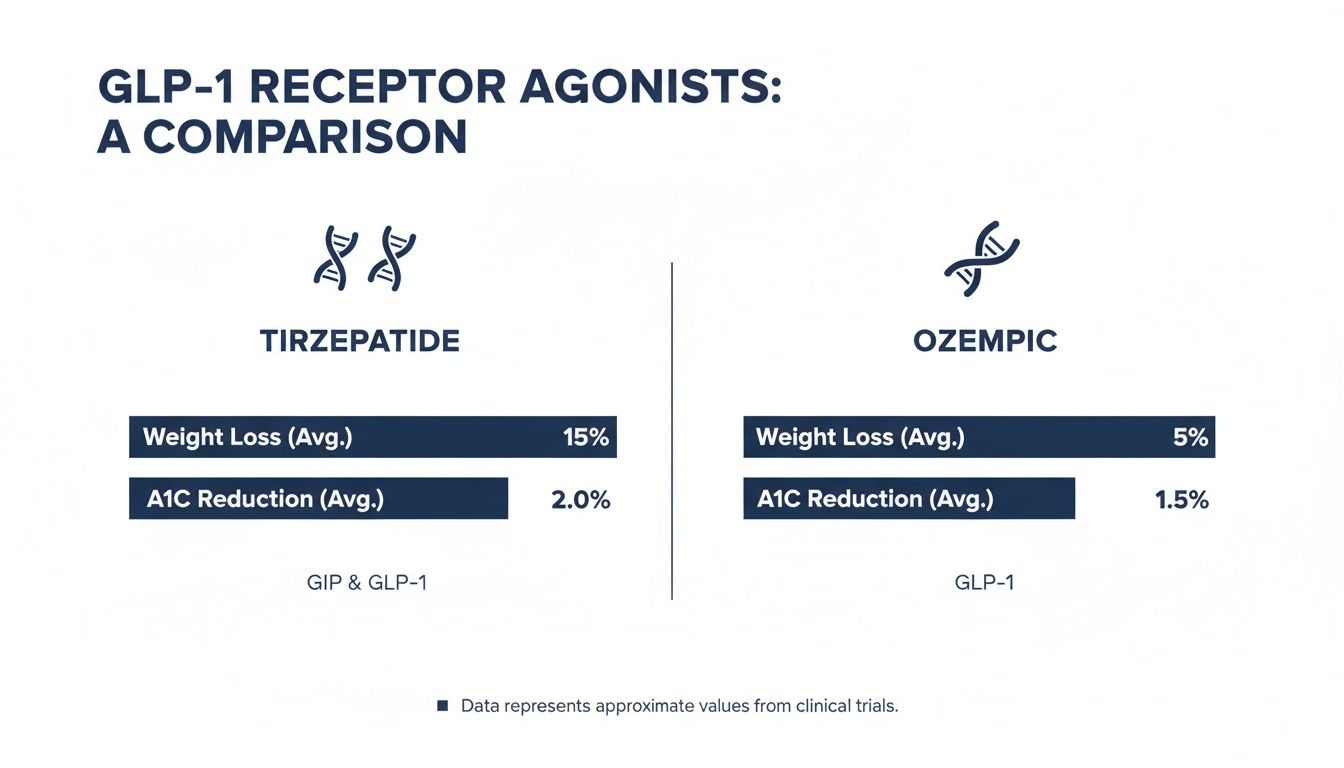
As you can see, tirzepatide's approach of targeting two different hormone receptors often leads to more significant weight loss and better blood sugar control than Ozempic's single-receptor action.
A Closer Look at The Weight Loss Data
When you put these two medications head-to-head, the numbers are quite clear. In trial after trial, tirzepatide has shown a higher average percentage of body weight loss. This isn't surprising, given it targets both GLP-1 and GIP pathways, creating a stronger effect on both appetite and metabolism.
So, what does that look like in practice? Major clinical trials showed patients on higher doses of tirzepatide achieved an average body weight reduction of 20-25% over 72 weeks. For comparison, similar studies for semaglutide showed an average loss of about 15%. That's a substantial difference.
If you're curious about what those percentages mean in real pounds, our guide on how much weight you can lose on tirzepatide offers some helpful examples and timelines. This higher potential makes tirzepatide a very compelling choice, especially for people with a significant amount of weight to lose or those who haven't had success with other treatments.
To give you a quick snapshot, here’s a simple table breaking down the key differences.
Tirzepatide vs. Semaglutide (Ozempic) at a Glance
| Feature | Tirzepatide | Semaglutide (Ozempic) |
|---|---|---|
| Mechanism of Action | Dual-agonist (GLP-1 and GIP) | Single-agonist (GLP-1) |
| Average Weight Loss | 20-25% at higher doses | Around 15% |
| Dosing Schedule | Once-weekly injection | Once-weekly injection |
| Primary Use | Type 2 Diabetes & Weight Management | Type 2 Diabetes & Weight Management |
This table highlights why tirzepatide is often considered the more powerful option specifically for weight loss, thanks to its broader hormonal impact.
Impact on Overall Metabolic Health
Weight management is about so much more than the number on the scale. These medications can bring about profound improvements to your overall metabolic health, which is the ultimate goal for longevity.
Both drugs are fantastic at improving blood sugar control. Clinical trials have repeatedly shown that both tirzepatide and semaglutide significantly lower A1C levels—a key measure of your average blood sugar over three months.
While both medications work well, some head-to-head studies suggest tirzepatide may lead to slightly greater reductions in A1C. This could be particularly important for anyone whose weight loss journey is closely tied to improving their metabolic numbers.
On top of that, many patients see positive shifts in other critical health markers. These often include:
- Improved Cholesterol Levels: Weight loss frequently helps lower LDL ("bad") cholesterol and triglycerides.
- Lower Blood Pressure: Losing excess weight reduces the strain on your heart and entire cardiovascular system.
- Reduced Inflammation: Excess weight is linked to chronic, low-grade inflammation, and these medications can help bring that down.
These changes all work together to create a healthier, more resilient you.
Understanding Dosing And Your Treatment Journey
The day-to-day experience of starting these medications is also worth considering. Both tirzepatide and semaglutide are administered as a simple once-weekly injection, but the dosing schedules are not identical.
Both treatments start with a process called titration. This just means you'll begin on a very low "starter" dose, which your provider will gradually increase over several weeks or months. This slow and steady approach is crucial.
The reason for titration is to help your body get used to the medication gently. It’s the best way to minimize the potential for gastrointestinal side effects like nausea, which are most common when you first begin treatment. Your provider at Blue Haven Rx will tailor a plan just for you, based on your medical history and how you feel on the initial doses.
Understanding Side Effects and Safety Profiles

Starting any new medication comes with questions, and "Is it safe?" is usually at the top of the list. When we look at tirzepatide vs. Ozempic, the good news is that their safety profiles are very similar. Since they work in similar ways in the body, the side effects they cause often overlap.
The most common side effects are gastrointestinal. This makes sense when you remember these drugs work by slowing down your digestion to make you feel full. As your system adjusts, you might experience some nausea, diarrhea, constipation, or general stomach upset.
For most people, these issues are mild and tend to fade as the body gets used to the medication. This is why we always start with a low dose and increase it slowly—it’s the best way to ease into treatment and minimize discomfort.
Managing Common Side Effects at Home
While nobody enjoys side effects, they are usually quite manageable with a few simple adjustments to your routine. These practical tips can have a huge impact on how you feel, especially in those first few weeks.
- Eat Smaller, More Frequent Meals: This gives your digestive system less work to do at one time. Smaller portions spaced throughout the day are much easier to handle than three large meals.
- Stay Well-Hydrated: This is a big one. Sipping water all day can help ease both nausea and constipation, supporting your digestion and overall health.
- Choose Bland Foods: If your stomach feels unsettled, stick with the basics. Simple, low-fat foods like crackers, toast, or clear broths can be soothing. This is a good time to avoid spicy or greasy meals.
- Listen to Your Body: This is key. These medications change your hunger signals, so you have to learn your new "full" cue. Stop eating when you feel satisfied, not stuffed.
Honest communication with your medical team is crucial. For a deeper dive, check out our guide on managing GLP-1 medication side effects.
The journey to better health should feel supportive, not stressful. Most side effects are temporary and a sign that the medication is beginning to work with your body’s metabolic systems.
Important Safety Considerations
Beyond the common stomach issues, there are more serious warnings for both tirzepatide and semaglutide that are important to discuss. This is crucial for making sure this is the right and safe choice for you.
Both medications come with a warning about a potential risk of a rare type of thyroid tumor called medullary thyroid carcinoma (MTC). Because of this, these drugs are not for anyone with a personal or family history of MTC. They're also not an option for people with an endocrine condition called Multiple Endocrine Neoplasia syndrome type 2 (MEN 2).
Other serious, though less common, side effects can include pancreatitis (inflammation of the pancreas), gallbladder problems, or changes in vision. It is essential to discuss your entire medical history with your provider. This is why the thorough telehealth consultation at Blue Haven Rx is so important—it ensures the path we choose is not only effective but, above all, safe for you.
Which Medication Fits Your Real-World Needs
Clinical trial data is one thing, but your personal health story is what truly matters when choosing between medications like tirzepatide and Ozempic. The best option is the one that fits into your life, targets your specific challenges, and helps you reach your wellness goals.
Let's walk through a few common scenarios. Think of it like planning a trip: both medications can get you to a healthier destination, but they travel slightly different roads.
For The Person Hitting a Weight Loss Plateau
We see this often. Someone has been doing everything right—eating well, exercising—but the scale is stuck. For this person, tirzepatide can be the breakthrough they need.
Because it targets two different hormone receptors (GLP-1 and GIP), tirzepatide gives your metabolism a more powerful nudge. The clinical evidence backs this up, consistently showing higher average weight loss. When you’ve hit a wall, tirzepatide’s potent action can be the key to getting things moving again.
For The Individual Sensitive to Side Effects
Now, let's consider someone else. They are motivated for a change, but their body is sensitive to new medications, especially when it comes to digestive issues. They want an effective treatment but need to ease into it gently.
In this situation, semaglutide (Ozempic) is often a great starting point. While both medications require a slow dose increase, semaglutide has a very well-established titration schedule. This slow and steady ramp-up gives the body plenty of time to adapt, which can significantly reduce the intensity of side effects. It’s a reliable, proven path that prioritizes a smoother transition.
Your comfort is key. A medication only works if you can stick with it, so finding one that your body tolerates well is a huge part of long-term success.
Special Considerations for Menopausal Women
The tirzepatide vs. Ozempic conversation is particularly important for women in perimenopause and menopause. Hormonal shifts during this time can disrupt metabolism, often leading to stubborn weight gain, especially around the midsection.
This is where tirzepatide's dual-action mechanism can be a game-changer for healthy living. By influencing two distinct hormonal pathways, it offers a more robust answer to the metabolic slowdown that comes with changing estrogen levels. At Blue Haven Rx, we understand these life stages and can help you find a solution that works with your body.
In the rapidly expanding market for GLP-1 medications, tirzepatide is quickly gaining on Ozempic's leadership, largely due to its impressive weight loss results. To put it in perspective, Ozempic, made by Novo Nordisk, achieved a massive USD 22.3 billion global market valuation in 2025 and is projected to climb to USD 58.4 billion by 2035. A significant portion of this growth, 57% in 2025, came from its use in treating type 2 diabetes. You can explore more Ozempic market trends on futuremarketinsights.com. This context underscores just how significant these treatments have become in modern healthcare.
No matter which of these scenarios sounds more like you, the next step is a one-on-one conversation. Ready to find out if a GLP-1 medication could be the right fit for your journey?
So, How Do I Get Started?
Deciding between tirzepatide and Ozempic is a big step, but you don't have to figure it out alone. While the clinical data might point toward tirzepatide for more significant weight loss and semaglutide as a rock-solid, proven option, the right choice is always personal. At Blue Haven Rx, our whole process is designed to make this journey straightforward and supportive.
We've built our telehealth service to cut through the usual red tape. Forget confusing insurance paperwork and long waits for an appointment. We've created a simple, patient-first system that puts you in control of your health.
Your Path to Treatment
Getting started with us only takes a few steps, and you can do it all from the comfort of your home. We believe in making top-tier medical care easy to access and stress-free.
Here’s how it works:
- Take a Quick Online Quiz: Everything starts with our simple, confidential online health quiz. This gives us a baseline understanding of your health history and goals, helping us see if you’re a good candidate.
- Chat with a Medical Provider: You'll connect with a licensed U.S. medical provider for a virtual consultation. They’ll go over your information, walk you through your options—including a real discussion about tirzepatide vs. Ozempic—and map out a treatment plan that makes sense for you.
- Get Your Medication Delivered: Once your plan is in place, your medication is shipped discreetly right to your door.
What Makes Blue Haven Rx Different
Our approach is grounded in transparency and ongoing support. We have clear, upfront pricing with no hidden fees, so you'll never be surprised. Plus, our dedicated care team is with you for the long haul, ready to answer questions and offer guidance whenever you need it.
We see ourselves as more than just a prescription service. We're your partners in health. Our goal is to give you the tools and support you need to make a real, lasting change for a longer, healthier life.
Whether you're looking into GLP-1 medications for weight management or are curious about other wellness treatments like NAD+ for healthy aging, we're here to help guide you.
Taking that first step is often the hardest part. Learn more about how a medically supervised weight management program could be the right move for you. It's time to start your journey toward a healthier, more vibrant life.
Frequently Asked Questions About GLP-1 Medications
It's completely normal to have questions when you're considering a new treatment path. Here are answers to some of the most common things we discuss with patients comparing tirzepatide vs. Ozempic.
Can I Switch From Semaglutide to Tirzepatide?
Yes, it's possible to switch, but this is a decision that must be made with your healthcare provider. You can't just stop one and start the other.
Your provider will map out a specific transition plan for you. This often involves a short "washout" period where you're off the first medication before starting the new one. They'll also be very particular about your new starting dose to keep side effects to a minimum.
How Long Will I Need to Be on This Medication?
Think of this as a long-term strategy for your health, not a temporary diet. How long you stay on a GLP-1 medication depends on your individual goals, how your body is responding, and your provider's clinical judgment.
The real aim is to get you to a healthier weight and help you lock in new, sustainable habits that will benefit you for years to come, contributing to your overall longevity.
The most successful outcomes occur when these medications are viewed as a tool to support a broader lifestyle transformation, not just a short-term fix.
What Lifestyle Changes Will Help Me Succeed?
These medications work best when they're part of a bigger picture of healthy living. You don’t have to overhaul your life overnight, but small, consistent changes make a huge difference in your results. Here are a few practical tips:
- Eat for fuel and fullness: Focus your meals around lean protein, fiber-rich vegetables, and whole grains. This combination helps manage appetite and keeps you nourished.
- Find movement you enjoy: You don't have to live at the gym. Regular activity like brisk walking, swimming, or even light strength training can significantly boost your progress.
- Hydration is key: Drinking plenty of water is essential. It helps with potential side effects like nausea and is crucial for your overall metabolism.
Exploring low sugar snack options for diabetics is a great practical step to support your treatment goals without derailing your progress.
Is It Safe to Get These Medications Through Telehealth?
Yes, provided you're working with a legitimate and trustworthy provider like Blue Haven Rx. Our platform was built with patient safety as the number one priority.
We connect you with licensed U.S. medical professionals who perform a comprehensive review of your health history to determine if a GLP-1 medication is a safe and appropriate choice for you. From there, you get ongoing access to our care team to support you every step of the way.
At Blue Haven Rx, our job is to give you clear, honest information and the support you need to reach your health and wellness goals. If you're wondering whether a GLP-1 medication could be right for you, the first step is simple.
Take the first step on your health journey with our simple quiz.