
Tirzepatide Not Working Anymore? Reignite Your Weight Loss Journey
It can be an incredibly frustrating feeling. You feel like you're doing everything right, but the number on the scale just won't budge. If you've found yourself thinking, “tirzepatide is not working anymore,” please know you are not alone. This is a common part of any weight management journey. It’s not a sign of failure; it’s a sign that your body is adapting.
This guide is here to walk you through it in a clear, friendly way. We'll explore the common reasons for a stall—from your body's natural adjustments to hidden lifestyle habits—and give you practical steps to break through and get back on track.
Has Your Tirzepatide Journey Hit a Plateau?

When tirzepatide seems to lose its effectiveness, there's rarely a single, simple reason. More often, hitting a weight loss plateau is just your body's natural response to significant change. As you shed pounds, your metabolism naturally slows down a bit. This means the diet and exercise strategies that delivered quick results at the start might need a little tweaking for this new phase of your healthy living journey.
A great starting point is understanding the science behind the medication, which you can explore in our guide on how tirzepatide works.
Why Consistency Is the Secret Weapon
Staying the course is critical for long-term health, but it's also where many people stumble. Real-world data reveals that a major reason tirzepatide seems to "stop working" is that people stop taking it consistently. One study found that a staggering 55.9% of patients discontinue their prescription within the first 12 months.
This happens even though tirzepatide can deliver incredible results. Users are often more likely to achieve 5%, 10%, or even 15% body weight loss than with other medications. This contrast highlights just how vital it is to have consistent support to navigate the bumps in the road and stick with it for long-term wellness. You can explore more findings about medication adherence here.
We get that this journey is deeply personal. Our goal is to give you the tools and confidence to overcome this common hurdle. By figuring out what's causing your stall, you can get back to making progress toward your health and longevity goals.
Understanding Why Your Progress Might Have Slowed
When tirzepatide seems less effective, it's rarely because of one single thing. Think of your body as a smart system that’s always trying to find balance. It learns, it adapts, and it adjusts. So, if you've hit a wall and are wondering why tirzepatide is not working anymore, it’s often just your body’s natural adaptation process at work.
This isn’t a sign you've failed. It’s a signal that your strategy needs a tune-up. By digging into the common reasons for a stall, you can make smart, targeted adjustments to get things moving again. Let's break down the five most common culprits.
A Quick-Glance Guide to Stalled Progress
Sometimes it helps to see all the potential reasons laid out in one place. Use this table to quickly identify what might be happening on your journey and what your first move should be.
| Potential Cause | What It Means | First Step to Troubleshoot |
|---|---|---|
| Metabolic Adaptation | Your body has become more efficient and now burns fewer calories at rest. | Re-evaluate your calorie intake and activity level to match your new metabolism. |
| Dosage Needs | The dose that worked initially may no longer be strong enough to produce results. | Talk to your healthcare provider about whether a dose adjustment is appropriate. |
| Lifestyle Habits | Small slips in diet, exercise, or sleep are counteracting the medication's effects. | Honestly track your nutrition, activity, and sleep for a week to find patterns. |
| Medication Logistics | Incorrect storage, injection technique, or inconsistent timing is reducing effectiveness. | Double-check storage instructions and review your injection routine for consistency. |
| Side Effects | Nausea or fatigue may be causing you to miss workouts or delay doses unintentionally. | Document your side effects and discuss management strategies with your provider. |
Now, let's explore each of these points in a little more detail to give you a clearer picture.
1. Your Body Has Adapted Metabolically
One of the most common reasons for a slowdown is something called metabolic adaptation. As you successfully lose weight, your body gets smaller. A smaller body simply requires less energy—fewer calories—to keep everything running. The calorie deficit that kickstarted your weight management might now just be your new daily maintenance level.
This is a totally normal biological response. Your body doesn't realize you're trying to lose weight for your health; it just senses it's getting less fuel and cleverly adjusts its "burn rate" to be more efficient. This is a classic weight loss plateau, and it means it's time for your strategy to evolve right along with your body. You can learn more by reading our detailed article on what causes weight loss plateaus.
2. Your Dosage Needs May Have Evolved
Tirzepatide treatment almost always starts with a low dose that is slowly increased over time. This "start low, go slow" approach is designed to help your body get used to the medication and keep side effects to a minimum. That initial 2.5mg dose, for instance, is just a stepping stone—it's not the dose where most people experience the most significant results.
If you’ve been on the same lower dose for a while, it might just not be strong enough anymore to overcome your body's new metabolic set point. Your progress may have stalled simply because your current dose has done all it can. This is a great time to have a chat with your healthcare provider about whether a dose adjustment is the right next step for you.
3. Lifestyle Habits Are Playing a Crucial Role
Medication is a powerful partner, but it can't do all the work on its own. Research confirms that combining tirzepatide with intentional lifestyle changes delivers the biggest, most sustainable results for healthy living.
It's a good time to take an honest look at your daily habits.
- Nutrition: Are you getting enough protein to protect your muscle and feel full? Are you keeping an eye on portion sizes and sneaky calories from drinks or snacks?
- Activity: Are you moving your body regularly? A good goal is about 150 minutes of moderate activity a week, plus strength training twice a week to keep your metabolism-revving muscle.
- Sleep and Stress: Are you getting 7–9 hours of quality sleep most nights? Chronic stress and lack of sleep can spike cortisol, a hormone that encourages your body to store fat and can trigger cravings.
Even small, unintentional slips in these areas can add up and quietly bring your progress to a halt.
4. Medication Logistics Could Be Off
Sometimes the problem isn't your body at all—it's something much more practical. The effectiveness of tirzepatide can be impacted if it isn't being stored or administered correctly.
A practical tip is to set a weekly reminder on your phone. Consistency in your medication routine is key. Missing doses or stopping and restarting can reduce the medication's effectiveness because it disrupts the steady level of the drug in your system.
Take a minute to review your process:
- Proper Storage: Is your medication being stored at the right temperature, far from extreme heat or cold?
- Injection Technique: Are you rotating your injection sites between your abdomen, thigh, or upper arm? Using the same spot over and over can lead to poor absorption.
- Consistency: Are you taking your dose on the same day each week?
These little details are essential for making sure the medication can do its job properly.
5. Side Effects Are Impacting Your Consistency
Finally, a sneaky reason for a stall can be the side effects themselves. If you're dealing with persistent nausea, bloating, or fatigue, it can unintentionally throw off your entire routine. You might eat less than you should, feel too drained for a workout, or even put off your next dose just to feel better.
Those feelings are completely valid, but the inconsistency they create can stop your momentum. The key is to manage the side effects so you can stay on your routine. Talking about them with your provider can lead to simple fixes that help you feel better, stay consistent, and get back to making progress.
How Side Effects Can Disrupt Your Momentum
It’s frustrating when you feel like you're doing everything right, but the scale won’t budge. You're taking your tirzepatide on schedule, but the results have stalled. Sometimes, the answer isn't that tirzepatide is not working anymore; it's that the side effects are quietly sabotaging your efforts.
Persistent nausea, a constant feeling of being bloated, or general digestive upset are more than just uncomfortable. They can disrupt the very habits that drive weight management. When you feel off, you’re less likely to eat a nourishing meal, you might skip your workout, or you might not have the energy to stay active. Over time, these little disruptions can break the consistent routine your body needs.
When Feeling Unwell Slows You Down
Think of side effects as unexpected detours on your health journey. They don’t change your destination, but they can slow you down if you don't know how to navigate them.
For example, if you get a wave of nausea after your injection, you might barely eat for a day. The problem is, that can trigger intense rebound hunger later, making it tempting to grab whatever easy, high-calorie comfort food is nearby.
Likewise, fatigue can make the idea of exercising feel impossible. Missing those workouts means you're not building the muscle that helps keep your metabolism humming. These are normal reactions, but they can create an inconsistent pattern that often leads to a weight loss plateau. The trick is to see these side effects as a manageable challenge.
Practical Tips for Soothing Your System
Getting a handle on side effects is all about making your experience more comfortable so you can stick with your plan. Often, small tweaks to your daily routine can make a world of difference in how you feel, helping you stay consistent with your medication, diet, and activity.
Here are a few simple, practical tips to try:
- Eat Smaller, More Frequent Meals: Instead of three big meals, try five or six small ones throughout the day. This keeps your stomach from getting overwhelmed and can help manage nausea.
- Prioritize Protein and Fiber: Focus your meals on lean proteins, lots of veggies, and whole grains. These foods digest more slowly, which helps keep your blood sugar stable and keeps you feeling full without the bloat.
- Hydrate Between Meals: Sipping water all day is crucial, but try to drink most of it between meals rather than during them. This can help reduce that uncomfortable feeling of fullness.
- Identify Your Trigger Foods: Pay close attention to how you feel after you eat certain things. For many people, greasy, spicy, or super sugary foods make side effects worse. A simple food journal is a great way to connect the dots.
For a more comprehensive look at managing these issues, our guide offers extra advice on handling GLP-1 medication side effects.
Side Effects vs. Ineffectiveness
It's important to understand the difference between feeling unwell and the medication not working. The two are not the same thing. In fact, research shows that while gastrointestinal side effects are common, they are not the primary driver of weight loss. Even when you're feeling off, tirzepatide is most likely still doing its job on a metabolic level.
The real risk is that these side effects can make people want to quit their treatment. By learning to manage these symptoms, you give yourself the best shot at staying the course and hitting your long-term health goals.
Learning to work with your body is a huge part of long-term success. By being proactive about managing side effects, you can maintain the consistency that’s so critical for pushing past a plateau.
A Step-By-Step Guide to Breaking Your Plateau
It can be discouraging when you feel like you’ve hit a wall and your progress has stopped. But don't lose heart. More often than not, this is just a signal that it’s time to take a closer look at your routine and make some smart adjustments. If you're thinking, “Tirzepatide is not working anymore,” it’s the perfect time to play detective.
Think of this as an opportunity to tune into your body. By systematically walking through the possibilities, you can often pinpoint the small changes that will get things moving again.
Step 1: Double-Check Your Medication Routine
Before you dive into diet or exercise, let's start with the basics: the medication itself. You'd be surprised how often tiny inconsistencies here can have a major impact.
Take a quick audit of your process:
- Proper Storage: Is your medication being stored correctly? It needs to be kept at the right temperature, as big temperature swings can weaken its potency.
- Injection Site Rotation: Are you moving your injection sites around? Sticking to the same spot on your abdomen, thigh, or upper arm can lead to poor absorption over time.
- Consistent Timing: Are you taking your dose on the same day each week? A consistent schedule is key to maintaining a steady, effective level of the medication in your system.
Step 2: Track Your Intake for One Week
Next, take an honest look at your nutrition. It is easy for extra calories to sneak into our day unnoticed. A splash more creamer in your coffee or a handful of nuts while cooking can add up.
For just one week, keep a simple food log. The goal isn't to judge yourself, it's simply to gather data. Jot down what you eat and when you eat it. This simple act of observation often shines a light on patterns you never knew were there. A practical tip is to focus on food quality. Making specific swaps, like opting for high fiber low carb snacks, can sometimes be enough to kickstart your progress.
Step 3: Evaluate Your Foundational Habits
Weight management is more than just medication and food. Your foundational habits—the pillars of your daily life—play a massive role in your metabolism and overall wellness. Let's talk about two of the biggest ones: sleep and hydration.
Being chronically sleep-deprived can spike your cortisol levels. Cortisol is a stress hormone that tells your body to store fat. Meanwhile, your brain can easily mistake thirst for hunger, tricking you into snacking when all you really need is a glass of water.
Ask yourself: Are you getting 7-9 hours of quality sleep most nights? Are you sipping water consistently throughout the day? Fixing shortfalls in these areas can have a powerful ripple effect on your weight management efforts.
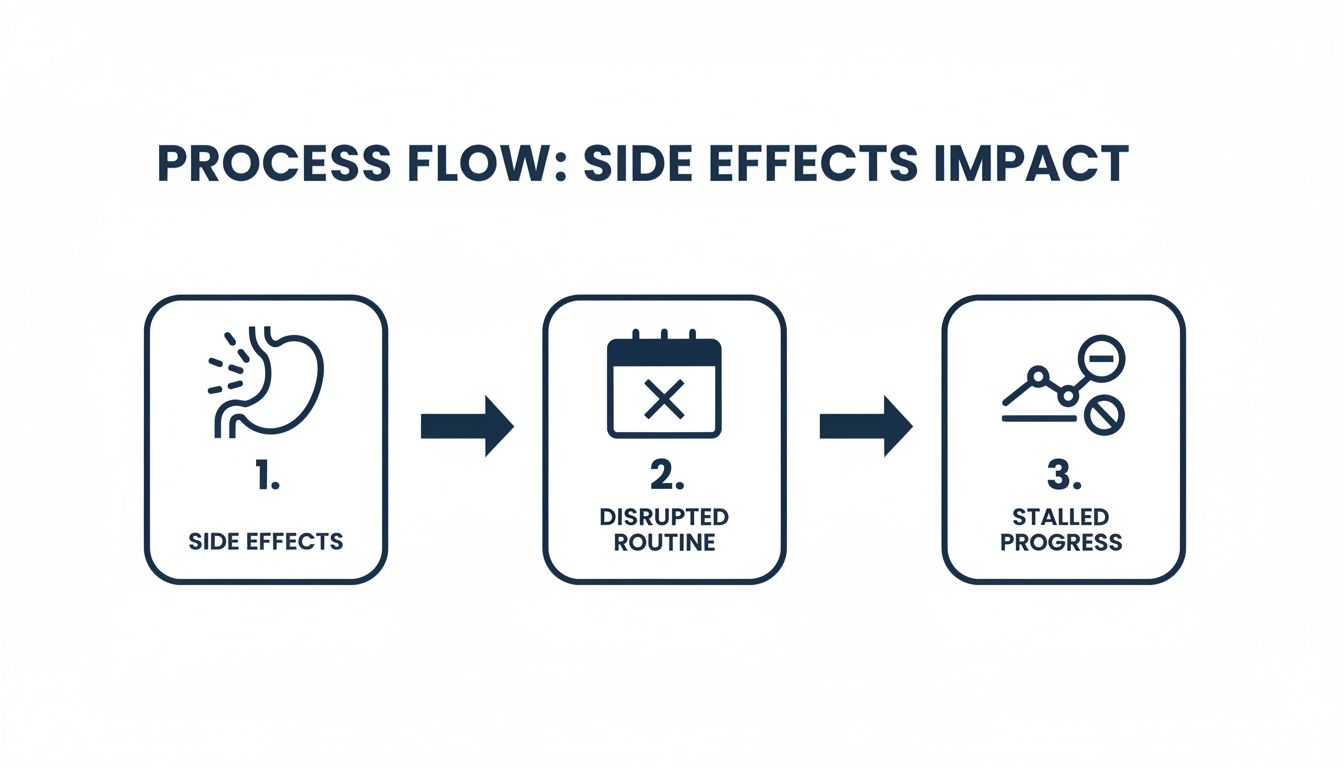
Sometimes, side effects can throw these foundational habits off course, creating a domino effect that stalls your progress.
Step 4: Assess Your Stress Levels
Stress is the silent saboteur of many weight loss journeys. When you're constantly under pressure, your body pumps out cortisol, which not only encourages fat storage but can also ramp up cravings for high-sugar, high-fat comfort foods.
Take a moment for a real self-check-in. How are your stress levels? Do you have healthy outlets for managing it, like going for a walk, practicing mindfulness, or calling a friend? Managing stress is a critical part of the puzzle for healthy living.
Step 5: Know When to Discuss a Dose Adjustment
So, you’ve gone through all the steps. You’re storing and taking your medication perfectly, your diet is on point, you’re sleeping well, and you’re managing stress. If you're doing everything right and the scale still won't move, it might be time for a chat with your doctor.
It's completely normal for your dosage needs to evolve as your body changes. The dose that helped you at the beginning might not be what you need now. A simple dose adjustment, guided by your healthcare provider, could be the key to getting things moving again.
The Importance of Professional Guidance on Your Journey

Trying to figure out a weight management plan by yourself can feel overwhelming, especially when you hit a plateau. It's frustrating and easy to start thinking tirzepatide is not working anymore. This is exactly the moment when having a medical professional in your corner becomes your most powerful tool.
You're not just getting a prescription; you're getting a partner who understands the science behind how tirzepatide works and can help you make sense of your body’s signals. A qualified provider helps you see the difference between a temporary stall and a real signal that your strategy needs to change for long-term health.
Why a Medical Partner Is Crucial for Success
A telehealth provider is more than a prescription writer. Think of them as your co-pilot, helping you look at your progress, manage side effects, and figure out if a dose adjustment is the right call for you. That personalized oversight is what keeps you both safe and on the path to success.
Without that partnership, it’s a real struggle to stay consistent—and consistency is everything for longevity. Research shows just how tough it can be to stick with it long-term. One study revealed that for patients taking tirzepatide without type 2 diabetes, discontinuation rates were a staggering 64.8% by the one-year mark. This data sheds light on why so many people feel the medication "stops working"; it's hard to stay on track without a solid support system.
How Telehealth Bridges the Support Gap
This is where the convenience of telehealth really changes the game for modern adults. Services like Blue Haven Rx give you that essential partnership, connecting you with licensed doctors who genuinely understand the nuances of GLP-1 treatments for weight management.
This modern approach to healthcare offers clear advantages:
- Convenience: You can chat with your doctor right from your living room, which makes it easier to keep up with regular check-ins.
- Accessibility: It cuts out the hassle of travel time and scheduling conflicts, making sure you can get advice when you need it.
- Specialized Knowledge: You’re connected with medical professionals who focus on weight management and can offer practical, effective advice for healthy living.
With this level of support, you’re never left second-guessing yourself. You have an expert on your team to help you navigate obstacles and move closer to your goals safely. You can learn more in our guide on using telehealth for weight loss.
A knowledgeable provider can look at your whole picture—from your medication schedule to your diet and activity levels. They can help pinpoint the subtle things that might be holding you back and lay out a clear plan to get things moving again.
What To Do When You Hit a Wall
Hitting a weight loss plateau can feel like running into a brick wall. It’s frustrating, and it's easy to get discouraged. But it's crucial to remember that this isn't the end of the road—it's just a sign that it's time to re-evaluate your strategy for your long-term health.
Think of it this way: your body is an incredibly smart, adaptive machine. What worked wonders for the first few months might need a little tweaking now. That's a completely normal part of the process.
It's More Than Just the Medication
Success with a GLP-1 medication like tirzepatide isn't just about the weekly injection. It's about building a foundation of healthy habits that support the medication's work. These habits are what turn short-term results into lasting wellness and longevity.
Here are a few actionable insights:
- Take an Honest Look at Your Lifestyle: How have your eating habits, activity levels, sleep, and stress been lately? Sometimes, small shifts in these areas are all it takes to halt your progress. A minor adjustment can be the key.
- Don't Suffer Through Side Effects: If side effects are making it hard to stay consistent, talk to your provider. They can offer simple solutions to manage discomfort so you can stick with your plan.
- Ask for Help: If you feel like tirzepatide is not working anymore, reaching out for professional guidance is the smartest move you can make. A telehealth provider can help you figure out what's going on and adjust your treatment safely.
Think of this as a partnership. It's you, your medication, and your healthcare team all working together toward your health goals.
By pairing tirzepatide with these mindful lifestyle changes and expert support, you can get past this hurdle and back on track toward a healthier, more vibrant life.
Common Questions About Tirzepatide Plateaus
When you're on a weight loss journey, hitting a wall can be frustrating. If you're starting to wonder, "why isn't tirzepatide working anymore?" you're not alone. Let's tackle some of the most common questions we hear.
Can You Build a Tolerance to Tirzepatide?
This is a great question. It’s less about building a "tolerance" and more about your body adapting to its new normal. As you lose weight, your metabolism becomes more efficient—it simply doesn't need as many calories to run as it used to.
This slowdown isn't a sign that the medication has failed. Think of it as your body's way of telling you it's time for a strategy refresh. It's the perfect opportunity to check in with your healthcare provider and fine-tune your approach to match your new, healthier body.
Should I Switch Medications If Tirzepatide Stops Working?
Jumping to a different medication is rarely the first or best move. Plateaus are a normal part of the weight management process. The most effective solution is usually to troubleshoot what you're already doing with the guidance of a professional. Small, strategic tweaks to your diet, exercise routine, or even your dosage can often be enough to get things moving again.
Changing medications should always be a collaborative decision with your doctor after you've both taken a close look at your entire wellness journey.
How Long Does a Weight Loss Stall Typically Last?
There's no magic number here. A weight loss stall could last a few weeks or even a couple of months. The duration depends on individual factors, from how consistent you are with your habits to your body's unique metabolic response.
During a plateau, patience is your best friend. It’s easy to get discouraged, but remember that this is almost always a temporary phase. Sticking with your healthy habits is the surest way to break through and continue on your path to healthy living.
Your health journey is your own, but you don’t have to walk it alone. Blue Haven Rx is here to provide the expert medical guidance and support you need to push past plateaus and achieve long-term success. Take our quiz to get started today.