
Rybelsus vs Mounjaro: An Essential Guide
When you're comparing Rybelsus vs Mounjaro, the main difference comes down to how they work and how you take them. Rybelsus is a daily pill that uses one pathway (GLP-1) to influence your metabolism and support weight management. Mounjaro, on the other hand, is a once-weekly injection that uses two pathways (GLP-1 and GIP), which often leads to more significant weight loss results.
Rybelsus vs Mounjaro: A Practical Overview
Navigating your health and wellness path can feel overwhelming, but understanding these two modern options is a great place to start. Both Rybelsus and Mounjaro are designed to improve metabolic health and are effective tools for weight management. However, their active ingredients and the way they work in your body are quite different—and those differences matter for your lifestyle.
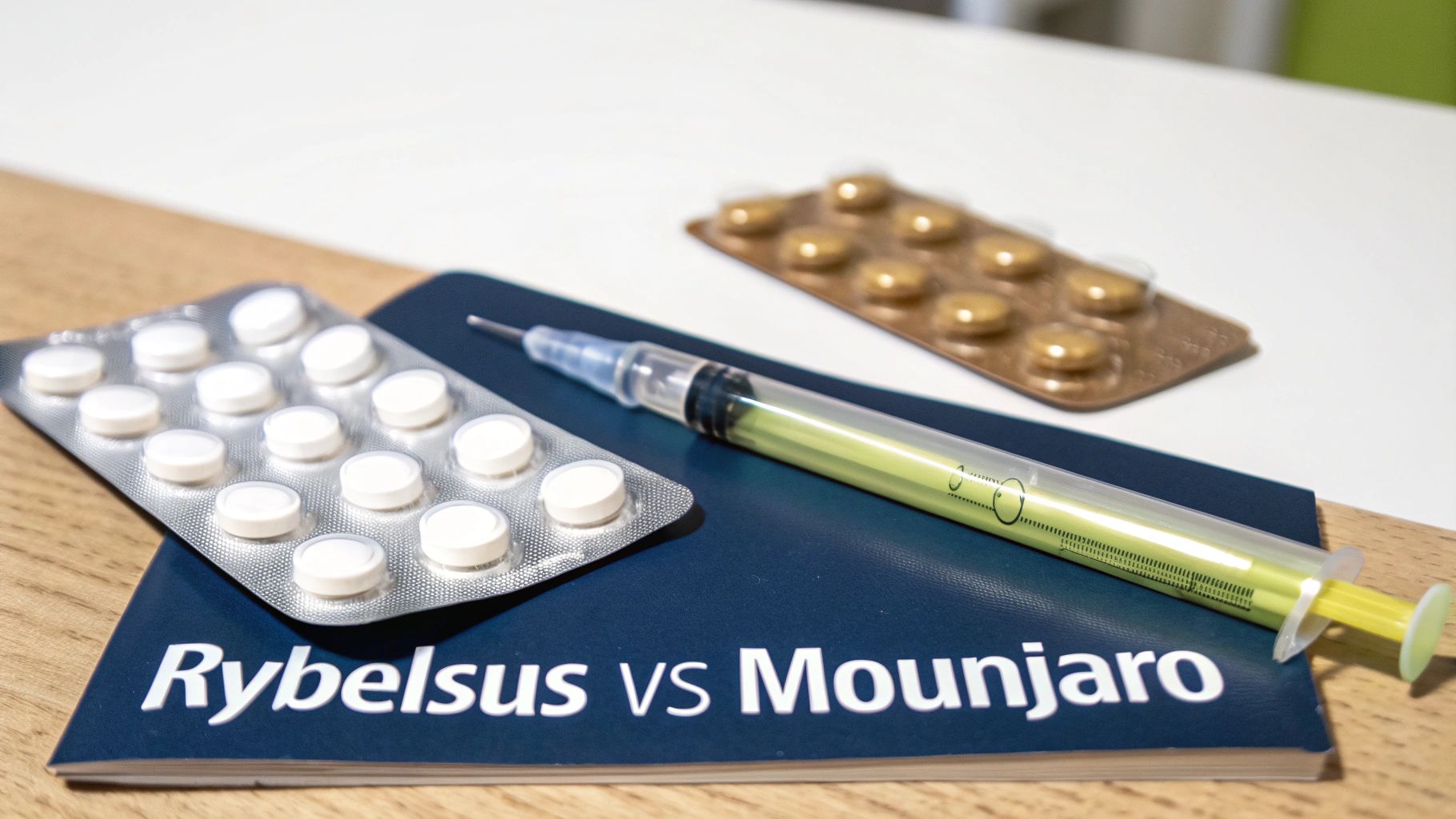
Key Distinctions at a Glance
Let's break down the core differences in a simple format. This table gives you a quick, side-by-side look at what sets these two apart.
Rybelsus vs Mounjaro Key Distinctions
| Feature | Rybelsus (Semaglutide) | Mounjaro (Tirzepatide) |
|---|---|---|
| Administration | Daily oral tablet | Once-weekly injection |
| Active Ingredient | Semaglutide | Tirzepatide |
| Mechanism of Action | GLP-1 receptor agonist | Dual GLP-1/GIP receptor agonist |
| Typical Use Case | Best for those who strongly prefer a non-injectable, daily routine. | Ideal for those seeking the highest level of efficacy with a once-weekly schedule. |
For many people, the decision starts with a simple question: a daily pill or a weekly shot? Rybelsus is a wonderful option for anyone who wants to avoid needles. Mounjaro’s weekly schedule, however, offers a "one-and-done" convenience that fits seamlessly into a busy life.
The choice often pits lifestyle preference against potency. Rybelsus is a fantastic and effective oral option, but Mounjaro's dual-action design often delivers a more powerful impact on appetite and metabolism.
Understanding Your Options
Both medications represent a modern, science-backed approach to weight management. They work by mimicking hormones your body naturally produces to tell your brain you're full. This can dramatically quiet "food noise" and make sticking to healthier habits feel less like a daily struggle.
Ultimately, there's no single "better" option—it's about what aligns with your health history, your goals, and your daily life. To get a bigger picture, it can be helpful to explore the different types of prescription weight loss medication available today.
This guide will walk you through everything you need to know about the Rybelsus vs Mounjaro choice, so you can feel confident and informed.
How Each Medication Supports Your Metabolism
To make the best choice for your health journey, it helps to understand how these medications actually work inside your body. While both Rybelsus and Mounjaro are excellent tools for weight management, they use different biological pathways. Think of it as two different routes leading to the same destination: a healthier, longer life.

Rybelsus: A Singular Focus on GLP-1
Rybelsus is built around its active ingredient, semaglutide. This places it in a class of drugs known as GLP-1 (glucagon-like peptide-1) receptor agonists. That sounds complex, but the concept is actually quite simple. It mimics a natural hormone your gut releases after you eat.
This hormone sends a direct signal to your brain that says, "I'm full, you can stop eating." By using this single, powerful pathway, Rybelsus helps to:
- Reduce appetite and cravings, which is a huge help in quieting that constant "food noise."
- Slow down how quickly your stomach empties, helping you feel satisfied for much longer after a meal.
- Promote stable blood sugar levels, a cornerstone of good metabolic health and longevity.
This targeted approach is very effective for many people. If you want to dive deeper, you can learn more about how it works on our blog: https://www.bluehavenrx.com/blogs/health/how-does-rybelsus-work.
Mounjaro: A Powerful Dual-Action Approach
Mounjaro takes a more comprehensive approach with its active ingredient, tirzepatide. It’s what’s known as a dual-agonist because it works on two different hormone receptors, not just one. It targets the same GLP-1 receptor as Rybelsus, but it also targets another key receptor called GIP (glucose-dependent insulinotropic polypeptide).
This two-pronged approach creates a powerful synergy, amplifying the benefits for both appetite control and overall metabolic function. It’s this dual-agonist mechanism that often leads to more significant results in both blood sugar control and weight loss.
The key takeaway is this: While Rybelsus fine-tunes one crucial metabolic signal, Mounjaro amplifies two. This dual action is often what contributes to the more significant weight loss results seen in many individuals comparing Rybelsus vs Mounjaro.
While we're focused on these specific medications, it’s always interesting to see how other compounds can support a healthy metabolism. For instance, you might find this discussion on how creatine influences fat loss and metabolism useful as part of a wider wellness strategy.
Ultimately, knowing how these drugs work differently helps you and your provider decide which one is better suited to your specific health profile and weight management goals.
How They Stack Up: Real-World Results and Efficacy
When you're choosing a path for weight management, the bottom-line question is always, "How well does this actually work?" While both Rybelsus and Mounjaro are powerful tools, clinical data and real-world experience reveal some clear differences. Let's look at what the research means for your health and longevity journey.
The difference in results comes from Mounjaro's dual-action mechanism. By targeting both GLP-1 and GIP hormone pathways, it often drives more significant weight loss and metabolic improvements than single-agonist drugs like Rybelsus. Both medications are excellent at reducing "food noise" and helping your body manage blood sugar, but Mounjaro's design simply gives it more power.
This isn't just a theory; studies consistently back it up. In clinical trials, people taking Mounjaro lost between 15 to 20 pounds over 40 weeks. For comparison, those on the highest doses of Rybelsus lost closer to 10 pounds over a longer period of 52 weeks. The same pattern holds for HbA1c, a key measure of blood sugar control, where Mounjaro tends to deliver more substantial improvements. You can discover more insights about these comparisons here.
What These Results Mean for You
Statistics are one thing, but what does this look like in your daily life? More significant weight loss often translates into health benefits you can really feel.
- Improved Mobility: Losing a higher percentage of body weight can take a massive load off your joints, making activities like walking, gardening, or keeping up with grandkids feel easier.
- Increased Energy: As your metabolic health improves and you carry less weight, it's common to feel a major boost in your overall energy and vitality.
- Better Health Markers: Substantial weight loss is closely tied to better numbers for blood pressure, cholesterol, and other key indicators of long-term health and healthy aging.
While Mounjaro often comes out ahead in direct comparisons, Rybelsus is still a very effective medication. A 5-10% loss of body weight, which is a realistic goal with Rybelsus, is clinically significant and can have a huge positive impact on your health.
Efficacy for Perimenopausal and Menopausal Women
During perimenopause and menopause, hormonal shifts can make managing weight feel like an uphill battle. Metabolism often slows, and fat storage can shift to the midsection. It’s incredibly frustrating.
In this scenario, a more potent medication like Mounjaro can be a game-changer. Its powerful effect on insulin sensitivity and appetite control can help counteract the metabolic hurdles of this life stage. Many women find its dual action provides the extra support they need to finally see progress.
That said, the simplicity of Rybelsus as a daily pill can't be overlooked. For someone who wants a steady, needle-free routine, it might be the perfect fit. Different GLP-1 medications offer different levels of support; it's all about finding the right tool for your specific situation.
The choice often comes down to this: are you looking for steady progress with an oral pill, or are you aiming for the most significant results possible with a weekly injection? Thinking through your personal health goals is the best place to start.
How Each Option Fits Into Your Daily Life
The best weight management tool isn't just the one that works in a lab—it's the one you can stick with long-term. When it comes to Rybelsus vs. Mounjaro, the day-to-day practicalities can be a deciding factor. Your personal routine and habits will influence which one feels like a natural part of your healthy lifestyle.

Let’s break down what life actually looks like with each option so you can get a real sense of which one might be the right fit for you.
The Rybelsus Routine: A Daily Commitment
For anyone who wants to avoid needles, Rybelsus is an attractive choice since it’s a pill. But that convenience comes with specific instructions that require a structured morning.
To ensure your body absorbs the medication correctly, you have to take Rybelsus:
- First thing in the morning, on a completely empty stomach.
- With only a small sip of plain water—no more than four ounces.
- You must then wait at least 30 minutes before you can eat, drink anything else, or take other medications.
If you have a predictable morning, this can easily become a simple habit. But for others, that 30-minute waiting period can feel restrictive, especially on busy mornings.
The Mounjaro Method: A Weekly Touchpoint
Mounjaro offers a different kind of convenience with its once-a-week injection. Many people love this "set it and forget it" approach because it frees them from thinking about their medication every single day.
The injection is straightforward and can be done any time of day, with or without food, on whatever day of the week you choose. This flexibility is a huge advantage for those with unpredictable schedules or who travel often.
Ultimately, the decision comes down to a trade-off. Rybelsus offers a needle-free option but requires daily precision. Mounjaro provides maximum flexibility and higher potency in exchange for a quick weekly injection.
Administration and Lifestyle Integration
To see the practical differences, let's put them side-by-side. The table below outlines how each medication fits into daily life, which is often the most important factor for long-term success.
| Aspect | Rybelsus (Oral Pill) | Mounjaro (Injection) |
|---|---|---|
| Morning Routine | Must be taken on an empty stomach with a 30-minute wait. | No impact on morning routine; can be injected any time of day. |
| Frequency | Daily task, requires remembering every single morning. | Weekly task, freeing up mental space on the other six days. |
| Travel | Can be tricky to manage with time zone changes and meal schedules. | Very easy to travel with; just pack the pen for your weekly dose. |
| Flexibility | Low. The morning window is rigid and crucial for effectiveness. | High. Can be taken on any day, at any time that works for you. |
As you can see, it's about which one you can realistically commit to without disrupting your life. Your ability to stay consistent is what will drive your success and help you build a foundation for healthy living.
For a more detailed look at how dosages compare, check out our guide on Tirzepatide vs. Semaglutide dosage for weight loss.
Navigating Potential Side Effects and Safety
Any effective medication has the potential for side effects. Knowing what to expect with Rybelsus vs Mounjaro empowers you to manage them and have a productive conversation with your doctor.
The good news is that both have been studied extensively, so their side effect profiles are well-understood. Most of what you might experience is tied directly to how these medications work to support weight management.
Common Gut-Related Issues
Because these drugs slow down your digestion and send fullness signals from your gut to your brain, the most common side effects are gastrointestinal. This is your body adjusting to a new way of operating.
When you first start either medication or increase your dose, you might experience mild-to-moderate symptoms, such as:
- Nausea and indigestion
- Diarrhea or constipation
- Bloating and stomach discomfort
- Vomiting
For most people, these issues are temporary. They typically lessen as your body adjusts. That's why providers always start you on a very low dose and increase it gradually—it's the best way to minimize these effects.
Practical Tips for Managing Side Effects
You don't just have to wait for side effects to pass. There are simple, practical things you can do to feel better and stay on track with your wellness goals.
- Eat Smaller Meals: A large meal can trigger nausea when your stomach is emptying more slowly. Smaller, more frequent meals are much easier on your system.
- Stay Hydrated: Dehydration can make nausea and constipation feel worse. Keep sipping water throughout the day.
- Choose Bland Foods: If you feel queasy, stick to simple foods like crackers, toast, or rice. Avoid spicy, greasy, or heavy foods until you feel better.
- Listen to Your Body: These medications are great at telling you when you've had enough. Pay attention to that feeling of satisfaction and stop eating then, not when you feel completely stuffed.
Getting a handle on what to expect is a crucial step when starting any new treatment, similar to the importance of understanding medication side effects for other therapies.
Important Safety Information
While most side effects are manageable, there are a few serious warnings for both Rybelsus and Mounjaro. Both have a boxed warning regarding a potential risk of thyroid C-cell tumors.
This warning comes from studies in rodents, and it's not clear if the risk applies to humans. Still, because of this, these drugs are not for people with a personal or family history of medullary thyroid carcinoma (MTC) or Multiple Endocrine Neoplasia syndrome type 2 (MEN 2).
Be completely open with your doctor about your entire health history. It is critical they know about any past issues with your pancreas, kidneys, or gallbladder to ensure they choose the safest, most effective path for you.
Other serious but uncommon risks include pancreatitis, vision changes, and gallbladder problems. Knowing the symptoms—like severe, persistent abdominal pain—is important so you can get medical help right away if needed.
When used correctly under a doctor's care, both medications are considered safe for most people. The goal is to be informed, not alarmed.
Making an Informed Choice for Your Health
When you’re weighing Rybelsus vs. Mounjaro, there’s no single right answer. The best medication is the one that fits your life, aligns with your health goals, and feels right for you. It’s a personal decision based on your daily routine, comfort level, and what you’re hoping to achieve on your weight management journey.
If the thought of a needle is a non-starter, then Rybelsus immediately stands out. The discipline of a daily pill might be a perfect trade-off to avoid injections.
But if you are aiming for maximum impact with minimum daily fuss, Mounjaro’s once-a-week injection could be the clear winner. Its "set it and forget it" approach often delivers more significant results.
Applying This to Your Life
The best way forward is to honestly assess your own lifestyle and priorities. The clinical data is important, but the most effective medication is always the one you'll take consistently.
Ask yourself a few key questions:
- What are my primary weight management goals? Am I looking for steady progress, or am I aiming for the most powerful results available?
- How do I feel about needles? Is a daily pill a must, or am I okay with a quick weekly injection?
- What does my daily routine look like? Can I realistically manage the 30-minute wait each morning with Rybelsus, or does a once-a-week shot fit my schedule better?
Your answers will start to paint a clear picture. For a deeper dive into the active ingredients, check out our guide on the difference between semaglutide and tirzepatide.
Ultimately, this decision is a partnership between you and your healthcare provider. The goal is to equip you with the knowledge to make a truly personalized choice.
No matter which path you choose, managing side effects is key. Nausea is common with both, but often manageable with a few simple lifestyle tweaks.

This visual is a great reminder that small adjustments, like eating smaller portions and staying hydrated, can make a huge difference in how you feel as your body adjusts.
Your Next Steps with Blue Haven Rx
You don't have to figure this all out alone. The telehealth providers accessible through Blue Haven Rx are here to provide guidance based on your specific health profile, helping you move forward with confidence. They’ll review your medical history, listen to your goals, and help you determine if a GLP-1 medication is the right fit.
Taking that first step is simple. It all starts with our straightforward Blue Haven Rx quiz. This assessment gathers the necessary information for a provider to review your case and help you get started.
Frequently Asked Questions
When comparing Rybelsus vs. Mounjaro, many practical questions come up. Here are answers to some of the most common ones to help you feel prepared.
Can I Switch from Rybelsus to Mounjaro?
Yes, switching is possible, but it must be managed by a healthcare provider. They will evaluate your health, your response to Rybelsus, and your long-term goals to create a safe transition plan. This involves careful timing and determining the right starting dose of Mounjaro.
Which One Works Faster for Weight Loss?
While everyone's body is different, clinical trials generally show that Mounjaro leads to faster and more significant weight loss. Its dual action on both GLP-1 and GIP hormones gives it a powerful edge for weight management.
However, consistency is key. Rybelsus is a daily pill that fits seamlessly into many people's routines, delivering steady, meaningful results for healthy living.
Key Takeaway: Mounjaro often shows more significant weight loss in clinical trials, but personal preference is powerful. If a daily pill like Rybelsus is easier for you to manage than a weekly injection, it might be the more effective choice for you in the real world.
What’s the Difference in Cost?
Cost is a major factor, and the price you pay can vary dramatically based on your insurance plan and pharmacy. The best first step is to call your insurance provider and ask about your specific coverage for both medications.
If brand-name options are out of reach, compounded medications can be a more affordable route. It's worth discussing these GLP-1 medications with a provider to see if they are a medically appropriate and financially viable option for you.
How Do I Know If I'm a Good Candidate?
Figuring out if a GLP-1 medication is right for you starts with a thorough medical evaluation and an open conversation with a healthcare provider about your health history and goals.
At Blue Haven Rx, this process begins with our comprehensive quick online quiz. It helps you organize your health information, setting you up for a focused and effective consultation with a provider to see if a GLP-1 program is the right next step for your health and longevity. If you’re ready to learn more about how to achieve your wellness goals, we’re here to help. Start your assessment today.