
Metformin vs. Ozempic: A Clear Comparison for Weight Management
When you're looking at Metformin vs. Ozempic, the biggest difference comes down to how they work and the kind of weight management results you can expect. Metformin is an oral pill that has been a trusted tool for blood sugar support for years, with modest weight loss often coming along as a helpful side benefit. Ozempic, on the other hand, is a weekly injectable designed as a GLP-1 medication to reduce appetite and slow digestion, which typically leads to more significant weight loss.
The Key Differences Explained
Exploring your options for weight management can feel overwhelming, but understanding how different medications work is the best first step on your health journey. Both Metformin and Ozempic can help with blood sugar, but their approach—and their impact on your weight—are worlds apart.
Metformin: The Trusted Oral Tablet
Metformin is a true veteran in metabolic health support. Taken as a daily tablet, its main job is to help your liver produce less glucose while helping your body respond better to its own insulin. Some people do lose a bit of weight on it, but that's usually seen as a helpful side effect, not the primary goal.
Ozempic: A Modern, Targeted Approach
Ozempic is part of a newer, more targeted class of medications called GLP-1 receptor agonists. It works by mimicking a natural hormone that tells your brain you're full, keeps food in your stomach longer, and helps put the brakes on your appetite. This direct effect on hunger is why it can be so effective for achieving consistent, often substantial, weight loss. To get deeper into the science, you can explore our guide on whether semaglutide is the same as Ozempic.
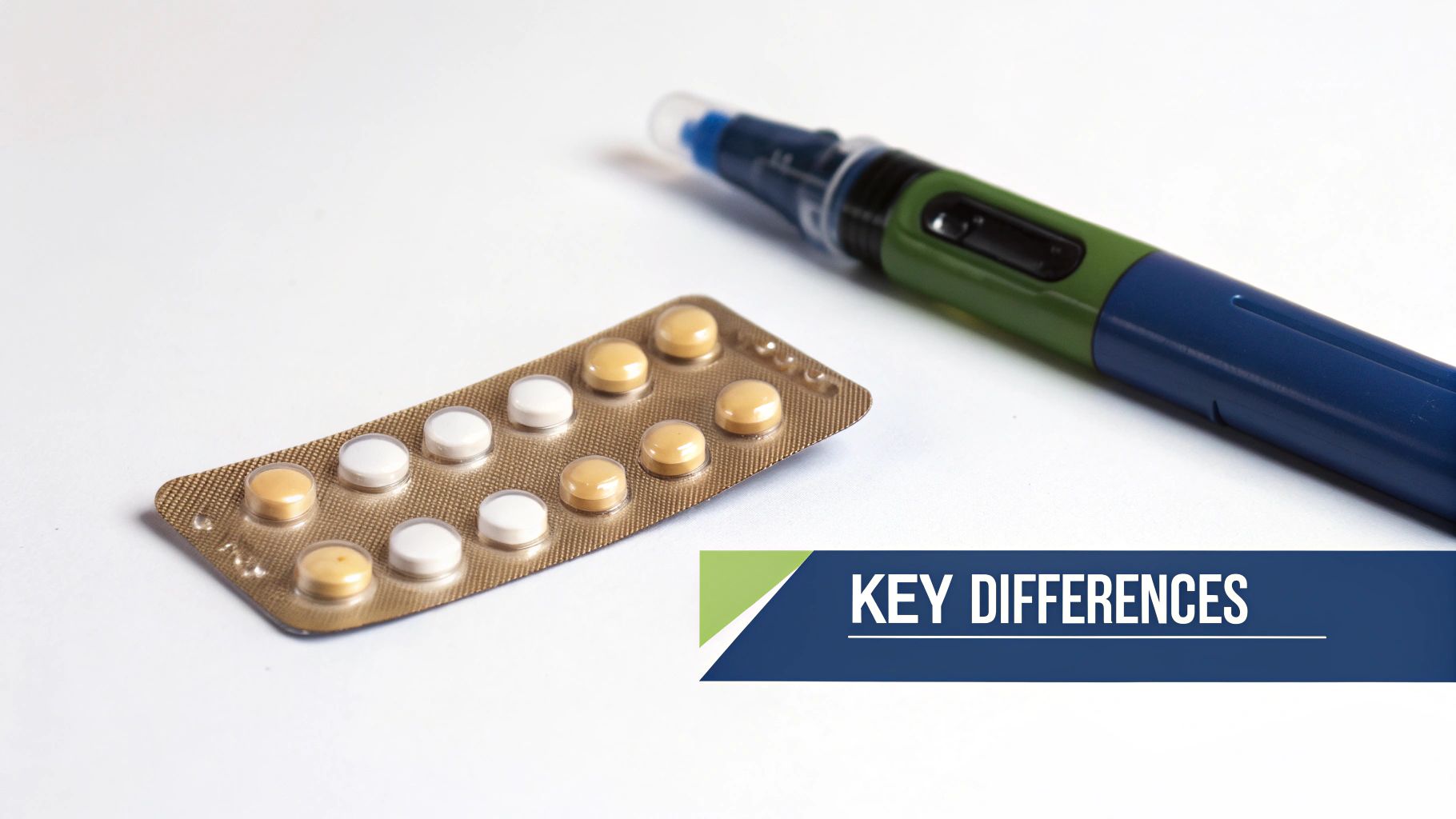
This side-by-side comparison gives you a quick visual on how these two really stack up.
As you can see, the choice between a daily pill and a weekly shot is just the beginning of what separates these two powerful options.
A Closer Look at the Comparison
To really see the contrast, let's break things down into a quick, at-a-glance table. This helps clarify the core differences and shows why one might be a better fit than the other, depending on your wellness and longevity goals.
Quick Comparison: Metformin vs. Ozempic
| Feature | Metformin | Ozempic (Semaglutide) |
|---|---|---|
| Primary Action | Reduces liver glucose production & improves insulin sensitivity. | Mimics the GLP-1 hormone to reduce appetite and slow digestion. |
| Administration | Daily oral tablet. | Once-weekly subcutaneous injection. |
| Typical Weight Loss | Modest, often 2-5% of body weight over a year. | Significant, can be 15% or more of body weight. |
| Primary Use | First-line support for managing blood sugar. | Managing blood sugar with a strong secondary focus on weight loss. |
This table makes it clear why GLP-1 medications like Ozempic have come to the forefront for people seeking more than just modest results from their weight management efforts. The numbers speak for themselves.
How Each Medication Supports Weight Management
When we look at metformin versus Ozempic for managing weight, it’s important to realize they work in completely different ways. One helps your body handle sugar better, which can lead to some weight changes as a side effect. The other directly targets the hormonal systems that control hunger, often resulting in much more significant weight loss.
Think of it this way: Metformin is like a traffic controller who reroutes cars to less crowded streets. Ozempic, on the other hand, installs a new, smarter traffic light system that slows everything down to prevent gridlock in the first place. Both help improve the flow, but their methods are worlds apart.
Metformin: An Indirect Approach to Weight
Metformin's main job is managing blood sugar, not directly causing weight loss. It does this in two key ways. First, it signals your liver to scale back on glucose production, meaning less excess sugar enters your bloodstream.
Second, it boosts your body's sensitivity to insulin. This allows your cells to use the glucose that’s already there for energy more effectively, instead of shuttling it away to be stored as fat. The weight loss people sometimes see is a secondary benefit. While some studies suggest a mild effect on appetite, any weight change is usually gradual and modest—maybe a few pounds over a year.
Practical Tip: Metformin’s impact on weight is best seen as a helpful side benefit of its main job: improving your metabolic health. It helps set the stage for a healthier lifestyle but isn’t the primary driver of weight loss itself.
This makes it an incredibly valuable medication for people dealing with insulin resistance or prediabetes. It supports a healthier metabolism, which in turn can support your weight goals.
Ozempic: A Direct Line to Appetite Control
Ozempic, which contains the active ingredient semaglutide, takes a completely different and far more direct route. It's part of a class of medications known as GLP-1 receptor agonists. These medications mimic a natural hormone your gut releases after you eat, called glucagon-like peptide-1.
This hormone creates a multi-faceted approach to regulating appetite and managing weight.
Here’s a simple breakdown of how it works:
- It tells your brain you’re full. GLP-1 interacts with the appetite control centers in your brain, dialing down hunger signals and making it easier to feel satisfied with smaller meals.
- It slows down stomach emptying. Ozempic keeps food in your stomach longer, creating a feeling of fullness that lasts for hours after you eat.
- It helps manage blood sugar. It also helps regulate blood sugar by promoting insulin release when needed, but its major impact on weight comes from its effects on appetite.
This direct-action approach is precisely why GLP-1 medications are so effective for achieving significant, sustained weight loss. If you want to learn more, our detailed guide explains how GLP-1s work for weight loss.
Understanding these differences makes the metformin vs Ozempic comparison much clearer. One provides foundational metabolic support, while the other is a powerful tool designed to actively reduce appetite and promote significant changes in body weight, offering a path toward better health and longevity.
Comparing Real-World Weight Loss Outcomes
When we talk about metformin versus Ozempic for weight management, the conversation always comes down to results. While both are key players in metabolic health, their effects on the scale are worlds apart. Let's break down what you can realistically expect.
Metformin: A Modest but Helpful Nudge
Think of metformin as a foundational tool. It's fantastic at improving how your body handles insulin. For most people, this translates to a slow, gradual reduction in weight. Studies show that people taking metformin typically lose about 2-5% of their body weight over a year. For someone who weighs 200 pounds, that’s a loss of 4 to 10 pounds. It's a great step for overall health, but may not be enough for someone with more significant weight management goals.
Ozempic: A Different Ballgame Entirely
Ozempic (and its active ingredient, semaglutide) works in a completely different way. By targeting the brain's appetite signals and slowing digestion, it directly addresses the root causes of overeating. The impact is far more significant.
Research Insight: Landmark clinical trials have shown that people using semaglutide can lose, on average, 15% or more of their body weight. For that same 200-pound person, we're now talking about a potential loss of 30 pounds or more. That's the kind of change that can dramatically improve your quality of life and long-term health.
This is especially relevant for people dealing with stubborn weight that won't budge, like women navigating the hormonal changes of perimenopause and menopause. When diet and exercise aren't enough, a more direct approach can be what's needed to finally see progress.
The Head-to-Head Comparison: No Contest
When you put the clinical data side-by-side, the picture becomes crystal clear. Ozempic's ability to drive weight loss simply outclasses metformin's.
- Metformin: Typically produces a 2-5% body weight reduction over 6-12 months.
- Ozempic (semaglutide): Landmark trials show average weight loss of 14.9% at one year, climbing to 17.4% at two years in adults.
This huge difference in effectiveness is shaping how doctors approach treatment today, a trend you can see in recent market trends in diabetes care.
This stark contrast is exactly why GLP-1 medications are becoming the go-to choice when significant weight loss is the primary goal. Metformin is an excellent, time-tested medication, but Ozempic offers a more powerful path to substantial results. If you're looking to truly move the needle on your weight, understanding what a GLP-1 program can offer is a critical next step.
If you're wondering whether these modern treatments could be right for you, our simple online quiz is a great place to start.
Side Effects, Dosing, and Your Daily Routine
When you’re weighing your options, it's not just about what a medication does—it's about how it fits into your life. The daily routine and potential side effects are huge factors, and this is where metformin and Ozempic really differ.

Both medications can bring on some gastrointestinal (GI) issues, particularly when you first start. But how you manage them and how they impact your day-to-day can be quite different.
Common Side Effects of Metformin
Metformin is well-known for causing some digestive upset, especially when you first begin taking it. The good news is these symptoms are usually mild and tend to fade as your body adjusts.
Common side effects include:
- Diarrhea
- Nausea
- Gas and bloating
- Stomach discomfort
Practical Tip: Always take metformin with a meal to significantly lessen these effects. Many people also find that the extended-release (ER) version is much easier on their stomach.
Managing Ozempic Side Effects
Ozempic can cause similar GI side effects like nausea or constipation. This happens because it slows down your digestion—which is part of how it helps you feel full longer. Thankfully, these effects are very manageable with the right approach.
The golden rule with GLP-1 medications is to "start low and go slow." We begin with the lowest possible dose and gradually increase it over several weeks. This gives your body plenty of time to adapt and makes the process much more comfortable.
This careful schedule is a core part of the treatment plan. You can learn more in our complete guide to managing GLP-1 medication side effects. For more specific insights, resources exploring Ozempic side effects in females can also offer valuable context.
Dosing Schedules: A Question of Lifestyle
For many people, the most practical difference comes down to the dosing schedule. Your personal preference will play a big part in which medication feels more sustainable long-term.
Metformin: A Daily Oral Pill
- Routine: Taken one to three times a day, almost always with meals.
- Convenience: It’s a simple pill, but remembering to take it multiple times every day can be a challenge for some people.
Ozempic: A Weekly Injection
- Routine: Administered just once a week, on the same day each week.
- Convenience: The "set it and forget it" nature of a weekly schedule is a huge plus for many. It simplifies your routine and takes daily medication management off your plate.
If you have a busy life, the convenience of a weekly injection can be a game-changer for staying consistent with your treatment, which is key to getting the best results.
Deciding Which Medication Fits Your Journey
Choosing between metformin and Ozempic isn't just a matter of looking at clinical data. It's about matching a medication to your specific health profile, your lifestyle, and your goals. What works wonders for one person might not be the right fit for another.
The biggest question to ask is: Are you looking for foundational metabolic support or a more powerful tool for significant weight management? The answer usually points you in the right direction.
The Metformin User Profile
Metformin is often the first step for people who need a gentle but effective push toward better metabolic health. This can be a great fit for someone in their late 40s who just learned they have prediabetes. Their primary goal is improving insulin sensitivity and getting their blood sugar on track, with weight management as a secondary benefit.
A good candidate for metformin is usually someone who:
- Has mild insulin resistance or a prediabetes diagnosis.
- Is already committed to lifestyle changes and wants medication to support those efforts.
- Is aiming for modest, gradual health improvements.
- Prefers a time-tested, affordable, and widely available oral pill.
When Ozempic Becomes the Clearer Choice
Ozempic (semaglutide) is a different tool for a different job. It’s built for individuals facing more significant weight challenges, where losing just a few pounds won't be enough to meaningfully impact their long-term health and longevity. This is particularly true for those with obesity or other weight-related health conditions.
Research Insight: For patients struggling with obesity—a condition now affecting over 1 billion adults worldwide—the numbers are clear. Ozempic can lead to an average weight loss of 15-20% of body weight, a stark contrast to metformin's typical 2-5%.
A strong candidate for a GLP-1 medication like those in our GLP-1 Program often fits one of these profiles:
- Women trying to manage hormonal weight gain during perimenopause or menopause.
- Individuals who need to lose a significant amount of weight for health reasons.
- People who have tried diet and exercise alone but saw limited success.
- Anyone looking for a powerful tool to finally get control over their appetite and cravings.
Of course, the final decision should always be made with a healthcare provider. Medication works best as part of a bigger picture that includes healthy nutrition and physical activity. For ideas on the exercise front, guides on the best cardio machines for weight loss can be a great starting point.
Figuring this all out can feel like a lot, but you don't have to navigate it alone. The first step is getting a personalized assessment.
Take our quick online quiz to see if you're a candidate and start your journey with Blue Haven Rx today.
Navigating Cost and Access Through Telehealth
In the real world, the choice between metformin and Ozempic often hinges on two major factors: cost and access. These medications couldn't be more different on this front, and that reality can heavily influence which option makes sense for you.
Metformin: Affordable and Accessible
Metformin is the definition of a workhorse medication. It’s been around for decades, and because it's available as a generic, it's incredibly affordable and easy to find. This makes it a highly approachable first step for anyone looking to manage their metabolic health without a large financial burden.
The Higher Cost of Brand-Name GLP-1s
Ozempic and other brand-name GLP-1s are a different story. Without insurance, the price is steep—often approaching $1,000 a month or more. Even with good insurance, getting coverage can be a challenge, often requiring pre-authorizations and paperwork with no guarantee of approval. This financial barrier can be incredibly frustrating.
A Modern Solution Through Telehealth
This is where telehealth services like Blue Haven Rx really shine. We’ve built a more direct and accessible way for people to get powerful GLP-1 medications, like compounded semaglutide (the same active ingredient in Ozempic). Our model is designed to sidestep the usual headaches of the traditional healthcare system.
How Telehealth Helps: By connecting you with licensed doctors online and shipping medication directly to your door, telehealth simplifies the entire process. It’s a transparent, straightforward approach to accessing the treatments you need for your weight management journey.
This direct-to-patient approach is growing as more people seek out effective weight loss solutions. The market trends tell the story: spending on Ozempic in the US alone ballooned from $410 million in 2018 to a staggering $26.42 billion in 2023. You can read more about how the market is evolving on pharmasources.com.
Services like ours meet this demand by offering a simpler path with quiz-based eligibility and direct delivery. It's about providing science-backed options for lasting results, without the hassle. With clear pricing and no insurance battles, we make it easier to get the support you need. You can find out more in our guide to getting prescription weight loss medication online.
If you’re ready to explore a simpler way to achieve your health goals, take our quick online quiz to see if you are a candidate.
Common Questions About Metformin and Ozempic
When you're weighing your options, it's normal for questions to pop up. Getting clear, straightforward answers is the best way to feel confident about your health decisions. Let's tackle some of the most common things people ask.
Can You Take Metformin and Ozempic Together?
Yes, absolutely. In fact, it's common for doctors to prescribe both medications at the same time, particularly for managing type 2 diabetes. They work on the problem from different angles: metformin helps your body use insulin more effectively, while Ozempic actively increases insulin release and dials down your appetite. The combination can be a powerful one-two punch for both blood sugar control and weight management. This decision, of course, must be made with a licensed healthcare provider.
How Quickly Can You Expect Weight Loss Results?
This is where you really see the difference. With metformin, any weight loss is usually a slow and steady process over several months. It's more of a long-term metabolic support tool.
On the other hand, people taking a GLP-1 medication like those in our GLP-1 Program often feel their appetite decrease within the first few weeks. Noticeable weight loss typically begins within the first two to three months as the dosage is carefully adjusted to what works best for your body.
The bottom line: Metformin provides modest, long-term support for your metabolism. Ozempic and other GLP-1s are designed for a more direct and significant impact on weight by targeting appetite right from the start.
Is the Weekly Injection Difficult or Painful?
This is a very common concern, and it's completely understandable. The thought of a weekly shot can feel intimidating, but the reality is much less scary than it sounds.
The injection uses a very thin, short needle designed to be as comfortable as possible. It’s a subcutaneous injection, which means it just goes under the skin—usually in your stomach, thigh, or upper arm. Most people say it’s a quick, tiny pinch that's over in seconds.
At Blue Haven Rx, we provide clear, step-by-step instructions, and our medical team is always there to support you. We help turn what seems like a big deal into a simple, once-a-week routine.
Ready to get a clear, personalized plan for your health and wellness journey? At Blue Haven Rx, we're here to guide you. Learn more about your options and see if you're a candidate.
Take our free online quiz to get started.