
How to Reduce Belly Fat: A Science-Backed Guide
If you've been wondering how to reduce belly fat, you've probably realized it takes more than just a few crunches. The real answer lies in a smart, consistent plan that brings together the right nutrition, effective exercise, and a few key lifestyle changes.
It all starts with understanding that not all belly fat is created equal. The key to both looking better and dramatically improving your health is targeting the most harmful type: visceral fat.
Why Belly Fat Is More Than a Cosmetic Concern
Let's be honest, most of us start this journey because we’re frustrated by that stubborn fat around our middle. Maybe it’s a pair of jeans that no longer fit, or just not feeling comfortable in our own skin. And while wanting a flatter stomach is perfectly normal, the real conversation about belly fat goes much deeper.
It's a conversation about your long-term health, your energy levels, and your risk for serious medical conditions down the road.
To get a handle on it, you need to know what you’re up against. There are two very different kinds of fat in your abdominal area:
-
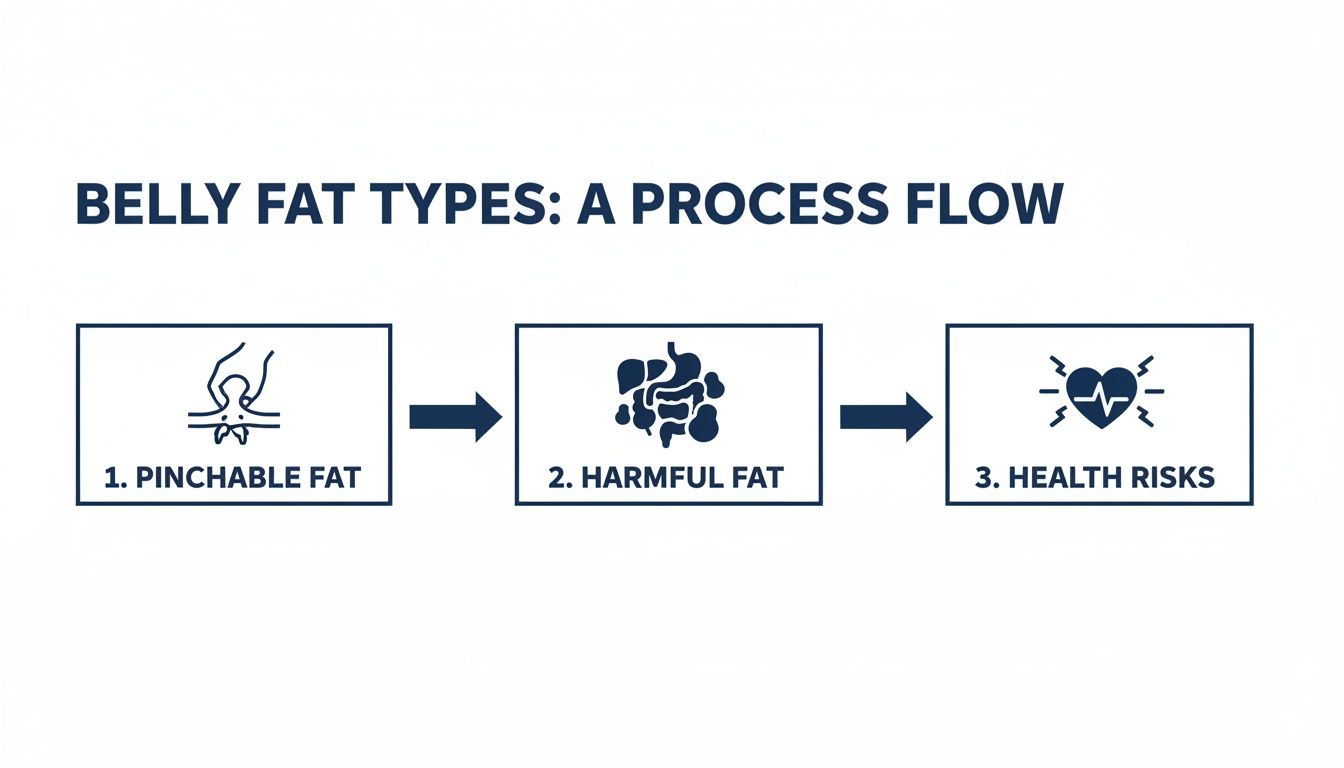
Subcutaneous Fat: This is the soft, pinchable layer you can feel right under your skin. While nobody wants too much of it, this type is less of a direct threat to your metabolic health.
-
Visceral Fat: This is the stuff you can't see or touch. It’s the dangerous fat stored deep inside your abdominal cavity, wrapped around essential organs like your liver, pancreas, and intestines. This isn't just passive storage; it's metabolically active, releasing substances that can throw your body’s systems out of whack.
The Hidden Dangers of Visceral Fat
Visceral fat is the real villain here. Because it’s packed so tightly around your organs, it can pump out inflammatory compounds and hormones that disrupt your metabolism, blood sugar control, and cholesterol. This is precisely why a larger waistline is so strongly linked to an increased risk for serious conditions like heart disease and type 2 diabetes.
This flow chart shows how that simple, pinchable fat can evolve into a much more serious health risk as visceral fat builds up.
With global obesity rates nearly tripling since 1975, abdominal fat has become a massive public health issue.
In fact, research shows that excess belly fat can increase the risk of developing type 2 diabetes by up to 7 times compared to fat stored on the hips or thighs. But here’s the good news: visceral fat responds incredibly well to the right strategies. Studies show that combining aerobic exercise with resistance training can slash visceral fat by 10-20% in as little as 12 weeks.
Shifting your focus from just fitting into old jeans to actively investing in your future health makes this journey far more meaningful. It’s not just about a smaller waist; it's about a longer, healthier life.
Knowing this distinction is empowering. It reframes the goal from simply "losing belly fat" to the much more motivating mission of "improving my metabolic health." This guide is your roadmap to do exactly that.
Here’s a quick summary of the key strategies we’ll cover in this guide for tackling visceral fat.
| Your Roadmap to Reducing Belly Fat at a Glance | ||
|---|---|---|
| Strategy Area | Key Action | Primary Benefit |
| Nutrition | Prioritize protein, fiber, and healthy fats while reducing sugar and processed carbs. | Supports satiety, stabilizes blood sugar, and reduces calorie storage as fat. |
| Exercise | Combine resistance training with High-Intensity Interval Training (HIIT). | Builds metabolism-boosting muscle and effectively burns visceral fat. |
| Lifestyle Factors | Aim for 7-9 hours of quality sleep and actively manage stress. | Lowers cortisol levels, which directly contributes to abdominal fat storage. |
| Medical Support | Consider a supervised plan, potentially with GLP-1 therapy. | Provides expert guidance and powerful tools for significant, sustainable results. |
Each of these pillars works together to create a powerful, long-term solution.
Ready to take control? Find out if a personalized medical weight loss plan is the right next step for you by taking our quick quiz.
Fuel Your Body to Shed Abdominal Fat
When it comes to nutrition for losing belly fat, it's easy to get bogged down by endless lists of what you can't eat. Instead, a more effective and enjoyable approach is to focus on what you can add to your plate.
This simple shift in mindset turns mealtime from a source of stress into your greatest tool for reaching your goals. This isn't about a crash diet; it's about building lasting habits that fit into your life. By focusing on nutrient-rich foods, you'll naturally have less room for processed items, feel more satisfied, and give your body what it needs to burn fat efficiently.
Make Protein Your Priority
Protein is your best friend on this journey, especially as we age. It’s the key to holding onto muscle mass, and muscle keeps your metabolism firing on all cylinders. A faster metabolism means your body burns more calories all day long, even when you're resting.
But that's not all. Protein is incredibly filling. Including a solid source with every meal helps you feel full and stay that way, which quiets the urge to reach for high-calorie snacks between meals.
Here’s how to easily get more protein in your day:
- For breakfast: Instead of a plain bagel, go for scrambled eggs or a bowl of Greek yogurt topped with berries.
- At lunch: Toss some grilled chicken or a can of chickpeas into your salad.
- For dinner: Build your meal around a portion of fish, tofu, or lean beef.
- Smart snacks: Keep hard-boiled eggs, a handful of almonds, or edamame ready for a quick, satisfying bite.
Embrace the Power of Fiber
Think of fiber, especially soluble fiber, as your secret weapon against visceral fat. When you eat foods loaded with it—like oats, beans, apples, and Brussels sprouts—it creates a gel in your gut. This slows digestion, helping to keep your blood sugar steady and making you feel full.
Research has found a clear connection between eating more soluble fiber and having less visceral fat. In fact, for every 10-gram increase in daily soluble fiber, people saw visceral fat accumulation drop by nearly 4% over five years.
So, adding a little more fiber can make a huge difference in how your body stores fat, particularly around your middle.
Making Smart Swaps That Actually Stick
Lasting change doesn't happen by overhauling your entire diet overnight. It's all about making small, intelligent swaps that you can live with long-term. The main goal is to dial back refined carbs and added sugars, which are notorious for contributing to belly fat.
Forget about what you're "giving up" and focus on what you're gaining in both flavor and nutrition.
Simple Food Swaps to Reduce Belly Fat
| Instead of This... | Try This Smart Swap... | Why It Works |
|---|---|---|
| White bread or pasta | 100% whole-wheat bread or quinoa | Gives you more fiber to keep you feeling full and satisfied. |
| Sugary breakfast cereal | A bowl of oatmeal with fresh fruit | Provides steady, long-lasting energy without the sugar crash. |
| Potato chips | A handful of almonds or walnuts | Delivers healthy fats and protein for better hunger control. |
| Soda or sweetened tea | Sparkling water with a squeeze of lemon | Slashes empty calories and gets rid of added sugar. |
| Creamy salad dressing | A simple vinaigrette with olive oil | Swaps unhealthy saturated fats for heart-healthy ones. |
Every one of these small adjustments adds up to the bigger picture: creating a modest but consistent calorie deficit, which is the cornerstone of fat loss. By picking foods that pack more nutritional punch, you can enjoy satisfying meals while naturally consuming fewer calories. If you want to get into the nitty-gritty of this, check out our guide on what a calorie deficit is and how to achieve it safely.
At the end of the day, this is about nourishing your body, not punishing it. When you give yourself the right fuel, you won't just see a change around your waist—you'll feel more energetic and vibrant, too.
Move Smarter, Not Harder, to Target Visceral Fat

If you've ever tried to get a flatter stomach, you've probably been told to do endless crunches and sit-ups. It’s one of the biggest myths in fitness. While those exercises will certainly strengthen your abs, they do almost nothing to burn the layer of fat sitting on top of them.
The truth is, you can't pick and choose where your body burns fat from—a concept we call "spot reduction." The only way to effectively reduce belly fat, especially the dangerous visceral kind, is with a smart, full-body approach. You need to focus on workouts that burn the most calories and fire up your metabolism, which is what signals your body to finally tap into those stubborn fat reserves.
The Power Couple of Fat-Loss Exercise
So, what's the most effective strategy? The combination of High-Intensity Interval Training (HIIT) and resistance training is a powerful one-two punch for healthy weight management.
- High-Intensity Interval Training (HIIT): This is all about short bursts of maximum effort followed by quick recovery periods. A HIIT session can be incredibly effective in just 15-20 minutes—in fact, studies show it's often better at zapping visceral fat than an hour of steady jogging.
- Resistance Training: This is any activity where your muscles have to work against a force, whether it's lifting weights, using bands, or even just your own body weight. Building lean muscle is absolutely essential for long-term weight management.
This combination works so well because HIIT incinerates calories both during and after the workout, while resistance training builds muscle that increases your resting metabolic rate. That means you’re burning more calories 24/7, even when you’re relaxing on the couch. To really grasp why this is so important, it helps to understand what visceral fat is and why it matters.
Simple Workouts You Can Do at Home
The good news is you don’t need an expensive gym membership to get started. Consistency is what really matters, so the best plan is one you can actually stick to.
Here’s a simple but powerful circuit you can do right in your living room:
Sample At-Home Circuit (Repeat 3–4 times)
- Bodyweight Squats (Resistance): Stand with your feet shoulder-width apart and lower your hips like you're sitting in a chair. Keep your chest up! Aim for 12–15 reps.
- Jumping Jacks (HIIT): Go for 30 seconds at a brisk pace.
- Push-ups (Resistance): You can do these on your toes or on your knees. Go for 8–12 reps.
- High Knees (HIIT): Run in place, driving your knees up toward your chest for 30 seconds.
- Plank (Resistance): Hold a straight line from your head to your heels for 30–45 seconds.
- Rest: Take a 60-second breather before you go again.
This whole routine takes less than 20 minutes but hits both strength and cardio hard. Try to do something like this three to four times a week. For those who want to maximize their efforts, it can even be useful to explore passive ways to burn calories, like learning about infrared sauna calories burned for weight loss.
The key is consistency, not perfection. A 15-minute workout done regularly is far better than a one-hour session you only do once a month.
This smarter approach to exercise does so much more than just help with belly fat. Building and keeping muscle is one of the single best things you can do for your long-term health. It supports your joints, improves balance, and keeps your metabolism from slowing down as you age.
Ready to see how a complete, medically-supported plan can fit into your life? Take our quiz to find out if you're a candidate for a personalized weight management program with Blue Haven Rx.
The Lifestyle Habits That Secretly Add Belly Fat
You can have the perfect diet and a killer workout routine, but if certain lifestyle habits are working against you, losing belly fat will feel like an uphill battle. Often, the biggest hurdles have less to do with the kitchen or the gym and more to do with how we manage daily life.
Three of the biggest culprits are stress, sleep, and alcohol. These everyday factors can quietly sabotage your hormones and metabolism, basically telling your body to store fat right around your middle. Getting a handle on them is a critical step toward taking back control.
How Chronic Stress Fuels Belly Fat
When you're under constant pressure, your body pumps out a hormone called cortisol. While helpful in short bursts for "fight or flight," chronically high cortisol is a different story. It signals your body to hang onto energy, and its favorite place to stash it is in your abdomen as dangerous visceral fat.
This stress response is an ancient survival tool that doesn't fit our modern lives. To make matters worse, it can trigger intense cravings for high-sugar, high-fat "comfort foods," creating a vicious cycle. That’s why learning how to stop stress eating is such a crucial skill for anyone serious about their health.
You don't need an hour of meditation to make a difference. Simple mindfulness can lower cortisol fast:
- Deep Breathing: Just five minutes of slow, deep breaths that make your belly rise and fall can calm your entire nervous system.
- A Short Walk: Physically stepping away from a stressful situation, especially if you can get outside for a few minutes, helps reset your brain.
- Mindful Moments: Take 60 seconds. Just stop and notice your surroundings—what you see, hear, and feel—without any judgment.
The Critical Link Between Sleep And Your Waistline
A lack of quality sleep is another huge, often-overlooked contributor to belly fat. When you're sleep-deprived, two key hormones that regulate your appetite go haywire.
Your levels of ghrelin, the "I'm hungry" hormone, shoot up. At the same time, levels of leptin, the hormone that says "I'm full," plummet. This hormonal one-two punch leaves you feeling hungrier all day and less satisfied after you eat, which often leads to consuming more calories than you need.
Worldwide obesity has nearly tripled since 1975, and experts agree this is directly tied to lifestyle factors like poor sleep and chronic stress. For women, the hormonal shifts during perimenopause can ramp up belly fat storage by as much as 44%, making these habits even more critical to manage.
Rethinking Your Relationship With Alcohol
That evening glass of wine might feel like the perfect way to unwind, but alcohol can be a sneaky saboteur in your mission to reduce belly fat. It’s not just about the empty calories; it’s about what alcohol does to your metabolism.
When you drink, your body prioritizes getting rid of the alcohol over everything else. That means fat-burning gets put on pause while your liver is busy processing your drink. If you drink regularly, this can easily lead to fat accumulating, particularly around the liver and abdomen.
Making small adjustments can have a big impact:
- Set a Limit: Decide ahead of time that you're only having one drink, and stick to it.
- Hydrate in Between: Alternate every alcoholic drink with a full glass of water.
- Choose Lighter Options: A light beer, a wine spritzer, or a vodka soda has far fewer calories than a sugary cocktail or heavy craft beer.
The table below breaks down how these choices directly influence your body's fat-storage signals.
Lifestyle Factors Impacting Belly Fat
| Lifestyle Factor | Negative Habit (Increases Belly Fat) | Positive Habit (Reduces Belly Fat) |
|---|---|---|
| Stress Management | Constant high stress, no coping mechanisms | Regular mindfulness, deep breathing, taking breaks |
| Hormonal Effect | Chronically high cortisol signals the body to store visceral fat | Lower cortisol levels reduce fat storage signals |
| Sleep Quality | Fewer than 7 hours of inconsistent, poor sleep | 7-9 hours of consistent, quality sleep per night |
| Hormonal Effect | Increased ghrelin (hunger) and decreased leptin (fullness) | Balanced ghrelin and leptin levels for better appetite control |
| Alcohol Intake | Regular, excessive consumption of alcohol | Minimal to moderate intake, choosing lower-calorie options |
| Metabolic Effect | Pauses fat metabolism, adds empty calories | Allows fat-burning processes to function optimally |
By addressing these core lifestyle factors, you're building a solid foundation that makes all your nutrition and exercise efforts more effective. It’s about creating a holistic approach where your daily habits finally align with your goals for a long, healthy life.
When You Need Extra Support: Medical Options
Let's be honest. Sometimes you can do everything right—clean up your diet, stick to your workouts, and get your stress in check—and still feel like you’ve hit a brick wall. It’s incredibly frustrating.
For many of us, especially over the age of 45, factors like genetics, hormonal shifts, or a slowing metabolism make losing that stubborn belly fat feel nearly impossible. When lifestyle changes alone aren't cutting it, it might be time to look into getting extra support.
Fortunately, modern medicine has come a long way. We now have effective options that can work with your efforts, not as a shortcut, but as a powerful tool to help your body finally respond. This is especially critical when you're dealing with the health risks of too much visceral fat.
A Breakthrough in Weight Management: GLP-1 Therapies
One of the biggest game-changers in medical weight loss is a class of medications called GLP-1 (glucagon-like peptide-1) receptor agonists. That sounds technical, but the concept is actually quite simple. These medications, like Semaglutide and Tirzepatide, work by mimicking a natural hormone your gut releases when you eat.
This hormone is a key player in feeling full. It tells your brain you've had enough, which naturally dials down your appetite and helps quiet those nagging cravings. GLP-1 therapies also slow the rate at which your stomach empties, so you feel satisfied longer after a meal. This makes sticking to a healthy eating plan and creating a calorie deficit much more manageable.
The real benefit of these medications isn't just about the number on the scale. They've been shown to be particularly good at targeting the dangerous visceral fat packed deep inside your abdomen, directly improving your metabolic health and lowering your long-term disease risk.
For people with severe obesity (a BMI over 35), medical help is often a crucial part of the puzzle. Shockingly, this level of obesity is on track to increase by nearly 150% worldwide between 2010 and 2030. In major clinical trials, newer GLP-1 medications helped people achieve up to a 22.5% reduction in total body weight over 72 weeks. Better yet, MRI scans confirmed a 30-40% drop in visceral fat—results that are nearly impossible to get with diet and exercise alone. You can read more about these global obesity trends and projections.
Getting Personalized Guidance Through Telehealth
Figuring out medical weight loss options can feel like a maze, but telehealth services have made getting professional, personalized care much simpler and more accessible. This is where a service like Blue Haven Rx can step in, offering expert guidance right from the comfort of your home.
The entire approach is built around a safe, supervised, and personalized plan. Medication isn't a standalone fix; it's one component of a comprehensive health strategy. We connect you with licensed medical providers who truly understand the complexities of weight management.
Here’s how straightforward the process is:
- Start with a Quick Online Assessment: You'll begin by taking our quiz. It’s a simple, no-pressure way to see if a medical weight loss program could be a good fit for you.
- Chat with a Licensed Provider: If you're a potential candidate, you’ll have a private consultation with a healthcare professional to go over your medical history, talk about your goals, and map out the right treatment plan.
- Medication Delivered to Your Door: If a prescription is part of your plan, it’s shipped discreetly right to you. No more awkward pharmacy trips.
- Support for the Journey: This isn't a "set it and forget it" approach. You'll have ongoing support to track your progress and fine-tune your plan as you go.
Is Medical Support the Right Next Step for You?
Exploring medical options is a deeply personal decision, and one that should always be made with a healthcare professional. It tends to be a particularly effective path for people who:
- Have a significant amount of weight to lose.
- Are already dealing with weight-related health issues like high blood pressure or pre-diabetes.
- Have tried and tried again with lifestyle changes but aren't seeing results.
- Are wrestling with hormonal challenges from perimenopause or menopause that make fat loss feel like an uphill battle.
This approach recognizes that sometimes, your own biology is the biggest hurdle. By using prescribed treatments like GLP-1s, you can work with your body's systems instead of fighting against them, giving all your hard work with nutrition and exercise a much better chance to pay off. If you want to dive deeper into the different options, our guide on prescription weight loss medications is a great resource.
Ultimately, combining medical support with healthy habits creates a powerful, synergistic strategy. You’re not just losing belly fat—you’re building a foundation for sustainable, long-term health.
If you think this kind of support could be what you need to finally reach your goals, we encourage you to learn more. Take the first step today to see if a personalized plan with Blue Haven Rx is the right fit for your journey.
Putting It All Together for Your Health
Losing stubborn belly fat is about more than just looking better—it's one of the most powerful moves you can make for your long-term health and longevity. We've walked through a complete game plan that brings together smart nutrition, effective exercise, and crucial lifestyle habits. Think of them not as separate rules, but as interconnected pieces of a healthier, more energetic you.
Sometimes, even with the best efforts, diet and exercise aren't enough to get the results you need. That’s where medical support can truly make a difference. If you feel like you've hit a wall, exploring the options available through a service like Blue Haven Rx could be the key to breaking through. For more great ideas on keeping your momentum, check out these 5 actionable weight loss tips.
Remember, this is your journey. The best plan is the one you can stick with, one that fits into your real life. We're aiming for steady, sustainable progress—not a quick fix that won't last.
Our telehealth platform was designed to make getting expert guidance simple and private. You can connect with licensed providers who understand the nuances of weight management and can create a plan that works for you. This often includes modern, effective treatments like GLP-1 therapies, all managed from the comfort of your home.
Ready to see what a personalized approach could do for you? The first step is simple. Take our quick, confidential quiz to find out if a medical weight loss plan is the right next move for your health goals.
Common Questions About Losing Belly Fat
If you're trying to figure out how to lose belly fat, you probably have some questions. It's a topic surrounded by a lot of myths and misinformation, so let's clear up a few of the most common ones.
How Long Does It Take To Lose Belly Fat?
There isn't a one-size-fits-all timeline, but the good news is that you can start making a dent in the dangerous visceral fat relatively quickly—sometimes within a few weeks of consistent effort. Seeing a noticeable reduction in the more stubborn subcutaneous fat (the kind you can pinch) usually takes a couple of months.
The real goal here isn't just a quick fix; it's about building sustainable habits. That's the only way to ensure the fat you lose stays gone for good.
Can I Just Do Crunches to Target My Belly?
This is probably one of the biggest myths in fitness. The short answer is no, you can't "spot reduce" fat from one specific area. While doing hundreds of crunches will definitely strengthen your ab muscles, it won't do much to burn the layer of fat sitting on top of them.
A much smarter strategy is to focus on reducing your overall body fat percentage.
The most effective approach combines total-body, metabolism-boosting strength training with calorie-burning cardio like HIIT. This is what actually attacks the deep visceral fat around your organs, which is the real win for your long-term health.
Are Weight Loss Medications Safe for People Over 50?
For many people, especially as they get older and metabolism naturally slows down, certain medications can be a perfectly safe and powerful tool. The key is that they must be prescribed and carefully monitored by a qualified medical professional.
A doctor will do a thorough health evaluation to see if a specific medication is right for you, considering your unique medical history and needs. This is exactly the kind of personalized care we provide at Blue Haven Rx.
Everyone's journey is different. Sometimes, having an expert-guided, personalized plan is what it takes to finally break through and see the results you deserve. Blue Haven Rx is here to offer that professional guidance and support.
Take our quick quiz to see if a medical weight loss plan is right for you.