
How long does compounded tirzepatide last in the fridge? A Clear Guide
If you're beginning a weight management journey with compounded tirzepatide, you've likely asked a very practical question: "How long does this last in my fridge?" It’s a smart question, and getting the storage right is an important step toward achieving your goals.
The short answer is that most compounded tirzepatide will last between 28 and 90 days when stored correctly in the refrigerator. This timeframe is key to ensuring the medication remains safe, stable, and effective for every dose.
Your Guide to Storing Compounded Tirzepatide
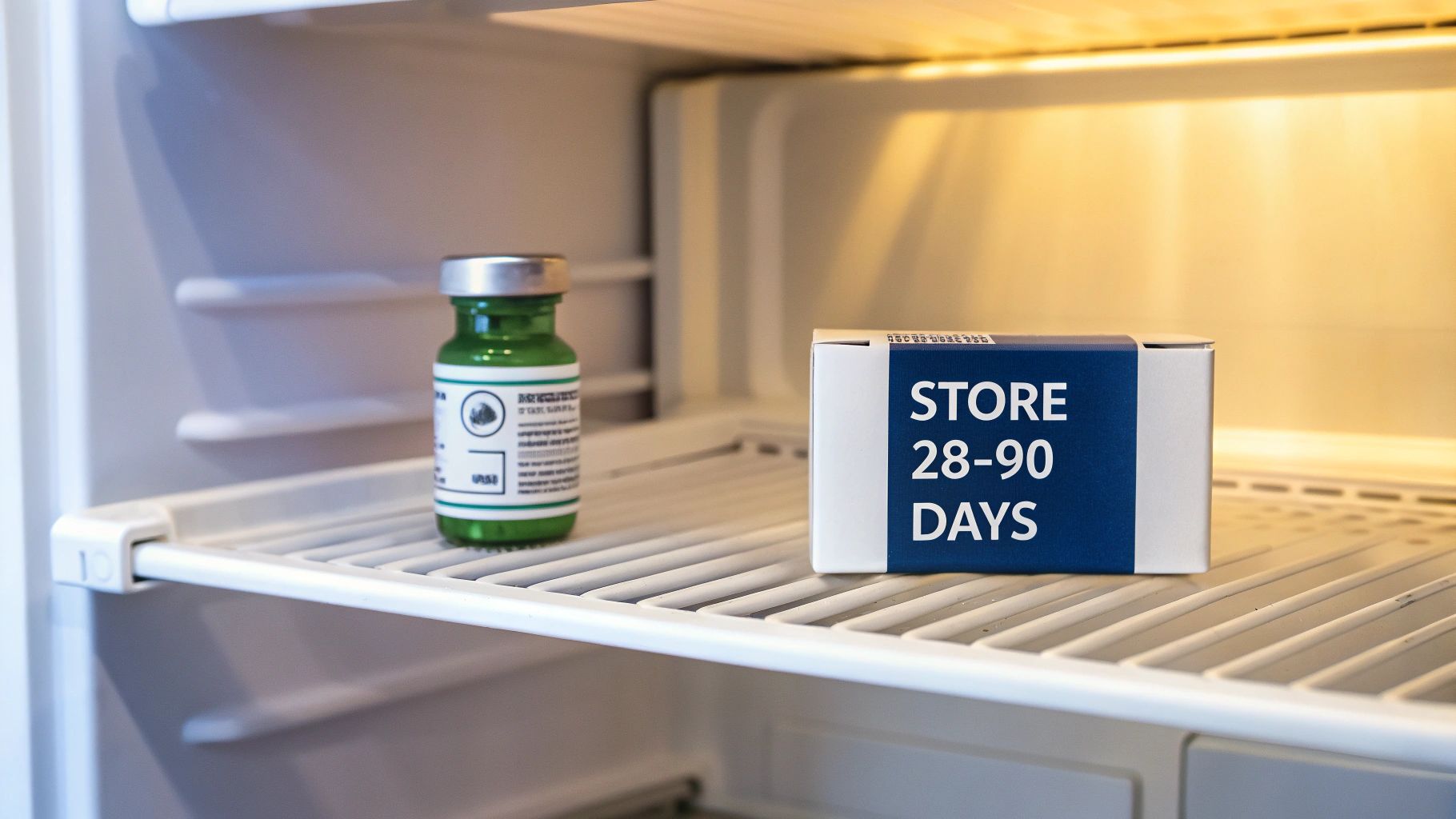
Navigating a new medication can feel a little overwhelming, but we're here to make it simple. Proper storage is one of the most important parts of your treatment plan, helping you get the results you are working toward.
It helps to think of compounded tirzepatide like bread from a specialty bakery, whereas a mass-produced version is more like a pre-packaged loaf from the supermarket. The bakery bread is made fresh and has a shorter, specific shelf life. The store-bought kind contains preservatives to keep it stable for much longer.
Because your medication is compounded specifically for you, it doesn't contain the same long-term stabilizers as mass-produced versions. That’s why its time in the fridge is more limited, and proper handling is so vital for your health journey.
Understanding the Storage Window
That 28 to 90-day window has an official name: the Beyond-Use Date, or BUD. This isn't just a suggestion; it's a date determined by your compounding pharmacy based on established quality and safety standards.
Following the BUD means the last dose you take will be just as potent as the first. When you receive your medication, you'll want to immediately store it in your fridge, keeping it between 36°F and 46°F (2°C and 8°C). This simple step gives you peace of mind that your medication is working exactly as it should until the date printed on the vial.
Your wellness journey is an investment in yourself. Proper medication storage protects that investment, ensuring you get the full benefit of each dose as you work toward a healthier, more vibrant life.
Keeping your medication away from extreme temperatures and direct light isn't just a good idea—it's essential for your treatment's success. To get a deeper look at how this GLP-1 medication supports your goals, check out our guide on using tirzepatide for weight loss.
We want you to feel empowered with clear, practical knowledge so you can focus on what really matters: your health.
For a quick reference, here's a simple breakdown of the most important storage guidelines.
Compounded Tirzepatide Storage At a Glance
| Guideline | Recommendation | Why It Matters |
|---|---|---|
| Storage Temperature | 36°F to 46°F (2°C to 8°C) | Keeps the delicate peptide structure stable and prevents it from breaking down. |
| Beyond-Use Date (BUD) | Adhere to the date on your vial (typically 28–90 days). | Ensures the medication remains potent and safe to use throughout your treatment. |
| Light Exposure | Store in the original box or a dark area of the fridge. | Light can degrade the active ingredients, reducing the medication's effectiveness. |
| Freezing | Never freeze the medication. | Freezing can permanently damage the tirzepatide molecule, making it ineffective. |
Always follow the specific instructions from your pharmacy, as they know the exact formulation of your medication. When in doubt, a quick call to your provider or pharmacist is the best way to get a clear answer.
Decoding the Beyond-Use Date on Your Vial
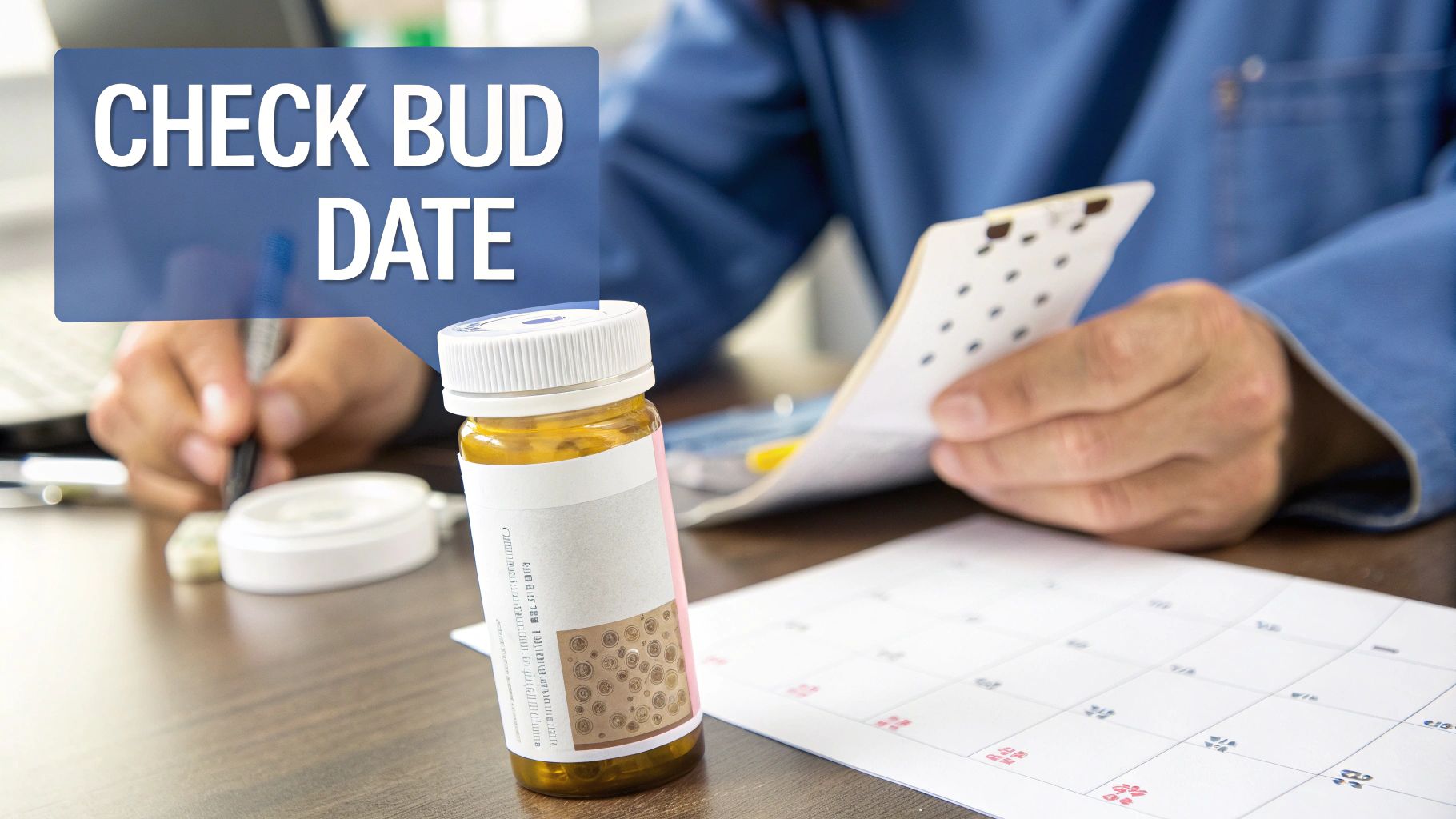
When you receive your vial of compounded tirzepatide, your eyes should immediately find the Beyond-Use Date, or BUD. This date isn't just a friendly suggestion; it's a critical deadline for both your safety and the medication's effectiveness.
Think of it like a freshly prepared meal from a high-end kitchen. It's made just for you and is best enjoyed within a specific timeframe to get the full flavor and quality. The BUD on your vial works the same way, ensuring you get the full therapeutic benefit from every single dose.
This date is set by the compounding pharmacy following strict guidelines. So, when you wonder how long compounded tirzepatide lasts in the fridge, the answer is always tied directly to this important date on the label.
Why the BUD Is So Important
Compounded medications are different from the mass-produced drugs you'd pick up from a regular pharmacy. They're prepared in smaller, customized batches and don't contain the same kind of long-shelf-life preservatives.
The BUD marks the scientifically determined window during which that specific, custom formula is known to be both stable and sterile. Using your medication after this date introduces risks that could derail your progress toward your health goals.
The Beyond-Use Date is your assurance of quality. It tells you the exact window of time your medication will be at its peak effectiveness, helping you achieve the consistent results you deserve on your health journey.
Once the BUD has passed, two things can happen. First, the medication may start to lose its potency as the active ingredients break down, which could lead to a less effective dose. For you, this might look like a frustrating weight loss plateau or a return of food noise. Second, the risk of bacterial contamination increases, which can be unsafe.
Factors That Determine the BUD
A compounding pharmacy doesn't just pull this date out of thin air. The BUD for your tirzepatide is meticulously calculated based on several key factors. Knowing what they are can give you a better appreciation for the science behind that date on your vial.
A few of the major elements that influence the BUD include:
- The Formulation: Every ingredient matters. The specific components mixed with the tirzepatide—like B12, for instance—can alter the stability and, therefore, the lifespan of the final product.
- Sterility and Preservatives: The process used to keep the medication sterile and the type of preservatives added are huge factors in determining how long it will remain safe to use.
- Storage Conditions: The BUD is set with the assumption that you're doing your part. It's valid only if the medication is stored correctly—in the refrigerator, away from light.
Treating the BUD with respect is a simple but vital part of managing your own treatment. Just as GLP-1 medications are a key tool in modern weight management—something we cover in our article on what is compounded semaglutide—proper handling is what allows them to work effectively.
Ready to take the next step in your personalized health journey? Discover if you're a candidate by taking the Blue Haven Rx quiz today.
How Temperature and Light Affect Your Medication
Ever wonder why compounded tirzepatide needs to be handled with such care? It all comes down to its structure. Tirzepatide is a peptide, which is essentially a delicate chain of amino acids. Just like a fragile necklace, this chain can be broken by environmental stressors like heat and light, which makes the medication less effective.
Think of it like a carton of milk. You know instinctively not to leave milk on the kitchen counter for hours because it will spoil. Your medication is just as sensitive. To make sure it works properly from the first dose to the last, protecting it from the elements is a crucial part of your routine.
Proper storage is your best defense for maintaining the stability of compounded tirzepatide, ensuring you get the full benefits for your health and weight management goals. Let’s break down the two biggest factors you need to control: temperature and light.
The Critical Role of Consistent Temperature
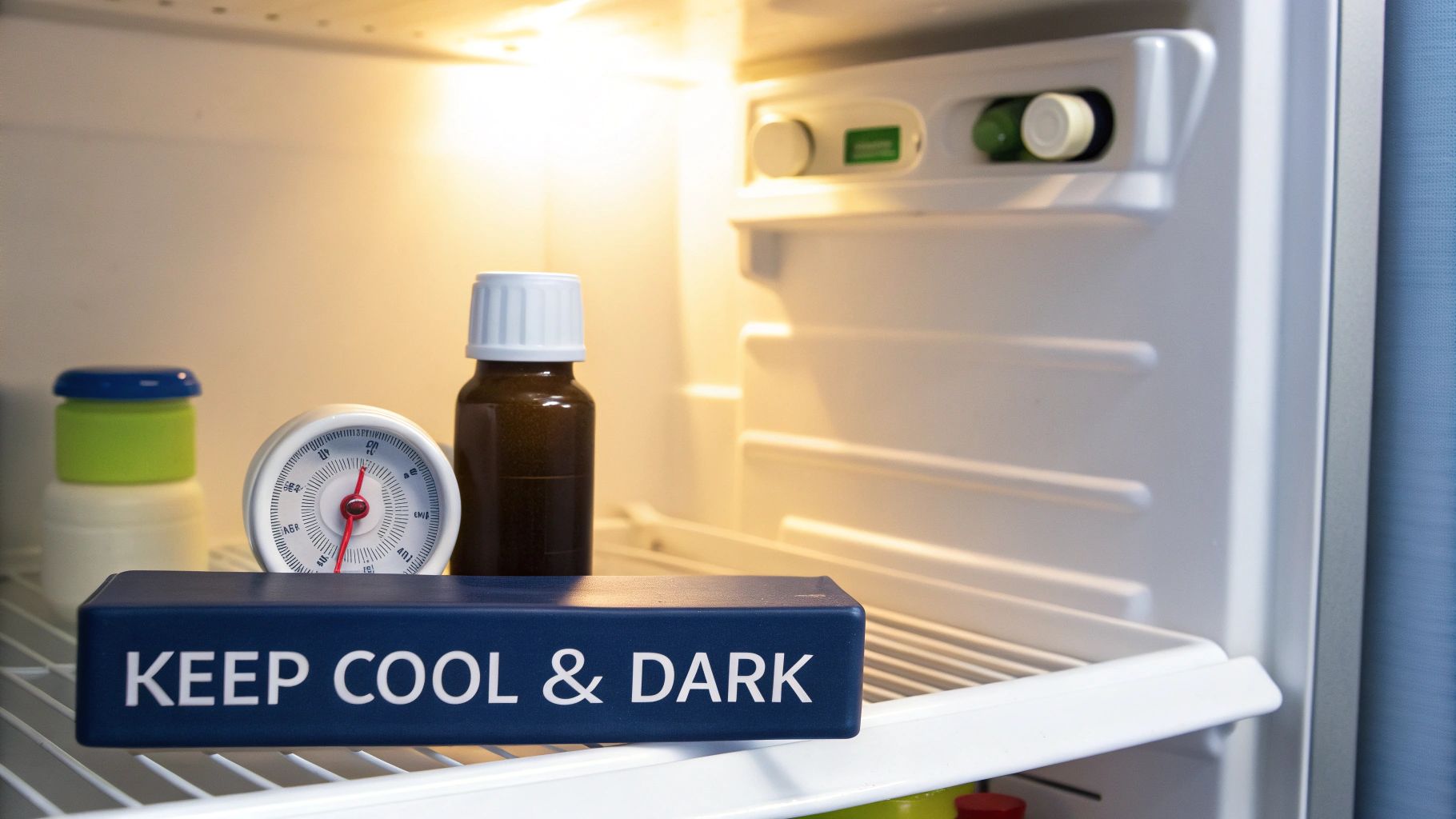
The single most important thing you can do for your medication is to keep it at a stable, cool temperature. The ideal range for storing compounded tirzepatide is between 36°F and 46°F (2°C to 8°C). This isn't just a casual suggestion—it's the precise range needed to keep those delicate peptide molecules intact and potent.
Even small temperature swings can cause damage over time. This is exactly why the refrigerator door is the worst place to keep your vial. Every time you open it, warm air rushes in, causing fluctuations that can compromise the medication's integrity. The best spot? A middle shelf toward the back, where the temperature is most stable.
Protecting your medication's potency is just as important as remembering to take it. A stable temperature is your best tool for ensuring the medication you inject is the medication that works.
And whatever you do, never freeze your tirzepatide. Freezing can permanently wreck the peptide structure, rendering it completely useless. If you even suspect your vial has frozen, it is no longer safe to use and must be discarded properly.
Keeping It in the Dark
The second key to protecting your medication is shielding it from light. Direct exposure to light—whether it’s sunlight streaming through a window or just bright indoor lighting—can trigger a process called photodegradation. In simple terms, the light energy physically breaks down the active ingredients in your tirzepatide, robbing it of its strength.
Luckily, the fix is easy. The best way to protect your medication from light is to simply keep it in its original box or container. This creates a simple but effective light-blocking barrier, giving you one less thing to worry about. Storing it this way helps ensure that the answer to how long compounded tirzepatide lasts in the fridge matches the Beyond-Use Date on your vial.
Properly storing your medication on the go is just as important. For those with busy lifestyles, our guide on how to travel with semaglutide offers great tips that are just as relevant for tirzepatide.
By making these simple storage habits part of your routine, you’re taking an active role in your treatment and ensuring you get the most out of your health journey.
Mastering Safe Handling and Injection Habits
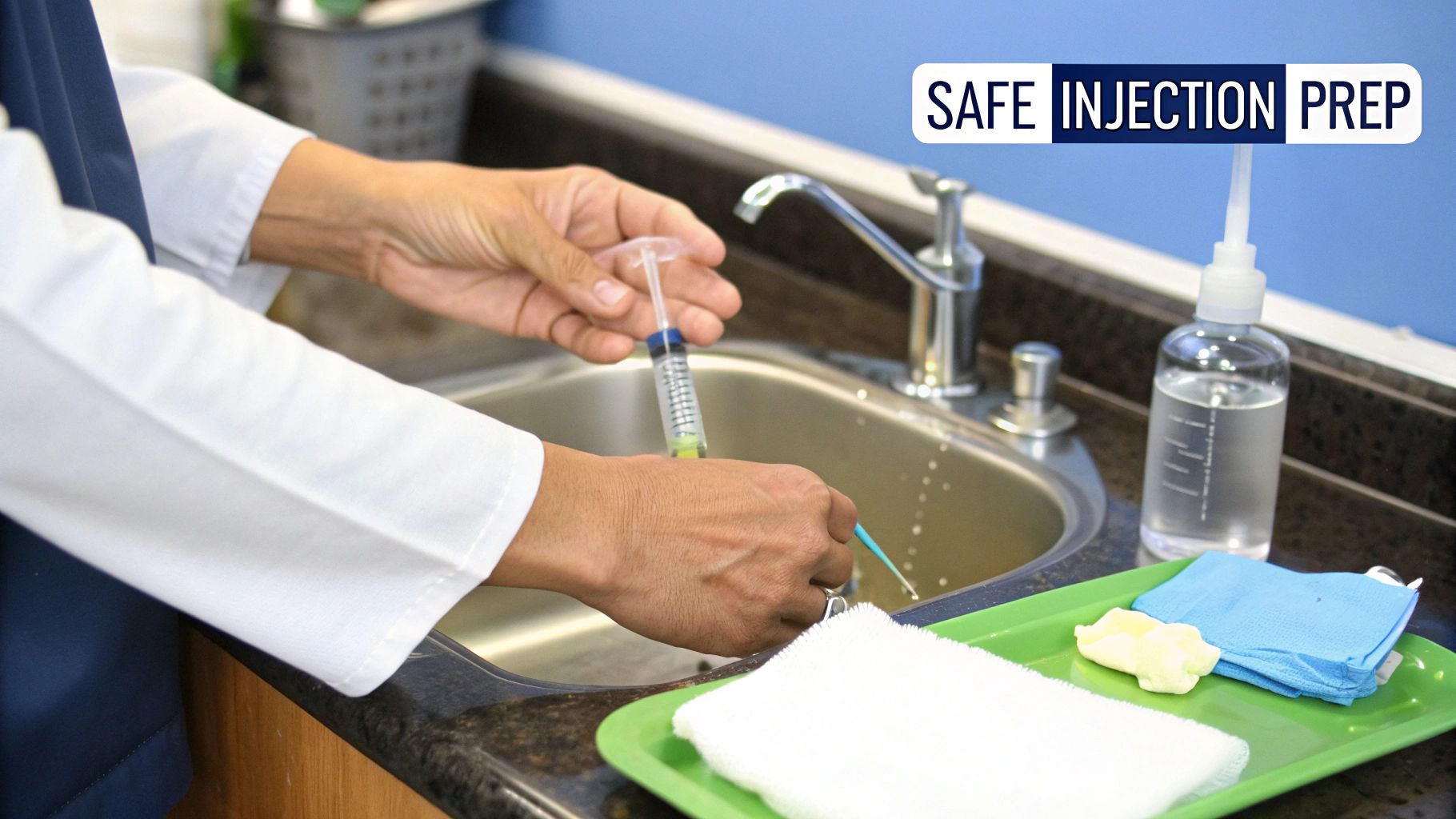
Knowing how to store your compounded tirzepatide is the first step. Just as important are your handling and injection habits. A clean, consistent routine is your best friend here—it ensures every dose is safe and effective, so you can focus on your wellness goals with total confidence.
Think of it like being a chef in your own kitchen. You wouldn't prepare a meal on a dirty countertop, right? The same logic applies to your medication. These habits are simple to build and make a huge difference in protecting both your health and the integrity of your tirzepatide.
Your Pre-Injection Checklist
Before every injection, it’s smart to run through a quick mental checklist. It only takes a minute, but this simple process quickly becomes second nature and is your best defense against contamination.
First, gather your supplies: your vial of tirzepatide, a new sterile syringe, and an alcohol wipe. Find a clean, well-lit, and flat surface where you won’t be disturbed.
Next, and this is non-negotiable, wash your hands thoroughly with soap and warm water for at least 20 seconds. This is the single most important step to prevent introducing bacteria.
Your weekly injection is a powerful act of self-care. By mastering a safe and clean technique, you honor the commitment you've made to your long-term health and well-being.
Once your hands are clean and dry, it's time to inspect the medication. Hold the vial up to the light. The liquid should be completely clear. Look for any floating particles, clumps, or general cloudiness. If you see anything that looks off, do not use it. Set it aside and contact your pharmacy or provider right away for advice.
Administering Your Dose Safely
With your sterile workspace set up and your medication checked, you’re ready to draw your dose. Take an alcohol wipe and firmly clean the rubber stopper on top of the vial, then let it air dry. Don’t blow on it or wipe it dry—that just reintroduces germs.
Now, for the needle. Always use a brand-new, sterile needle and syringe for every single injection. Reusing needles is a major no-go. It's not just unsafe and a risk for infection; it also dulls the needle, which can cause skin irritation, and can damage the vial's rubber stopper, potentially contaminating the rest of your medication.
After you've carefully drawn your prescribed dose, you're ready to go. Following these steps every time helps build a solid routine that supports your health journey. While the medications differ, the injection principles are very similar, and you can find a helpful walkthrough in our guide on semaglutide injection instructions.
Sticking to these habits ensures your medication stays potent and safe from the first dose to the last. When you handle it correctly, you can be sure you're getting the full benefit of your treatment every single week.
What to Do When Storage Mistakes Happen
Let’s be realistic—life gets hectic, and mistakes can happen. You might forget your vial on the kitchen counter for a few hours, or maybe you pushed it to the back of the fridge, right next to that notoriously icy spot. If this happens, don't panic. The most important thing is to handle it safely.
First, remember that compounded tirzepatide is a delicate peptide. When you have any doubt about whether it's been stored correctly, the golden rule is simple: when in doubt, throw it out. It's far better to be safe and discard one dose than to inject medication that has lost its effectiveness or become unsafe.
Signs Your Medication May Be Compromised
Your own eyes are the best tool you have. Make it a habit to visually inspect the liquid in the vial before every single injection. If you spot any of the following, do not use the medication.
- Cloudiness or murkiness: The solution should always be crystal clear.
- Floating particles or crystals: Any specks, solids, or "floaters" are a definite red flag.
- Color changes: Tirzepatide mixed with B12 might have a slight pink or yellowish tint, but any noticeable change from its original color is a warning sign.
- Evidence of freezing: If the vial feels slushy or you think it may have frozen solid and then thawed, the molecular structure is likely damaged. It is no longer safe to use.
If you suspect your refrigerator is the culprit, that's a problem you need to solve right away. If you find your fridge isn’t holding a consistent, safe temperature, you might need to troubleshoot a fridge that isn't cooling.
Your health is always the top priority. Never inject medication you're unsure about. Taking a moment to be cautious is a small step that protects your long-term well-being and keeps your treatment on track.
If you believe your medication is compromised, your next move is simple. Dispose of the vial safely (following your local guidelines) and get in touch with your provider or compounding pharmacy right away. The Blue Haven Rx team gets it—accidents happen. We’re here to help you figure out what to do next without judgment, ensuring you don't have to miss a beat in your treatment plan.
Think of us as your partners on this wellness journey. You're never going it alone. If you have questions or just need some support, please reach out. To learn more about getting started with a personalized weight management program, take our quiz and see if our GLP-1 program is the right fit for you.
Got Questions About Storing Your Tirzepatide? We've Got Answers.
When you're starting a new medication like compounded tirzepatide, it's completely normal to have a few questions about the details. Getting storage and handling right is a key part of making your treatment successful. To help you feel confident, here are some practical answers to the questions we hear most often.
Is It Okay to Pre-Fill Syringes for the Week?
It might seem like a smart way to save time, but pre-filling syringes is not recommended. We strongly advise against it.
The medication is designed to be stable inside its glass vial, not in long-term contact with the plastic of a syringe. Plus, every time you handle the medication, you introduce a small risk of contamination. To ensure you get the full, uncontaminated dose every single time, always draw your medication right before you inject it.
What Does "Protect From Light" Actually Mean in Practice?
This instruction is simpler than it sounds, but it's incredibly important. "Protect from light" means keeping the tirzepatide vial in its original box or another container that blocks out light while it's in the fridge.
The peptide molecules in tirzepatide are sensitive. Exposure to light—even bright indoor light, but especially sunlight—can slowly break them down. This degradation can make the medication less potent, so keeping it in the dark ensures it stays effective.
Can I Travel Safely With My Compounded Tirzepatide?
Absolutely, as long as you plan ahead. The key is maintaining the cold chain. You'll need to transport your vial in an insulated cooler bag with cold packs to keep the temperature within that critical 36°F to 46°F (2°C to 8°C) range.
A couple of crucial tips: Never, ever put it in your checked luggage where temperatures can fluctuate wildly. Always keep it in your carry-on bag and it's a good idea to quickly review the latest TSA guidelines for traveling with liquid medications before you head to the airport.
Should I Shake the Vial to Mix It Before My Injection?
Please don't! You should never shake your tirzepatide vial. Shaking is too aggressive for the delicate peptide structure and can damage the molecules, reducing the medication's effectiveness.
If the solution looks like it needs mixing, the proper way is to just gently roll the vial between your palms for a few seconds. That’s all it takes to evenly distribute the contents without harming them.
Your health and safety are our top priority. At Blue Haven Rx, our goal is to provide you with the clear guidance and support you need to reach your goals.
Ready to explore a personalized path to a healthier you? Take our quiz to see if you are a candidate for our GLP-1 program.