
Finding the Best Injection Site for Semaglutide
When you first start a GLP-1 medication like semaglutide for weight management, one of the biggest questions on your mind is probably, "Where's the best place to inject this?" The short answer is simple: the best spot is wherever you feel most comfortable.
All three recommended areas—your abdomen, thigh, and upper arm—are equally good at getting the medication where it needs to go for your healthy living journey.
Your Guide to Choosing the Right Semaglutide Site

Starting any new medication can feel a bit daunting, but giving yourself the injection will quickly become second nature. Understanding your options is the first step to feeling confident and keeping your focus on your wellness goals, not on the weekly shot itself.
The real key to success isn't finding one "magic" spot. It's about learning to rotate between a few good ones. This simple habit is crucial for making sure the medication absorbs consistently and, just as importantly, for preventing any skin irritation down the road. This helps support your long-term weight management goals.
Why Site Selection Matters for Your Journey
The goal is to inject semaglutide into the layer of subcutaneous fat, which is that soft tissue right under the skin. This allows the medicine to be absorbed slowly and steadily, giving your body the full benefit for your weight management.
Clinical guidance points to three main areas for this:
- The abdomen (staying at least 2 inches away from your belly button)
- The front of your thighs
- The back of your upper arms
You might be wondering if one of these spots is better than the others for weight loss. The truth is, research shows that consistent weekly use and the right dose are what really move the needle. Any tiny differences in absorption rates between the abdomen, thigh, or arm aren't significant enough to affect your results.
To give you a clearer picture, here's a quick comparison to help you decide which spot might work best for you today.
Semaglutide Injection Sites at a Glance
This table breaks down the pros and cons of each recommended injection site, making it easier to choose based on what feels right for you each week.
| Injection Site | Pros (Why Choose It) | Cons (Things to Consider) |
|---|---|---|
| Abdomen | Easiest to reach and see, which is great when you're starting out. Often reported as the least painful spot. | The area is prone to skin sensitivity or irritation if you don't rotate sites properly. Avoid injecting near scars or your belly button. |
| Thigh | A large, accessible area with plenty of fatty tissue. An excellent choice if you're nervous about injecting your stomach. | Can be slightly more sensitive than the abdomen for some people. Requires you to be seated to ensure the muscle underneath is relaxed. |
| Upper Arm | A great alternative for rotation, helping to prevent skin issues. Some people find it a very convenient spot. | Can be tricky to reach on your own, so you might need help from a partner or family member. There's also a higher chance of hitting muscle if not careful. |
Ultimately, the best site is the one you can comfortably and consistently use. Don't be afraid to experiment to find your preferred rotation schedule.
We believe that providing effective patient education resources is the best way to empower you to self-administer semaglutide safely.
Feeling prepared makes all the difference. Knowing that each of these spots is effective allows you to choose based purely on personal comfort and what’s easiest for you, making your weekly routine a seamless part of your new, healthier lifestyle.
Choosing Your Spot: Abdomen, Thigh, or Upper Arm?

Alright, you know the three recommended zones for your semaglutide injection. Now, let’s get into the specifics of each one. Getting a feel for the abdomen, thigh, and upper arm will help you pick your spot with confidence each week.
Truthfully, there’s no single "best" site that works for every single person. The right spot is simply the one that feels most comfortable and works best for you.
Each location is equally effective, so your choice really comes down to personal preference. This flexibility is great because it lets you build a routine that feels easy and sustainable, which is key for long-term success on your weight management journey.
The Abdomen: A Popular and Practical Choice
For many people starting a GLP-1 medication, the abdomen is the go-to choice, and for good reason. It’s a large area with plenty of subcutaneous fat, which often makes injections less noticeable and more comfortable.
When injecting in your stomach, just be sure to pick a spot at least two inches away from your navel. Think of an imaginary circle around your belly button—anywhere on the outside of that circle is fair game.
Most people find this area the easiest to see and reach, giving them a sense of control, especially in the beginning. Just steer clear of any scars, moles, or tough stretch marks, as injecting there can be more uncomfortable and might even change how the medication is absorbed.
The Thigh: An Accessible Alternative
The front of the thigh is another fantastic option. It's a great spot to switch to if you're not feeling the abdomen or just want to rotate injection sites. It’s also incredibly easy to access while sitting down, which helps keep the muscle nice and relaxed.
Here’s a practical tip to find the sweet spot:
- Sit down and relax your leg.
- Visually divide the top of your thigh, from your knee to your hip, into three sections.
- Aim for the outer, middle third—that fleshy part that’s easy to pinch.
Try to avoid the inner thigh, as the skin is much more sensitive there. You'll also want to stay away from any visible veins or the bony area right above your knee. Some active people mention a little tenderness if they inject into the thigh before a big workout, but it's usually very minor.
The Upper Arm: A Great Option for Rotation
Don't forget about the upper arm! It's an essential part of a good rotation schedule, giving your other spots a much-needed break. This helps keep your skin healthy and ensures the medication absorbs consistently over time, supporting your path to healthy living.
The target is the fatty tissue on the back of your upper arm, about halfway between your shoulder and elbow.
Here's a practical tip for injecting in your arm by yourself: try bracing that arm against a door frame or the back of a sturdy chair. This helps hold the area steady, making it much easier to manage the injection with your free hand.
This spot can be a little tricky to reach alone. Some people find it easier to ask a partner or family member for a hand. With a mirror and a bit of practice, though, most people get the hang of it just fine. Just be careful not to inject too high up into the deltoid muscle near your shoulder, which can cause the medication to absorb too quickly.
Ultimately, choosing where to inject is a personal call that might even change from week to week. For example, if you're traveling, the thigh might be the simplest choice. Speaking of which, our guide on how to travel with semaglutide has more practical tips for these situations. By getting comfortable with all three sites, you can make your weekly injection a quick, stress-free part of your routine.
Why You Can't Just Stick to One Injection Spot
So you've found the perfect, most comfortable spot for your injection. It’s tempting to just use that same spot every single week, right? It’s easy. But when it comes to semaglutide, rotating where you inject isn't just a friendly suggestion—it’s a non-negotiable part of making your treatment work for the long haul.
Think of it this way: you wouldn't keep planting a flower in the exact same tiny patch of soil every single time. The ground needs a break to recover. Your skin and the tissue underneath are no different. Giving them that break is crucial for keeping your skin healthy and making sure the medication does its job effectively for your weight management.
What's Happening Under the Skin
The biggest reason we emphasize rotation is to avoid a condition called lipohypertrophy. That’s a technical term for a buildup of fatty tissue that can form under the skin from injecting into the same little area over and over. These spots can turn into noticeable lumps that feel firm or even rubbery.
More than just a cosmetic issue, these lumps can seriously interfere with how your body absorbs the medication. When semaglutide goes into this hardened tissue, absorption becomes erratic. That kind of unpredictability is the last thing you want when you're working toward consistent weight management results.
On top of that, always using the same spot can lead to more common site reactions like lingering tenderness, redness, or bruising. By simply moving the injection site each week, you give the tissue a chance to heal completely, which makes your next injection that much more comfortable.
The Key to Consistent Results
The whole point of a rotation schedule is to keep your tissue healthy so your medication is delivered smoothly and predictably, week in and week out. This consistency is a cornerstone of any successful plan involving GLP-1 medications like semaglutide.
Research and clinical experience show a clear link between sticking to one spot and developing these nodules. The good news? These problems almost always clear up once a good rotation habit is formed. This is a simple, proven way to reduce these risks.
A consistent rotation schedule isn't just a "nice-to-do." It's one of the most powerful things you can do at home to support your treatment. It directly impacts how well the medication works and how comfortable you are, which helps you stay on track with your long-term health goals.
Simple Rotation Schedules That Actually Work
You don’t need a complex system here. The only thing that matters is being intentional and keeping track of where you injected last.
Here are a few easy methods people find helpful:
- The Clockwise Abdomen Method: Picture a clock on your stomach with your belly button in the middle. The first week of the month, inject at "12 o'clock" (at least two inches away from your navel). The next week, move to "3 o'clock," then "6 o'clock," and finally "9 o'clock."
- The Four-Zone Switch: This is perfect for giving each part of your body a long rest. Just assign each week of the month to a different area. For example, Week 1: Right Thigh, Week 2: Left Thigh, Week 3: Right Upper Arm, Week 4: Left Upper Arm.
- The Quadrant System: Split your abdomen into four sections (upper-right, upper-left, lower-right, lower-left). Use one quadrant per week for a month before you switch to a different site, like your thigh.
To make it stick, use a simple chart, a note in your phone’s calendar, or a small notebook. All you need to write down is the date and the location. After just a few weeks, it'll become as routine as taking the medication itself.
This little bit of discipline goes a long way, ensuring your body gets the full benefit of every dose. It’s a simple step that supports your path to sustainable weight management. If you're ready to get started but want to confirm it's the right fit for you, you can take our quick quiz to see if you're a candidate.
A Step-by-Step Guide to a Flawless Injection
Getting comfortable with your injection technique is the first step toward making your weekly dose feel like a simple, stress-free routine. This guide breaks down the whole process—from prep to cleanup—so you can feel confident from day one.
Preparing for a Smooth Experience
A little prep work makes a world of difference. Taking a few moments to get everything in order ensures the process is safe, comfortable, and effective. This small ritual can help ease any nerves and quickly becomes a familiar habit for your healthy living routine.
First, gather your supplies on a clean, well-lit surface. You’ll need:
- Your semaglutide pen or syringe.
- A fresh alcohol swab.
- A designated sharps container for safe disposal.
Next, wash your hands thoroughly with soap and water. It's a basic but crucial step to prevent introducing any bacteria to the injection site. Once your hands are clean and dry, you're ready to pick and prepare your spot for the week.
Selecting and Cleaning Your Spot
Following your rotation schedule, choose today's injection site—your abdomen, thigh, or upper arm. Once you have your spot picked out, grab that alcohol swab.
Wipe the skin with the swab in a gentle, outward circular motion, cleaning an area about the size of a quarter. The key here is to let the alcohol air-dry completely before you inject. This simple step helps prevent stinging.
The Injection Process Itself
With your site prepped, it’s time. Hold the pen or syringe firmly. For most spots, like the abdomen or a fleshy part of the thigh, you'll want to go straight in at a 90-degree angle.
If you're injecting into a leaner area with less fatty tissue, you can gently pinch about an inch of skin. This practical trick creates a small pocket, ensuring the medication gets into the subcutaneous layer where it belongs—not into the muscle underneath.
Insert the needle with one smooth, steady motion. Once it’s in, press the plunger down slowly and consistently until all the medication is delivered. Don't rush this part.
Here’s a practical tip: After the plunger is fully down, keep the needle in place and slowly count to six. This brief pause gives the full dose time to disperse under your skin instead of leaking back out when you pull the needle away.
After your six-second count, withdraw the needle at the same angle it went in. And just like that, you're done.
This simple visual shows an easy-to-follow rotation schedule to keep your injection sites healthy week after week.
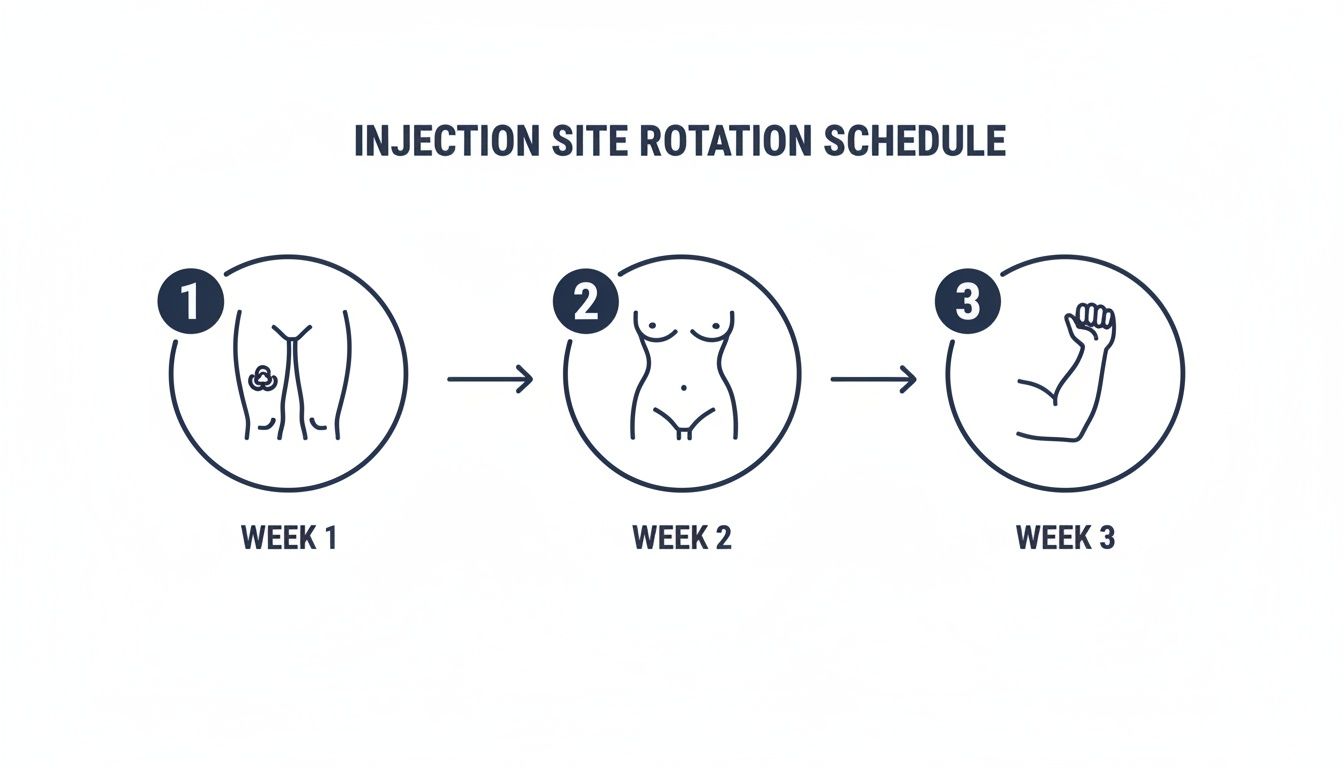
As you can see, moving between the thigh, abdomen, and arm prevents skin irritation and helps your body absorb the medication properly every time. This consistency is important for your weight management goals.
To keep everything straight, a simple checklist can be very helpful. It helps you build a consistent routine and ensures you don't miss a single step.
Injection Day Checklist
| Stage | Action Item | Helpful Tip |
|---|---|---|
| Before | Gather all supplies on a clean surface. | Lay everything out in the order you'll use it to make the process seamless. |
| Before | Wash hands thoroughly with soap and water. | This is one of the easiest ways to ensure a safe injection. |
| During | Clean the chosen site with an alcohol swab and let air dry. | Don't rush the drying! Injecting into wet alcohol can cause a stinging sensation. |
| During | Inject at a 90-degree angle and count to six before removing. | Counting out loud can help ensure you hold the needle in place for the full duration. |
| After | Apply gentle pressure if needed; do not rub the area. | Rubbing can cause irritation or bruising. A simple press with a cotton ball is all you need. |
| After | Immediately dispose of the needle in a sharps container. | Never recap the needle. Place it directly into the container to prevent accidental pokes. |
Following this checklist will help you master the process quickly and safely, turning injection day into just another part of your week.
After the Injection: Care and Disposal
Once the needle is out, you might notice a tiny drop of blood or medication. That's completely normal. Just apply gentle pressure with a clean tissue or cotton ball for a few seconds.
Now for the final, and most important, step: safe disposal. Immediately place the used syringe or pen needle into your sharps container. Never throw loose needles into the regular trash, as this poses a serious safety risk to others.
Following these steps will make your weekly injection a quick and seamless part of your health routine. For an even more detailed walkthrough, you can review our comprehensive semaglutide injection instructions, which offers extra tips and visual guides.
Troubleshooting Common Injection Questions
Even with perfect technique, it’s completely normal to have questions or hit a small snag now and then. This is your go-to guide for navigating those little "what if?" moments that can pop up on your weight management journey.
Knowing how to handle these situations will help you feel confident and in control. Most minor issues are easy to manage right at home, so let's walk through the most common ones.
What if I See a Little Bruising or Redness?
A small bruise or a bit of redness at the injection site is one of the most common things people notice. Don't worry—it usually just means the needle passed by a tiny blood vessel near the skin's surface.
To keep this to a minimum, apply gentle pressure with a cotton ball for a few seconds right after you remove the needle. Critically, do not rub the area. Rubbing can actually make the bruising worse. Another practical tip: let the alcohol from your prep pad air dry completely before injecting. Injecting while the skin is still wet can cause that stinging feeling and redness.
I Feel a Small Lump Under My Skin
It can be a little alarming to feel a small, pea-sized lump after an injection, but this is typically just the medication sitting in the tissue before it gets absorbed. It's almost always harmless and should disappear in a day or two.
This is exactly why rotating your injection sites is so important for your long-term wellness. Sticking to the same spot over and over can lead to harder lumps, which might interfere with how the medication is absorbed. If a lump feels particularly painful, is warm to the touch, or doesn't go away within a week, that’s a good time to check in with your Blue Haven Rx clinical team.
Did I Do It Wrong if a Drop of Medication Leaked Out?
Seeing a single drop of semaglutide on your skin after an injection is perfectly normal. It does not mean you missed your dose or need to do it again.
The best way to prevent this is to count to six after you've fully pressed the plunger. Just hold the pen in place for about 6 seconds. This simple pause gives the medication time to settle into the tissue instead of following the needle back out.
Modern injection pens are designed with this in mind, so rest assured you've received the full dose. Whatever you do, don't try to inject a second time.
A positive experience with your injections is crucial for sticking with your treatment plan. In fact, studies show that over 80% of injections are rated as causing no or very mild pain. For many, the abdomen ends up being the most comfortable spot. When you consider that consistent use is linked to significant weight loss, making your routine as smooth as possible is key to hitting your longevity and wellness goals. You can read the full research about these findings on JAMA Network.
For other common questions, our guide on managing GLP-1 medication side effects has a ton of helpful advice. While most of these little issues resolve on their own, never hesitate to reach out if something doesn't feel right. Your Blue Haven Rx team is here to make sure your journey is as smooth and successful as possible.
Common Questions About Semaglutide Injections
As you get into the swing of things with your new routine, it's totally normal for questions to pop up. Feeling confident about your treatment is a huge part of your long-term success, so let's walk through some of the most common questions our members ask about their semaglutide injections.
Does Injecting Semaglutide in the Stomach Work Better for Weight Loss?
This is probably the number one question we get, and the short answer is no. There’s no clinical evidence suggesting that injecting in your abdomen leads to better weight loss than using your thigh or upper arm. Semaglutide is absorbed into your bloodstream to work systemically, so its effectiveness really comes down to consistent, weekly dosing—not where you stick the needle.
The abdomen is a popular spot mostly because it's easy to see and reach, and many people find it’s the most comfortable area. What truly matters for hitting your goals is taking your prescribed dose every week and, just as importantly, rotating your injection sites. This simple habit keeps your skin healthy and ensures the medication absorbs correctly every single time.
So, go ahead and choose the best injection site for semaglutide based on whatever feels most comfortable and convenient for you that day.
What Should I Do if I Have a Lump After an Injection?
Finding a small, temporary lump at the injection site isn't unusual. This is typically just a minor local reaction, it’s harmless, and it usually disappears on its own within a few days to a week.
If you notice one, the best thing to do is leave it alone. Try to avoid rubbing or massaging the area, as this can make the irritation worse. The best way to prevent these little lumps in the first place is to be diligent about rotating your injection sites each week. Using the same spot over and over is the most common reason these reactions happen.
A quick rule of thumb: If a lump is painful, red, feels warm, or just isn't going away after a week, it's time to reach out to your Blue Haven Rx clinician. We’re here to give you guidance and make sure everything is okay.
Keeping your skin tissue healthy is the key to a comfortable experience, which is why that rotation schedule we talked about is so crucial for your healthy living journey.
Can I Change My Injection Day or Time?
Absolutely. Life gets busy, and schedules change. The good news is that you have the flexibility to change the day of the week you do your injection.
The only hard-and-fast rule is that there must be at least two full days (48 hours) between your doses. For example, if you normally inject on a Sunday morning but want to switch to a Tuesday evening, that's perfectly fine. Just try to stick to your new day once you’ve chosen it to maintain a consistent level of medication in your system.
You can also take your dose at any time of day that works for you, with or without food. If you ever have questions or concerns about adjusting your schedule, it's always smart to check in with your Blue Haven Rx healthcare provider first.
How Do I Know if the Full Dose Was Delivered?
Today's semaglutide pens are designed to be very reliable, so you can trust you're getting the right amount. To be sure, just hold the injection button down until you see the dose counter return to "0". You’ll often hear a little click, too.
Here's a practical tip: keep the pen in place for about six seconds after the counter hits 0. This little pause gives the medication enough time to fully dispense under the skin and prevents any from leaking out.
Seeing a single tiny drop of liquid on your skin afterward is completely normal and doesn't mean you missed part of your dose. However, if you ever think the pen malfunctioned, don't inject a second time. Just make a note of what happened and get in touch with your Blue Haven Rx support team. We'll tell you exactly what to do next.
Your health journey is a partnership, and Blue Haven Rx is committed to providing the support and tools you need to succeed. If you're ready to explore a science-backed approach to weight management, take our quiz to see if you're a candidate and learn more about starting your journey today.